
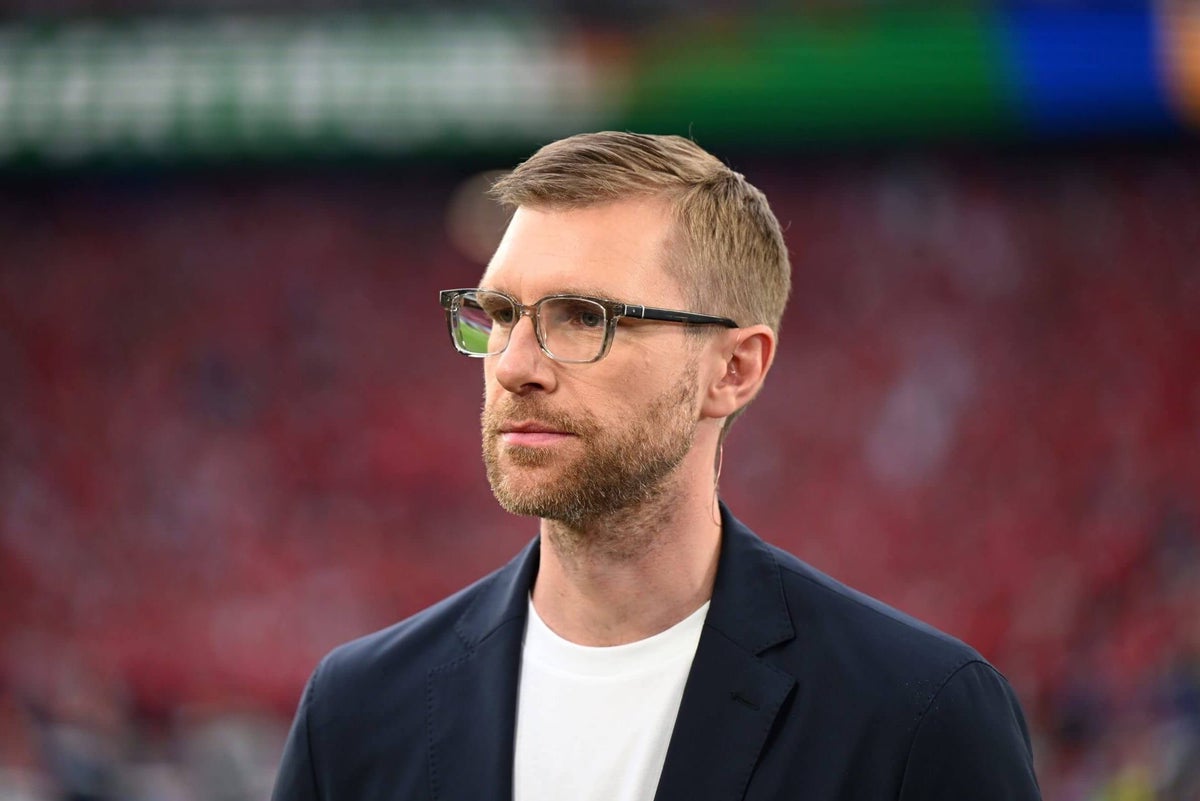
Arsenal have confirmed that academy manager Per Mertesacker is set to step down and leave the club at the end of the season.
Arsenal confirmed his departure in a club statement on Monday, with Mertesacker saying it was time to “explore something new”.
The Germany World Cup winner had been in the role since he retired as a player at Arsenal in 2018, and had also spent a short amount of time assisting interim head coach Freddie Ljungberg before Mikel Arteta was appointed in December 2019.
A three-time FA Cup winner with Arsenal as a player, who joined on the same day as manager Mikel Arteta in December 2011, he has also been a key figure in Arsenal’s recent history.
“Arsenal is and will always be a very special club to me, so this was a difficult decision,” Mertesacker told Arsenal’s official website.
“I am very thankful for the trust the club put in me when transitioning from a first-team player directly into the role as head of academy. Now it is time for me to move on and explore something new and push myself even further.
“I remain focused on finishing the season strongly, continuing to nurture and develop our young talent and support a seamless transition until my very last day with the club.”
Richard Garlick, Arsenal’s chief executive officer, added: “We support Per’s decision to pursue something new, but we will be incredibly sad to see him leave at the end of the season.
“We were fortunate to have retained Per as academy manager once he finished his playing career with us in 2018. He understands what Arsenal stands for and this has been a constant in his leadership — inspiring our academy coaches, staff and young players in an Arsenal way and giving so many an opportunity to develop and shine.
“We’re happy that Per remains in the role until the end of the season whilst we focus on our succession plan. We continue in our pursuit of winning major trophies with a sustained focus and investment in our academy.”
What did Mertesacker bring to Arsenal?
The judgement of an academy manager often has to be more nuanced than with the manager of the first team.
As well as looking at how players are developed for the first team, there are other factors that need to be considered.
For example, the German was a constant presence around not just the first-team training ground but also the academy base, Hale End.
Taking a very hands on approach, he would often be the one to speak to prospective parents before their child signed for the academy at the under-nine age group. In these conversations, he often felt it was important not to sell parents dreams about their sons making it to the first team, but providing a more rounded and realistic perspective of the academy journey.
As seasons went by Mertesacker started to put an emphasis on using the academy as a way to generate funds by selling academy graduates.
In recent years, he has also looked to widen Arsenal’s recruitment pool, but the effects of that will take longer to see.
Bukayo Saka, Emile Smith Rowe, Ethan Nwaneri, Myles Lewis-Skelly, Max Dowman and Marli Salmon are the standout players to come through Arsenal’s academy and feature for the first team in Mertesacker’s time in the role.
Mikel Arteta will hope to reap the benefits of the academy producing such talented youngsters, but Mertesacker leaving may also provide an opportunity for fresh eyes to implement new ideas on how Arsenal nurture their young players.