
(Editor’s note: This is excerpted from Mike Sando’s Pick Six of Jan. 12, 2026.)
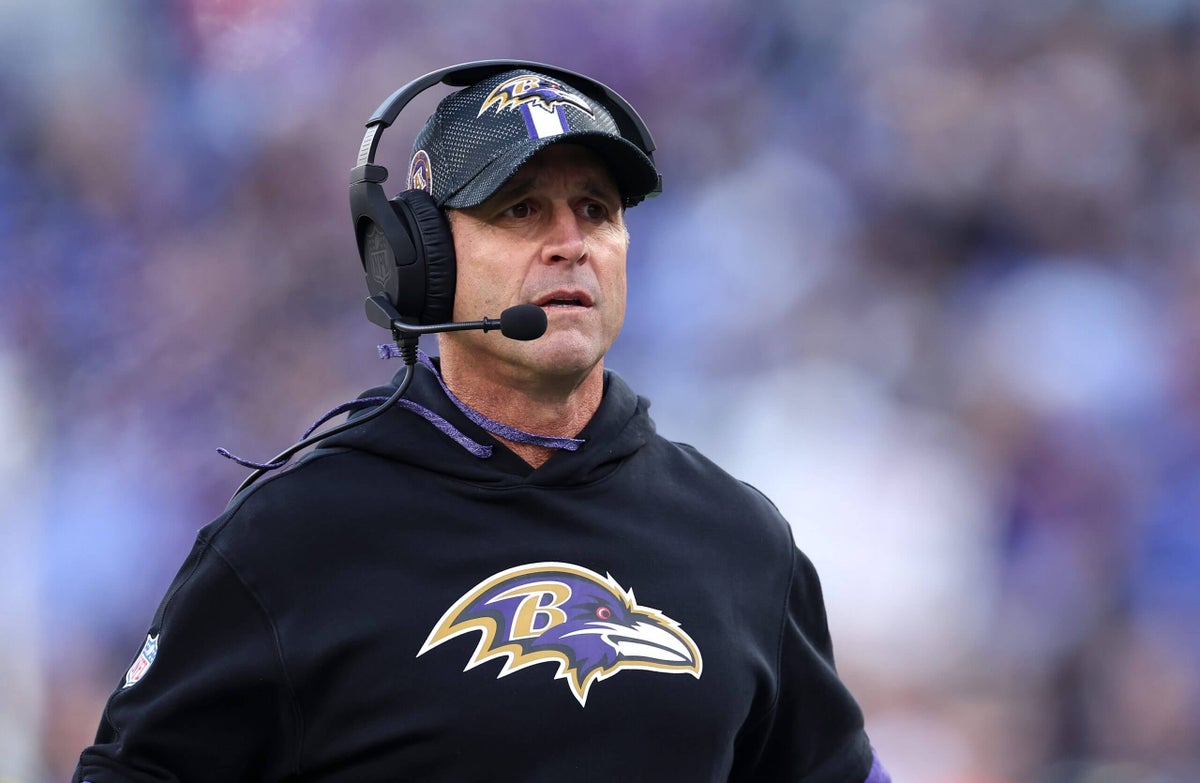
2. John Harbaugh looks like the hottest candidate in the 2025 coaching cycle. Should he be?
When the Ravens fired Harbaugh after 18 seasons, 12 playoff appearances and one championship, the 63-year-old coach instantly became the most qualified candidate in the market.
His resume speaks for itself, but how much of Harbaugh’s success with the Ravens is exportable?
“Harbaugh gives you a system and a leader,” an exec from another team said. “If you are an organization that is rudderless, he gives you that direction. He automatically establishes a standard and a belief. But you could say that about Pete Carroll as well, and that has not changed with him, but organizational dysfunction is dysfunction.”
Harbaugh, whose background is on special teams, does not call plays or design schemes on either side of the ball. He does not coach quarterbacks. Unless he lands in Green Bay, there’s almost zero chance Harbaugh will have anything close to the personnel support Baltimore provided him and his predecessor, Brian Billick, over the past quarter century.
The difference between Carroll in Seattle and Carroll in Las Vegas comes to mind. Harbaugh’s ability at this stage of his career to put together a vibrant staff to carry out his vision is one big difference. Carroll took the Raiders’ job on their terms, as a coach desperate to get back into the league. Harbaugh would have more leverage to operate on his terms.
“There are hurdles to overcome,” a coach from another team said, “but Harbaugh is still better than the rest even without that.”
What gives Harbaugh an edge? He’s known as an excellent coach of fundamentals and someone capable of putting together a strong staff. His brother, Jim, is strong in those areas as well, and he’s won everywhere he has coached, but as a former quarterback, Jim adds another dimension. Perhaps no one is better at instilling confidence in players of all experience levels at that position.
“The Giants or Tennessee would probably be the best spots for John,” another exec said. “If I’m the Giants, I need somebody to be an adult. Even if a younger coach is the right guy, I don’t know if they can afford it right now. They need a steady-the-ship guy, someone who can say, ‘I don’t give a s— what has happened in the last 20 years. This is what we are about.’ Tom Coughlin was that.”
There is no precedent for head coaches succeeding or failing after leaving the Ravens because Harbaugh’s only predecessors, Billick (1999-2007) and Ted Marchibroda (1996-98), never coached again.
Billick, hired after leading Minnesota’s record-setting offense in the late 1990s, had an 80-64 (.556) record and won a Super Bowl in his second season with Baltimore, despite having an offense that ranked 29th in EPA per play over his final eight seasons (EPA for Billick’s first season, 1999, is not available).
Harbaugh was 180-113 (.614) and won a Super Bowl in his fifth season.
Both coaches won championships without top-tier quarterbacks (Joe Flacco produced like one for the 2012 Ravens when they went 4-0 in the playoffs, but Baltimore ranked 17th in offensive EPA per play that season, and 24th when Billick won it all after the 2000 season).
Though Billick and Harbaugh deserve credit for leading Super Bowl winners, neither assembled or coached Baltimore defenses that ranked No. 1 in EPA per play across both their coaching tenures (the Ravens ranked sixth in points allowed in 1999, before EPA was available). This would suggest the Ravens have a better shot at winning in the future than any coach leaving their organization for another opportunity.
“What does not come with Harbaugh to another team is the scouting department and ownership, two big components of success,” the coach from another team added. “Then you have to find a quarterback who is worthy, or else you are Bill Belichick, who could not win without Tom Brady.”
No head coach has ever won a Super Bowl with two different teams, although seven have won conference championship games with multiple teams.