
In late December, state and federal officials celebrated the announcement of a health care funding windfall. The administration of President Donald Trump had said it would hand Montana roughly $233 million for the first year of the Rural Health Transformation Program, a five-year, nationwide investment surge in rural health care services and infrastructure. That award amount — for a state with just over a million people — was more than the awards for most other states.
The deluge of funding has been cheered by members of Montana’s congressional delegation, all Republicans who supported its inclusion in the budget bill last year. All told, the administration of Gov. Greg Gianforte, also a Republican, has said that Montana could receive $1.2 billion in grant money by 2031 if the Trump administration continues to fund the state’s proposed projects at the same level every year.
So, where exactly did this massive pot of money come from, and what could Montana do with it?
Here’s an overview of what we know at this point.
WHAT IS THE RURAL HEALTH TRANSFORMATION PROGRAM?
The federal rural health fund, totalling $50 billion for all states, originated as part of House Resolution 1, the sprawling tax-and-spend bill backed by Republican lawmakers and signed by Trump in early July 2025. Discussions about a fund for rural hospitals or health care providers began making headlines in June as lawmakers worked to recruit more Republican support for H.R. 1. A cornerstone of the budget package included dramatically downsizing the federal Medicaid health insurance program for low-income people, a sticking point for some Republicans, including those facing upcoming reelection bids.
“The purpose of it was, look, we’re going to cut Medicaid funding, there’s going to be less people covered. And so obviously the folks that are hit the hardest are the small rural facilities,” said Ed Buttrey, the president and CEO of the Montana Hospital Association, in a January interview with Montana Free Press. Leaders of rural facilities, many of which have tighter margins than larger health care systems, have said they may be particularly squeezed by Medicaid enrollment cuts, as they still have to provide care to uninsured patients but don’t have other ways to cover costs.
Explaining the thinking of congressional Republicans that backed the rural health fund, Buttrey said, “Let’s inject some money into those facilities to help right-size them, to help them with workforce, to help them with long-term sustainability so that even with the Medicaid cuts — well down past the five years of the [Rural Health Transformation] program — we are gonna hope that those facilities remain there, that they’re financially healthy and that they can serve the people locally.”
WILL THE RURAL HEALTH FUND BE ENOUGH TO BACKFILL MONTANA’S LOST MEDICAID REVENUE?
Congressional analysts have estimated that, when implemented, H.1. will strip more than $900 billion from the federal Medicaid spending nationwide over the next decade. (New Medicaid standards are expected to begin taking effect in most states by the end of the year.) The $50 billion Rural Health Transformation Fund is slated to be distributed to all states over the next five years, with 2026 being the first. Obviously, the amount of money that could be lost through Medicaid cuts is far greater than the new investment.
But how much Medicaid money could be siphoned out of Montana’s health care system because of the changes to H.R. 1? That’s hard to pinpoint. A 2025 report commissioned by the Montana Health Care Foundation, a nonprofit health policy advocacy group, estimated that Montana could lose between $4.8 and $6.1 billion in federal Medicaid funds over the span of a decade. If those projections come true, the loss would be multiple times the upper amount that one year of the Rural Health Transformation grant could infuse into the health care system.
Buttrey, a longtime Republican state lawmaker who became well-known for sponsoring bills to renew Montana’s Medicaid expansion program for low-income adults, took the helm at the hospital association last summer. He said his goal is for Montana to use the rural health funds to preemptively protect providers from Medicaid instability — as much as possible, anyway. That could include health care providers having new tools to make sure that eligible Medicaid recipients stay enrolled, or to help create money-making ventures that can keep hospitals afloat even if Medicaid revenue falls.
“I think when you look at the Medicaid funding loss to Montana versus the opportunity we have with [the] rural health [fund], if we do things really thoughtfully and correctly in Montana, we can offset those losses. But that’s our goal,” Buttrey said. “… I mean, I’m a hopeful person.”
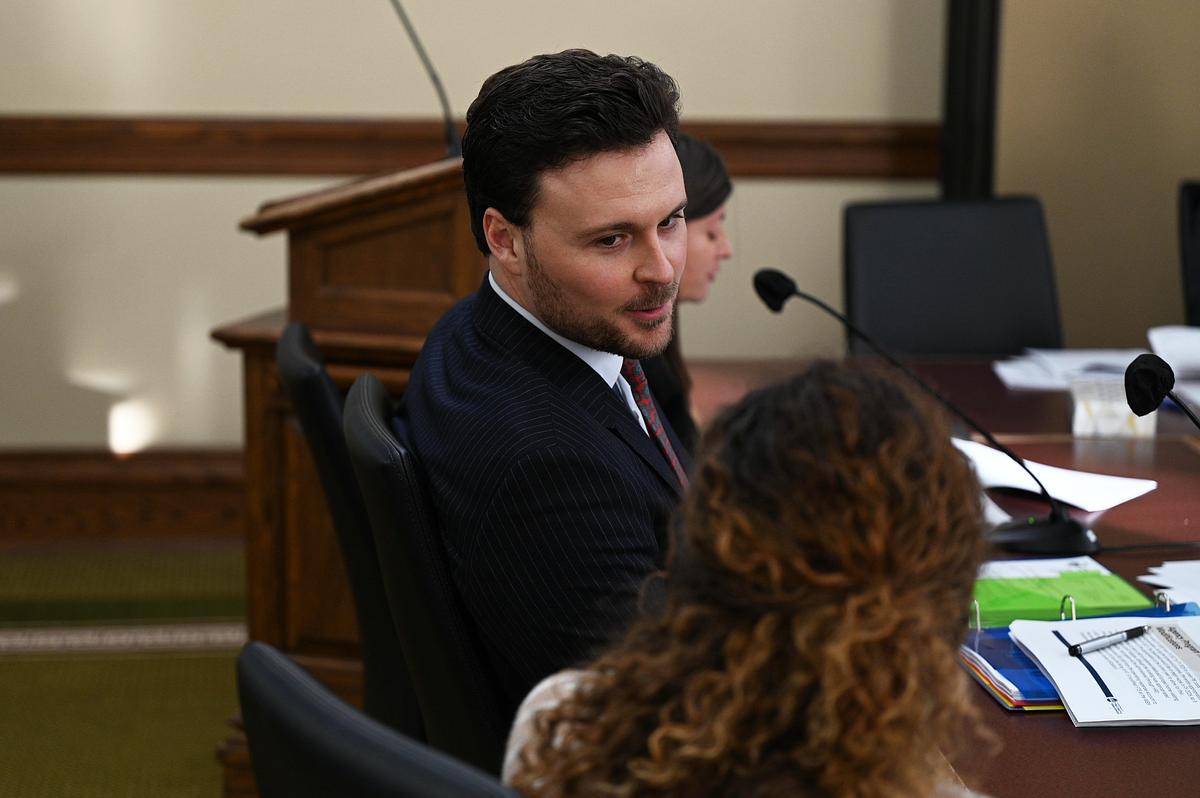 Charlie Brereton, Director of the Montana’s Department of Public Health and Human Services (DPHHS), answers questions during at the Health and Human Services Interim Budget Committee meeting on Dec. 15, 2026, in Helena. Credit: Lauren Miller, Montana Free Press, CatchLight Local/Report for America
WHAT DOES MONTANA WANT TO DO WITH THE MONEY?
Montana’s program application, released to the public in November, included five high-level initiatives. Here they are, verbatim:
Develop workforce through recruitment, training, and retention
Ensure rural facility sustainability and access through partnerships and restructuring
Launch innovative care delivery and payment models
Invest in community health and preventative infrastructure
Deploy modern health care technologies to guide rural health interventions
The state health department suggested several specific projects for each initiative — many of which could be executed through contracts with Montana health care providers and industry groups. The money could be used to create a statewide bed registry, for example, so providers could more easily transfer patients depending on needs or availability. Other uses could be financing upgrades to IT systems and electronic health record systems, or helping emergency medical service teams buy new software and equipment.
But some of the state’s ideas might be harder for non-policy wonks to make sense of. The largest single funding proposal in Montana’s application suggests spending $418 million over a five-year span to create a Center of Excellence within the Gianforte administration’s state health department. That entity would aim to “rapidly create a rural health supply and demand fact base for Montana and develop recommendations to align care delivery services with rural health needs at the county and facility level.” Clear as mud? We thought so, too.
LET’S DIG INTO THE STATE’S PROPOSED CENTER FOR EXCELLENCE A LITTLE MORE.
In some of its application materials and public presentations about the rural health funding, Montana’s health department has proposed “right-sizing” rural facilities and services to be more cost-efficient, while still meeting the needs of rural residents.
In a December meeting with state lawmakers, the health department’s deputy Medicaid director, Gene Hermanson, tried to elaborate on the purpose of the Center of Excellence.
“Say there is a rural facility where, today, they provide inpatient services and they have a number of staffed beds, but their inpatient utilization rate is low. And that might be a service line where they’re losing a lot of money. Whereas the community may have the need for outpatient services that they may have to travel a long way to get to, to a bigger community. So the role of the Center of Excellence would look at that, in that situation, and would encourage a movement where that facility could increase its service lines related to outpatient service,” Hermanson said.
Reading between the lines, we wondered if this effort could push rural providers to downsize or close existing services if they’re not making enough money to keep the lights on, and instead pivot to providing services — like specialty care — that bring in more money long term.
Buttrey said the Montana Hospital Association has been “concerned” about the state’s Center of Excellence proposal for a while. Instead of a broad, one-size-fits-all approach to reduce inpatient beds, Buttrey said MHA is advocating for a case-by-case approach.
“We’ve been pushing for using the Center of Excellence [to get] a real assessment of each individual facility in their community to see where they have their assets and what the community needs. And in some cases, to say, ‘Hey, their inpatient capacity is just right. Or maybe they need a little more.’”
Jean Branscum, the president and CEO of the Montana Medical Association, an industry group that lobbies for physicians, said there aren’t “too many details” about what the Center of Excellence will be working on. But, she said, she hopes the state will encourage new ways for health care systems to work together across regions to meet patient needs. That could include creative ways to fund data sharing agreements, hire specialty providers who can travel to different communities, or incentivize medical providers to provide outcome-based health care — also known as “value-based” services that reward improvements in patient health.
“How can you create networks?” Branscum said. “So we’re not siloed.”
SO, COULD A RURAL HOSPITAL USE THE MONEY TO FINANCE A NEW ROOF?
Probably not. The federal government put several conditions on the money, including a general prohibition on uses for physical infrastructure — like adding a new wing to a hospital. But grant money could help tackle infrastructure costs that are directly related to carrying out an initiative — like furnishing a lab to provide new services to patients that help stabilize a facility’s bottom line, or buying a new truck for an EMS crew.
HOW IS THE MONEY GOING TO BE DOLED OUT?
A spokesperson for the health department, Jon Ebelt, told Montana Free Press in a January email that the federal government’s award has been made in the form of statewide “cooperative agreements” with the Centers for Medicare and Medicaid Services.
He said CMS “does not pre‑allocate the $233.5 million into initiative‑specific ‘buckets.’” Rather, federal counterparts approved the state’s general plan, allowing the state to move forward with submitting a more specific budget that details how it will spend the first-year grant funds. Montana has until Jan. 30 to submit that revised budget, Ebelt said, and the federal government is expected to review it in another 30 days.
Buttrey and Branscum said that they anticipate the state will soon open the door for contractors, including rural health providers and association groups, to submit bids for different projects within each of the state’s five initiatives. Those contract opportunities will likely come in the form of “Request for Proposals,” or RFPs. Buttrey and Branscum said those bids could open in the coming weeks, but that they’re not aware of a specific timeline.
“Individuals are eagerly awaiting the unleashing of those monies, because they have so many ideas that they think can advance and improve rural healthcare in Montana and ultimately provide better patient care,” Branscum said.
ANY OTHER NEXT STEPS TO LOOK OUT FOR?
The state health department has created a Rural Health Transformation Program Advisory Committee, a group intended to provide input about how the grant funds are spent and invested in ongoing projects. The committee’s membership has yet to be published on the state’s RHTP website.
Ebelt said that group is scheduled to meet for the first time in Bozeman on Jan. 22. At that meeting, Ebelt said the group will “share project goals, next steps, and gather public feedback.” Additionally, he said, “committee members will provide targeted input on launching initiatives; however, this is not a decision-making meeting, and no funding awards will be determined.”
Ebelt directed members of the public to go to the state’s RHTP website in the coming weeks to view the advisory committee’s agenda and membership list.
LATEST STORIES
Four years of legalized adult-use marijuana in Montana produces more than $1 billion in sales
Montana’s regulated marijuana market grew modestly between 2022 and 2025, but adult-use cannabis sales surged while medical marijuana sales collapsed. Four years of sales have generated $216 million in cannabis tax revenue.
I’ll bet many of you have been introduced to “funeral potatoes,” either at a potluck, a family dinner or an actual funeral. My remake of this communal classic is one you can prepare any time during these cold winter months. It will make lots of palates happy.
What will be the fate of the governor’s mansion?
The fate of the 67-year-old executive residence that Montana governors used to live in could be decided soon. In a survey that closed last month, the state Department of Administration asked the public what they think should happen to the vacant house. The DOA’s Capitol Complex Advisory Council will present the survey results and cost models for consideration at its next meeting.