
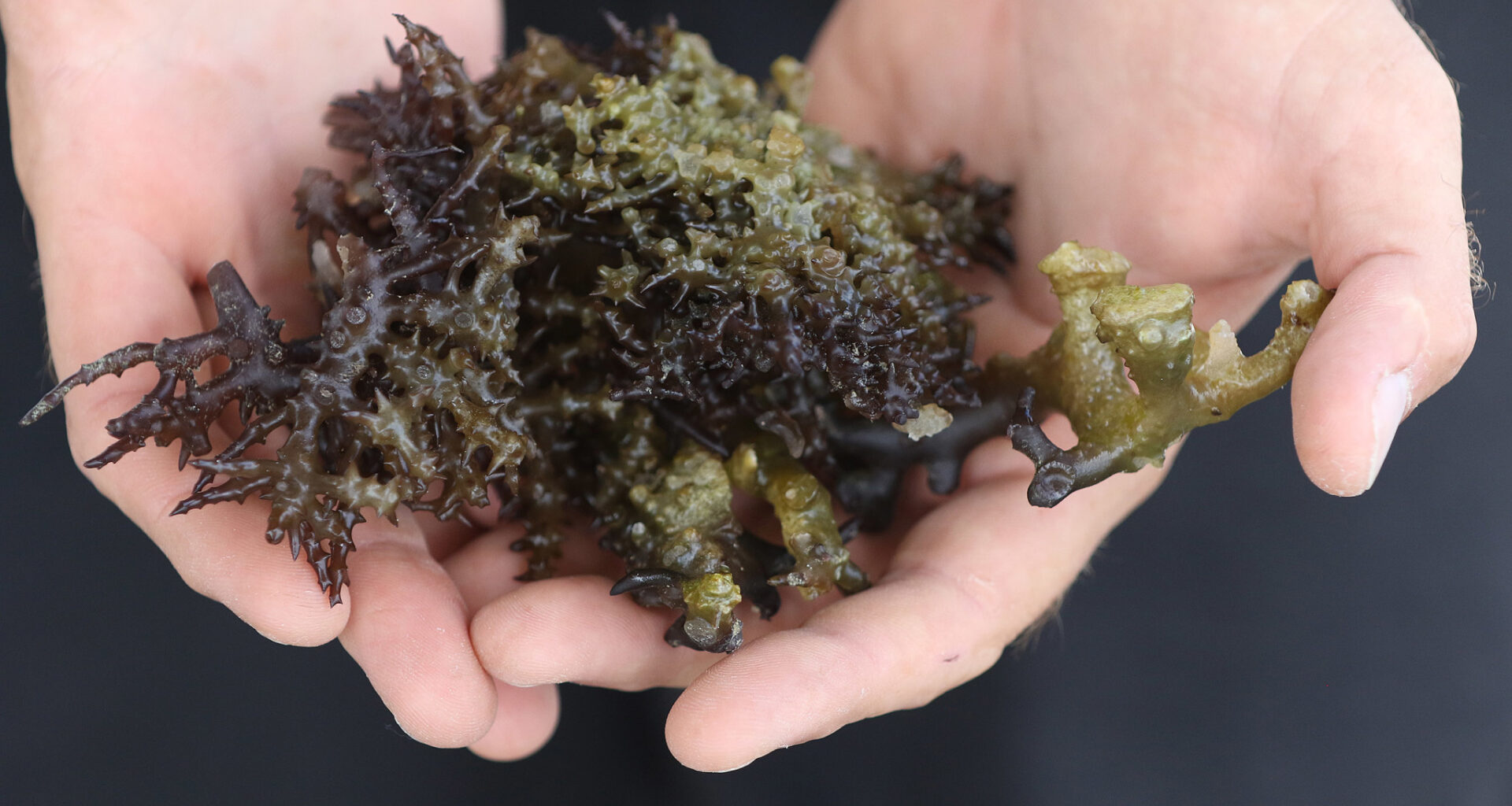
State lawmakers have handed agricultural officials their marching orders: Move faster and implement measures to control the invasive species crippling the farming community or risk losing a record amount of funding.
State agriculture officials received an earful from senators during a Ways and Means Committee meeting on Friday and will have to defend their budget requests with the House Finance Committee Tuesday, as lawmakers continue to look for places to trim the state budget to preserve state income tax cuts.
Farmers, ranchers and industry advocates are meanwhile undeterred by the lukewarm financial outlook, driven by funding changes within the federal government, as they seek tens of millions of dollars worth of funding for several key projects and even a new shipping subsidy before the session starts on Jan. 21.
The senators voiced frustrations with the state Department of Agriculture and Biosecurity that echo concerns they raised last year, when the state enacted legislation to completely reorganize the department and add over $26 million for more staff and biosecurity programs. But their grievances remain over staff vacancies.
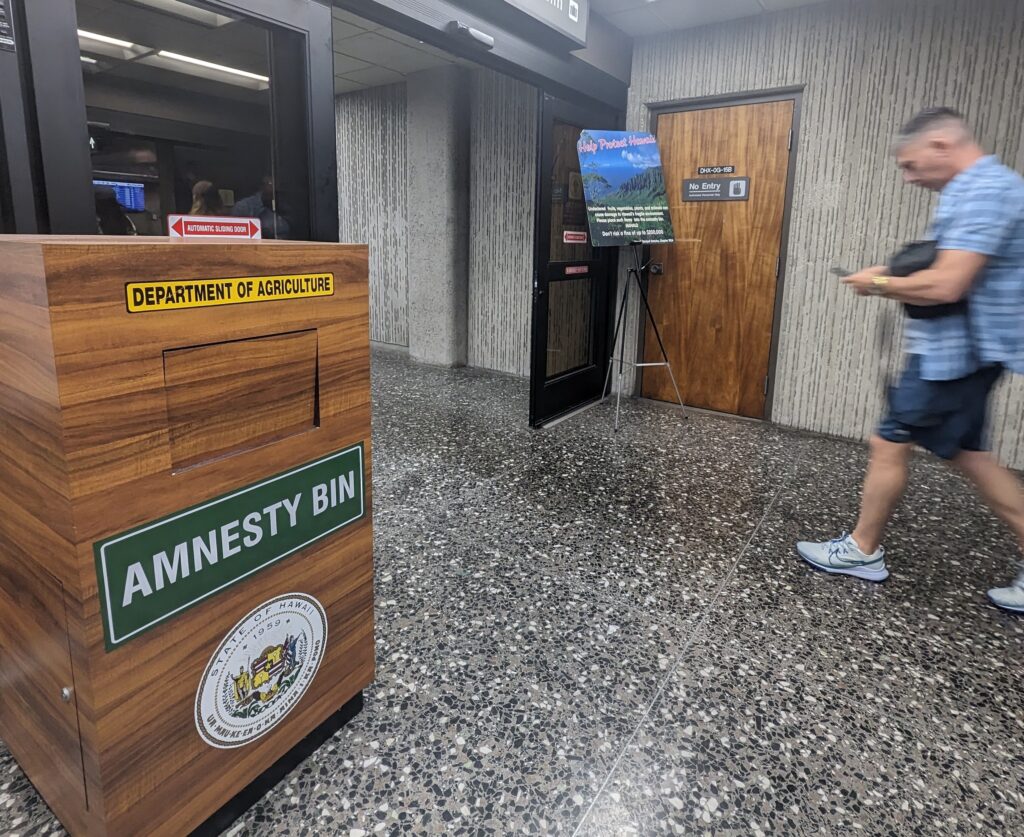 The Hawai‘i Department of Agriculture and Biosecurity has minimal presence at the Honolulu airport, but it does have amnesty bins where passengers can leave goods that pose a potential environmental threat to the state. (Thomas Heaton/Civil Beat/2023)
Lawmakers chastised the agency’s lack of progress in implementing a long list of mandates to curb the impacts of invasive species such as little fire ants, coqui frogs and coconut rhinoceros beetles. At the heart of the problem is the agency’s list of 116 vacancies, which Senate Ways and Means Chair Donovan Dela Cruz said they need to resolve quickly.
“If not, we’re in tough times. We’re going to take the money,” Dela Cruz said. “If you guys aren’t ready and you aren’t going to be able to spend it, we’re going to have to look at where we’re going to save money for the tax breaks.”

The agency, which has more than 320 people when fully staffed, filled 33 roles last year, but its staff worries that low salaries, a skill shortage and a lack of educational opportunities are hampering its progress.
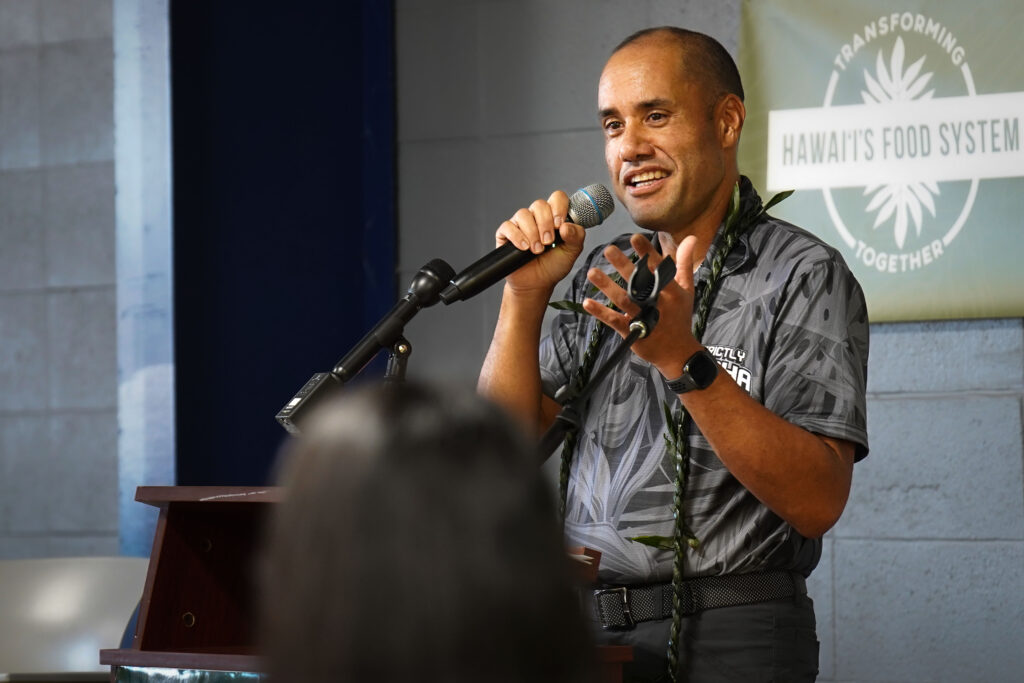 Sen. Donovan Dela Cruz speaks to food systems advocates about his plan to make Wahiawā a food and agriculture production hub during the Hawaiʻi Food Systems Summit in December. (Courtesy: Michelle Bir)
The empty roles include everything from entry level plant inspectors to the head of the Plant Industry Division, which has been led by at least five different people since early 2023.
Richard Kim, who held the role for 10 months, is the latest in a string of administrators who have left after short tenures.
“Hopefully we can find a permanent administrator shortly but I’m holding down the fort now,” Deputy Director Dean Matsukawa told Civil Beat. “I think it’s on fairly good ground. So it kind of just needs some administrative support.”
The Department of Agriculture and Biosecurity has also lodged a request for just over $38 million for infrastructure projects, including building agricultural parks and improving state-owned irrigation lines.
Sen. Samantha DeCorte recommended the agency hold off on new initiatives, such as the agricultural parks, before it creates a solid plan to increase production and control invasive species.
“If we can trim the fat in some areas, that would be good also,” DeCorte said. “But executing pending programs is critical at this time.”
Biosecurity, Food Security
Agriculture advocates understand the state’s budgetary constraints but they are still preparing to make hefty requests this year, including the creation of two new research centers at the University of Hawaiʻi. The centers aim to address household food security concerns and improve biosecurity efforts, through research and community education.
Contractors have already designed the proposed Center on Biosecurity Research, Education and Extension, according to UH Agriculture Dean Parwinder Grewal, with an anticipated $45 million price tag.
It will focus on detecting, monitoring and eradicating invasive pests throughout the islands, with a specific focus on biocontrol methods that are easier on the environment.
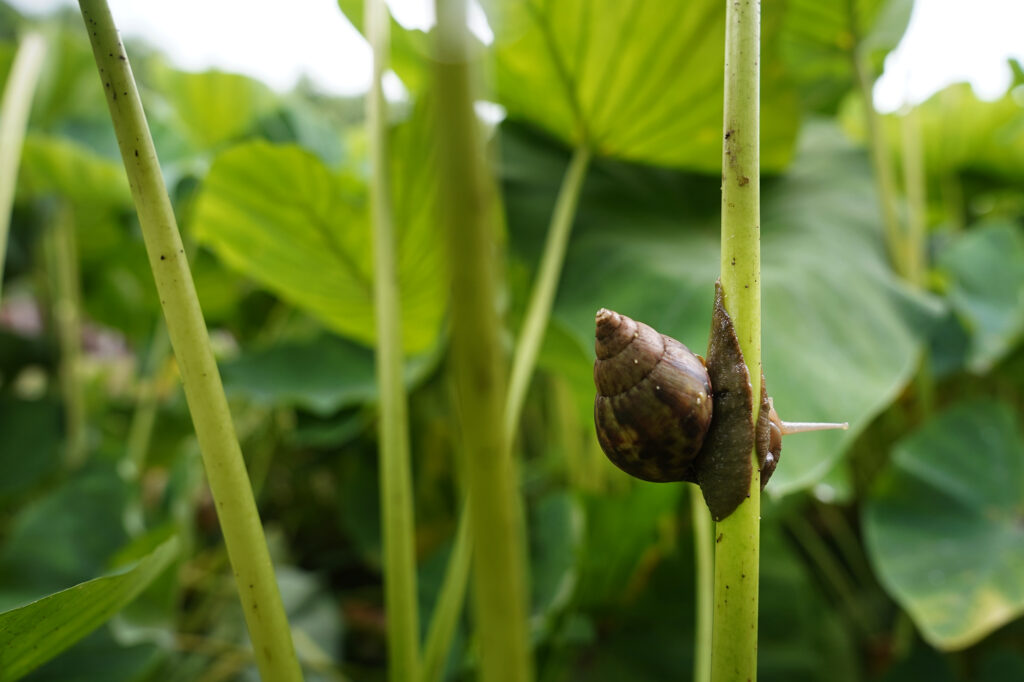 An invasive giant African snail, one of many invasive pests in Hawaiʻi, crawls on a kalo plant. (Kevin Fujii/Civil Beat/2024)
“Very little is being done,” Grewal said, adding that most of the current work is happening in a piecemeal fashion, across multiple locations.
The new facility would cost $25 million, with greenhouses and a laboratory. Another $20 million would be needed for office space, to house university researchers and other staff under one roof.
Grewal understands the financial outlook is bad for the new project but he hopes to piece together state and federal funding, including from the U.S. Department of Defense, which has supported Hawaiʻi’s pest control efforts in the past.
UH has not included the centers as part of its bill package, but the Hawaiʻi Farm Bureau has stepped up to find a lawmaker to sponsor the legislation.
The work is particularly important, considering the fact that farmers typically name invasive species as one of their greatest impediments to productivity, says bureau executive director Brian Miyamoto. He believes the state’s renewed focus on controlling pests is only the first step in what needs to be a more thorough process.
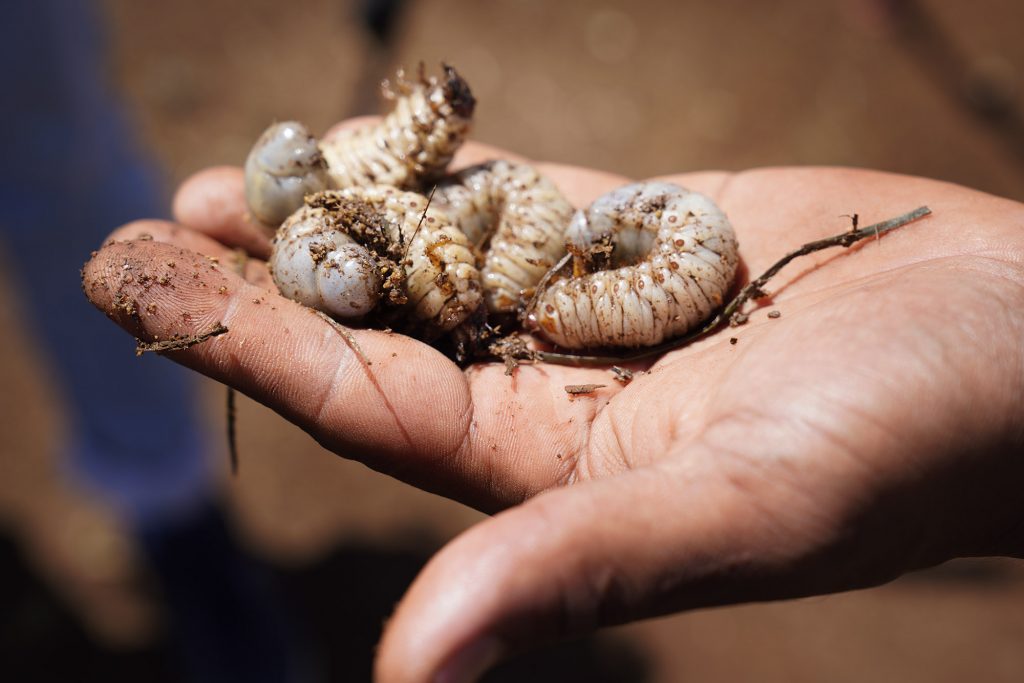 Coconut rhinoceros beetles and their larvae would be a prime candidate for research, as the prolific species threatens several important indigenous crops and has few natural predators. (Kevin Fujii/Civil Beat/2023)
“We’ve got to take it a further step, developing more solutions, looking at biocontrols and biocontainment, looking at it from the university side and the research side,” Miyamoto said. “We can’t just be reactive.”
The federal government’s withdrawal of support for nutrition and food assistance programs has also spurred the College of Tropical Agriculture and Human Resilience to propose a Human and Community Resilience Institute, which carries a smaller $1.2 million price tag.
The institute would employ 12 staff statewide to educate families about nutrition and to complement initiatives to reduce the health burden of diet-related diseases, filling gaps left by the U.S. Department of Agriculture’s abolition of Supplemental Nutrition Assistance Program Education, which funded 13 positions within the college until 2024.
Several of the college’s health and human resilience programs would also be consolidated within the institute, Grewal said, including the state 4-H program.
Farmers’ Concerns
Hawai‘i Farmers Union and the Hawaiʻi Farm Bureau will return to the Legislature in support of some old-but-ignored initiatives to resolve barriers to expanded local food production.
All farmers will face a 25% increase in interisland shipping costs starting this month. The change comes less than five years after Young Brothers, the state’s barge operator, increased the rates by almost 50%.
The state last month approved the price hike, leading many farmers and ranchers to cry foul, claiming the cost of sending their food to market is becoming too much. The industry receives a discount from the shipping monopoly for as much as about a third of the cost, but farmers and ranchers are still struggling.
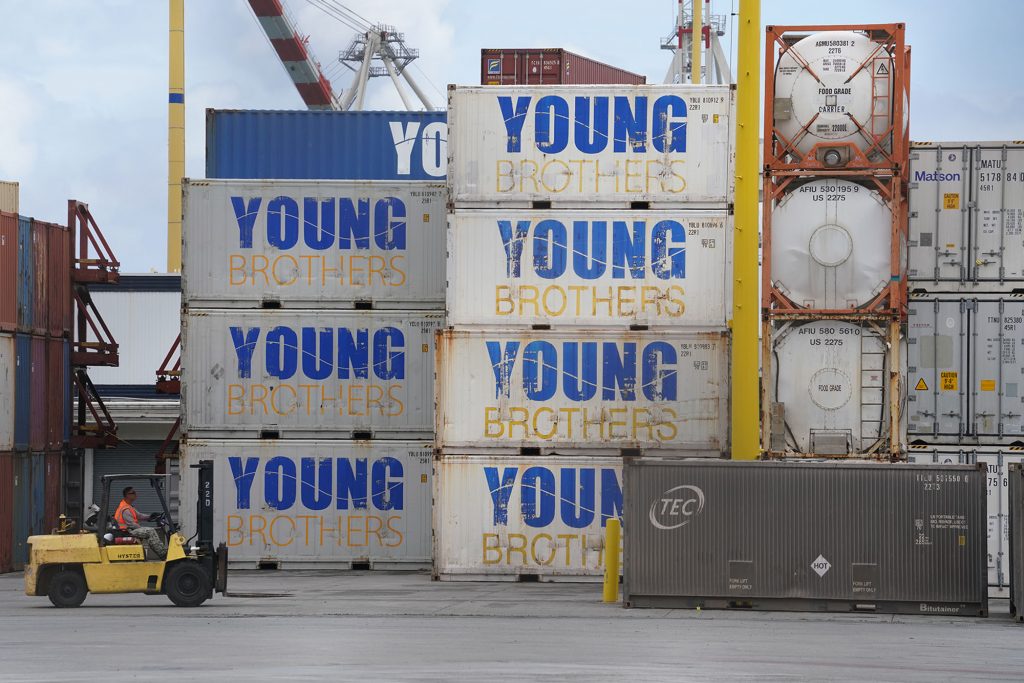 The cost of shipping has become a key consideration for farmers and ranchers across Hawaiʻi, particularly as prices have risen considerably over the past 10 years. (Cory Lum/Civil Beat/2022)
For this reason, Sen. Tim Richards, a Hawai‘i island rancher, will sponsor a bill to subsidize interisland shipping of agricultural commodities, with an anticipated cost of $25 million.
“It’s sorely needed,” said Dexter Kishida, food security and biosecurity manager for the Department of Transportation.
Housing is one of the farmers union’s top priorities, in response to feedback it received from its members during the union’s annual convention last month. Invasive species controls, and the need for more food hubs, livestock slaughter facilities and housing were among the top issues, according to advocacy director Hunter Heaivilin.

This ongoing series delves deep into what it would take for Hawai‘i to decrease its dependence on imported food and be better positioned to grow its own.
The union is hoping lawmakers will sponsor legislation that helps more farmers use regenerative practices and focus on conservation.
The Hawaiʻi Farmers Union United will support a carryover measure from last year, introduced by Richards, that seeks to find some solutions to the current housing restrictions on farms by 2028. The bill would install a dedicated working group with members from the counties, the state and the industry to find solutions to the complicated issue.
Aside from housing, many of the union’s concerns have been addressed by the Legislature and the initiatives are underway. But the industry has a lot further to go, Heaivilin said.
Lawmakers continue to question the department’s approach, considering half its funding — approximately $33 million — is being paid to contractors, for everything from pest control to biosecurity declaration forms at airports.
The department, which receives around $70 million annually, has long blamed its issues on low funding. But the senators on the Ways and Means Committee say they have held up their end of the bargain by injecting money into agriculture and biosecurity, without timely results.
“Pretty soon you’re going to have more contract money than staff money,” Dela Cruz said Friday. “Is it just going to be that the staff manages contracts or are you actually going to do work?”
“Hawai‘i Grown” is funded in part by grants from the Stupski Foundation, Ulupono Fund at the Hawai‘i Community Foundation and the Frost Family Foundation.

Sign up for our FREE morning newsletter and face each day more informed.
Sign Up
Sorry. That’s an invalid e-mail.
Thanks! We’ll send you a confirmation e-mail shortly.