
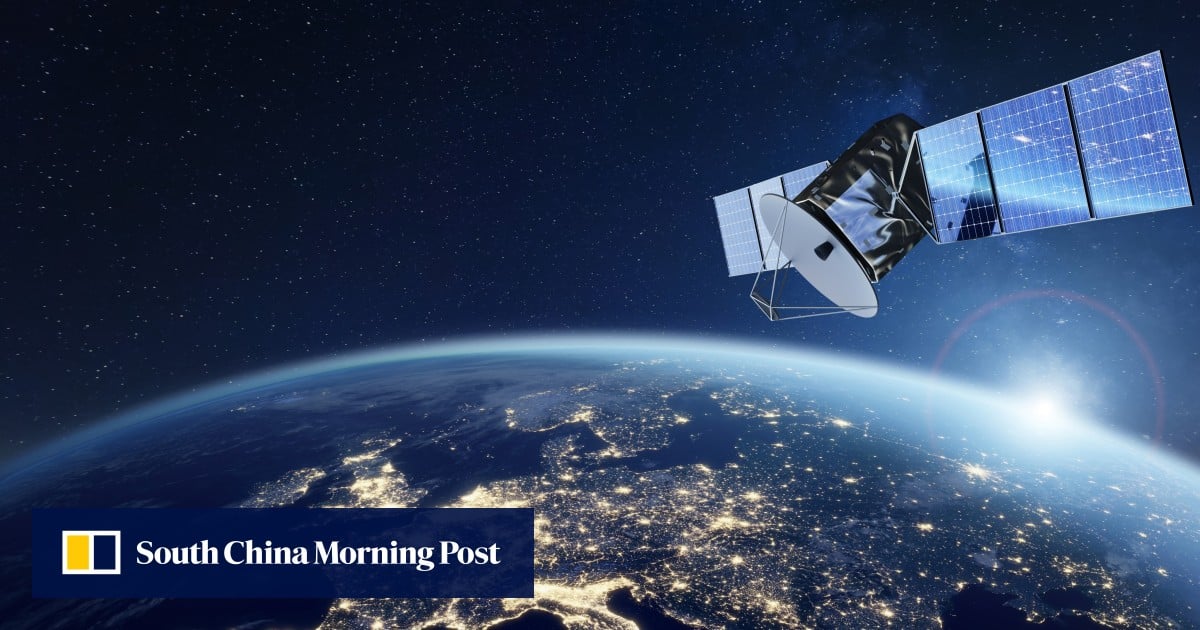
As China pushes to take the global lead in building space-based solar power stations, a new study warns that powerful lasers beaming energy back to Earth could pose serious risks to other satellites in the increasingly crowded low-Earth orbit.
If these beams miss their targets – because of tracking errors or system malfunctions – they could strike nearby spacecraft, overheat solar panels or trigger electrical discharges, according to a team from the Beijing Institute of Satellite Environment Engineering.
Such discharges can induce unintended currents, potentially damaging on-board electronics and forcing an emergency shutdown. The risk is greater when the laser beam is more energetic or uses shorter wavelengths, the team reported in the January issue of the Chinese journal High Power Laser and Particle Beams.
03:00
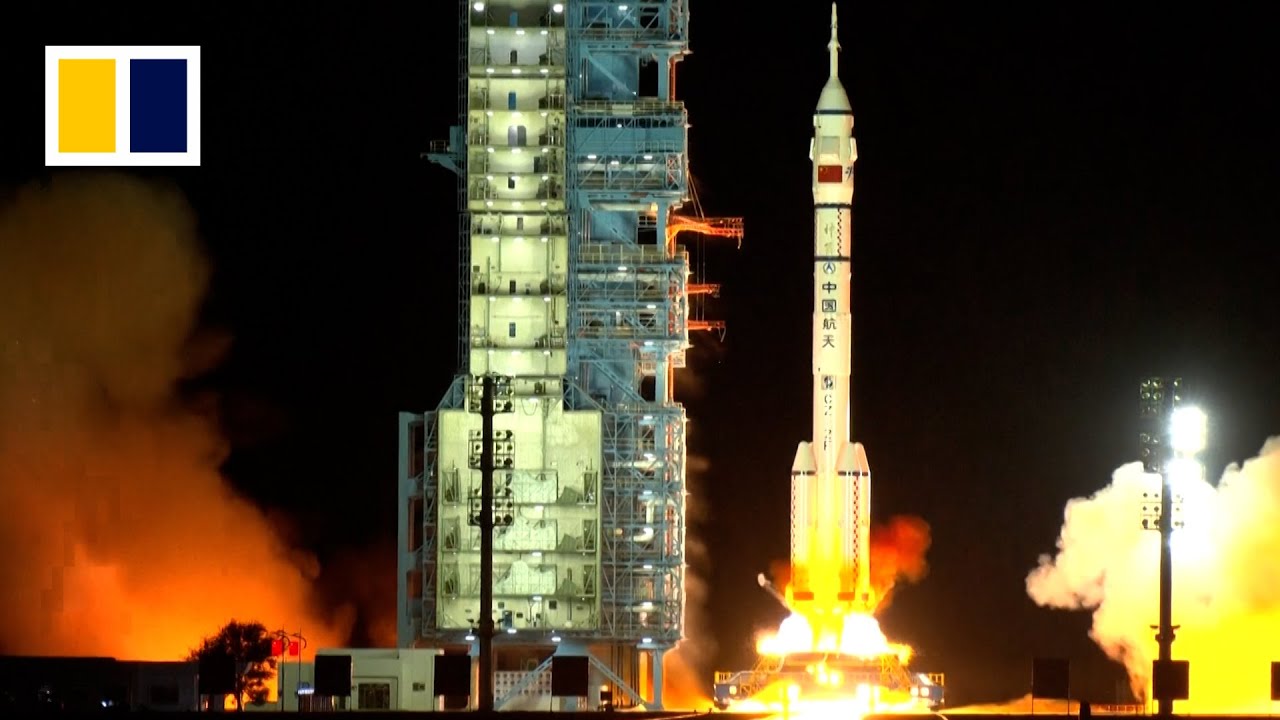
China launches Shenzhou-21 spacecraft with 4 mice aboard for 6-month experiment
China launches Shenzhou-21 spacecraft with 4 mice aboard for 6-month experiment
“Our findings provide guidance for selecting safer laser parameters and for designing protective measures for satellite solar arrays,” the researchers wrote in the paper.
The idea of harvesting solar energy in space and sending it wirelessly to Earth was first proposed by Czech-born American scientist Peter Glaser in the 1960s. Unlike ground-based solar power, space solar power offers uninterrupted energy – unaffected by weather, nightfall or atmospheric interference.
Early concepts relied on microwave transmission and required massive kilometre-scale structures, making the system too complex and costly at the time. But recent progress in reusable rockets, lightweight materials and precise beam control has renewed global interest.
Today, countries including the United States, Japan, China and European nations are racing to develop the technology. The US is in the lead, aided by a Caltech-led prototype in 2023 that showed beamed power in orbit.