
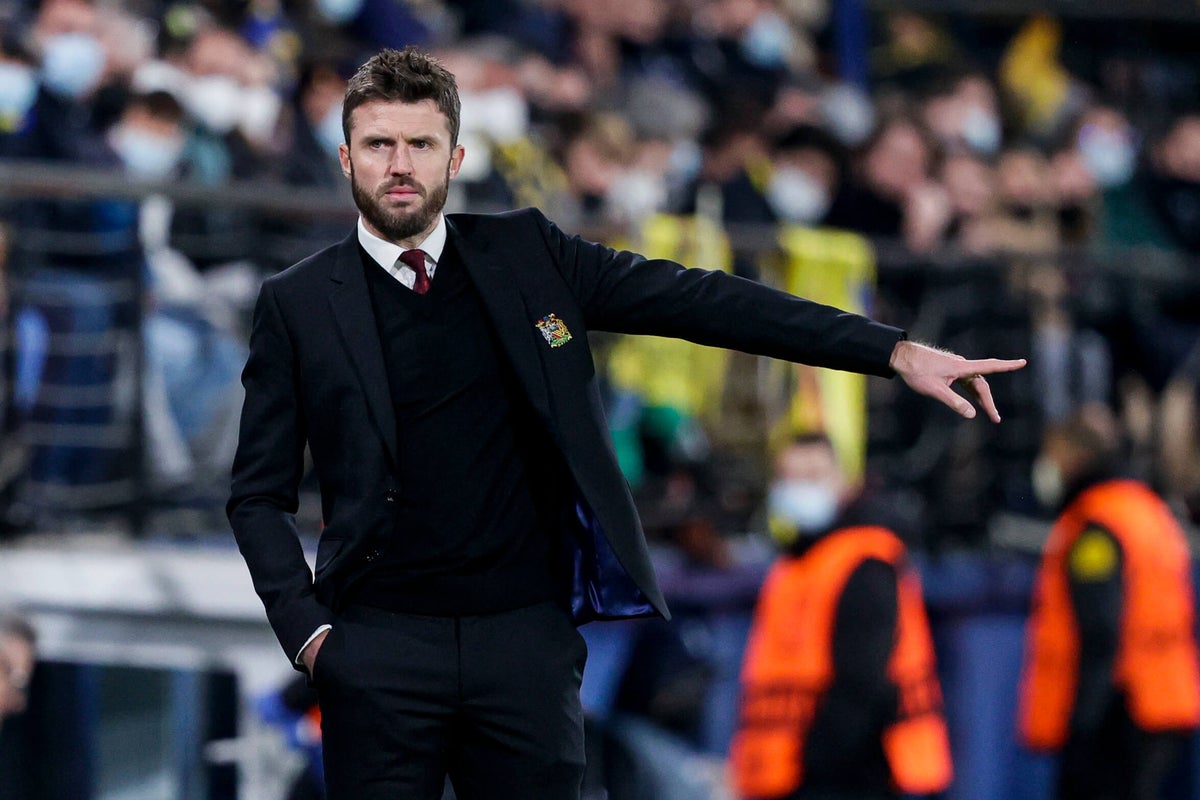
Maximising the talents of this Manchester United squad remains a complex tactical puzzle, with Michael Carrick the latest tasked with putting the pieces together.
Carrick, who edged out former United team-mate Ole Gunnar Solskjaer to secure the role on an interim basis until the end of the season, takes the reins following Ruben Amorim’s explosive exit last week.
He has been here before, managing three games — winning two and drawing one — as interim head coach after the dismissal of Solskjaer in November 2021. That brief spell included a victory over Arsenal, who he faces again in his second match as part of a daunting opening pair of fixtures that begin at home to second-placed Manchester City on Sunday.
As with Darren Fletcher, who has overseen United’s last two matches, it would be unfair to judge Carrick’s tactical acumen based on an emergency, stopgap role. Instead, his 136-game spell as Middlesbrough manager is the more relevant body of work.
Taking over from Chris Wilder in October 2022 with Middlesbrough 21st in the Championship, Carrick delivered an immediate turnaround, leading them to a fourth-place finish, missing out on promotion after a narrow playoff semi-final defeat to Coventry City.
That capacity to quickly identify tactical issues and make necessary adjustments takes on extra importance now, given the short remit of his caretaker role. Carrick will manage the side for just 17 games in United’s historically abridged 40-game season.
That promising debut campaign proved the high point of his time at Middlesbrough. Finishes of eighth and 10th followed in the two seasons before his dismissal last summer.
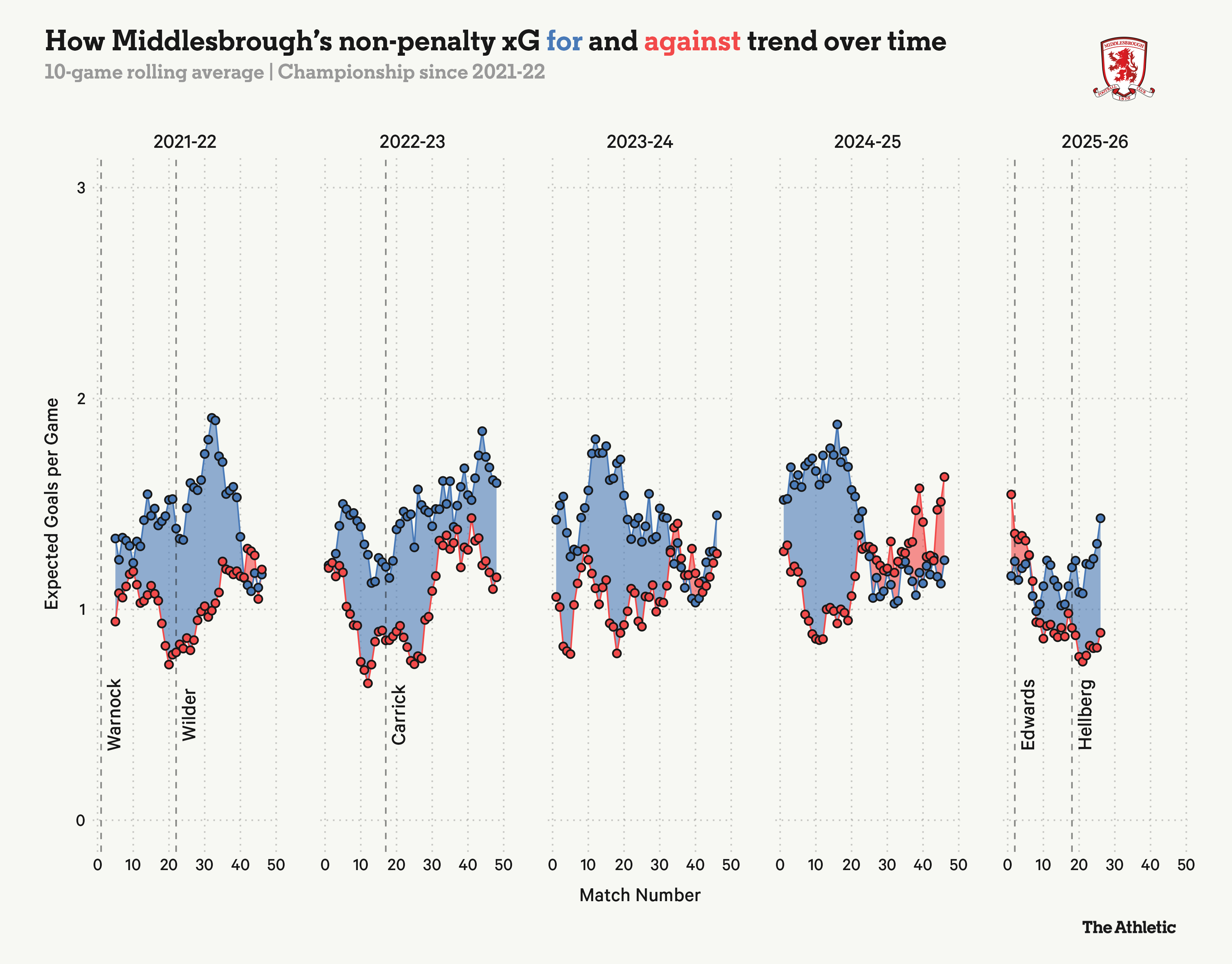
Managing in the Championship is often about managing upheaval, with talented players prized away by richer clubs, ripping up carefully constructed tactical plans and forcing constant recalibration. Carrick lost several key figures, including the division’s top scorer in that first season, Chuba Akpom, and as the rolling expected goals (xG) chart below shows, Middlesbrough’s attacking and defensive underlying numbers collapsed towards the end of his three-year spell.
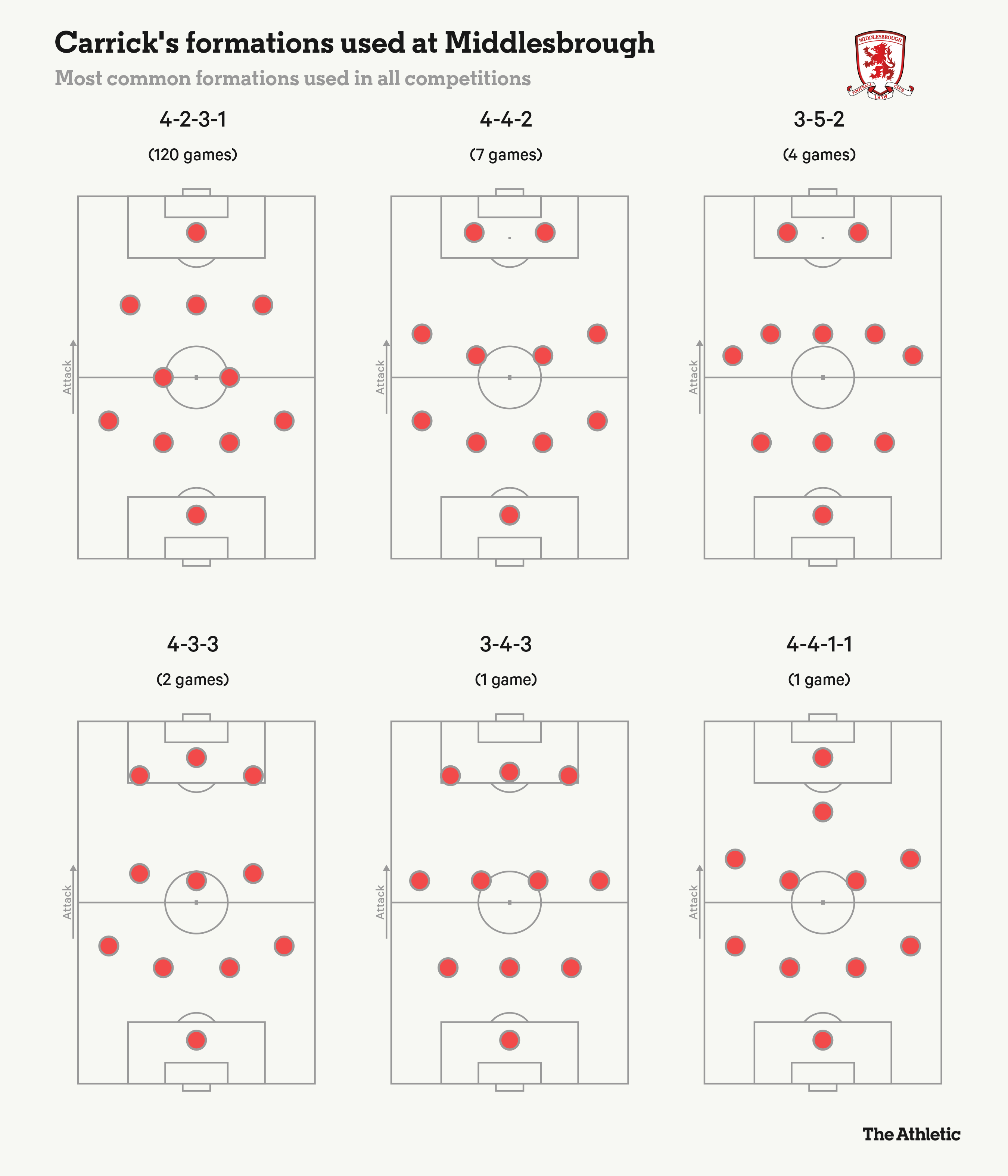
Across that period, Carrick consistently favoured a 4-2-3-1 formation, using it in almost 90 per cent of his matches. Formation talk dominated Amorim’s reign, with his 3-4-2-1 a recurring topic in press conferences. The Portuguese coach often bristled at what he saw as a reductive line of questioning, repeatedly stressing the fluidity of the modern game. “We can say it’s a ‘4-4-2’, but five minutes later it’s a ‘4-3-3’ or a ‘3-4-2’,” he said.
Carrick maintains a similar viewpoint. “The actual formation often doesn’t make a huge difference to how we do things,” he told the Northern Echo newspaper in 2024.
Strip away these transient formation labels, and some striking similarities in their tactical approaches emerge.
Take Middlesbrough’s build-up play under Carrick. The example below is taken from their 5-0 win against Reading in March 2023. When starting attacks, one full-back — in this case Ryan Giles — pushes high and wide, while the other, Tommy Smith, tucks in alongside the centre-backs to form a back three.
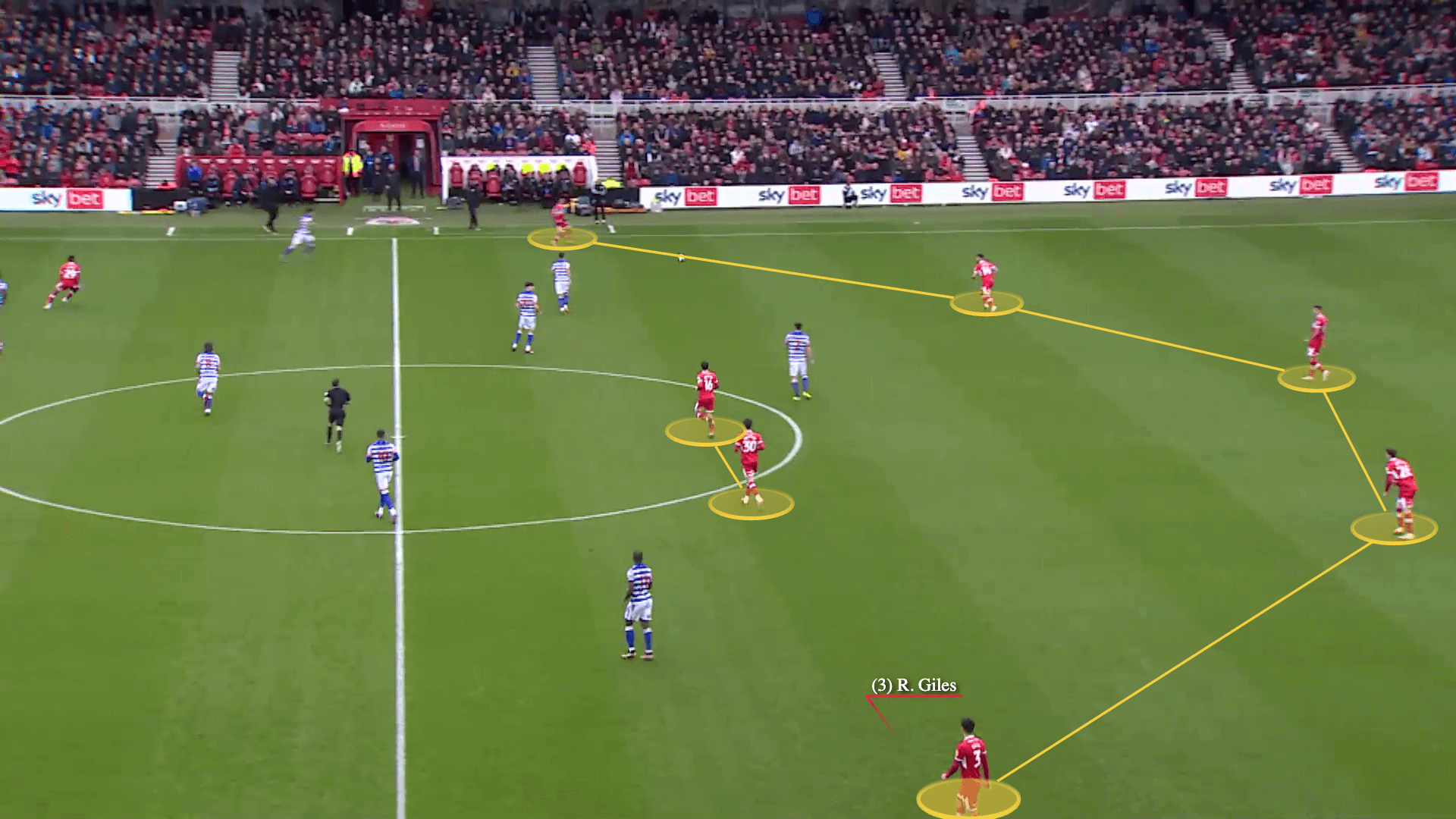
To maintain width on the opposite side, the right-sided attacking midfielder, Riley McGree, drifts out to the touchline, while the two remaining attacking midfielders move inside to occupy the left and right half-spaces as narrow No 10s.
The result is a 3-2-5 structure that is practically identical to Amorim’s and places similar emphasis on aggressive wing-back play. That shows up in the data, with Giles attempting 461 crosses in 2022-23 — more than 100 more than any other Championship player.
This setup facilitated Carrick’s possession-based approach, providing passing options across the width of the pitch. A metronomic tempo-setter during his own playing career with Manchester United, West Ham United and Tottenham Hotspur, Carrick has carried those same instincts into management: Middlesbrough averaged 57.4 per cent possession in 2022-23, while their direct speed — a measure of how quickly the ball moves upfield — ranked fourth slowest in the league.
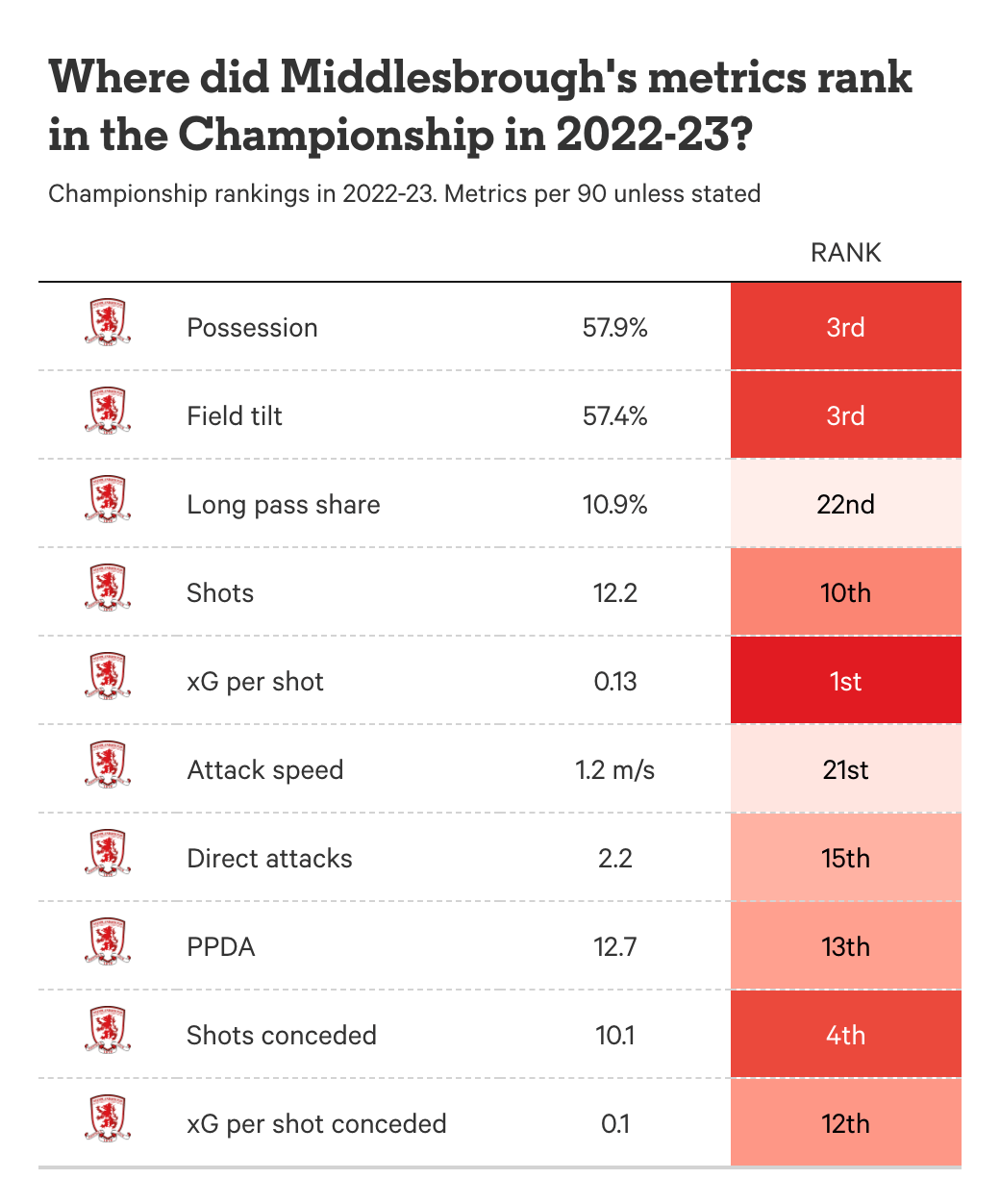
But the line between control and sterility is a thin one, and slow, predictable possession became a growing source of frustration among fans towards the end of Carrick’s reign. He actually did try to inject more variety into their play, with Middlesbrough ranking fourth for direct attacks in 2024-25. That directness came at a defensive cost, leaving them more open in transition and contributing to 56.2 xG conceded, their highest total over the last four seasons.
At Old Trafford, the crowd is notoriously restless in the face of patient, some might say ponderous, football (the usual response is chants of “attack, attack, attack”). Carrick’s United will need to pair their measured build-up with greater cutting edge in the final third.
Encouragingly, for all that he preaches control in build-up, Carrick champions creative freedom in the final third. Before his arrival, former Arsenal forward Akpom’s career had stalled, never scoring more than eight goals in a league campaign. Carrick’s decision to move him from centre-forward into a roaming No 10 role, with licence to drift in search of space, transformed him into the league’s top goalscorer. “He’s given me the freedom to just go out there and express myself,” Akpom told Sky Sports in April 2023.
Carrick was banging this drum even as his tenure at Middlesbrough was coming to an end. “We’re not quite so rigid, especially in those attacking areas,” he told the Northern Echo in April 2025. “The players have the freedom to go and express themselves.”
Individual expression has faded at United in recent times; the graphic below shows their take-ons completed per 90 minutes, which have declined in each of the last six seasons.
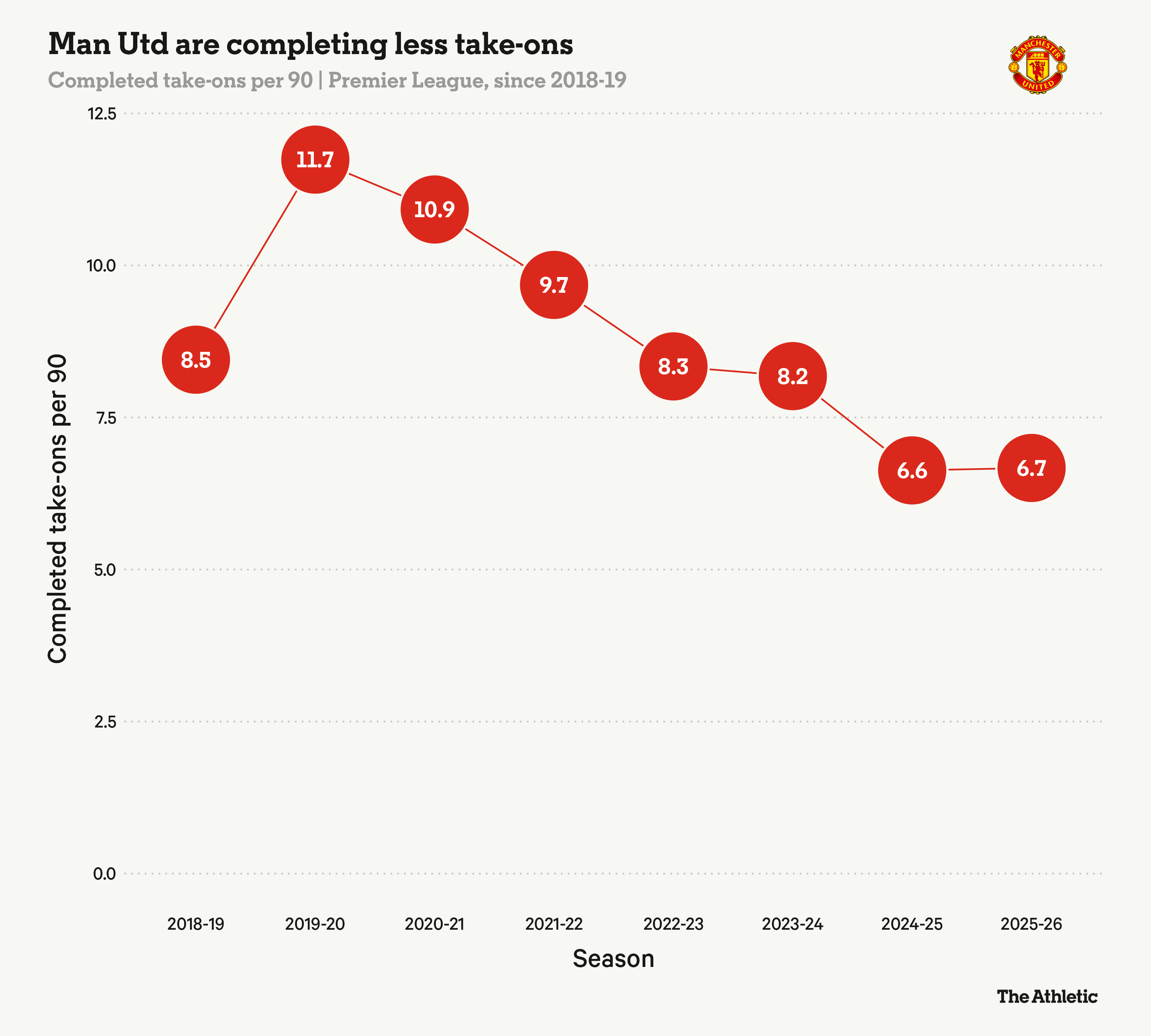
Carrick’s lighter-touch approach in attack should suit their two most prolific dribblers this season — Amad and summer signing Matheus Cunha, along with creative talisman Bruno Fernandes.
Along with front-footed play in possession, United supporters expect relentless intensity off the ball, but Carrick adopted a relatively passive approach out of possession with Middlesbrough.
They consistently ranked around the middle of the Championship for possessions won in the final third across his three seasons, instead dropping quickly into a compact 4-4-2 mid-block and prioritising the closure of passing lanes over aggressive ball-hunting.
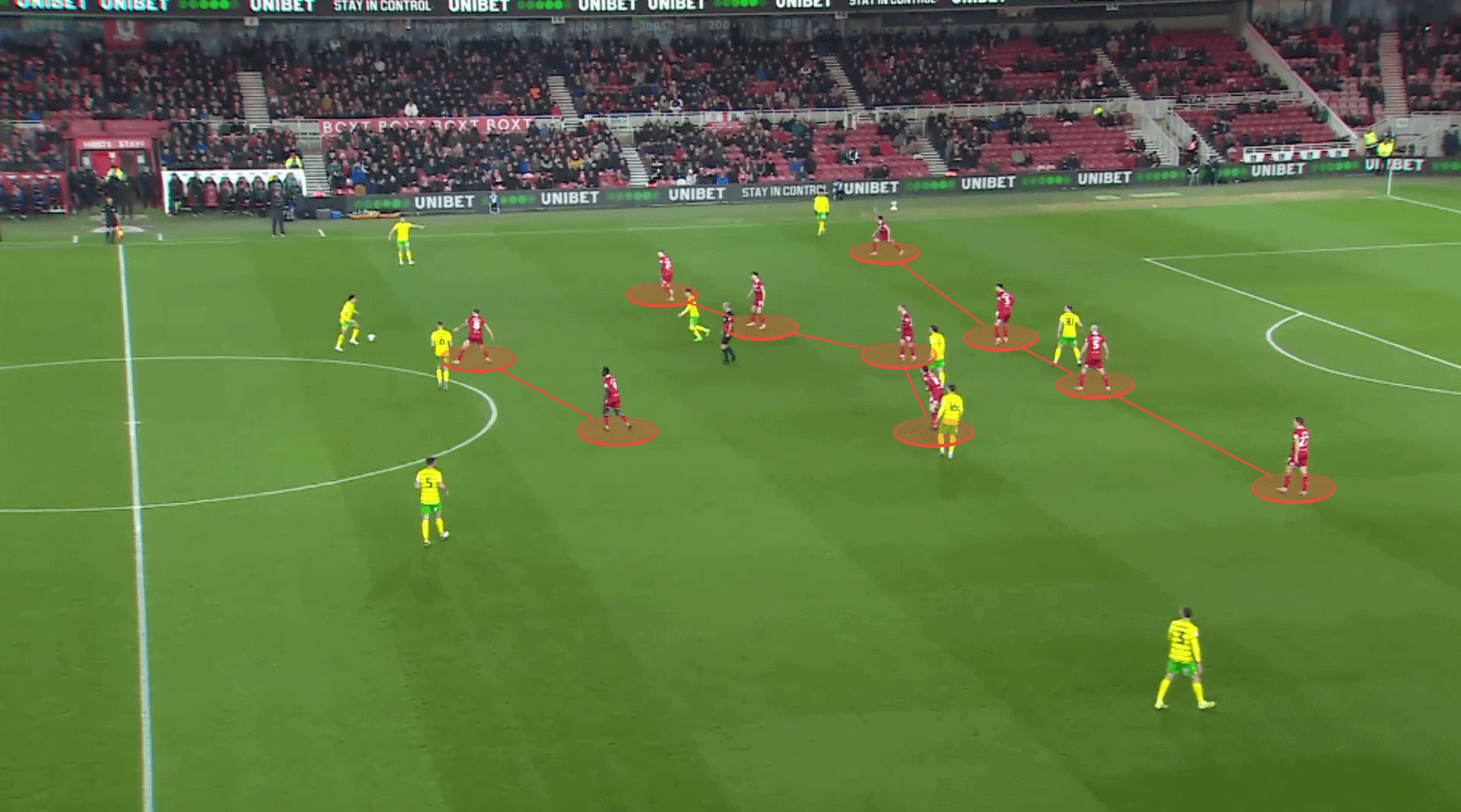
Carrick would do well to resist Old Trafford’s demands here and stick to his principles, with United lacking the energetic profiles, particularly in central midfield, to sustain a collective, high-intensity press.
There is every chance that, armed with a stronger set of players, Carrick ultimately opts for a completely different tactical approach to the one he employed at Middlesbrough. But with so little time to work on the training pitch, and the similarities of his previous tactics with Amorim’s, subtle tweaks may prove more sensible than wholesale changes
Get those tweaks right, and Carrick’s short-term appointment might yet yield long-term rewards for United.