
Want more ways to catch up on the latest in Bay Area sports? Sign up for the Section 415 email newsletter here and subscribe to the Section 415 podcast wherever you listen.
For too long, the Giants have lagged behind other Major League Baseball clubs in how they’ve signed and developed Latin American prospects.
The examples are haunting, and a case could be made that the Giants could have won more than three World Series titles in the past half-century with a bigger influence and impact from Latin America.
Pablo Sandoval, who won rings in 2010, 2012, and 2014, became an All-Star in 2011, a first for a homegrown Giant from the Caribbean in 40 years, since the great Juan Marichal in 1971. The Giants have had just two homegrown Latino pitchers since Marichal make an All-Star team, both in the past three years: Camilo Doval and Randy Rodríguez. Worse, the Giants haven’t had a homegrown Latin American starting pitcher in a regular-season game since Salomón Torres. And that was 33 years ago.
It’s a far cry from the Giants’ early days in San Francisco, when they were at the forefront of bringing Latinos into pro ball. The list from the late 1950s and early 1960s is staggering: Marichal. Orlando Cepeda. Felipe Alou and his brothers Matty and Jesús. José Pagan. Manny Mota. José Cardenal. Tito Fuentes. André Rodgers.
Fast forward to 2026, and there’s hope. There’s promise. There’s a reason to suggest the Giants might one day not just catch up internationally, but flourish.
“We’re going in the right direction,” assured Joe Salermo, the Giants’ senior director of international scouting.
Of the top 10 prospects listed on the Giants’ website, five are international signings. With all of them in A ball or below, it’ll be a while before any make an impact in the majors. But it’s fun for the Giants and their fans to dream —especially with the team’s recent success of snagging top teenage Latino prospects.
During last year’s international signing period, the Giants signed 17-year-old switch-hitting Dominican shortstop Josuar Gonzalez for $2,997,500, the second-biggest international bonus in franchise history. At the time, Gonzalez, compared to a young José Reyes or Francisco Lindor, was ranked the No. 1 prospect from Latin America and No. 2 prospect overall behind Japanese pitcher Roki Sasaki.
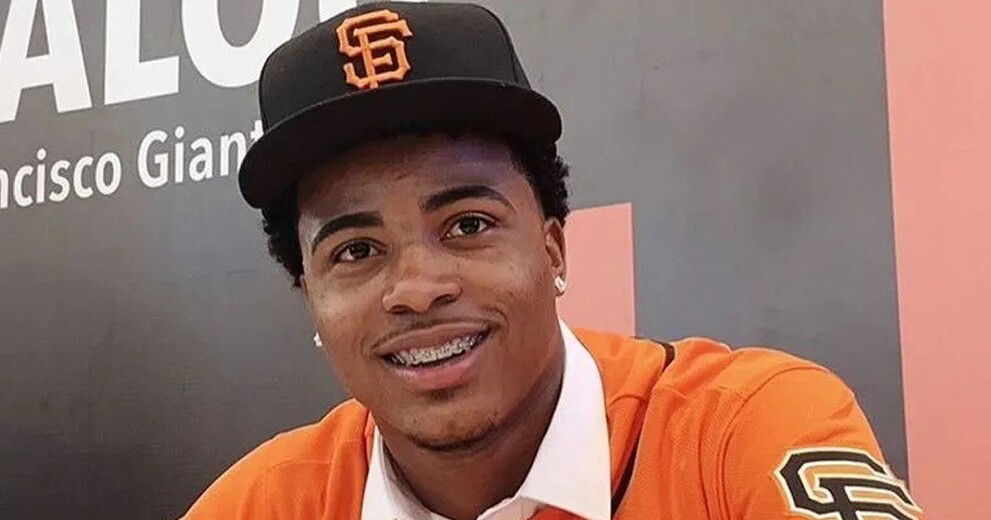
Thursday, this year’s international signing period begins, and the Giants are awaiting an encore. For the second straight year, they’re signing the No. 1 prospect from Latin America, Luis Hernandez, a 17-year-old Venezuelan shortstop, for an estimated $5 million, which amounts to most of their allotted bonus pool of $5.44 million.
Hernandez is said to have superior tools for his age and has competed at a high level against far more experienced players. His bat speed, pop, ability to make contact, defense, athleticism, and baseball IQ are advanced, and it’ll be fascinating how the Giants use Gonzalez and Hernandez as they climb the minor-league ladder, given both are gifted shortstops.
Today

2 days ago

4 days ago

“It’s exciting the talent that’s coming into the organization through these countries,” Giants general manager Zack Minasian said. “This is something we feel needs to be a strength of ours for us to build and sustain a winner.”
The international scouting department has come a long way since the days of Angel Villalona (who earned a $2.1 million bonus in 2006) and Lucius Fox ($6 million in 2015), both regrettable signings. Marco Luciano ($2.6 million in 2018) is the latest example of a heralded international signing that didn’t pan out, though the team didn’t exactly handle him well in recent years and let him go last month.
 Giants outfielder Luis Matos signed with the organization in July 2018. | Source: Sara Nevis/Associated Press
With Latino players comprising 28.6% of big-league rosters in 2025, and clubs scouting kids in the Dominican and other areas of the Caribbean when they’re as young as 13, the Giants can’t afford to keep missing.
Hernandez is about to join a farm system packed with high-level Latin American talent. On the Giants’ (opens in new tab)MLB.com (opens in new tab) top 10 prospect list, players from the Caribbean rank second (Gonzalez, 18), fourth (shortstop Jhonny Level, 18), eighth (outfielder Rayner Arias, 19), ninth (starting pitcher, Argenis Cayama, 18), and 10th ( starter and reliever Keyner Martinez, 21).
All but Gonzalez advanced to Low-A San Jose last season, and Gonzalez likely is heading there next after hitting .288 with an .859 OPS in 52 games in the Dominican Summer League.
“It’s a humbling game,” Salermo said. “We can’t sit on our hands and say we’re doing great. We’ve got to keep moving forward and look at the next class. Every year is a different year. Like I tell our staff, don’t walk around like you have all the answers because no one has all the answers. Every day is a learning experience. The day you think you have answers is the day you fail. You’ve always got to be humble in this game.”
The success in adding top Latin American talent to the system, albeit at the lower levels, didn’t happen overnight. It’s been decades of swings and misses. Sometimes without even any swings.
After Marichal’s final season with the Giants in 1973, their pipeline to Latin America virtually dried up. The playoff teams of the late 1980s had zero players the Giants developed from Latin America. The 103-win team from 1993 had one, Torres, who took the fateful loss in the season finale, got traded to Seattle for Shawn Estes, and had a serviceable career elsewhere. The most notable homegrown Latin American from the Barry Bonds years was third baseman Pedro Feliz.
Not until the championship era could the Giants finally brag about signing and developing a Latino star. Sandoval entered pro ball as a catcher and converted to a third baseman who hit his way to the majors and won the 2012 World Series MVP award, one of the most popular Giants in their West Coast history.
Three years later, in September 2015, Salermo was promoted to international scouting director. The native of Cuba received autonomy over international scouting and allowed scouting director John Barr, who had overseen operations both stateside and in the Caribbean, to focus more on prospects within the U.S.
Then in August 2016, the Giants opened the Felipe Alou Baseball Academy in Boca Chica, not far from the Dominican capital of Santo Domingo. It’s the Giants’ headquarters for Latin American operations and home and training ground for their international players.
Compared with other clubs, the Giants were late to build such a facility – “I hate to say it; I think we’re the last ones in,” Brian Sabean said at the time – which might help explain their drought in the market. Nevertheless, with its fields, dormitories, dining hall, and extensive training facilities, the state-of-the-art academy is a difference-maker.
“I think the process became clearer once everything got reorganized 10 years ago,” Salermo said. “We moved from a one-step process to a five-step process with the entire organization and every department involved and committed.”
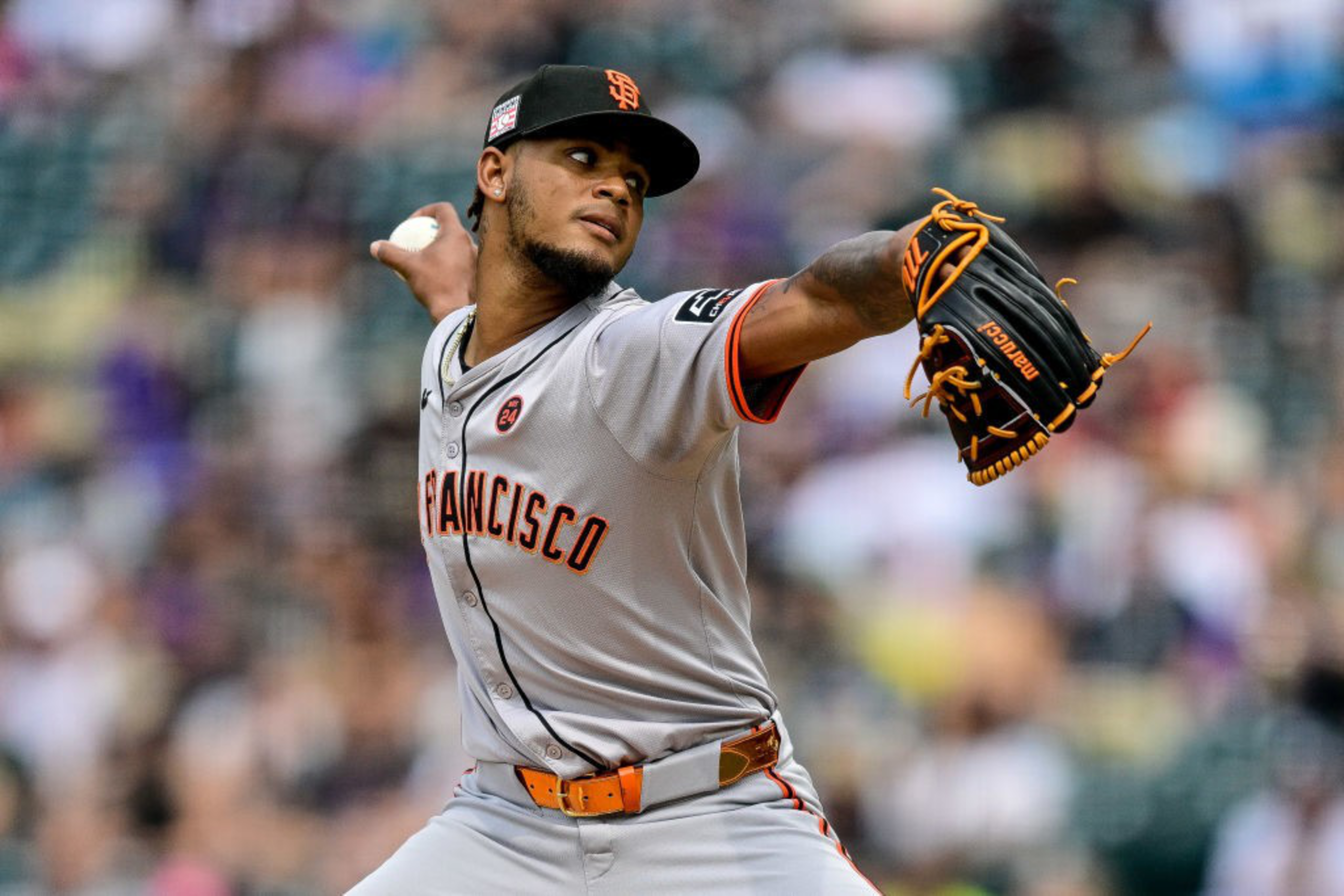 Camilo Doval served as the Giants’ closer before the team traded him away last July. | Source: Dustin Bradford/Getty Images
Beyond the Salermo promotion and academy opening, the Giants’ international scouting department was impacted in 2017 (like all clubs) by a drastic change in the collective bargaining agreement that placed a hard cap on teams’ bonus pools. This came shortly after the Giants spent $6 million on Fox, which put them in a hole because they were penalized and unable to spend more than $300,000 on any international prospect.
Salermo was forced to focus on more mid-range prospects. He signed Doval for a mere $100,000 and Rodríguez for just $50,000. Once the Giants were free of the penalties, Luis Matos signed for $750,000, still a far cry from the millions the Giants spent on Gonzalez last year and will give Hernandez this year.
Salermo is working with his third regime. He became international scouting director under Sabean and Bobby Evans, got promoted to senior director of international scouting under Farhan Zaidi, and now is working under Buster Posey, who visited the Alou academy as one of his first acts since becoming president of baseball operations after the 2024 season.
“It was an impact statement he put out to our organization to say, ‘Hey, I’ve got your back, keep working hard, keep grinding,’” Salermo said. “It showed a lot to our staff. We have a lot of resources that ownership has given us with the blessing of Buster.”
It must be noted that Heliot Ramos was an All-Star, but he was drafted from a high school in Puerto Rico, not part of the international signing process. And the Giants did sign two pitchers from the Dominican who became All-Stars … however, with other teams. The Giants traded both away when they were minor-leaguers: Francisco Liriano to the Twins in 2003 in the forgettable Joe Nathan-for-A.J. Pierzynski deal and Luis Castillo to the Reds in 2014 for Casey McGehee.
That’s the risk you take when trading prospects. On the other hand, the beauty of stockpiling good prospects is using them in trades to improve the big-league roster — remember, Fox was packaged in the 2016 Matt Moore deal. The Liriano and Castillo trades look bad, but Sabean’s track record trading prospects was otherwise very good.
Of course, any of the Giants’ current Latin American prospects could be dealt, including those on the top 10 list. But at least for now, they’re assets that potentially will make the organization stronger and deeper.
Which is certainly better than the alternative.