
NEED TO KNOW
Thirty-three North Atlantic right whales were seen in Cape Cod Bay during an aerial survey conducted on Saturday, Jan. 10The number is notable because, as a Center for Coastal Studies researcher shared, it may be “the highest number of right whales documented in the bay in a single day in January”The North Atlantic right whale is one of the rarest whale species in the world, with an estimated 384 animals, and is considered critically endangered.
A record number of critically endangered sea creatures made an appearance off the coast of Cape Cod.
The Center for Coastal Studies (CCS) shared in a release that 33 North Atlantic right whales were seen in Cape Cod Bay during an aerial survey conducted on Saturday, Jan. 10.
CCS Aerial Observer Ryan Schosberg said in the release that the number of whales sighted was particularly notable as it may be “the highest number of right whales documented in the bay in a single day in January.” He also noted that their behavior was a bit odd.
“Most of our sightings in December and early January have been of animals in what we call surface active groups, but almost all of the whales on Saturday’s flight were observed in shallow subsurface feeding,” Schosberg added.
A photo of the right wales spotted by the CCS.
Center for Coastal Studies
The CCS said the latest sighting brings its total of right whales observed during the 2025-2026 field season — which started in November — to 54. The first bunch of right whales, 10 individuals, were observed in the bay on Dec. 5.
Based on a 2024 population estimate from the North Atlantic Right Whale Consortium, there are an estimated 384 North Atlantic right whales worldwide, meaning researchers observed over 8% of the species population during the Jan. 10 survey.
Among the nearly three dozen whales were a couple of standouts, including a 45-year-old whale who was only documented “one other time in the last 15 years” and a whale calf that surprised researchers last season when it was reported for the first time during another Cape Cod Bay survey.
The New England Aquarium also told CBS News that its researchers have seen 23 right whales in two flights south of Nantucket, Mass., prompting a slow zone for boats in the area.
The CCS noted in its release that “ship strikes” are one of the “greatest threats to North Atlantic right whales” and that “efforts are being taken to reduce this danger,” including limiting vessels 65 feet and longer to 10 knots or less in Cape Cod Bay beginning on Jan. 1.
Additional speed restrictions for smaller boats and fixed fishing gear take effect on Feb. 1, per the CCS.
It is also illegal for boaters, kayakers, paddle-boarders, swimmers, light aircraft, and drone pilots to “approach” a North Atlantic right whale within 500 yards without a federal research permit, the CCS said.
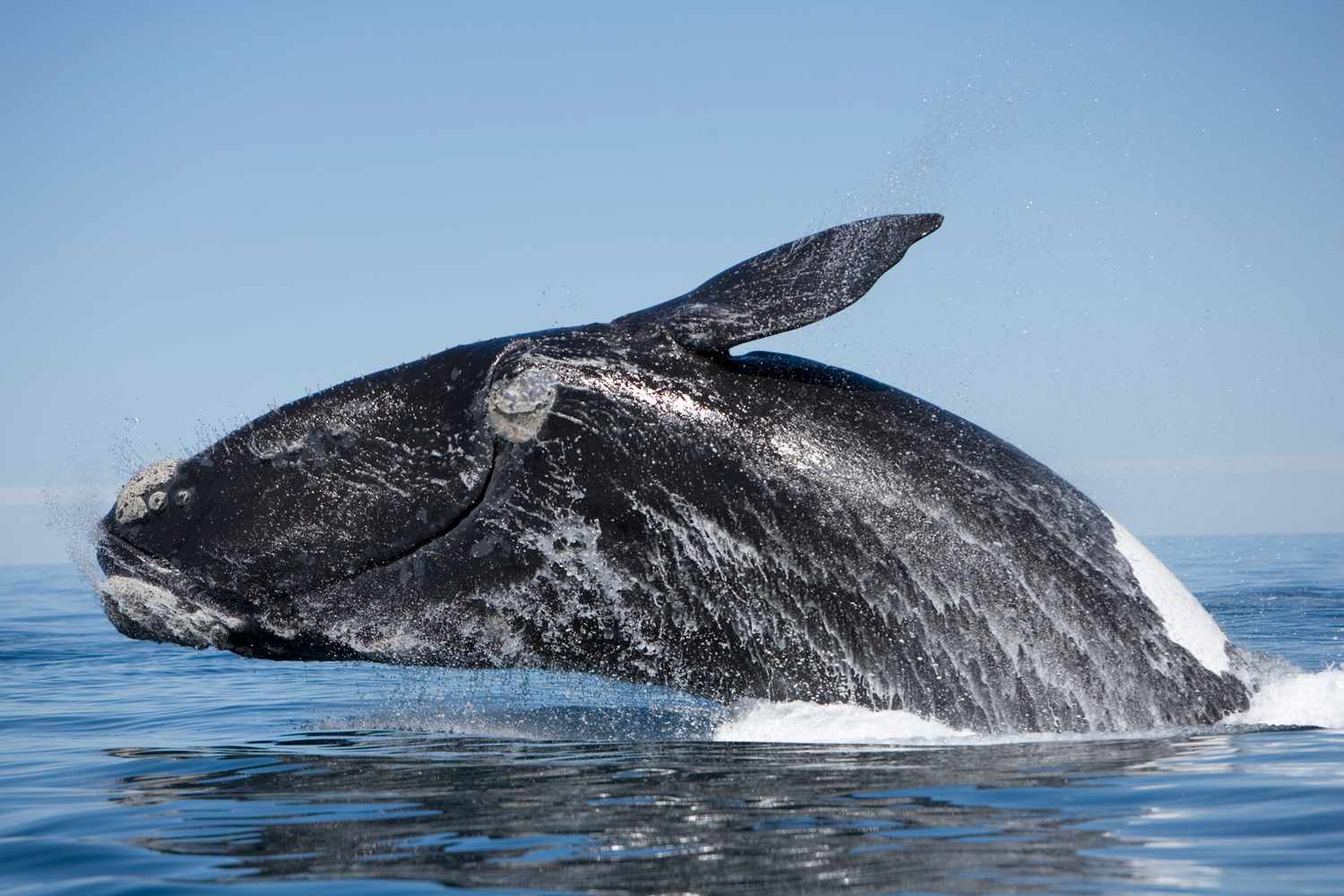
A photo of a North Atlantic Right Whale.
Getty
Never miss a story — sign up for PEOPLE’s free daily newsletter to stay up-to-date on the best of what PEOPLE has to offer, from celebrity news to compelling human interest stories.
The North Atlantic right whale is one of the rarest whale species in the world, according to the New England Aquarium. It has been listed as endangered under the Endangered Species Act since 1970, according to the National Oceanic and Atmospheric Administration (NOAA). The species is considered Critically Endangered by the IUCN Red List.
Last year, the North Atlantic Right Whale Consortium reported that the North Atlantic right whale population increased 2.1% between 2023 and 2024, making experts “cautiously optimistic” about future growth.