
Sign up for the Slatest to get the most insightful analysis, criticism, and advice out there, delivered to your inbox daily.
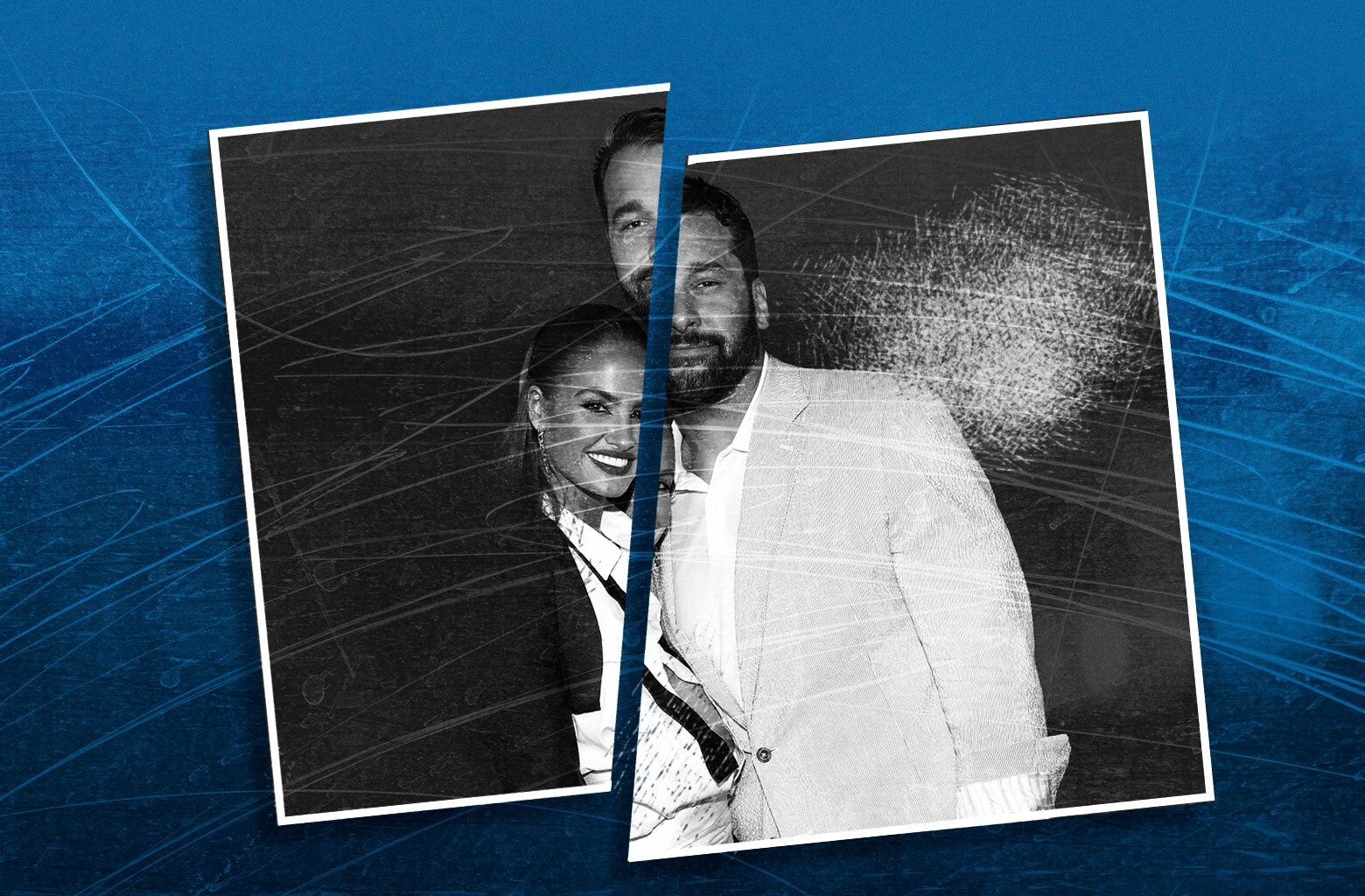
In a lawsuit as legally significant as it is titillating, former NFL player Matt Kalil is suing his former wife, Haley Kalil, claiming that she violated his right to privacy during a livestreamed interview by describing his genitals as being too big. Haley Kalil, a social media personality with millions of followers, gave the interview with Marlon Lundgren Garcia, another popular online figure with millions of followers. During the 12-minute interview, Haley implicitly referenced Matt’s genitalia, claiming that his penis was like “two Coke cans, maybe even a third,” and described the daunting dick as the primary reason for the couple’s divorce.
Perhaps because the interview remains widely available on YouTube, Haley has not publicly disputed the facts alleged in the complaint, which go far beyond the aluminum can comparison. She claimed that sex with Matt was “painful,” “impossible,” and left her “in tears.” She added that the couple tried “medical and therapeutic intervention,” and that the physical challenges made their sexual relationship “unhealthy” and were a major factor contributing to the couple’s subsequent divorce. Given the broad reach of Garcia’s livestream, these intimate details were then spread to many different sources, amplifying the harm that Matt alleges.
That harm is firmly anchored in a branch of privacy law that has long been recognized, but has fallen into disfavor in recent years. The law of personal injury, while primarily concerned with physical injuries, also protects certain dignitary interests, including reputation (the law of defamation), emotional well-being, and four distinct categories of privacy. Only one of these is alleged to apply in this case: public disclosure of private facts.

Robyn Nicole Sanders
Sonia Sotomayor Just Vindicated the Rights of the Incarcerated to Seek Appeals
Read More
But what facts are private? Given the explosion of news and entertainment outlets—where every information source from network television and national press down to a TikTok personality with a few hundred followers scrambles for the public’s attention—it’s easy to conclude that nothing about us is private. Everything, it seems, is fair game for virality. And the law has indeed moved strongly in the direction of valuing the public’s right to know over individuals’ privacy—especially when the information concerns people who fall into what’s now the vast but amorphous category of “public figures.” Not surprisingly, then, there are not many recent cases that claim a private fact was maliciously made public.
Yet it’s a mistake to conclude that everything about us is fair game for public consumption. The Second Restatement of Torts, which many courts rely on in creating and interpreting legal rules, strikes a sensible balance between privacy and the public’s right to know. Publicizing the private life of another person is actionable if the matter publicized is of a kind that A) would be highly offensive to a reasonable person, and B) is not of legitimate public interest. Sensible, but not easy to apply—at least not the second requirement.
We can rely on a jury to determine what a reasonable person would find offensive. Many people would be offended by having this fact bandied about—especially when the Coke-can commentary is part of a larger discussion of the serious problems Haley tied to the size statement.
But the harder problem lies in determining what counts as a matter of legitimate public interest and what does not. This question is typically resolved by a judge, not the jury, and it’s only the most private of facts that today’s courts are likely to protect. What are such facts? In a federal appellate case involving an unsuccessful privacy claim, the distinguished Judge Richard Posner provided a helpful catalog of information that is definitely private and that would be “mortifying” if disclosed, including depictions of bodily functions, nude photos, and descriptions of a person’s sexual activities: “The desire for privacy,” he added, “is a mysterious but deep fact about human personality … that deserves … legal protection.” And that’s true even of the most public figures, such as Matt Kalil. He’s entitled to marital privacy, as well.
What Are the Chances of a Blue Wave in the Midterms?
The Real Reason the Supreme Court Reversed Its Position on Trans Rights
What are the damages from such disclosure, though? Cannily, the complaint names two quite separate categories, which can be seen as mirroring each other. On the one hand, the plaintiff claims that he and his family have suffered ridicule and that his dignity, peace of mind, and enjoyment of life have been compromised. Matt is seeking “in excess of $75,000” for his alleged pain and suffering, emotional distress, and harm to his reputation. But at the tail end of the complaint, he flips the switch and requests that Haley be required to cough up the financial gain she’s alleged to have realized from sharing these private facts, unjust enrichment acquired though “increased viewership, increased engagement, and monetization through various social medial platforms and … coverage.” It would be “inequitable and unjust,” Matt claims, to allow Haley to retain the benefits of her wrongful conduct. In other words, his loss of privacy and dignity was her gain. But not for long, if the claim succeeds.
Matt Kalil’s complaint reserves the right to seek punitive damages, as well. I hope he does, and that the jury sees fit to punish this kind of conduct. More generally (and based on what’s known now), this claim should succeed. There has to be some kind of private space we are all permitted to occupy, even in 2026. This case might serve valuable public interests by discouraging this kind of lurid oversharing and by beginning to push back a bit on the idea that there’s nowhere to hide.

Sign up for Slate’s evening newsletter.