
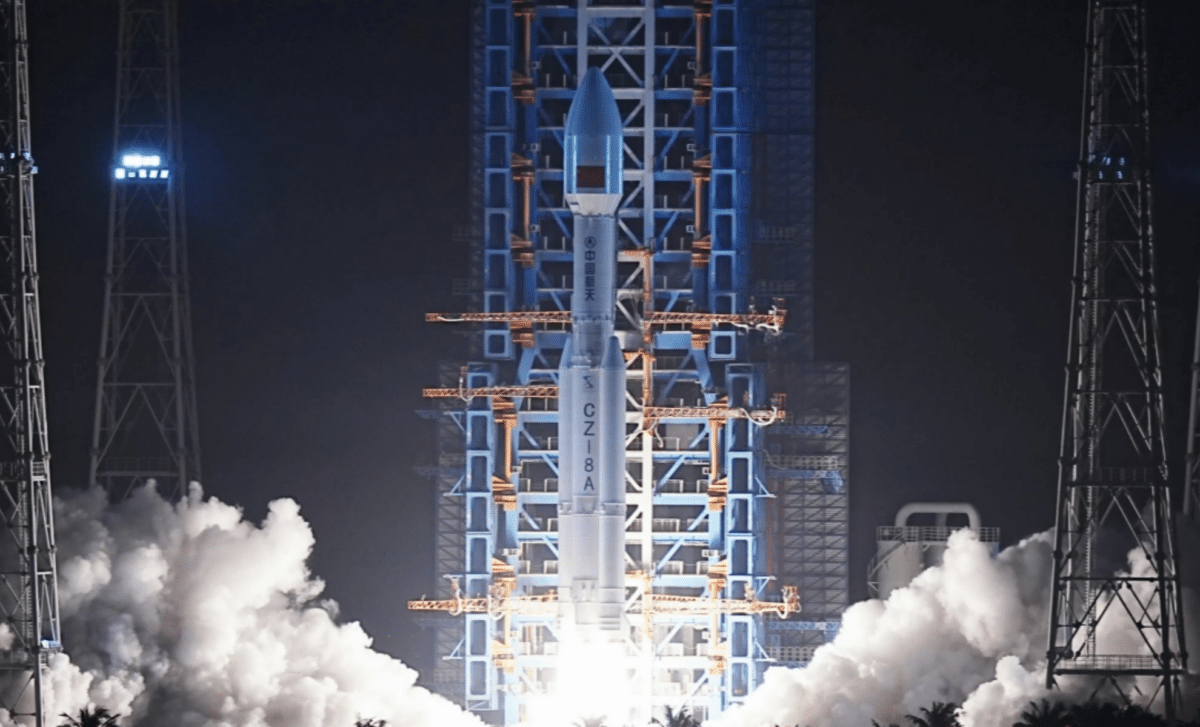
China has started 2026 with a bang, launching two Long March rockets in the first days of the year. These launches represent a significant step in China’s space ambitions, as they mark the beginning of an incredibly busy year for the country’s rapidly advancing space program. Among the payloads were the Yaogan-50 01 remote sensing satellite and a series of Guowang satellites, both crucial to expanding China’s space presence.
The Beginning of China’s Space Surge in 2026
On January 13, 2026, China launched two important Long March rockets from the Wenchang Space Launch Center, initiating the nation’s space missions for the year. The first mission saw the launch of the Yaogan-50 01 remote sensing satellite into a unique orbit, while the second mission placed a group of Guowang satellites into low Earth orbit. These successful launches mark the start of what is expected to be a record-breaking year for China, as it plans to complete numerous space-related projects over the course of 2026.
China’s space missions in 2026 are particularly significant because they continue to showcase the nation’s advanced space technologies and its focus on developing autonomous systems. The Yaogan-50 01 satellite, in particular, is an important step forward, as it will provide crucial data for China’s remote sensing efforts, a field critical for scientific research, national security, and environmental monitoring.
Yaogan-50 01: A Leap in Remote Sensing Technology
The Yaogan-50 01 satellite, launched aboard the Long March 6A rocket, is an advanced remote sensing satellite. One of the most intriguing aspects of this mission is the satellite’s unusual orbit, which is expected to give it enhanced capabilities for collecting high-resolution data. Unlike typical satellites that operate in standard low Earth orbits, According to CASC, Yaogan-50 01’s orbit is designed to maximize its ability to observe Earth from unique angles, providing a broader and more detailed view of the planet.
This satellite is part of China’s growing portfolio of remote sensing technology, which is used for a wide range of applications, from agricultural monitoring to military surveillance. As China continues to develop and deploy more of these satellites, the country is positioning itself as a leader in Earth observation capabilities. The Yaogan-50 01 satellite will also contribute to the country’s ability to monitor natural disasters, manage resources, and support scientific research efforts across the globe.
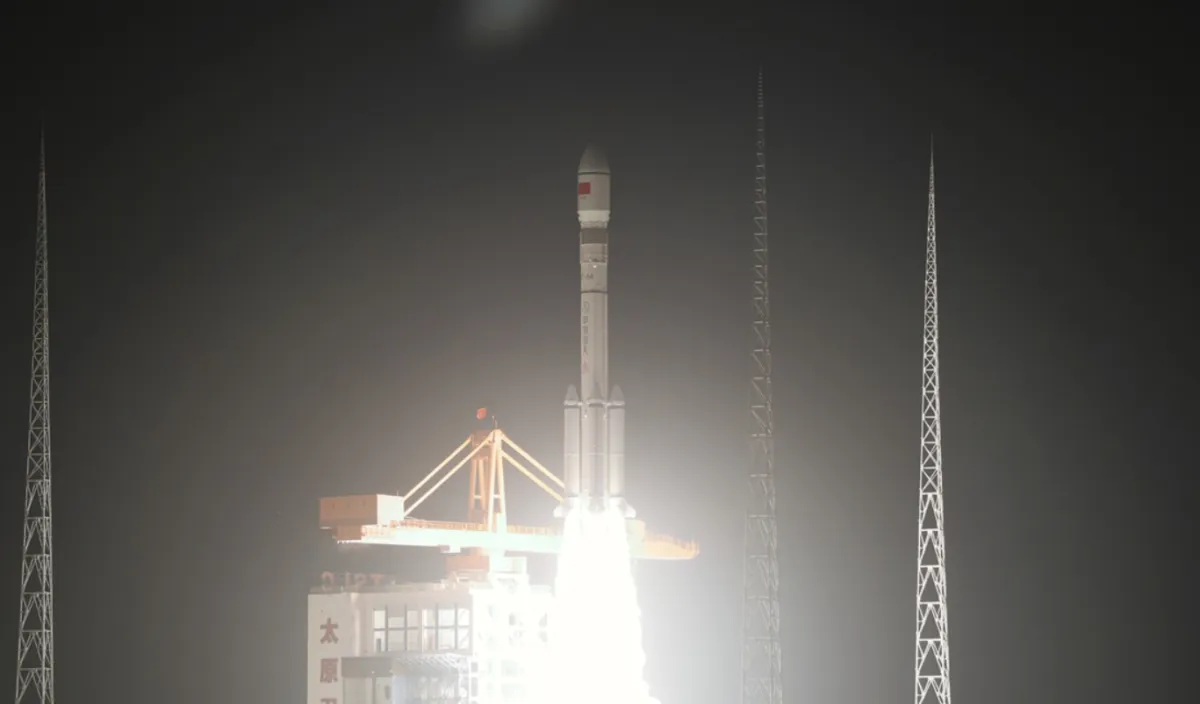 A Long March 6A lifts off from Taiyuan, Jan. 13, 2026, carrying the Yaogan-50 (01) satellite towards a highly retrograde orbit. Credit: CASC
The Guowang Satellites: Expanding Low Earth Orbit Capabilities
In addition to the Yaogan-50 01, China also successfully launched a series of Guowang satellites into low Earth orbit (LEO). These satellites are part of the Guowang constellation, which is designed to improve China’s capabilities in telecommunications, Earth observation, and scientific research. The constellation’s expansion is a significant step in China’s efforts to increase its presence in space and strengthen its space-based infrastructure.
The Guowang satellites are particularly notable for their contribution to China’s communications network. By placing these satellites in low Earth orbit, China will be able to provide enhanced communication services, including high-speed data transmission, over large regions. This will not only benefit China domestically but also improve its global connectivity, particularly in areas with limited access to terrestrial communication networks.
Moreover, the Guowang constellation is expected to play a crucial role in supporting China’s space exploration goals. By providing real-time communication and data transfer capabilities, these satellites will be instrumental in supporting future space missions, including those to the Moon and Mars.