

SALT LAKE CITY — Flu season is in full swing, with the U.S. seeing its highest rates in 25 years. Utah hospitals have treated hundreds of patients in recent weeks as a new strain of influenza A spreads rapidly.
“We are feeling the crunch in the emergency department for sure,” said Dr. Nelson, medical director of the emergency department at Intermountain Medical Center.
Nelson said if you do get influenza, there is unfortunately no quick cure — symptoms can last a week or longer.
“Healthy or not, the flu usually makes you feel pretty awful,” he said. “It’s not like a bacterial infection where you get an antibiotic, and you recover. With influenza, like with any viral illness, it’s going to take time.”
Certain groups are most at risk: older adults (65+), people with underlying medical conditions and young children. These groups are more likely to experience complications like pneumonia or hospitalization.
Common symptoms in children and adults include fever, cough, body aches, fatigue, congestion and sometimes vomiting. People can be contagious with the flu starting one day before symptoms start and up to seven days after, making it important to limit contact with others while sick.

Three of the Hubbards’ seven children tested positive for influenza over Christmas break. (Photo courtesy: Dallin and May Bo Hubbard)
“A lot of parents are coming in who are extremely worried about the flu and symptoms of the flu,” said Dr. Dallin Hubbard, a pediatrician and founder of Direct Care Pediatrics in Sandy.
At his clinic, parents can text him directly with questions and get guidance on caring for their child or know when it’s time to head to the ER.
“We can do some triage work over the phone and help them figure out what they need to do for their family,” he said.
Hubbard and his wife, May Bo, are the parents of seven children. Three of their kids tested positive for the flu over the holidays.
“When they got the body aches, I was like, ‘Okay, we need to test the kids,’” said May Bo Hubbard. “All of them were in bed for at least a week.”
“Our house turned into a little hospital,” Dr. Hubbard added.
Most flu cases, like the ones in the Hubbard household, can be managed at home with rest, fluids and over-the-counter medications such as Tylenol or ibuprofen. Antiviral drugs like Tamiflu don’t cure the flu, but can shorten symptoms if taken within the first 48 hours.
“If you have concerns about how they’re breathing, how they’re acting, you should get them checked out,” Nelson said.
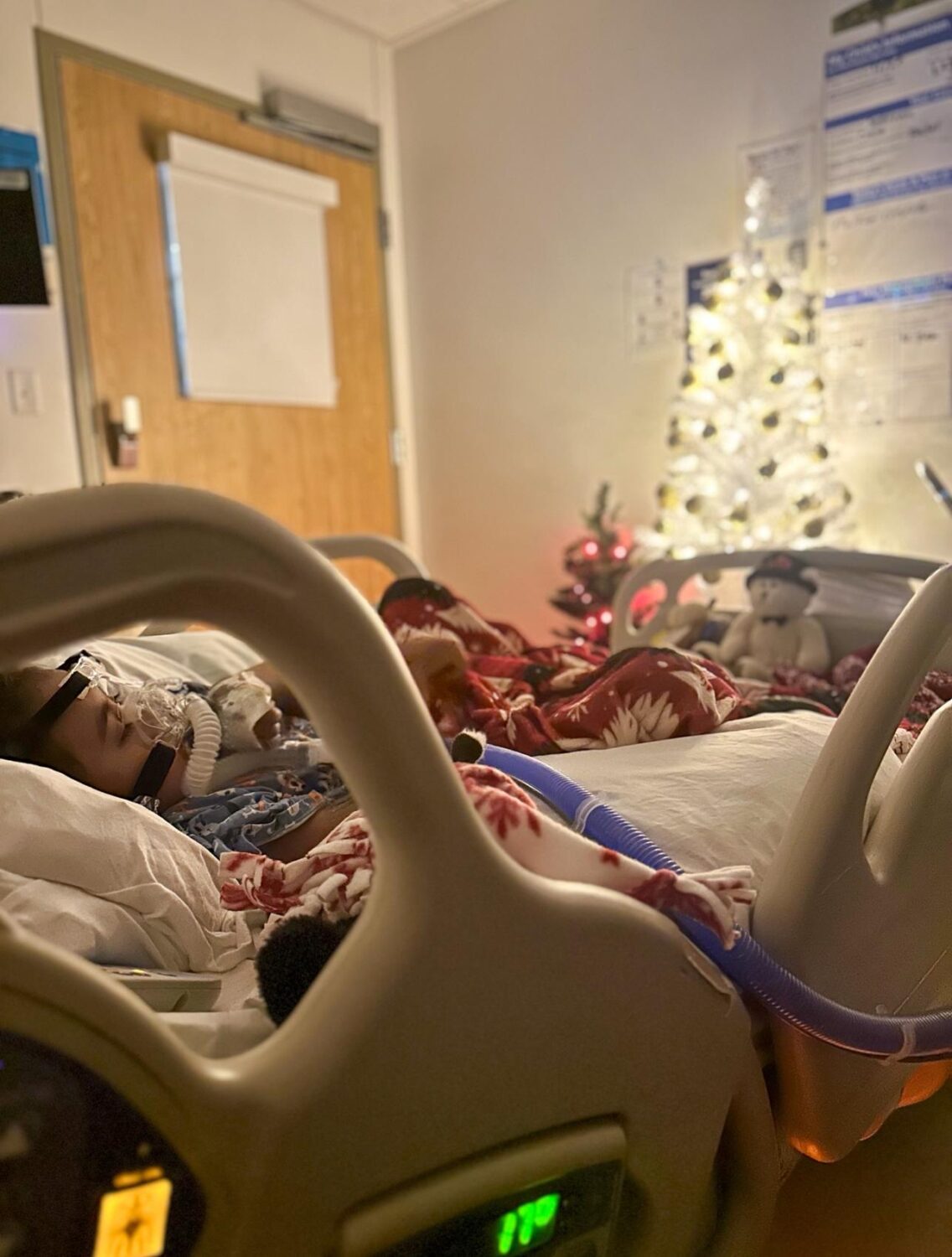
Lexi Breen’s six-year-old son was hospitalized with influenza over Christmas. (Photo courtesy: Lexi Breen)
Lexi Breen, a secretary at Dr. Hubbard’s practice, learned that firsthand when her six-year-old son started showing concerning symptoms right before Christmas.
“It’s very scary to have to go in, and to spend Christmas in the hospital was not something we planned on,” she said. “Luckily, he was able to get the help he needed and he recovered quickly.”
“You know your kids best,” she added. “Just go in if you feel like something’s really wrong.”
How to protect your family
Get vaccinated: Anyone 6 months and older can get a flu shot. Even though the vaccine isn’t a perfect match for the current strain, it can still lessen severe symptoms. You can find locations near you at immunize.utah.gov.
Practice good handwashing hygiene.
Stay home when sick to prevent spreading the virus.
Monitor children closely and seek medical care for severe symptoms, such as difficulty breathing or a high fever.