
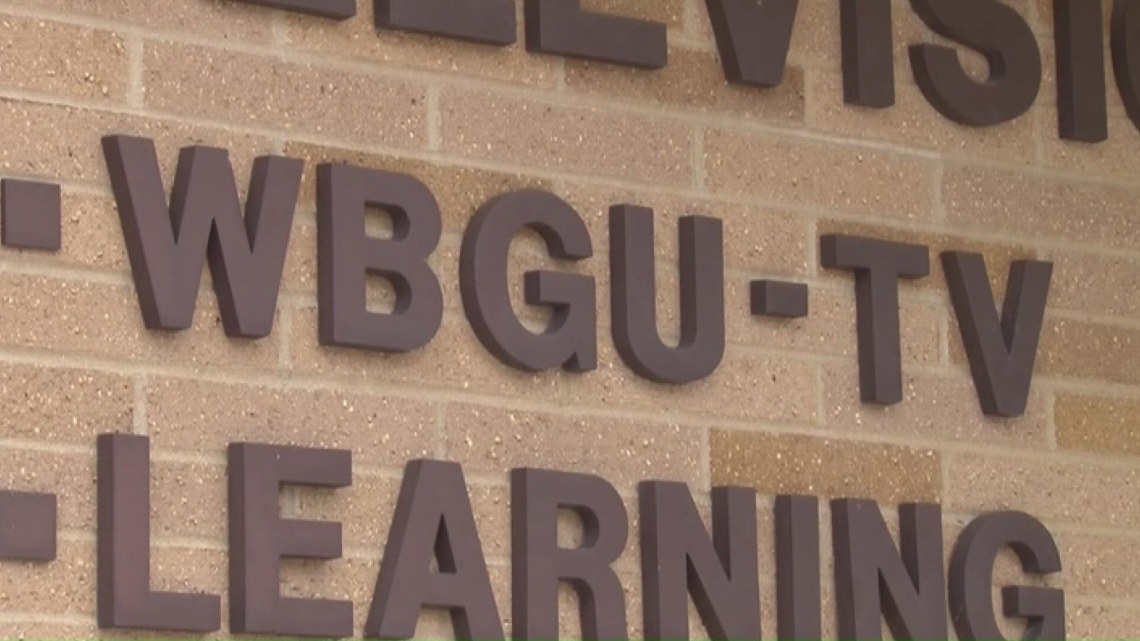
The university says the loss of the Corporation for Public Broadcasting support eliminates about $1.1 million in annual funding for WBGU-TV.
BOWLING GREEN, Ohio — WBGU-TV will stop airing PBS programming after June 30, following federal funding cuts and the closure of the Corporation for Public Broadcasting, Bowling Green State University announced on Friday.
University officials said the loss of CPB support eliminates about $1.1 million in annual funding for WBGU-TV, accounting for more than 40% of the station’s operating budget. The funding had been used to pay PBS membership dues and purchase national programming, the university said.
BGSU spokesperson Colleen Rerucha provided the following statement:
“As a public university for the public good, Bowling Green has deep appreciation for the critical role public institutions, like the Corporation for Public Broadcasting, have in enriching our society. For more than six decades, WBGU-PBS has been a fixture at Bowling Green State University, providing learning experiences and opportunities for students interested in broadcast communications and springboarding careers, while serving 19 counties across northwest Ohio with educational and community-focused programming.
Facing the loss of nearly half of its operating budget because of federal funding cuts, continuing to carry PBS programming and services has become financially unsustainable long term. Bowling Green has identified a pathway that allows WBGU to remain a broadcasting unit at the University with limited operations, focused on livestreaming services. In addition, we are actively identifying new learning opportunities for students, while serving the community in innovative ways, and we look forward to leveraging our broadcast capabilities for our students and northwest Ohio.”
WBGU-TV serves about 550,000 households across 19 counties. According to the university, Nielsen data shows approximately 40,000 households currently watch WBGU-PBS. University officials said most households in the viewing area will continue to have access to PBS programming over the air through other PBS-affiliated stations.
The station has about 4,000 active donors, who contribute roughly 15% of WBGU’s annual budget. University leaders said they decided not to continue soliciting donations through the upcoming national PBS fundraising campaign, knowing the station would no longer be able to carry PBS programming after June 30.
As PBS programming is phased out, WBGU-TV will begin broadcasting The Ohio Channel and will sunset locally produced shows, including “The Journal” and “BGSU Brain Game.” Officials said those decisions were driven by both federal and state funding cuts.
The university said WBGU-TV “will remain a broadcasting unit” within BGSU with a focus on livestreaming services. Planned programming includes commencement ceremonies, athletic events, arts performances and other university-related content.
The university said it will continue working with WBGU and the BGSU School of Media and Communication to identify new learning opportunities for students under the revised model.