
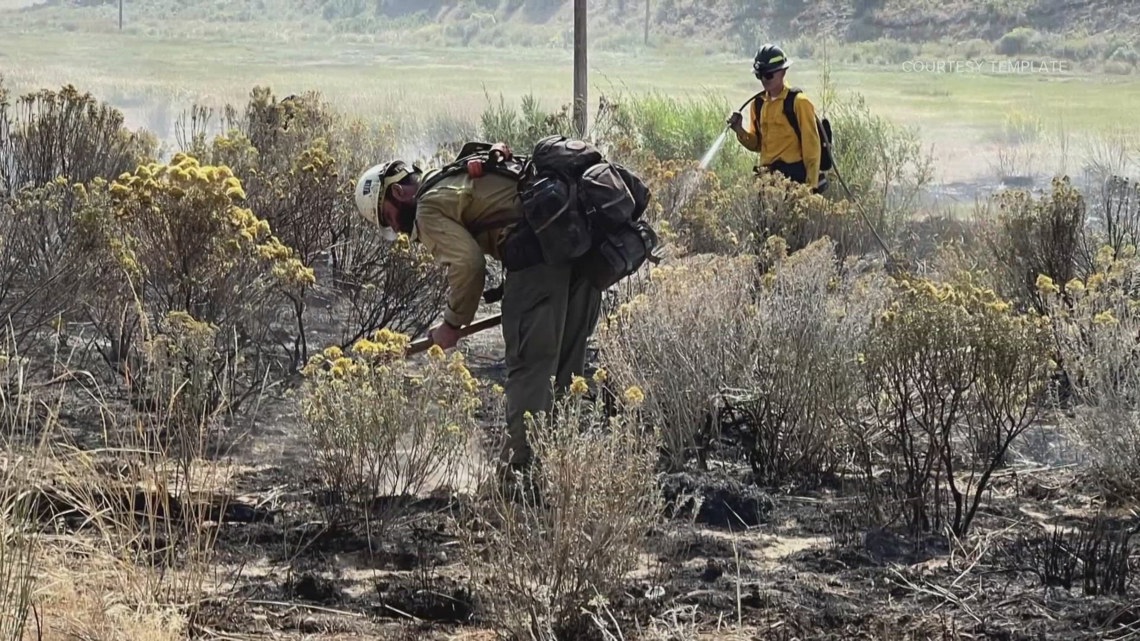
Disaster declaration requests to help with recovery from the Lee and Elk fires, as well as flooding in western Colorado, were denied in December.
COLORADO, USA — Colorado Gov. Jared Polis (D) has formally appealed President Donald Trump’s rejection of disaster declaration requests made to help with recovery from severe flooding and wildfires that devastated the state last year.
Polis’ office announced the appeals in a Friday release. In September, he requested support from the Federal Emergency Management Agency (FEMA) for recovery efforts after the Elk and Lee fires in Rio Blanco County. Polis filed another request in November asking for FEMA support following flooding in Archuleta, La Plata and Mineral counties. Disaster declarations would unlock funds from FEMA to assist with recovery from the natural disasters.
Denials to those requests were issued late last month, leading Polis and Colorado U.S. Sens. John Hickenlooper (D) and Michael Bennet (D) to petition Trump to reconsider.
A release issued by Polis’ office in December said the requests “exceeded FEMA indicators required to approve a major presidential disaster,” and that the state had invested more than $57.5 million responding to these and other disasters since July 2024.
FEMA responded with an emailed statement to 9NEWS that read, in part:
“The law and regulations require FEMA to review each request closely and consider the unique circumstances of disaster-caused damages as well as state and local capacity. This decision just like all disaster requests was based on policy not politics.”
Nearly a month later, Polis’ office announced the governor had submitted formal appeals.
“We are submitting these appeals to help ensure that the Colorado communities impacted can get the support they deserve to recover more quickly,” reads a statement from Polis included in his office’s Friday release. “Whether fires or floods, Coloradans have been deeply impacted by these natural disasters. With this appeal, we hope that the federal government steps in to help Coloradans recover stronger.”
Elk and Lee Fires
Polis issued a disaster declaration in August for the fires in Rio Blanco County, authorized deployment of the Colorado National Guard and unlocked $18.5 million in state funding to support the response to the fires.
Combined, the Elk and Lee fires burned more than 237 square miles, according to the governor’s office release. The Lee Fire, which burned more than 137,000 acres alone, became one of Colorado’s five largest fires in history.
The release says the state demonstrated that the initial damage from the fires and mudslide totaled more than $27 million, which FEMA validated.
Rio Blanco County said last year that the request documented an estimated $27 million in damages. Approximately $23.6 million of those damages were attributed to White River Electric Association’s electrical infrastructure, which supports a significant portion of the nation’s energy supply, the county said.
“The Lee Fire destroyed nearly 14 miles of critical transmission infrastructure that provides power to natural gas and other industrial producers in the Piceance Basin southwest of Meeker,” the county said. “As a result, industrial consumers in the basin have faced limited operational capacity.”
The county said the Piceance Basin produces approximately 2 billion cubic feet of natural gas per day, which represents between 2% and 5% of the nation’s daily consumption.
“While FEMA assistance was never guaranteed, the scale of this disaster underscores the challenges rural communities face when critical infrastructure is lost,” Scritchfield said in the news release. “Rio Blanco County will continue to advocate for our residents, our utilities, and our role in supporting national energy security.”
Flooding in Archuleta, La Plata and Mineral counties
Polis issued a disaster declaration for the flooding in October, which activated the State Emergency Operations Plan and authorized initial state support. That unlocked $6 million in state funding for flood response and recovery, he said.
Damage to roads, culverts and publicly owned infrastructure totaled more than $13 million, as verified through FEMA’s Joint Preliminary Damage Assessment, according to Polis. The flooding also spread debris that caused damage and required removal.
There also were significant impacts to water control facilities, including the Big Meadows Reservoir, major sewer system failures in Pagosa Springs and the San Juan River Village Metro District, as well as damage to parks, riverwalks and other infrastructure in the counties.