
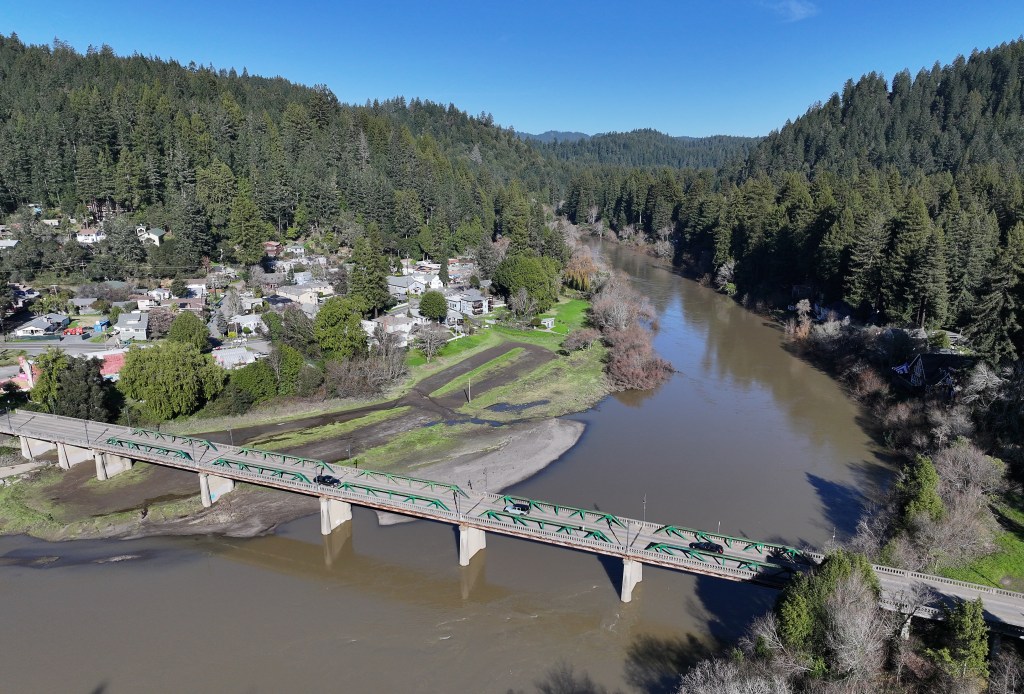
An estimated 5.5 million gallons of wastewater, including untreated sewage, overflowed early this month from a Guerneville treatment plant into the lower Russian River over three days, making for the largest such spill in the river in more than four decades.
Despite the absence of major flooding, a series of heavy storms managed to inundate the intake system of the aging Neeley Road wastewater plant that has been linked to a series of weather-related spills over the years. The fallout led water and public health officials to issue advisories closing beaches along more than 13 miles of the lower river and a 40-mile stretch of the Sonoma Coast.
The last of those closures wouldn’t be lifted until the beginning of the following workweek, after days of testing to determine the water was safe for contact.
State water quality regulators in Santa Rosa say they are looking into the spill and will determine if any enforcement action is warranted, including potentially a fine.
“Something needs to change,” said Sonoma County Supervisor Lynda Hopkins, who represents lower Russian River communities and the coast.
Familiar with reports on the outdated sewer networks and septic tanks that cover her vast 5th District, Hopkins has bemoaned the high cost and glacial progress in upgrading those systems, especially in steep, forested terrain bisected by streams.
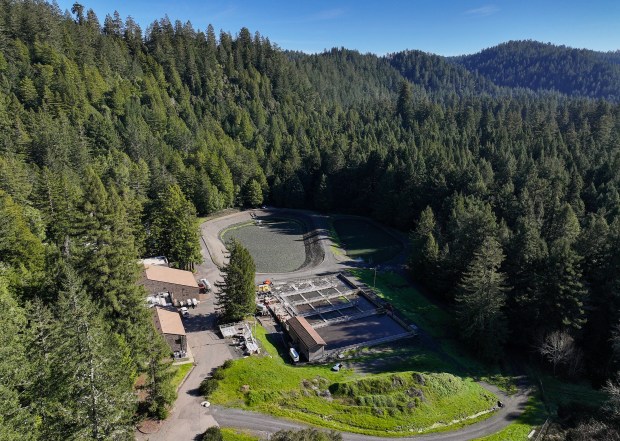 The Russian River Treatment Facility operated by Sonoma Water at the end of Neeley Road near Guerneville on Friday, Jan. 9, 2026. The treatment plant’s holding ponds overflowed on Tuesday, Jan. 6, causing 5.5 million gallons of wastewater, including untreated sewage, to seep into the Russian River. (Christopher Chung/The Press Democrat)
“The biggest problem is that we have these small, old systems that were under-built in the first place and are now woefully out of date,” she said in an interview after the recent spill.
It came almost as a surprise during what officials described as a relative non-event on the lower river, which crested Jan. 6 less than two feet below the 32-foot flood stage in Guerneville.
“We just got hammered on the 5th and 6th,” David Royall, assistant manager of operations and management with Sonoma Water, said of the strong atmospheric river, the last in a series that hit the region starting before Christmas. “We were bringing so much water into the system that suddenly the plant got overwhelmed.”
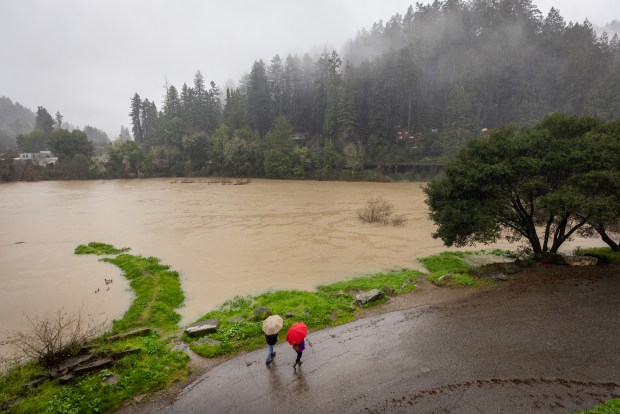 Local residents find a break in the rain to have a walk and check the level of the Russian River Monday, Jan. 5, 2026 at the Monte Rio bridge. On the following day, Jan. 6, Sonoma Water and Sonoma County health officials asked people to stay away from the river after wastewater, including untreated sewage, from the Russian River Treatment Plant on Neeley Road overflowed, sending an estimated 5.5 million gallons into the river over three days. (John Burgess / The Press Democrat)
Between Jan. 1 and Jan. 6, the Russian River region received about 5.5 inches of rain, with the heaviest precipitation falling Monday night, Jan. 5, about 12 hours before the spill began, according to National Weather Service meteorologist Rachel Kennedy and Sonoma Water officials.
The spill began at 6:50 a.m. Tuesday, when, by 8 a.m. the lower river had risen more than 20 feet since New Years Day.
Sonoma Water, the region’s main drinking water provider and manager of the Guerneville treatment plant, is still working to determine the chain of events that led to the system failure and consequential spill. However, officials suspect it has to do with the high volume of stormwater that entered the system over a short period of time, quickly overwhelming it, Royall said.
For comparison, the worst wastewater event on record for the Russian River came in 1985, amid a prolonged stretch of dry weather. After holding off for months on what were then routine releases because of the river’s low level, Santa Rosa was nearly out of space in its storage ponds and let go 750 million gallons of effluent at once, an illegal dump that limited access to drinking water in the lower river region for a week.
The massive discharge enraged river residents. Santa Rosa’s all-powerful city manager at the time, Ken Blackman, was assigned police escorts to follow-up meetings. In political terms, the sewage release “was like dropping an atom bomb,” former Santa Rosa Mayor Schuyler Jeffries told The Press Democrat in 2009.
By then, after decades of pressure to stop discharging into the river, the city’s regional sewer plant was pumping most of its treated wastewater to The Geysers, on the border of Sonoma and Lake counties, where it is used to recharge the world’s largest geothermal power field. The remaining share of wastewater from the Laguna Road plant goes to irrigate farmland, vineyards, parks, golf courses, school grounds and urban landscaping. For Santa Rosa, the change reversed more than 120 years of municipal discharges into the river.
The Guerneville plant, however, has remained a sore spot for water infrastructure on the lower river.
After a February 2014 storm caused a rapid rise in river levels, a mainline tied to the plant ruptured, spilling roughly 100,000 gallons of wastewater into the river.
Five years later, an unprecedented series of atmospheric rivers slammed the region, causing the third highest flood in the river’s post-dam era and the sixth worst overall flood on record. In the course of eight days, more than 885,600 gallons of untreated wastewater, including sewage, spilled into the river and streets at three places in Guerneville in February and early March 2019.
And just two years ago, a late February storm caused the lower river to rise about 18 feet over about four days. A subsequent power failure at the treatment plant led 277,000 gallons of untreated wastewater to spill into the waterway.
System overload: ‘It took a hit’
When the latest spill began Jan. 6, the Russian River, swollen and murky, was flowing at a very high rate, exceeding 30,000 cubic feet per second, or 13.4 million gallons per minute, as measured at the Hacienda Bridge in Forestville upstream of Guerneville.
Although small pockets of Guerneville were partially submerged in floodwaters, including known problem areas around Fife Creek and Mill Street, the Russian River crested Tuesday evening with some room to spare: at 30.51 feet in Guerneville, it was just over the “monitor” level but 1.5 feet shy of a minor flood.
Still, on the streets, storm runoff streamed into sewer drains throughout the 2,700-acre service area, entering the system for the Neeley Road plant. At the outset of the period singled out by Sonoma Water, roughly 4 million gallons of daily inflow was hitting a system meant to accommodate about 710,000 gallons a day.
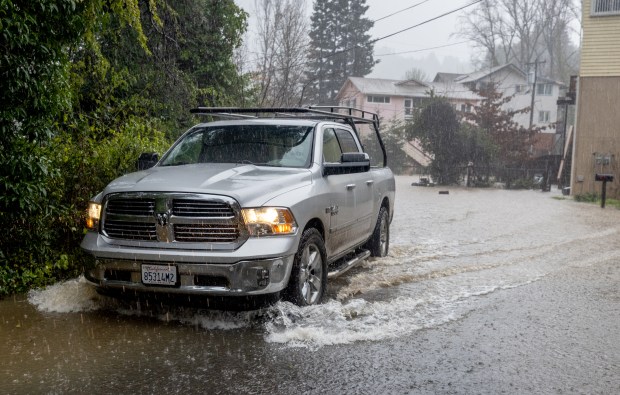 Mill Court resident Steven Kline heads out for higher ground as the stormwater begins to flood his Guerneville neighborhood Monday, Jan. 5, 2026. Kline credits the county for clearing the nearby creek and reducing the height of the flood waters. (John Burgess / The Press Democrat)
The treatment plant itself did not flood during the storms, but the plant’s two storage areas — a main basin and the emergency storage pond — overflowed. The effluent seeped about a quarter-mile south through a wooded area to the Russian River, bypassing homes.
The deluge also caused the microbes within the system — the microorganisms that help break down sewage — to completely wash out, leaving the plant ill-equipped to treat the wastewater that continued to pour in.
Two loads of microbes from Sonoma Valley have since been trucked to Guerneville to get the system back online.
“We are on the right track,” Royall said, “but it took a hit from all the rain.”
Testing and beach closures
By Wednesday, Jan. 7, as the spill reached into its second day, Sonoma Water and Sonoma County health officials were concerned enough that they issued advisories urging beachgoers to stay away from the river downstream of Guerneville and the surf stretching from the river mouth at Jenner to Gualala, 40 miles north on the border with Mendocino County.
The move, with little recent parallel outside of unpopular pandemic stay-home orders that put outdoor destinations off-limits for nearly two months, was made out of an abundance of caution. It extended through a sunny, post-storm weekend, when Highway 1 even in January can still draw legions of visitors, including hardy beachgoers.
“We knew that we would not have any real-time information in terms of water quality so we decided to be aggressive in terms of closing beaches and making sure that folks weren’t interacting with the water,” Hopkins said.
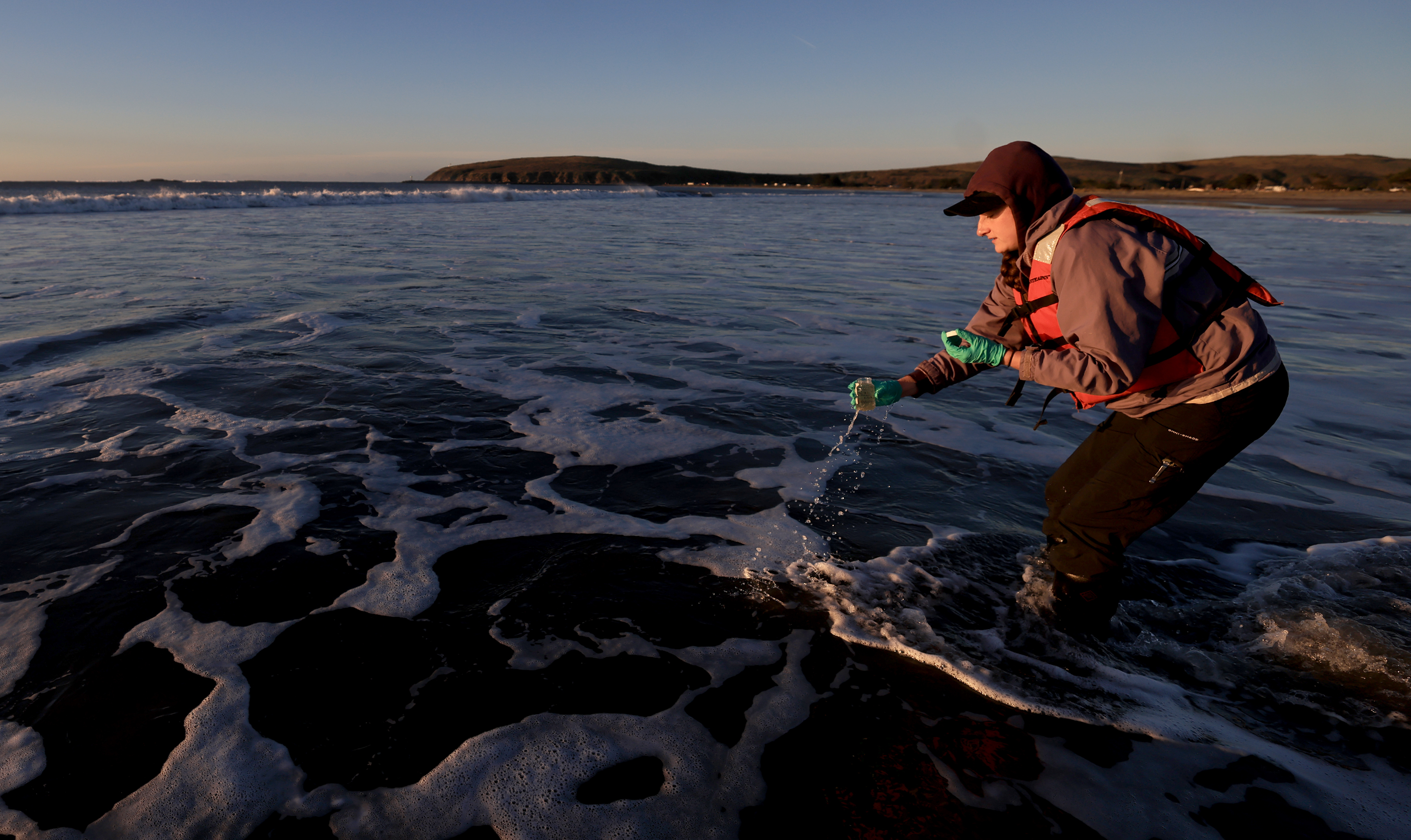
Ellyse Cappellano, county environment health specialist, takes a sample of water at Doran Regional Park in Bodvga Bay, Thursday, Jan. 8, 2026, in response to the sewage spill in Guerneville. (Kent Porter / The Press Democrat)

Ellyse Cappellano, county environment health specialist, prepares to take a water sample from Doran Beach which was retested for contaminates, in Bodega Bay, Thursday, Jan. 8, 2026, in response to the sewage spill in Guerneville. (Kent Porter / The Press Democrat)
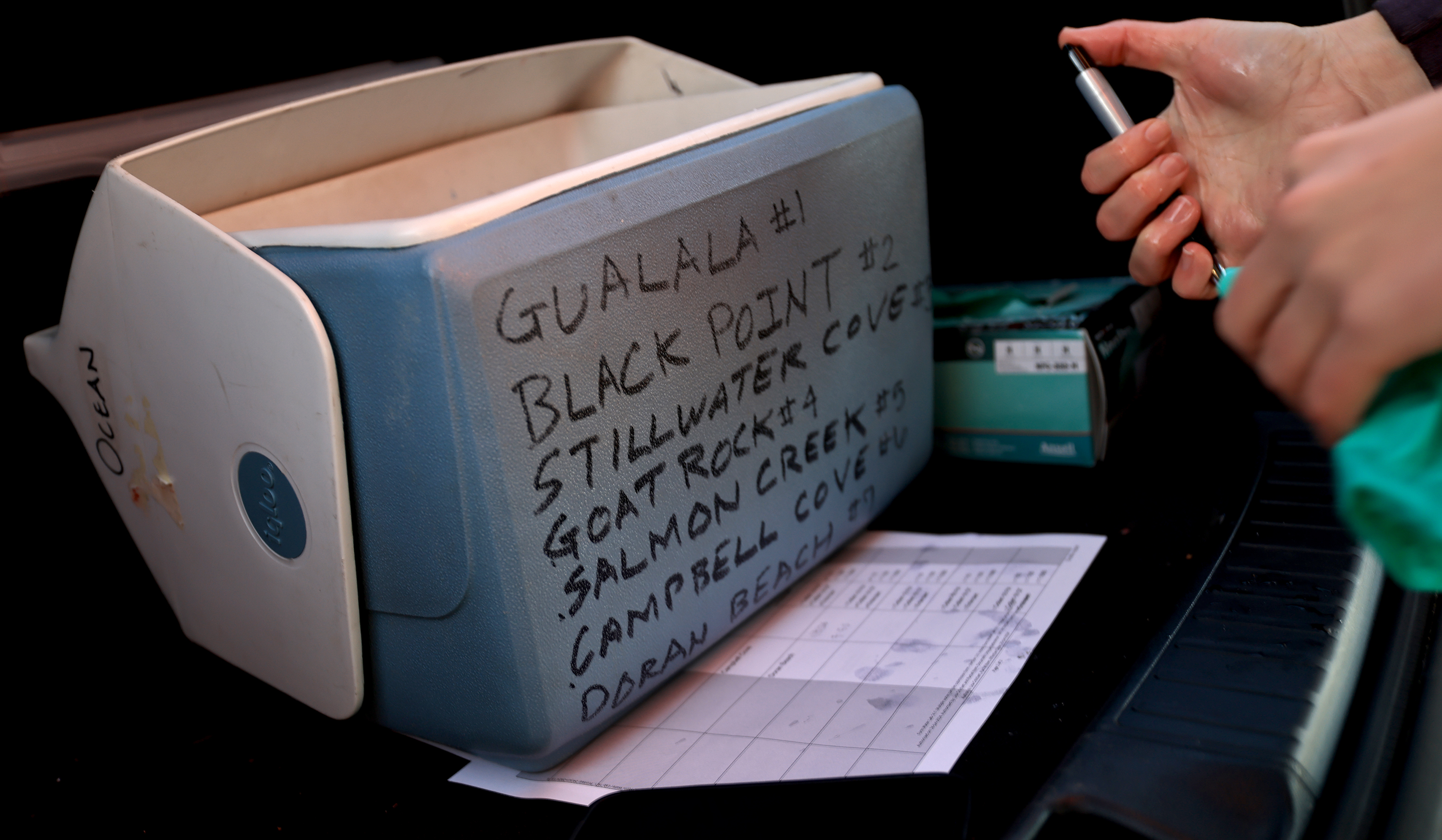
Ellyse Cappellano, county environment health specialist, records her latest water sample, at Doran Regional Park , Thursday, Jan. 8, 2026, in response to the sewage spill in Guerneville. Several site were tested up and down the Sonoma Coast. (Kent Porter / The Press Democrat)
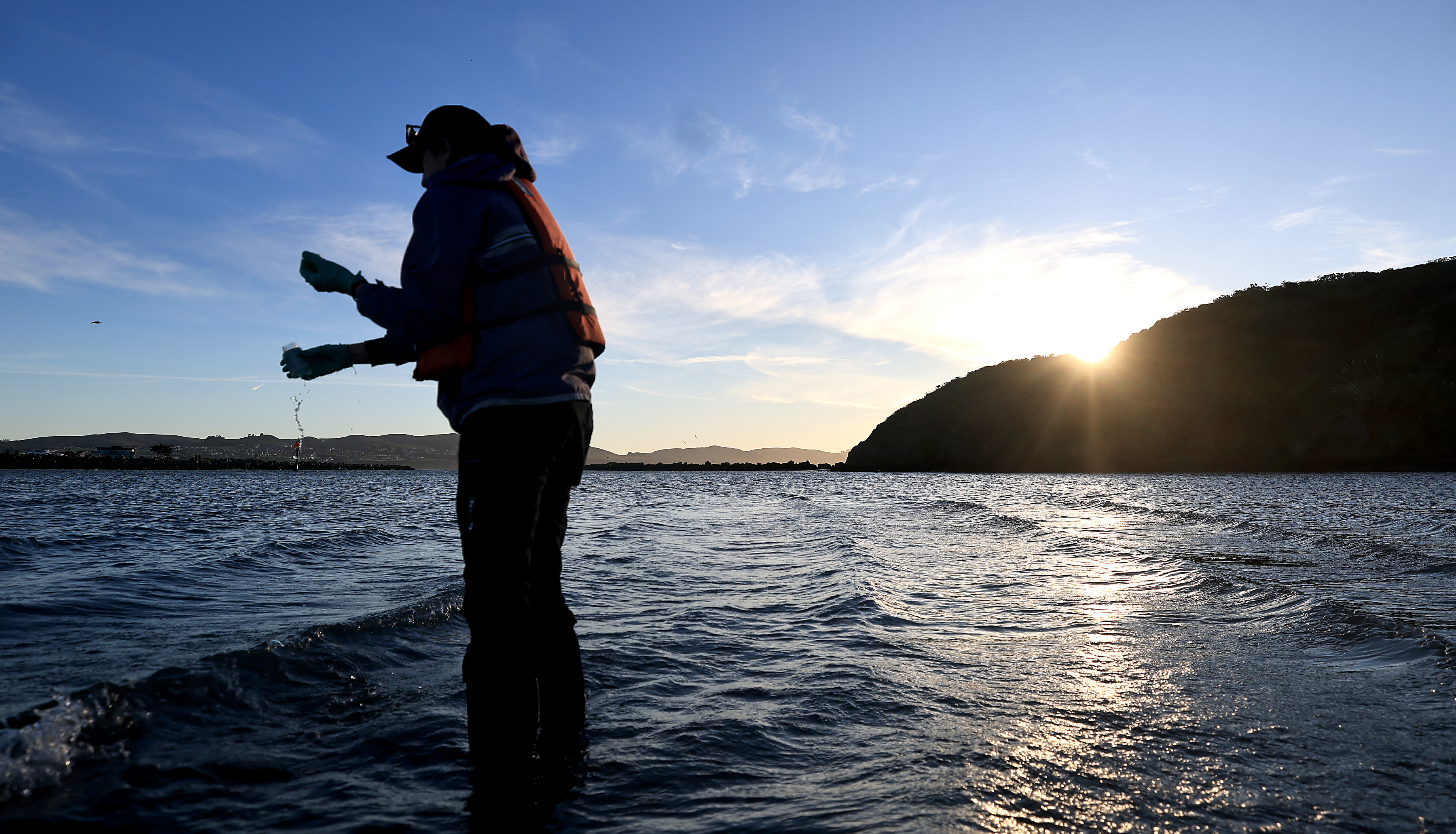
Ellyse Cappellano, county environment health specialist, takes a sample of water which was retested for contaminates, at Campbell Cove in Bodega Bay, Thursday, Jan. 8, 2026, in response to the sewage spill in Guerneville. (Kent Porter / The Press Democrat)
Show Caption
1 of 4
Ellyse Cappellano, county environment health specialist, takes a sample of water at Doran Regional Park in Bodvga Bay, Thursday, Jan. 8, 2026, in response to the sewage spill in Guerneville. (Kent Porter / The Press Democrat)
Water quality testing began almost immediately on the morning of Jan. 6, after health officials were informed of the spill, according to Sonoma County Environmental Health Director Christine Sosko.
The testing focused on stretches of the Russian River and seven of Sonoma County’s most popular coastal beaches, assessing for high levels of E. coli and total coliforms — harmful bacteria found in untreated sewage.
Potentially unsafe levels of pathogens were found, prompting officials to post warning signs along beaches at the river and coast that urged people to avoid contact with the water.
The spill ended Thursday, Jan. 8 at about 6 a.m. after the volume of the inflow dropped back to within what the Guerneville plant could accommodate.
The advisory was lifted the next day for the first three coastal beaches — Doran, Salmon Creek and Campbell Cove — after testing for the pathogens came back clean. The following Monday, Jan. 9, officials issued an afternoon all-clear for the remaining beaches — Goat Rock, Stillwater Cove, Black Point and Gualala Point — and the lower river.
The county health department still encouraged people to rinse off after spending time in the water.
Local river advocacy groups voiced relief after the closures were lifted, but said they were concerned about any persistent pollutants that could have entered the system.
“Human waste does not persist in the environment for very long,” said Don McEnhill, deputy director of Russian Riverkeeper, the nonprofit dedicated to protecting and restoring the 115-mile waterway and its tributaries. “Our concern is really more about anything beyond human waste in the water.”
That can include drugs — pharmaceuticals and illicit street varietals, which are carried in human waste — as well as household chemicals.
The county environmental health department did not test for the presence of pharmaceuticals in the river or along the coast because it is not mandated by state law, officials said.
Sonoma Water reported the incident to multiple environmental agencies, including the National Marine Fisheries Service, the California Governor’s Office of Emergency Services, the National Oceanic and Atmospheric Administration’s Office of Law Enforcement and the North Coast Regional Water Quality Control Board.
Based in Santa Rosa, the North Coast water board is responsible for monitoring and safeguarding the health of the region’s water supplies and related riparian environments. A spokesperson told The Press Democrat it was reviewing the spill report sent by the county water agency.
“Once we have reviewed the report and any supplemental information, we will discuss the matter internally and consider next steps, including whether enforcement action is appropriate,” said Blair Robertson, the board spokesperson.
After the 2019 spill, Sonoma Water was fined more than $1 million, of which it paid just over $147,000. According to the settlement with regulators, Sonoma Water also was forced to complete a study on feasible remediation projects for the plant and establish alert plans for the community, in the event of future spills.
That notification plan was implemented in 2022 and includes posting signs in both English and Spanish at the spill site, hand-delivering flyers to affected neighborhoods, posting alerts on social media, updating the Sonoma Water website and sending news releases to the media.
The agency also operates a new sewer overflow hotline, which was updated during the event.
Cleanup and search for solutions
Crews continued to work this past week on cleanup at and surrounding the Neeley Road plant. Crews surveyed the forested area surrounding the facility in the wake of the incident and were prepared to use vacuum trucks to remove any remaining untreated water, Royall said.
Both Hopkins and Sonoma Water officials said the historic scale of the spill underscored the need for long-term solutions for the aging sewer network.
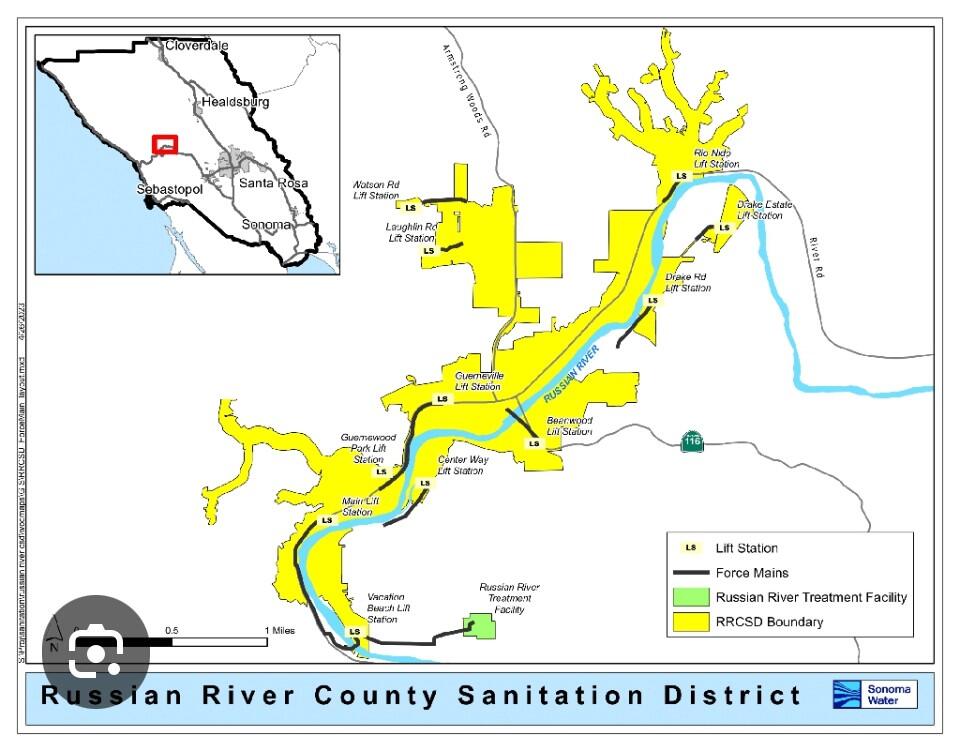
Built in 1983, the Guerneville system has about 34 miles of sewer lines in the lower river area and four miles of mains, serving 3,300 parcels in the Russian River Sanitation District, spanning from Rio Nido upstream to Vacation Beach downstream.
Between October and May, when river levels are typically at their highest, the district discharges its treated wastewater into the river. From May to September, it is used for irrigation at the nearby Northwood Golf Course and on forested land adjacent to the plant.
Kent Porter / The Press Democrat
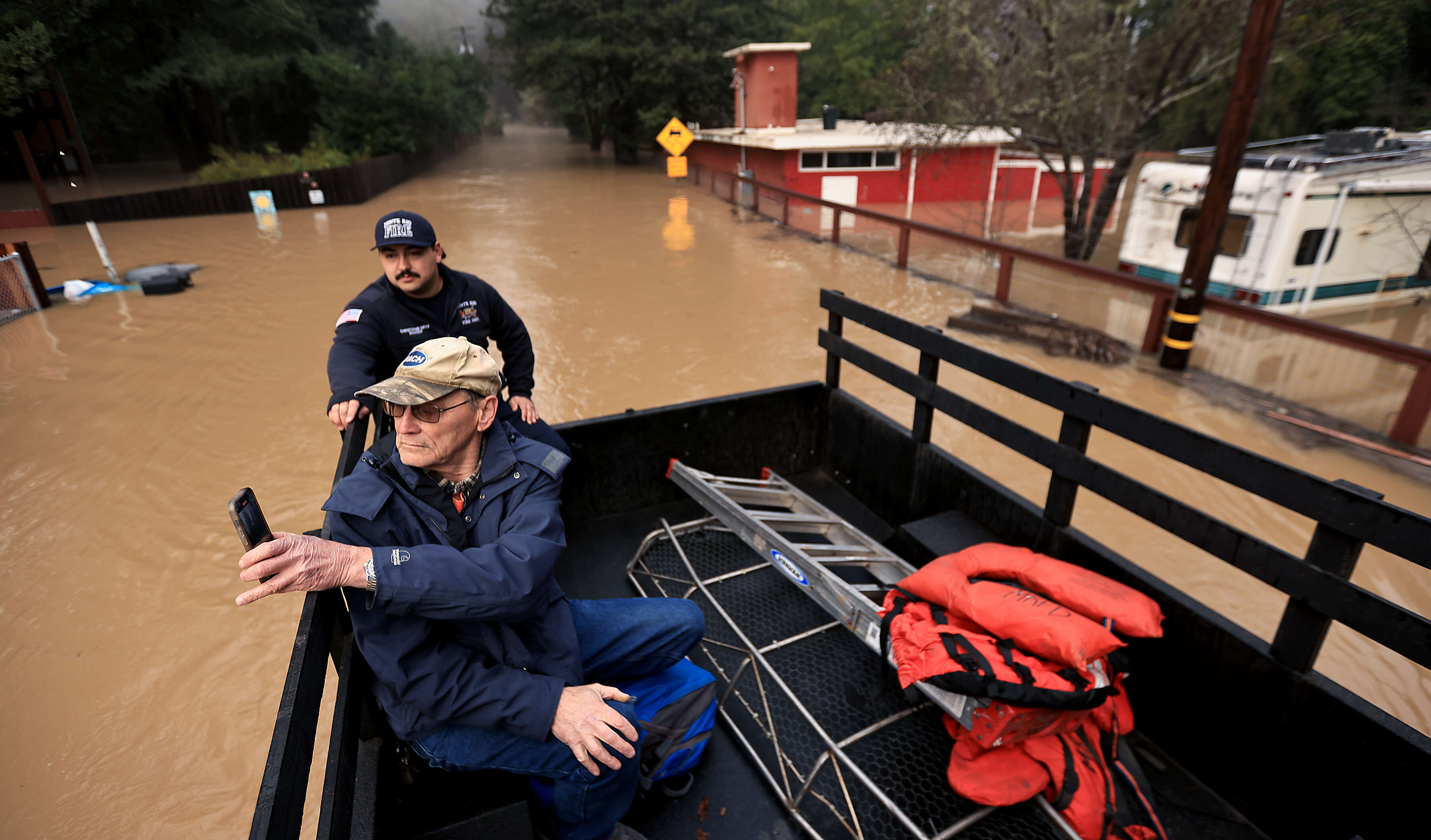
The lower Russian River sits at the end of a large, flood-prone watershed, even with upstream dams that help regulate flows. The region’s heaviest storms, known as atmospheric rivers, can raise the river by 20 feet or more in just a few days. Here, on Feb. 4, 2025, Sonoma Water senior water treatment plant operator Chuck Novak is safely transported along Neeley Road in Guerneville after spending the night at the Russian River Treatment Plant to make sure the sewer facility was kept up and running. In the background is Monte Rio Fire Protection District firefighter Christopher Ortiz. Monte Rio fire chief Steve Baxman used his five-ton vehicle to shuttle workers back and forth. (Kent Porter / The Press Democrat)
Sonoma Water
This map shows the Russian River County Sanitation District service area, stretching from Rio Nido upstream to Vacation Beach downstream, with the Russian River Treatment Plan shown in green the end of Neeley Road, where an estimated 5.5 million gallons of wastewater, including untreated sewage, spilled from Jan. 6 to Jan. 8, 2026. (Sonoma Water)

The Russian River Treatment Facility operated by Sonoma Water at the end of Neeley Road near Guerneville on Friday, Jan. 9, 2026. The treatment plant’s holding ponds overflowed on Tuesday, Jan. 6, causing 5.5 million gallons of wastewater, including untreated sewage, to seep into the Russian River. (Christopher Chung/The Press Democrat)
Show Caption
Kent Porter / The Press Democrat
1 of 3
The lower Russian River sits at the end of a large, flood-prone watershed, even with upstream dams that help regulate flows. The region’s heaviest storms, known as atmospheric rivers, can raise the river by 20 feet or more in just a few days. Here, on Feb. 4, 2025, Sonoma Water senior water treatment plant operator Chuck Novak is safely transported along Neeley Road in Guerneville after spending the night at the Russian River Treatment Plant to make sure the sewer facility was kept up and running. In the background is Monte Rio Fire Protection District firefighter Christopher Ortiz. Monte Rio fire chief Steve Baxman used his five-ton vehicle to shuttle workers back and forth. (Kent Porter / The Press Democrat)
Sonoma Water budget documents for the Russian River County Sanitation District show small upgrades over past years, including the installation of an ultraviolet disinfection system, which helps treat the effluent.
But many of the big projects — including upgrades to the system needed after the 2014 mainline rupture — have yet to occur and are reliant on spotty federal or state grant funding. Other needed improvements include an additional holding pond at the sewer plant, with an estimated cost in the tens of million dollars, Royall said.
Without grant funding, the small pool of ratepayers will be relied on to cover the capital costs, Royall said.
“To generate revenue, it’s a balancing act,” he said. At $207 a month, the wastewater rates for lower Russian River customers are already the second highest in the county — second only to the Occidental Sanitation District over the hill, where customers pay over $262 per month, the highest in the state.
Sonoma Water pays for “minor infrastructure upgrades at the (Neeley Road) facility,” Royall said, but those won’t solve the failures at issue this month.
“We just got overwhelmed and we couldn’t keep up,” he said. “I don’t have all the answers yet. It will take engineering staff, operating managers and our operations manager to start to look at that. We’ll have more information in the future.”
Contact Staff Writer Anna Armstrong at anna.armstrong@pressdemocrat.com. On X (Twitter) @annavarmstrongg.