
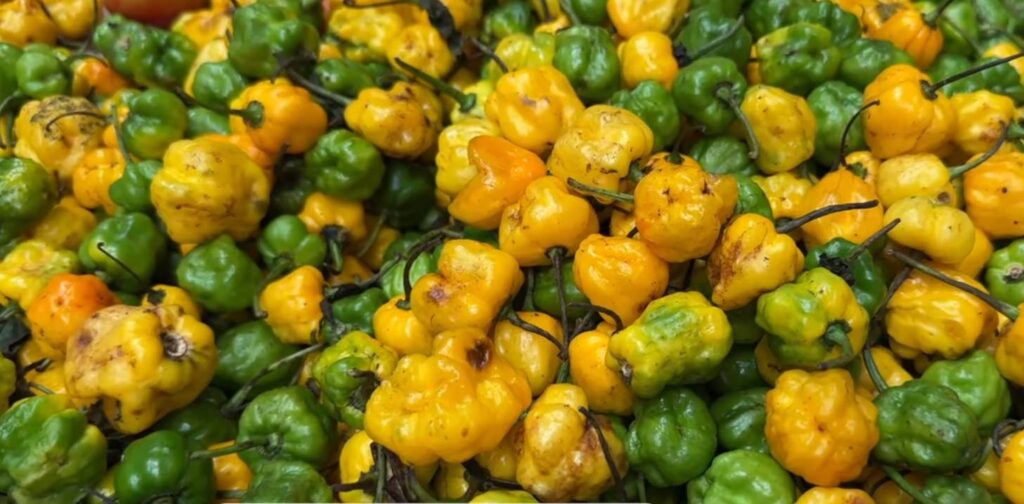
Scotch bonnet pepper prices were as high as $5,000 a pound at the Coronation Market during the Christmas season.
The Statistical Institute of Jamaica (STATIN) is reporting that the All Jamaica Consumer Price Index (CPI) for December 2025 increased by 1.3 per cent. This was mainly influenced by a two per cent increase in the index for the ‘food and non-alcoholic beverages’ division.
According to STATIN, this movement was due primarily to a 4.5 per cent increase in the index of the ‘vegetables, tubers, plantains, cooking bananas and pulses’ class, and a 5.6 per cent increase in the index of the ‘fruits and nuts’ class.
“These increases were attributable to the continued increase in the prices of some agricultural produce that were impacted by Huricane Melissa,” said STATIN in its latest monthly update on price movements.
It said that additionally, the index for the ‘housing, water, electricity, gas and other fuels’ division increased by 2.6 per cent, largely influenced by higher electricity rates and rental cost.
The point-to-point inflation rate as at December 2025 was 4.5 per cent.
Meanwhile, the All-Jamaica CPI point-to-point inflation for the period December 2024 to December 2025 stood at 4.5 per cent.
The divisions contributing most to this increase were: ‘food and non-alcoholic beverages’ (7.1 per cent); ‘housing, water, electricity, gas and other fuels’ (3.5 per cent); and ‘restaurants and accommodation services’ (3.9 per cent).
Of note is that all classes within the ‘food and non-alcoholic beverages’ division recorded increases over the point-to-point period. The ‘vegetables, tubers, plantains, cooking bananas and pulses’ category registered the largest impact, with its index rising by 8.4 per cent. This resulted from higher prices for agricultural produce such as yam, Irish potato, tomato, carrot, cabbage and pumpkin. Additionally, there was an 8.4 per cent increase in the ‘fish and other seafood’ category, primarily due to higher prices for salted fish, sardines, mackerel and sliced fish.
STATIN said the main contributor to the rise in the index for the ‘housing, water, electricity, gas and other fuels’ division was a 5.1 per cent increase in the index for the group ‘imputed rentals for housing’. Added to that was a 3.7 per cent increase in the index of the ‘water supply and miscellaneous services’ relating to the ‘dwelling’ group. This was largely due to higher water supply and sewage rates.