
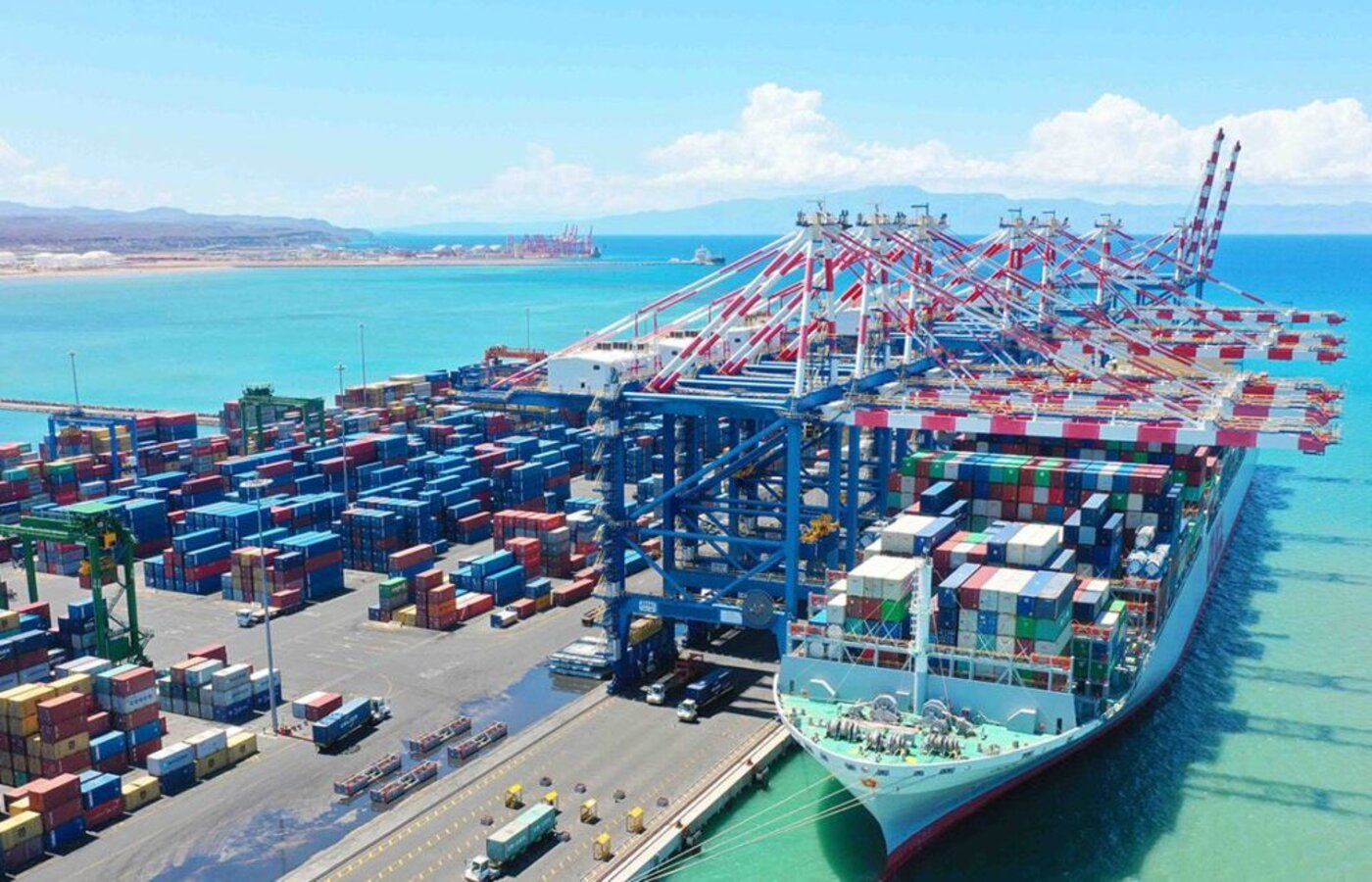
Ethiopia’s expanding economy and upcoming infrastructure projects are expected to boost demand for Djibouti’s port services in the coming years, despite competition from alternative regional ports that could put pressure on Djibouti’s revenues, the International Monetary Fund (IMF) said on January 15.
In a statement issued after a staff visit to Djibouti, the IMF said Ethiopia’s large market and joint cross-border infrastructure initiatives would help offset regional risks, including rising tensions in the Horn of Africa and potential trade diversion away from Djibouti’s ports.
“Ethiopia’s expansive market and upcoming major infrastructure projects are expected to boost demand for Djibouti’s port services, resulting in a positive growth outlook of about six percent from 2027 onwards,” the IMF mission, led by Esther Pérez Ruiz, said.
Djibouti’s economy grew by an estimated 6.5 percent in 2025, driven by robust port activity, construction, transport, telecommunications, and retail. Growth was slightly weaker than in 2024 due to reduced transhipment volumes, but Ethiopia-linked trade remains a key driver of port revenues.
Ethiopia, which relies on Djibouti for more than ninety percent of its maritime trade, continues to expand cargo volumes as it pushes ahead with large-scale infrastructure projects, industrial parks, and export growth under its economic reform agenda.
The IMF warned that rising tensions in neighbouring Horn of Africa countries could increase uncertainty, disrupt trade flows, and trigger refugee movements, while competition from other regional ports could reduce Djibouti’s earnings. Ethiopia’s fast growth and joint infrastructure projects with Djibouti were cited as key buffers against these risks.
Inflation in Djibouti fell to zero in 2025 from 2.1 percent in 2024, mainly due to lower food prices. The fiscal deficit narrowed to about 0.7 percent of gross domestic product, down from 2.7 percent in 2024, reflecting spending restraint despite revenue shortfalls. The 2026 budget targets a balanced position.
Although gross foreign reserves increased in 2025, their coverage remains below the level required under Djibouti’s currency board arrangement, which pegs the Djiboutian franc to the US dollar.
The IMF said stronger revenue mobilisation, tighter limits on public and publicly guaranteed debt, higher state-owned enterprise dividend payments, and the completion of debt negotiations with creditors were critical to restoring debt sustainability and protecting the currency board system.
For Ethiopia, Djibouti’s economic stability remains strategically important, given the country’s heavy reliance on the port for imports of fuel, fertiliser, and food, as well as exports of coffee, oilseeds, and manufactured goods.
The IMF also urged Djibouti to increase investment in health and education, reform state-owned enterprises and the energy sector, and improve efficiency to support job creation and economic diversification under its National Development Plan for 2025–30.
The IMF mission visited Djibouti from January 11 to 15. Its findings are preliminary and will not be discussed by the Fund’s Executive Board.