
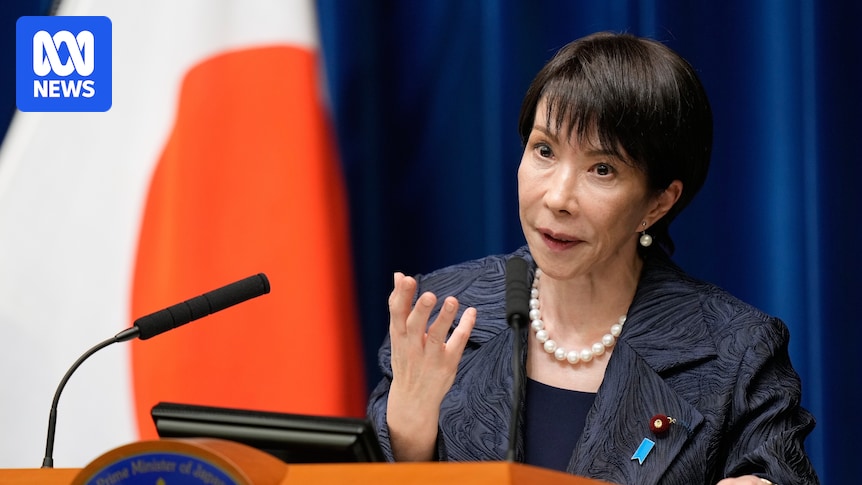
Japanese Prime Minister Sanae Takaichi says she will dissolve parliament on Friday and call a snap election for February 8.
Ms Takaichi will seek voter backing for increased spending and a new security strategy that is expected to accelerate Japan’s defence build-up.
The snap vote will decide all 465 seats in parliament’s lower house and mark Ms Takaichi’s first electoral test since she became Japan’s first female prime minister in October.
“I am staking my own political future as prime minister on this election,” Ms Takaichi said in a press conference.
“I want the public to judge directly whether they will entrust me with the management of the nation.”
Calling an early election would allow her to capitalise on strong public support to tighten her grip on the ruling Liberal Democratic Party (LDP) and shore up her coalition’s fragile majority.
The election will test voter appetite for higher spending at a time when the rising cost of living is the public’s top concern.
Ms Takaichi promised a two-year halt to an 8 per cent consumption tax on food and said her spending plans would create jobs, boost household spending and increase other tax revenues.
The prospect of consumption tax cut, which would reduce government revenue by 5 trillion yen ($47 billion) a year, according to government estimates, sent the yield on Japan’s 10-year government bonds to a 27-year high earlier in the day.
A poll released by public broadcaster NHK last week found 45 per cent of respondents cited prices as their main worry, followed by diplomacy and national security at 16 per cent.
Neighbouring spat
Ms Takaichi is banking on her high poll numbers to lead the unpopular ruling LDP to victory.
The LDP has governed Japan almost uninterrupted for decades, albeit with frequent leader changes.
Ms Takaichi was appointed prime minister in October and her cabinet is riding high in the polls, despite her party’s flagging popularity.
How Japan’s PM found herself in a diplomatic spat with China
But her ruling bloc — which includes coalition partner Japan Innovation Party (JIP) — only has a slim majority in the powerful lower house of parliament.
This could hamper the passage of her policy agenda, including “proactive” fiscal spending and boosting the defence budget.
The snap election may also help Ms Takaichi break the deadlock in a spat with China.
Ties between Tokyo and Beijing have deteriorated since Ms Takaichi suggested in November that Japan could intervene militarily if China ever launched an attack on Taiwan, the self-ruled island it claims.