
The concept of base formations has been dominating the Manchester United discourse in recent weeks.
Football is a dynamic game where formations change throughout the match depending on the phase of play. But a back three, or a back four, may affect the profiles of the players on the pitch. Because what is more important than how teams line up on paper is the characteristics of the players, their movements and the ideas they are trying to execute.
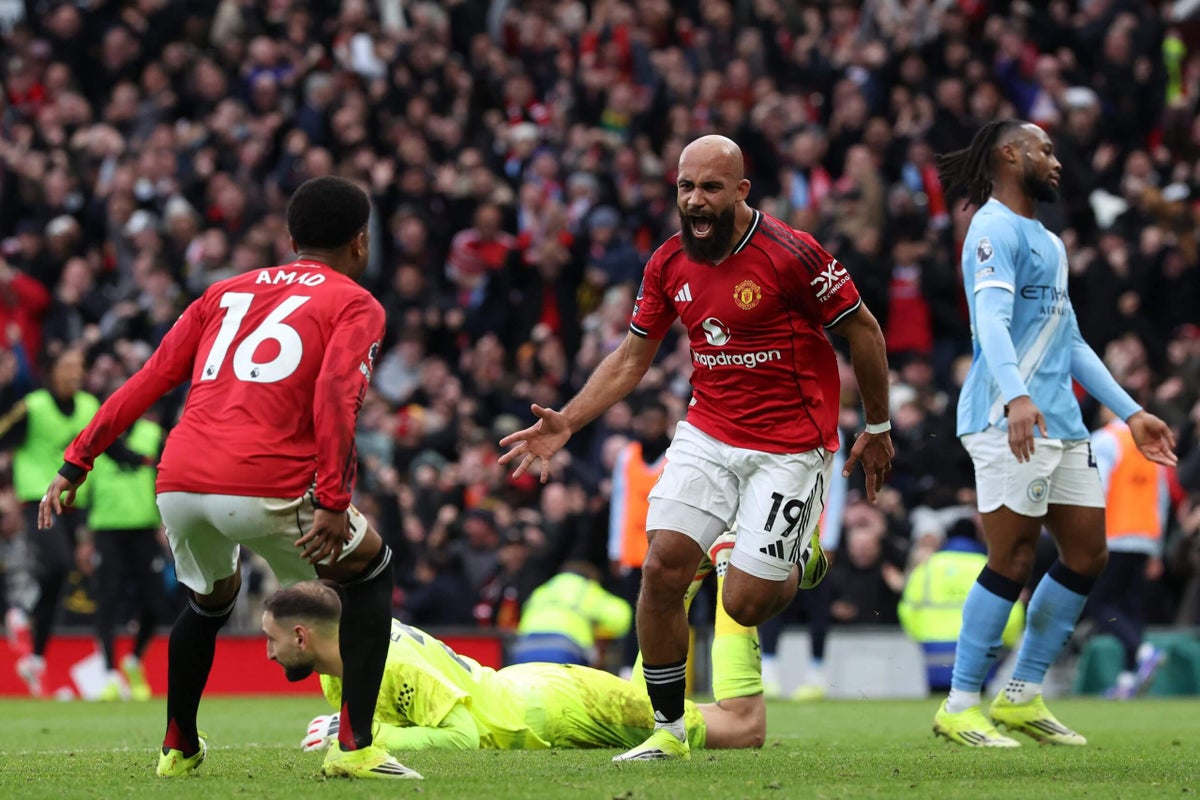
Michael Carrick and his staff had the right attacking ideas in United’s 2-0 victory against Manchester City on Saturday, and it was the players’ execution that brought it to life.
Attacking from a 4-2-3-1 base with Bryan Mbeumo leading the line, the Cameroon forward regularly dropped into the half-spaces to attack the area behind City’s midfield alongside Bruno Fernandes.
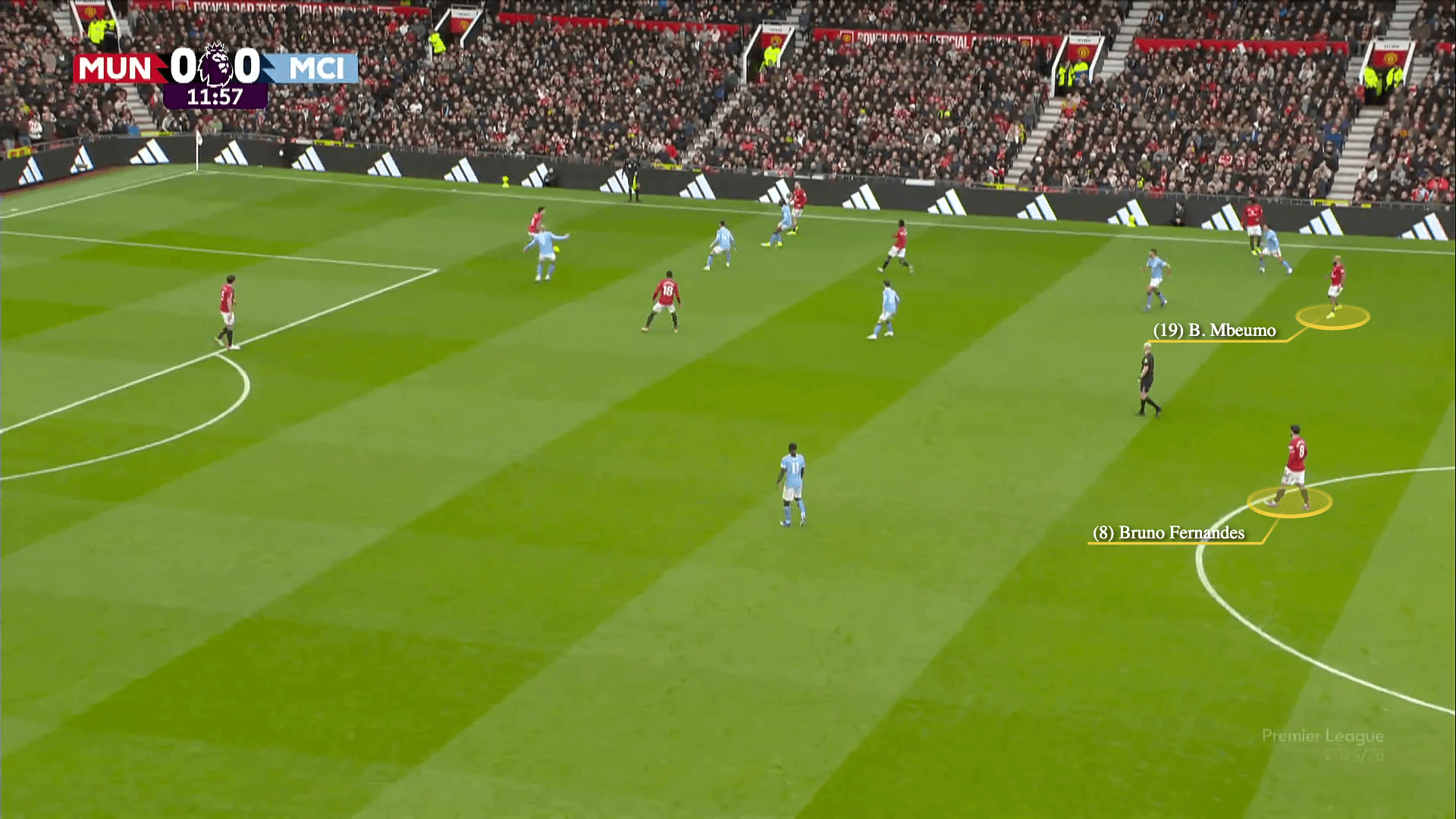
Against City’s narrow press, United wanted to use Mbeumo and Fernandes to manipulate the positioning of Rodri and City’s defensive line, while rotating their forwards to attack the vacated space.
Below, Harry Maguire finds the dropping Mbeumo, with Rodri in a deeper position covering Max Alleyne, who is tracking Fernandes.
As Mbeumo sets the ball for Fernandes, Diogo Dalot moves forward and Amad attacks the gap in City’s defensive line. The movement of United’s right-winger puts him in a centre-forward position and forces Nathan Ake inside, creating space for Dalot to attack.
Fernandes and Mbeumo combine, and the latter finds Dalot in space, but the right-back’s offside position prevents United from capitalising on Amad’s movement.

In another example below, Patrick Dorgu is momentarily in a centre-forward position, with Fernandes and Mbeumo occupying the half-spaces. Lisandro Martinez finds Fernandes between the lines and Rodri follows United’s captain, who quickly plays the ball to Kobbie Mainoo.
While Fernandes manipulates Rodri’s position and prevents him from dropping to support the defensive line, Dorgu and Mbeumo occupy the left side of City’s defence.
Mbeumo’s run into the space behind Alleyne forces Ake inside and creates space for Amad and Dalot to comfortably receive Mainoo’s switch of play. Even when Ake adjusts his orientation, United still have a two-vs-one overload, but Dalot fails to find Amad.

United’s two offside goals in the first half followed the same pattern of rotating the front line to attack the space in behind.
Here, Mbeumo’s deeper role drags City’s left centre-back, Alleyne, up the pitch, and even before Casemiro’s pass reaches United’s centre-forward, Amad and Fernandes are in position to attack the vacated space.
United’s right-winger is narrow to attack the gap in City’s defensive line, and Fernandes makes a third-man run towards the right wing because Amad is manipulating Ake’s position.
Mbeumo finds Fernandes with a one-touch pass, and United’s captain plays another one to Amad, who rounds Gianluigi Donnarumma to score, but the goal is ruled out for offside.

It is a different scenario on the second offside goal, but the main idea remains the same.
In this example, Mbeumo drops again and Dorgu moves inside to pin City’s right centre-back, Abdukodir Khusanov, keeping Alleyne alert in case Rodri is forced away from United’s centre-forward.
Meanwhile, Amad and Fernandes are overloading Ake, and the Portugal midfielder makes a run behind City’s pinned defensive line. Martinez finds Fernandes’ run into space, and the latter scores from this move, but the goal is disallowed for a close offside call.

In another example, Carrick’s side takes advantage of City’s unorganised block and finds a dropping Mbeumo.
United’s centre-forward is free because Rodri isn’t close to track him, and Ake doesn’t want to vacate space in the defensive line with Fernandes in position to attack it.
As Mbeumo plays the ball to Dorgu, Luke Shaw makes a run behind the defence, which triggers an offside trap from Ake.
With City’s left centre-back focusing on what is in front of him, Fernandes’ central position grabs the attention of the opponent’s left-back, Nico O’Reilly. This creates space for Amad, who Dorgu finds with a switch of play towards the right wing.

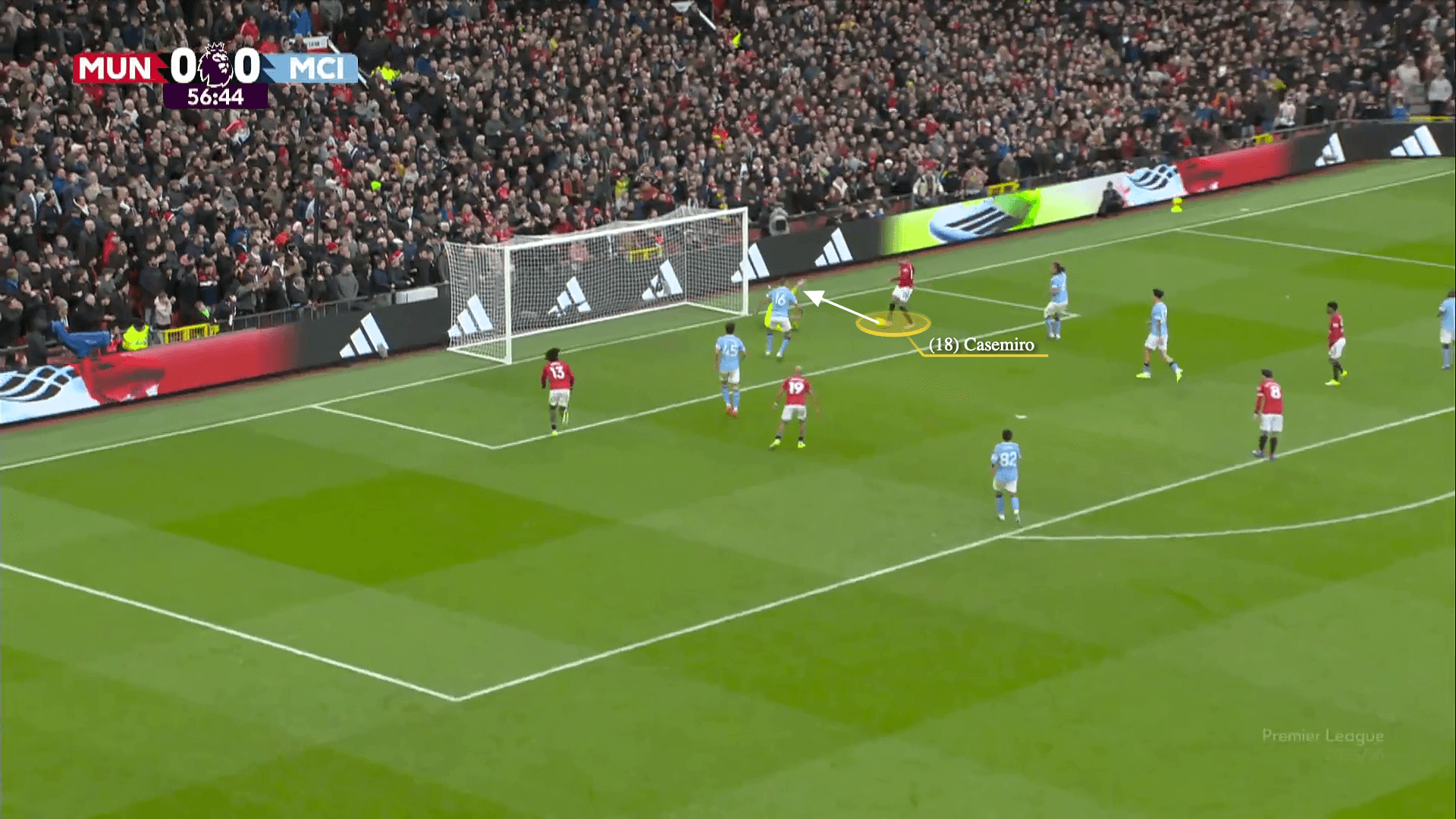
United create an isolated one-vs-one situation for Amad, and the winger dribbles past O’Reilly before his shot is saved by Donnarumma.
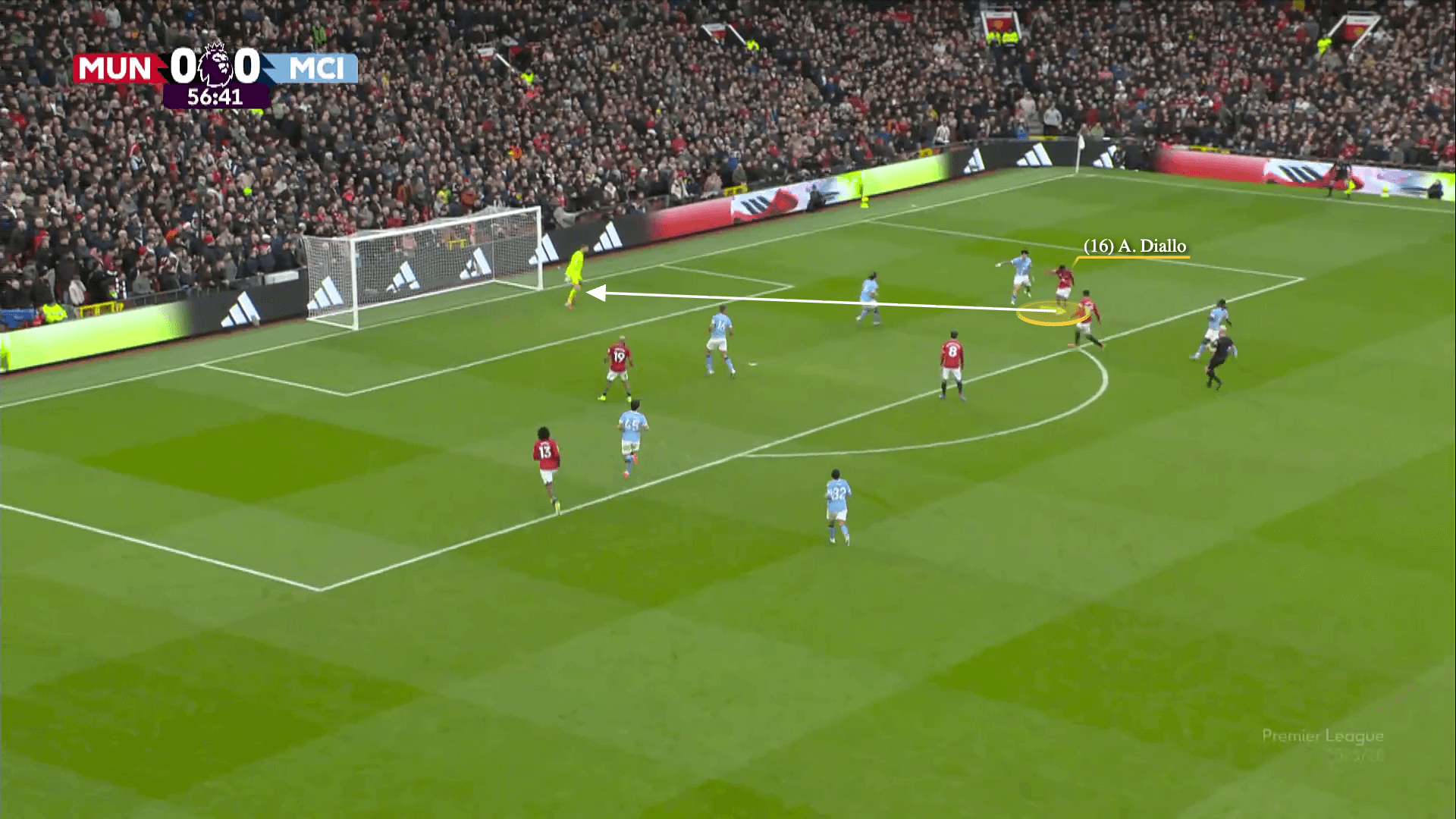
City’s goalkeeper then makes a second save to deny Casemiro from scoring.
United took the lead through a counter-attack, and even if their second goal didn’t come from a neat passing combination, it still followed the same principle of the forwards attacking the space in behind.
Here, Dalot tries to attack the space behind Ake when Matheus Cunha drops, and Dorgu is also signalling for the ball to be played behind City’s centre-backs.
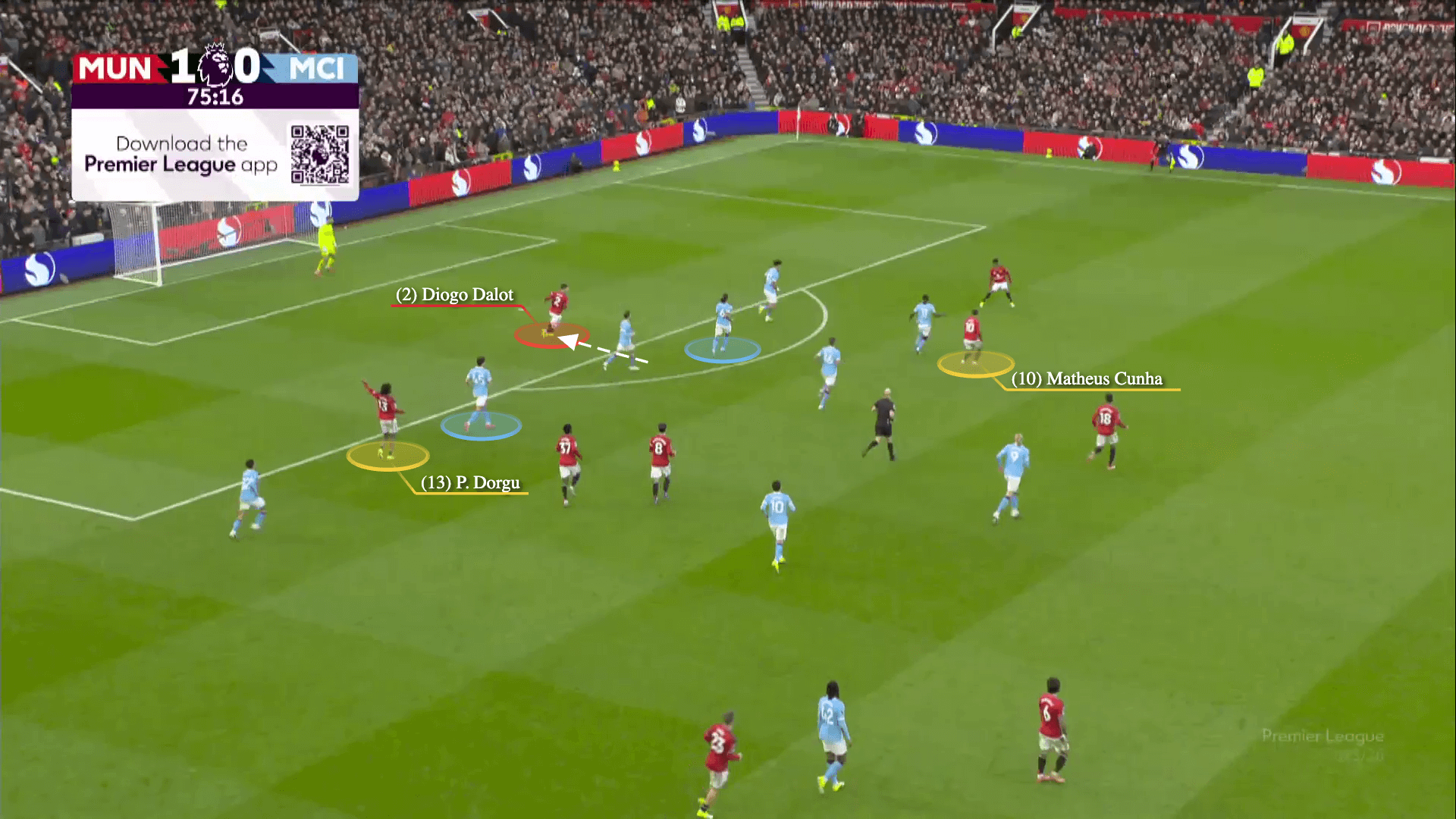
As Amad and Cunha combine down the right side, Fernandes and Dalot occupy Khusanov and Ake, with Dorgu positioned wide.
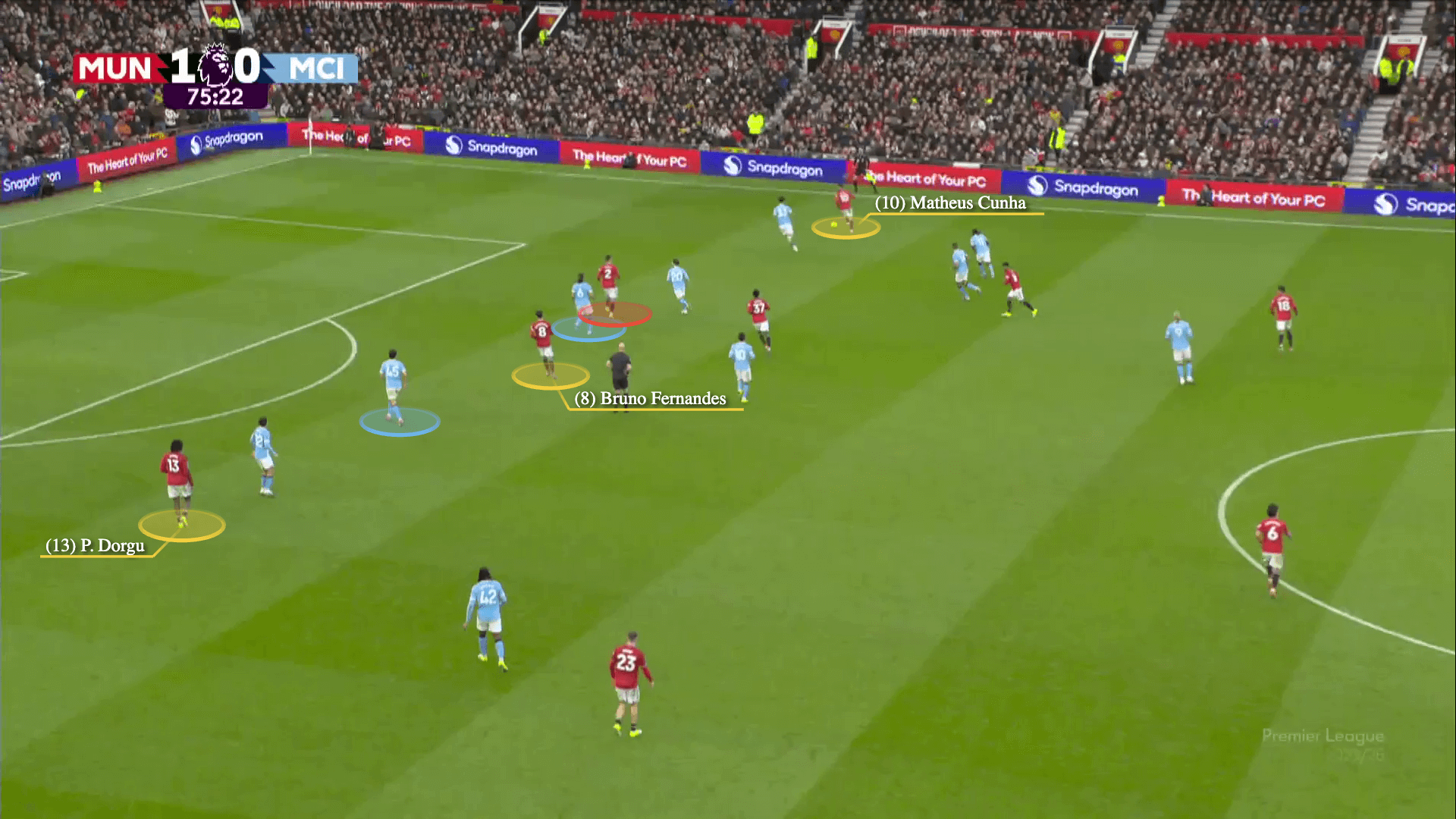
However, Dorgu moves inside to attack the space behind City’s centre-backs when Cunha is in a crossing position…
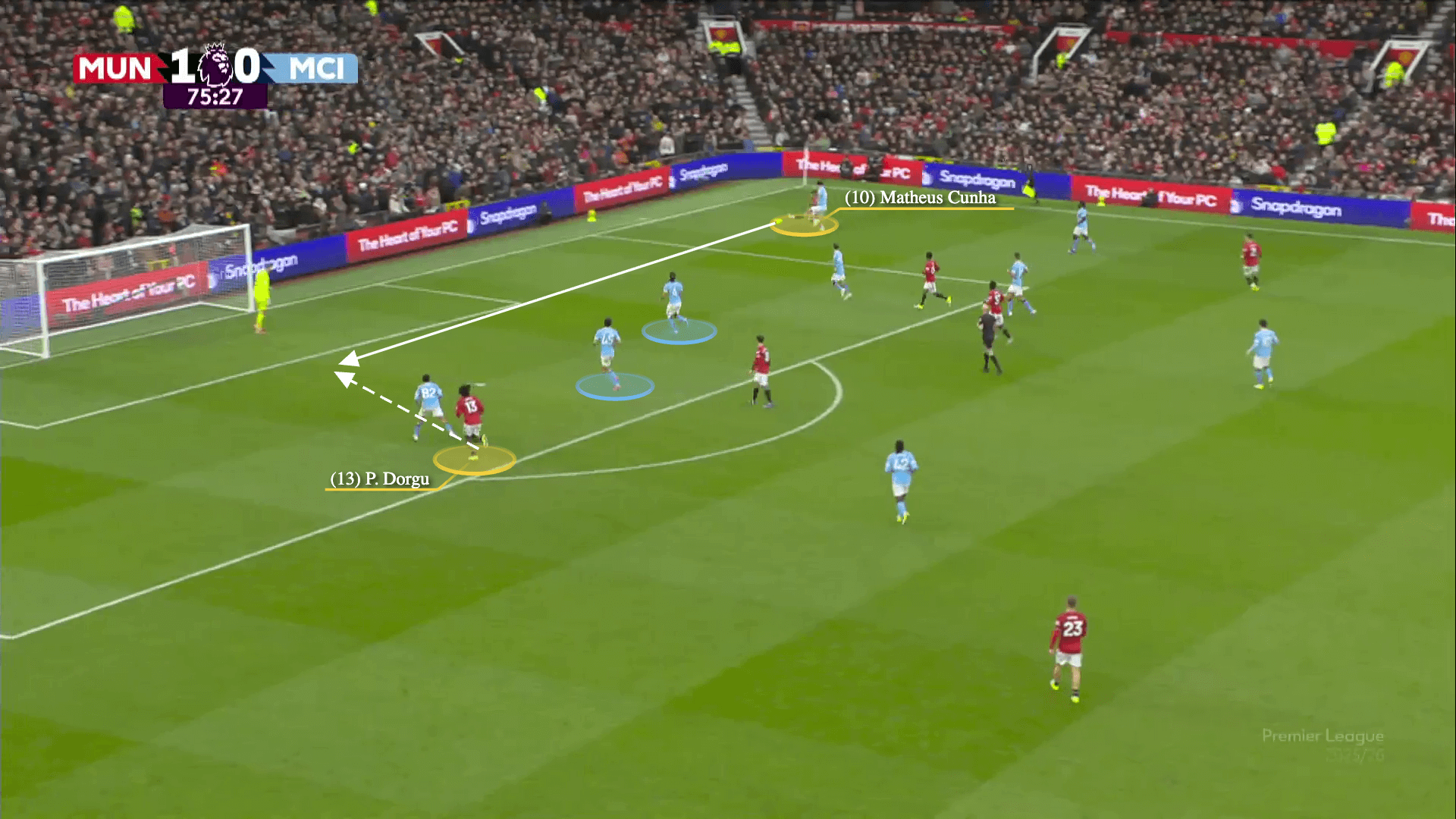
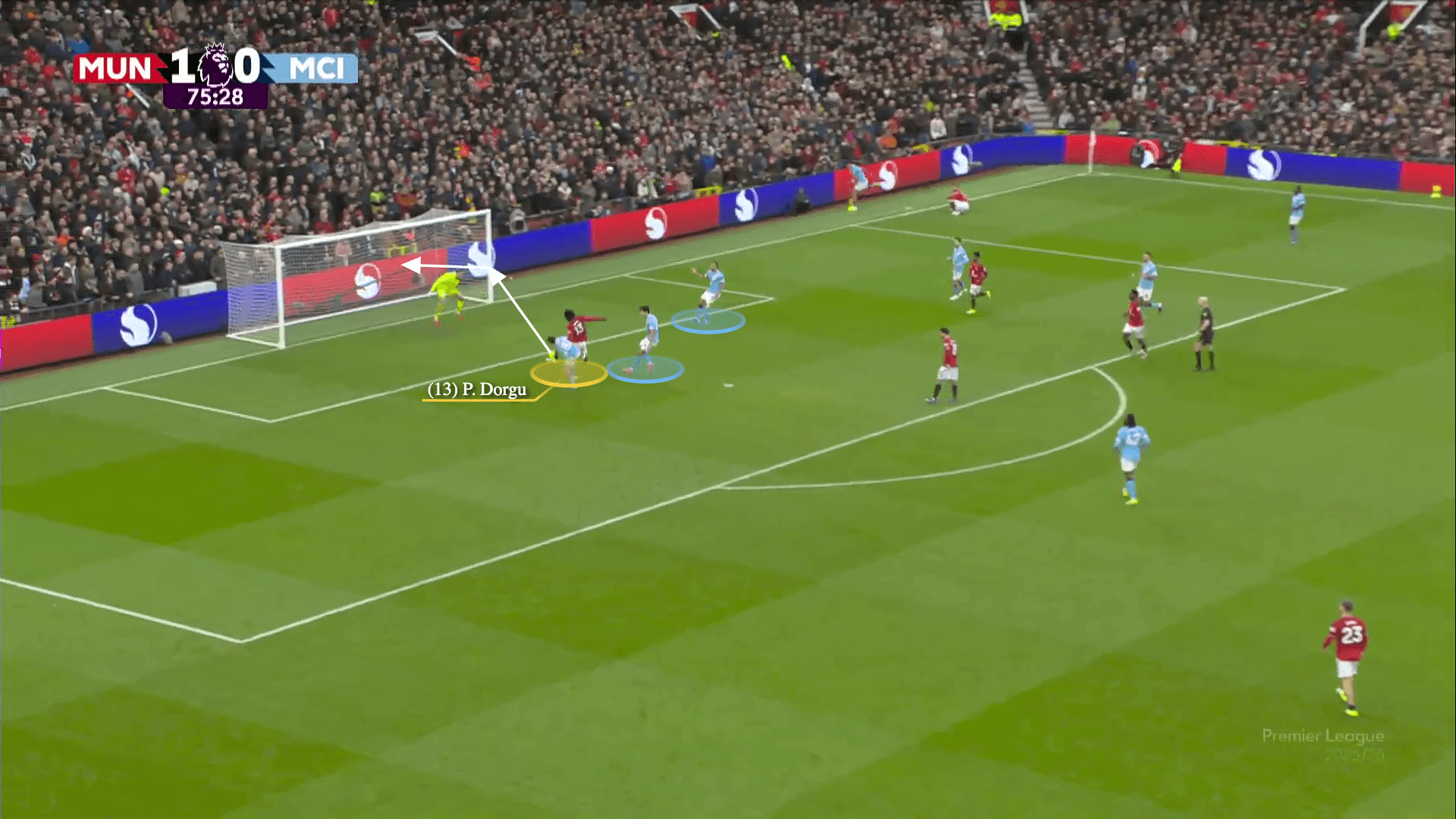
… and connects with the cross to make it 2-0.
Before the Manchester derby, Carrick was asked about his team selection as United head coach and gave an answer that didn’t make headlines.
“Nothing different to any other team in terms of putting players on the pitch that we think will fit in a good balance and depending what game, who we are playing against, what it looks like, where is our strengths,” he told reporters at the press conference. “That’s it. That’s on me and my coaches and the staff to put that together.”
It was a basic answer, but it was the right one.