
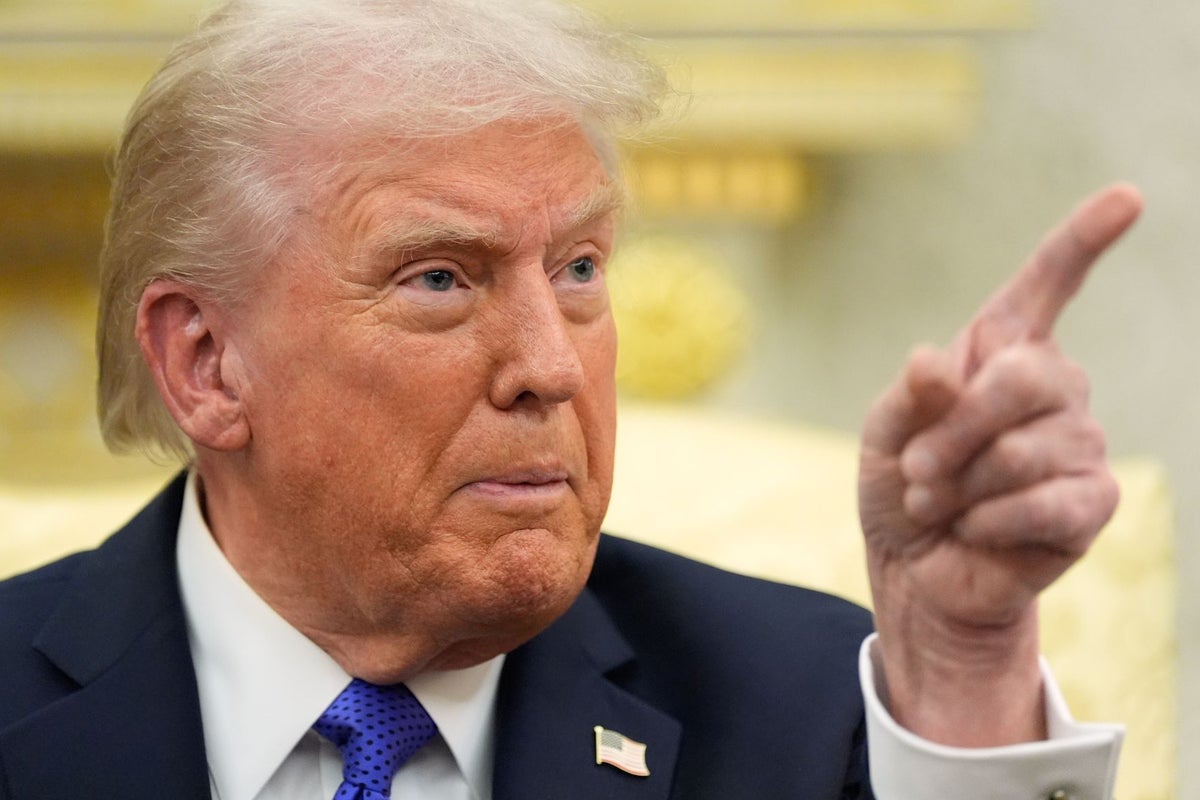
For most of my professional life I operated on a single, unshakeable assumption: the United States was the cornerstone of Western security. Nato planning, deterrence and collective defence rested on American leadership and reliability. Today, under president Donald Trump, that assumption no longer holds.
This is not about rhetoric or personality; it is about intent. With Trump, we must stop telling ourselves he does not mean what he says. He does. When he says he wants Greenland, he means it. When he speaks of Canada as the 51st state, he means it. When he threatens allies with tariffs, coercion or territorial claims, these are not jokes or negotiating gambits – they are policy.
The West has made a catastrophic error in treating Trump seriously, but not literally. Autocrats and bullies read accommodation as weakness. Appeasement does not buy stability; it invites escalation. The crocodile always comes back for more.
What makes the current moment so dangerous is that the threat is no longer external. Nato is an alliance built on trust, shared democratic values and collective defence. Article 5 depends not only on the principle that an attack on one is an attack on all, but also on the assumption that no member would ever threaten another. Yet we now face the extraordinary reality of Nato’s lead nation openly threatening Denmark, one of the alliance’s most loyal and courageous contributors.
Denmark paid a heavy price supporting US‑led operations in Afghanistan. Per capita, its casualties were among the highest of any ally. To see Danish sovereignty questioned by Washington is not merely offensive – it is a fundamental breach of trust that puts Nato’s future in jeopardy.
Consider the practical implications. If US forces landed in Greenland, they would not be planting a flag on empty ice; they would be entering Danish territory defended by allies who have already pledged their commitment to Denmark – including Britain.
That scenario would expose Nato as unworkable. Worse, it would hand Vladimir Putin precisely what he seeks: a divided West, incapable of collective defence and vulnerable to coercion once Ukraine has been ground down.
Appeasement is not merely misguided – it is dangerous. Europe’s failure to respond robustly to punitive US tariffs, and Britain’s reported search for exemptions, send the wrong message. Trump thrives on division. If nations break ranks to save themselves, unity collapses. Without unity, Nato dies.
So what must be done?
First, accept reality. Under Trump, the United States can no longer be treated as a reliable ally. This is not hostility towards America; it is contingency planning. Defence ministries and chiefs of staff should be war‑gaming worst‑case scenarios – including the previously unthinkable: US aggression against a Nato ally. Not doing so would be a dereliction of duty.
Second, Europe and Canada must stand together without hesitation or ambiguity. There must be no daylight between them. Tariffs, threats and intimidation succeed only if they divide us. Unity is deterrence.
Third, Nato must be Europeanised – not dismantled, but rebalanced. Nato already has the command structures, doctrine and interoperability to function. What must change is dependence. For decades, Europe outsourced its security to Washington and spent the dividend elsewhere. That era is over. Defence spending must rise – now, not in vague promises a decade hence.
This is not solely about money; it is about mindset. Modern warfare, as Ukraine has shown, is being reshaped by drones, autonomy, artificial intelligence and logistics resilience. Too much European spending remains locked into legacy systems while readiness and resilience are neglected. Armour still matters, but so do supply chains, adaptability and the capacity to sustain prolonged conflict.
Finally, prepare for a formal Canada-Europe defence pact built on Nato’s framework but excluding the United States while Trump remains in office.
The objectives would be the same: the defence of territory, airspace and sea lines of communication. Leadership must rest with those willing to commit real resources and stand by allies under threat. Britain, France, Germany, Poland and Canada should form the core, joined by others prepared to act rather than equivocate.
There will be institutional resistance, especially from those for whom closeness to Washington has become an article of faith. That reflex is now a liability. Loyalty must run both ways.
We have one card left to play: unity without illusion. If we play it, the values upon which Nato was founded may yet survive in another form. If we do not, we will discover – too late – that trust, once broken, cannot be restored by speeches, summits or state visits.
General Sir Richard Shirreff served as Nato’s deputy supreme allied commander Europe between 2011 and 2014