
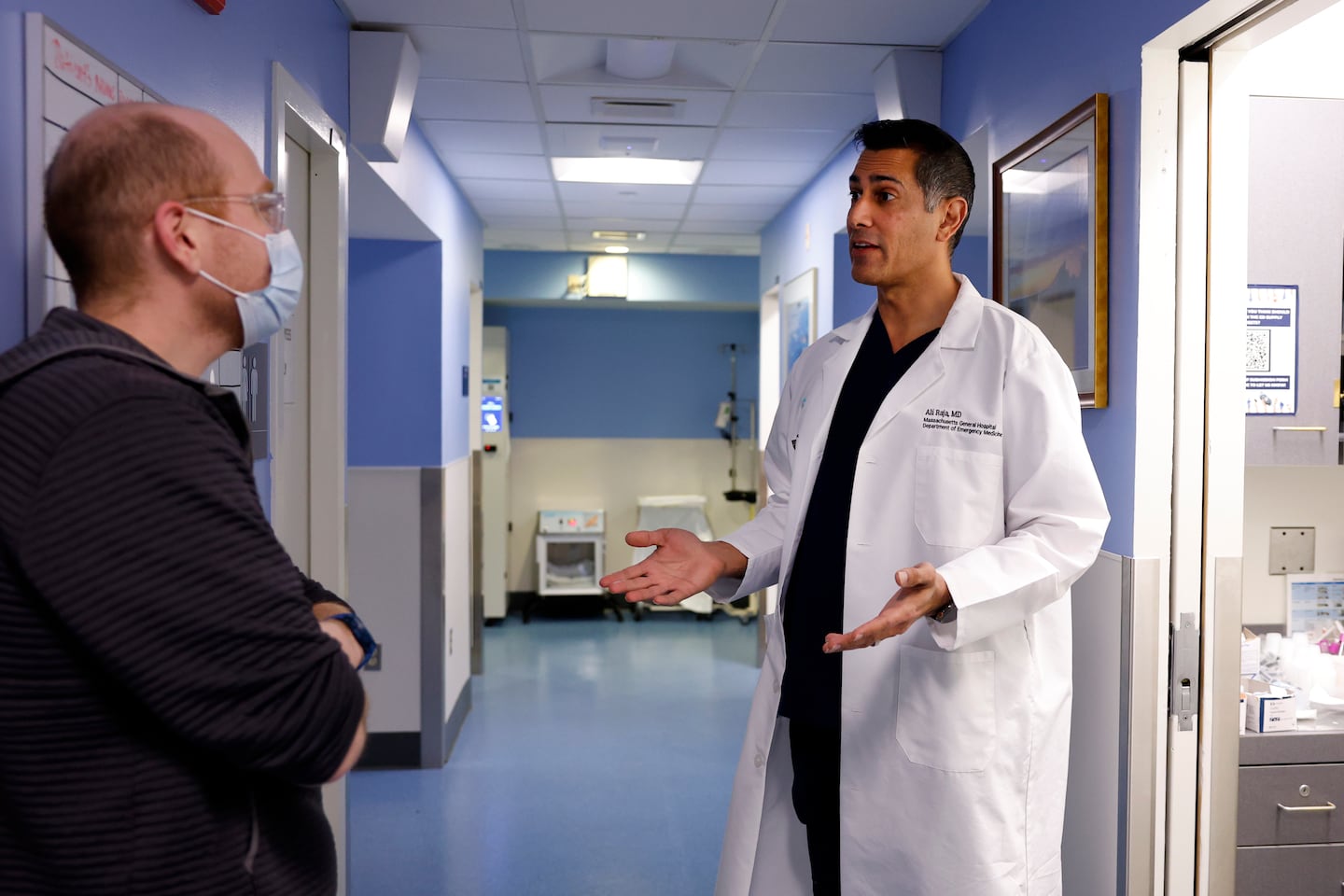
“This show is the most realistic portrayal of my job that I’ve ever seen,” said Dr. Ali Raja, executive vice chair of emergency medicine at Mass General Brigham, who works as an attending ER doctor at Massachusetts General Hospital and Brigham and Women’s Hospital a few days a week.
Raja, 48, has watched the first season of “The Pitt” twice. The first time was with his wife, Danielle, who worked as an emergency room nurse at the University of Cincinnati Medical Center. The second was with their two children, ages 13 and 11, who didn’t fully appreciate what Dad does for a living.
When a patient in the first episode ran naked through the emergency room screaming, “No more needles,” Raja said, his children were astonished, although Raja has seen patients with psychiatric problems try to leave the ER with gowns barely tied.
His kids aren’t the only ones he encouraged to watch it. If college undergraduates ask to shadow Raja to see if they should apply to medical school, as many do, he said, he recommends they first see “The Pitt.” More than one student has streamed the show, which features authentic-looking spurting blood, gaping wounds, and pulsating hearts, and never got back to Raja, he said.
“The Pitt” stars Noah Wyle as Dr. Michael “Robby” Robinavitch, an attending ER doctor at the teaching hospital who is wise, charismatic, and typically unflappable. Wyle and the supporting cast have won critical acclaim for capturing the complicated dynamics among attending physicians, residents, medical students, nurses, social workers, orderlies, security guards, and, of course, patients.
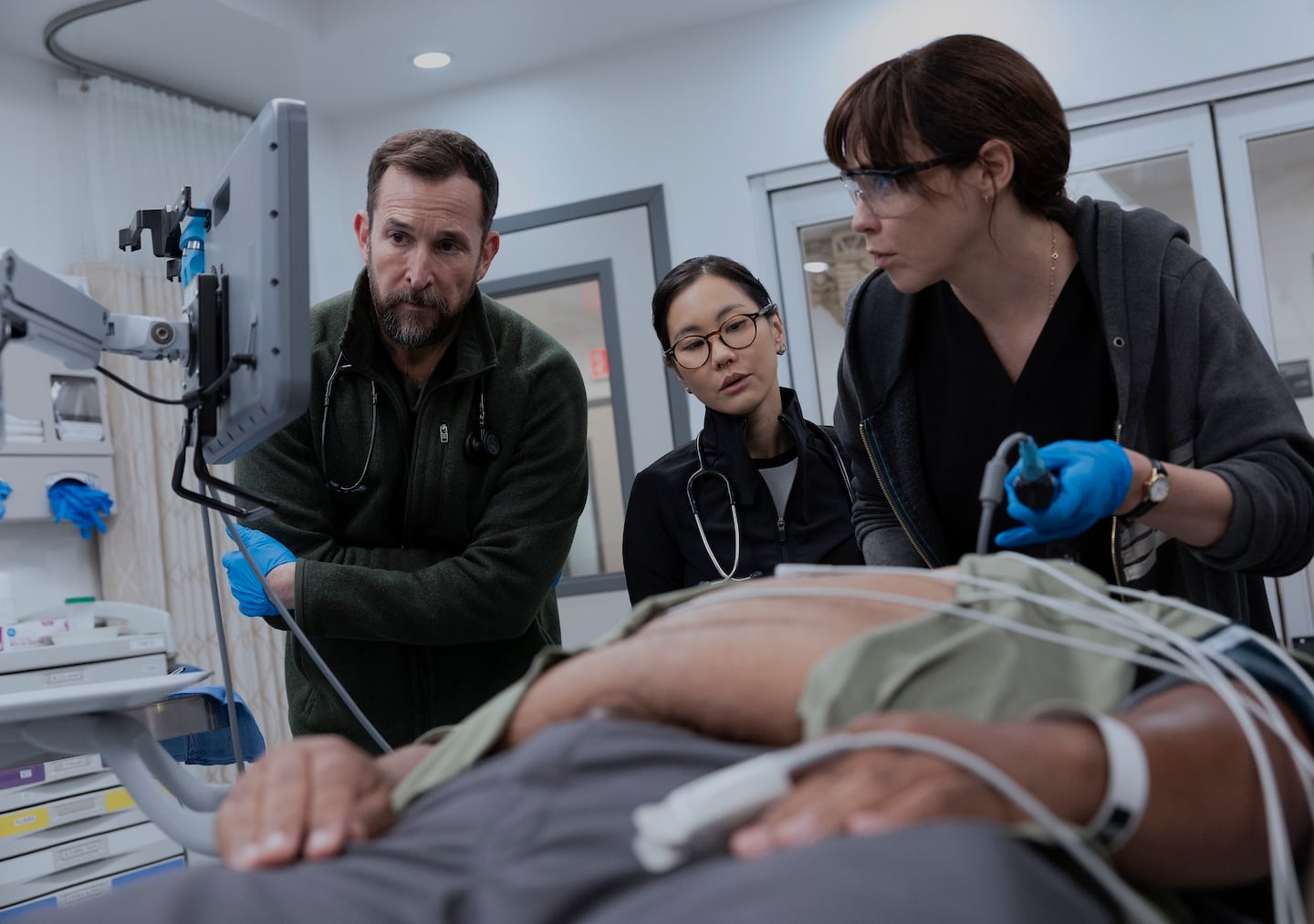 From left: Noah Wyle, Irene Choi, and Fiona Dourif in “The Pitt.”Warrick Page/HBO Max
Unlike other medical shows that pander to viewers, “The Pitt” brims with medical jargon — Raja recommends watching it with closed captions and with Google open nearby — and deploys no soundtrack to gin up emotional responses from audiences. Adding to the verisimilitude is the structure of the show: each hourlong episode covers a single hour in a shift.
But what makes the show so compelling to Dr. Timothy Boardman, an attending physician in the emergency department at UMass Memorial Medical Center in Worcester, is how patients overwhelm the ER in “The Pitt.” They clog the waiting room. They lie on gurneys in the hallway. They gripe to nurses that a physician should have seen them already.
“The reality of emergency medicine is there [are] more patients than there are providers,” said Boardman, 36, who said gurneys line the hallways of his emergency department to handle the overflow at UMass Memorial.
The maladies of patients who end up in the chaotic ER of “The Pitt” vary widely, from toothaches to gunshot wounds, from skateboarding injuries to drug overdoses. While the medical treatments are spot on, Boardman said, they occasionally exceed what even the most skilled emergency room doctors would do. (He cited an episode where a doctor drilled a “burr hole” in a patient’s skull to relieve pressure from intracranial bleeding; Boardman said that procedure would actually be performed by a neurosurgeon in an operating room.)
Another element that’s on target: how many patients come in because of psychiatric conditions.
“The emergency department is definitely the safety net of the medical system,” said Boardman. “We do see a large volume of patients with various degrees of mental health conditions and crises.”
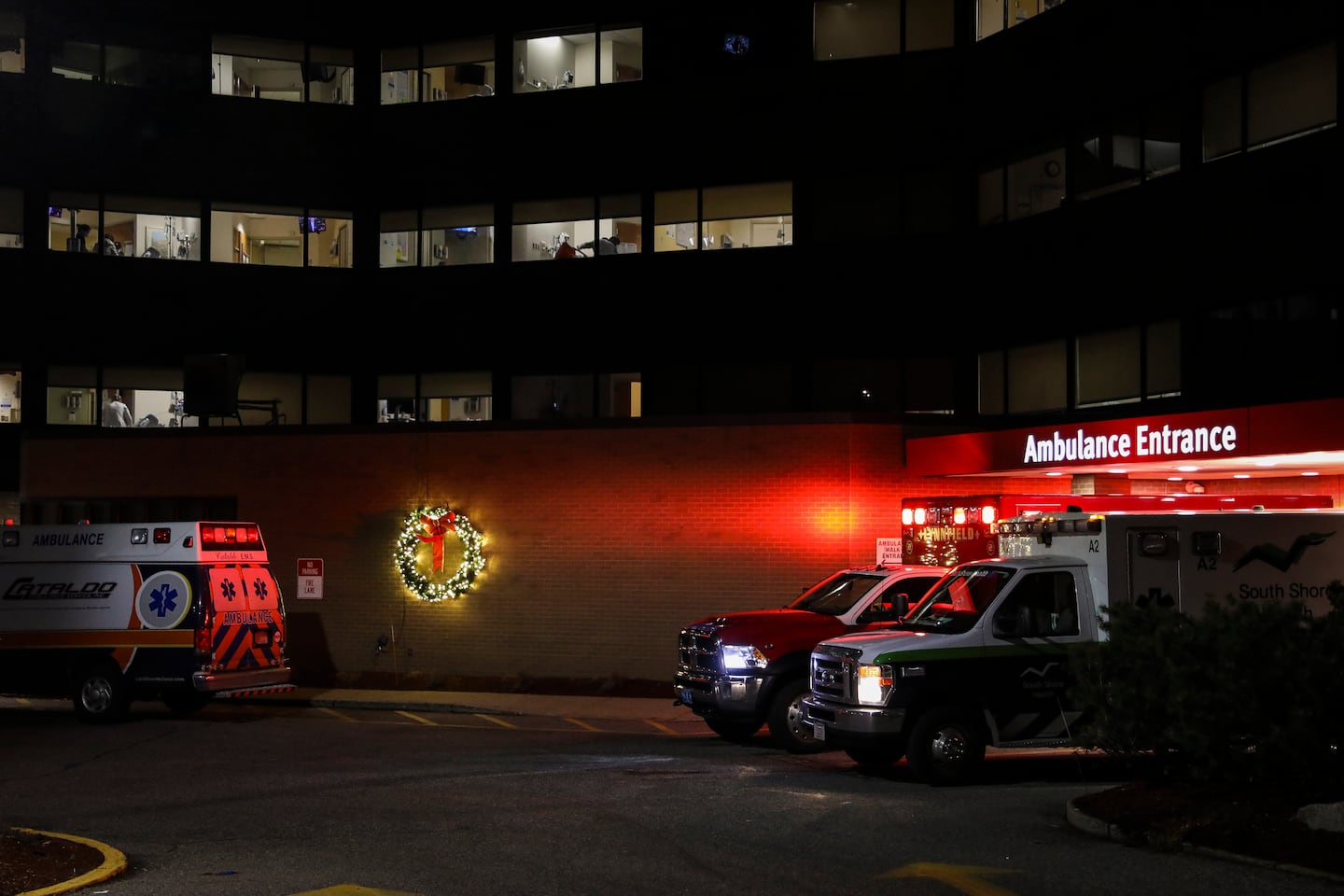 Two ambulances sat in the emergency bay of Melrose Wakefield Hospital in 2023.Erin Clark/Globe Staff
It’s not just grizzled veterans who praise the story of Dr. Robby and his team of junior physicians.
Connie Le, a second-year student at Tufts University School of Medicine, cited a scene in which a child shows up at the emergency room with a likely complication of measles and needs to undergo a spinal tap. Le said the details of the complication, called acute disseminated encephalomyelitis, matched what she was learning in school.
“You can tell they did their homework,” said Le, who is leaning toward becoming an ER doctor and has used the show as a study aid.
To be sure, some plot lines in “The Pitt” are exaggerated for dramatic purposes.
Andrew Buksar and Sarah Pearson, two nurses in the emergency room at Rhode Island Hospital in Providence, said they have never seen a patient with rats hidden under their clothes.
But they have treated patients with bed bugs and maggots, the latter of which squirm on the arm of a patient whose cast is removed in the second season.
Buksar, 45, and Pearson, 39, also said they have been assaulted by patients. (This is surprisingly common: Two-thirds of registered nurses surveyed in Massachusetts in 2024 said they had experienced at least one violent episode in the prior two years.)
In one case, Buksar said, a patient whose arm was in a cast swung at his head. Buksar vaguely recalled that the man wanted a medication, and the nurse couldn’t give it to him.
Perhaps the worst confrontation Pearson had with a patient was verbal, not physical. Pearson was nine months pregnant, she said, and referred an intoxicated man to a hospital specialist for a mental health exam.
“He said, ‘I hope your baby dies,’” Pearson said, wincing as she recalled it.
Another thing in “The Pitt” that resonated with Buksar and Pearson was when a hospital administrator tells Dr. Robby that the emergency department must improve its Press Ganey patient satisfaction scores. Press Ganey is a real South Bend, Ind.-based health care company that develops and distributes patient satisfaction surveys to hospitals. Administrators at Rhode Island Hospital keep track of its Press Ganey scores, too, the nurses said.
Rhode Island Hospital’s response to the Dec. 13 shooting at Brown University that killed two students and left nine wounded also closely resembled how Pittsburgh Trauma treated victims of a mass shooting at a concert, according to the two nurses. Both nurses came in to work on their days off after the tragedy. Like Pittsburgh Trauma, Rhode Island Hospital has an emergency management plan it rolled out after facing mass casualties.
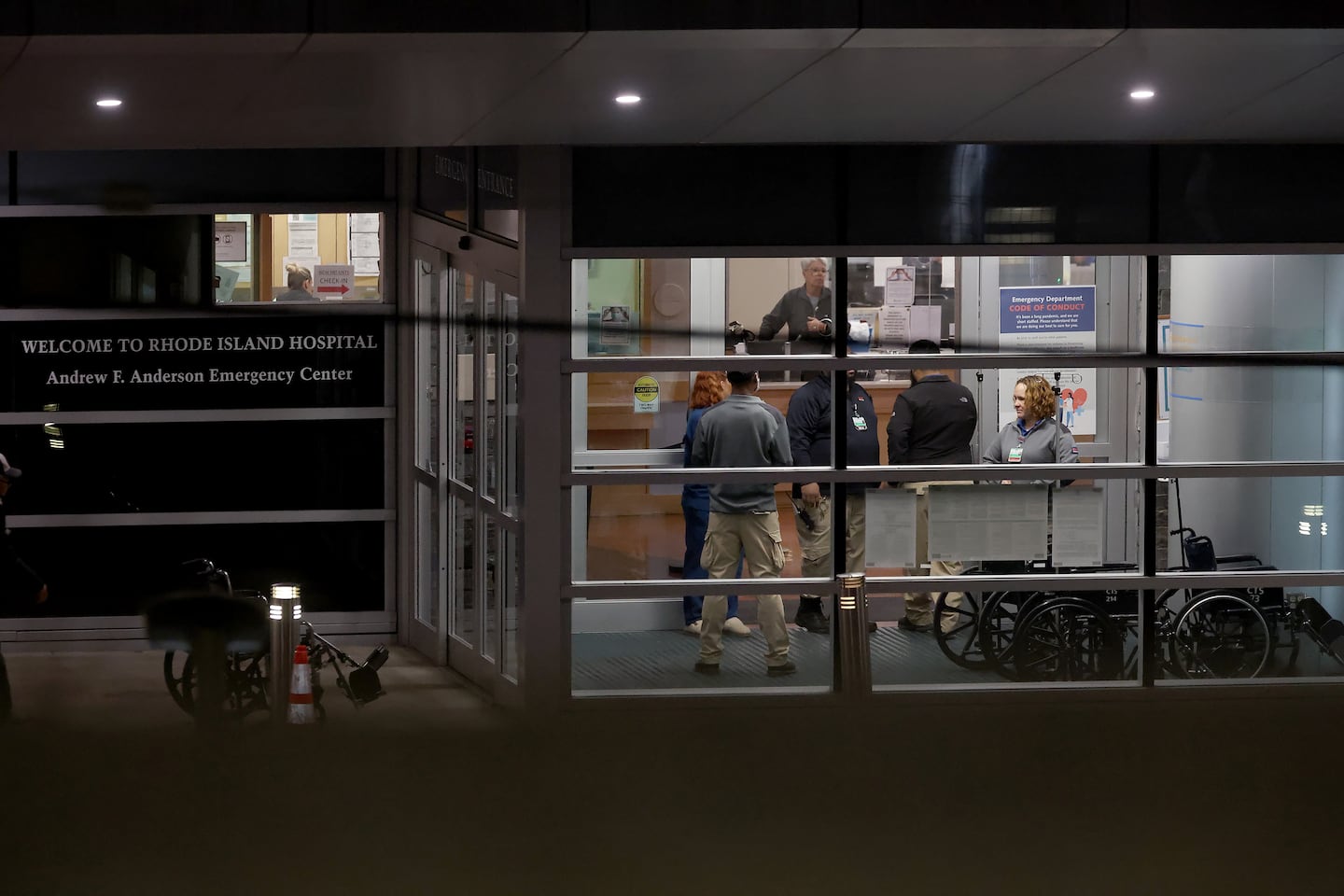 People stood at an entrance to Rhode Island Hospital in Providence on Dec. 13, where victims from a shooting at Brown University were transported.Mark Stockwell/Associated Press
But “The Pitt” is also entertaining, and that’s what keeps viewers coming back, whether they wear scrubs or not.
Pearson was delighted that the ER’s tough, seasoned charge nurse, Dana Evans, returned in the first episode of the second season. Evans said last season she was going to leave the hospital after a patient punched her in the head.
“She’s a total badass,” Pearson said. “I love her.”
Jonathan Saltzman can be reached at jonathan.saltzman@globe.com.