
The Social Security Administration has confirmed a 2.8 percent cost-of-living adjustment (COLA) for 2026, affecting nearly 75 million Americans who receive Social Security retirement, disability, survivors, and Supplemental Security Income (SSI) benefits.
The adjustment is intended to help benefits keep pace with inflation as measured by the Consumer Price Index for Urban Wage Earners and Clerical Workers. Most Social Security recipients will see the higher amounts reflected in January 2026 payments, while SSI recipients will receive the increase earlier due to calendar rules.
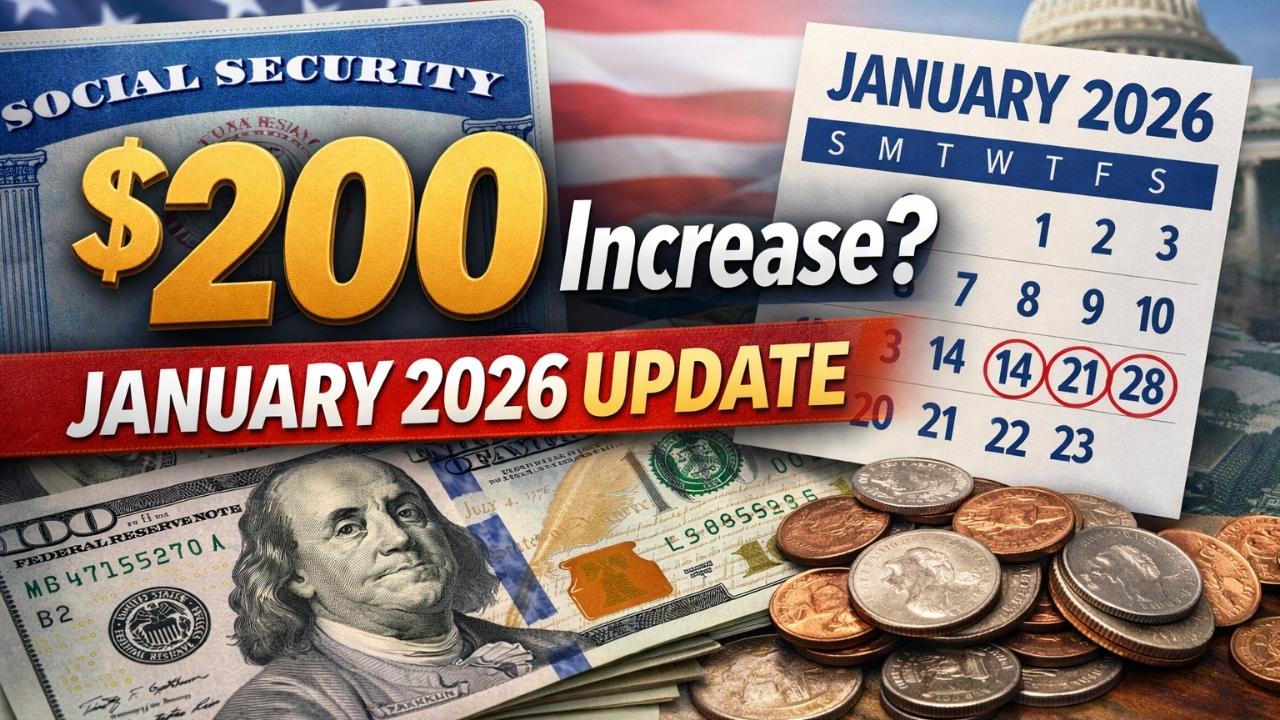
Despite frequent online claims, there is no official approval of a flat $200 monthly increase for all beneficiaries. Instead, the 2026 update follows the standard percentage-based COLA formula, meaning the actual dollar increase varies by individual benefit amount.
How the 2026 Social Security COLA Was Determined
Each year, the Social Security Administration reviews inflation data from the third quarter to determine whether a COLA is warranted. For 2026, inflation levels triggered a 2.8 percent increase, which is applied uniformly as a percentage rather than a fixed dollar amount.
This method ensures that benefits rise proportionally based on what each beneficiary already receives. Someone with a higher existing benefit sees a larger dollar increase, while someone with a lower benefit sees a smaller increase, even though the percentage is the same.
Because the COLA is formula-driven and written into law, beneficiaries do not need to apply or take any action to receive the increase.
What the Increase Means for Average Monthly Benefits
For most beneficiaries, the 2.8 percent COLA translates into a moderate monthly increase rather than a dramatic jump. According to current estimates, the average retired worker will see their benefit rise by about $56 per month, bringing the average monthly retirement benefit to roughly $2,071 in 2026.
Disability and survivor benefits also rise by the same percentage, but the actual dollar impact depends on each recipient’s payment history and eligibility category. While some individuals with higher benefits may see increases of nearly $200, this is not typical for most recipients.
It is also important to distinguish between gross benefit amounts and net payments, as deductions can reduce the final amount received.
Medicare Premiums and Other Deductions Can Offset Gains
Many Social Security beneficiaries have deductions automatically withheld from their monthly checks. The most common is the Medicare Part B premium, which is deducted before benefits are deposited.
If Medicare premiums rise in 2026, part of the COLA increase may be absorbed by those higher costs. Other deductions, such as voluntary tax withholding, garnishments, or repayment of overpayments, can further reduce the net increase. This explains why some beneficiaries may feel their raises are smaller than expected.
January 2026 Social Security Payment Schedule
Social Security payments are issued on a staggered schedule to ensure smooth processing. For most beneficiaries who began receiving benefits after May 1997, payment dates are based on birth dates and fall on Wednesdays.
In January 2026, payments are scheduled as follows:
Beneficiaries born between the 1st and 10th receive payment on January 14
Those born between the 11th and 20th receive payment on January 21
Those born between the 21st and 31st receive payment on January 28
Beneficiaries who began receiving payments before May 1997, as well as certain SSI recipients, follow separate payment rules.
Why SSI Recipients See the Increase Earlier
SSI payments operate on a different calendar from Social Security retirement and disability benefits. Because January 1 is a federal holiday, SSI recipients will receive their COLA-adjusted payment on December 31, 2025.
Although the federal SSI base rate increases by 2.8 percent, the final payment amount varies widely. Living arrangements, household income, and state-level supplement programs all influence how much an SSI recipient ultimately receives each month.
Why a Universal $200 Increase Has Not Been Approved
Social Security law authorizes only percentage-based COLAs, unless Congress passes separate legislation to approve a flat-dollar increase. No such legislation has been enacted for 2026.
As a result, payment changes vary due to factors such as existing benefit levels, Medicare premiums, and other deductions. Even beneficiaries with similar earnings histories may see different increases because of these variables.
What Beneficiaries Should Expect in 2026
Beneficiaries do not need to take any action to receive the 2026 increase. Updated benefit amounts are calculated automatically and paid according to the regular schedule. Revised payment details are typically available through official benefit notices and online Social Security accounts.
The January 2026 update represents a measured, inflation-based adjustment, not a sweeping benefit expansion. While some individuals may see increases close to $200, most beneficiaries will experience smaller, proportional gains tied directly to the 2.8 percent COLA.
FAQs
Is there a confirmed $200 Social Security increase for everyone in 2026?
No. The confirmed increase for 2026 is a 2.8 percent COLA, not a flat $200 monthly boost. Actual increases vary by benefit amount.
When will the higher Social Security payments start?
Most beneficiaries will see the increased amount in their January 2026 payment. SSI recipients receive the increase on December 31, 2025.
Why does my increase seem smaller than expected?
Medicare Part B premiums, taxes, or other deductions may reduce the net amount you receive, even though the gross benefit increased.
Do beneficiaries need to apply for the 2026 COLA?
No. The COLA is applied automatically to eligible benefits, and no action is required.
Can Congress still approve a flat increase later?
A flat-dollar increase would require new legislation. As of now, no law authorizing a universal $200 increase for 2026 has been passed.

Aslam Imandar is a dedicated Indian content writer at BhandaraDCCB.in, with a keen focus on recruitment notifications, exam updates, government schemes, and result announcements. With an eye for detail and a commitment to accuracy, he simplifies complex updates for job aspirants and students across India.