
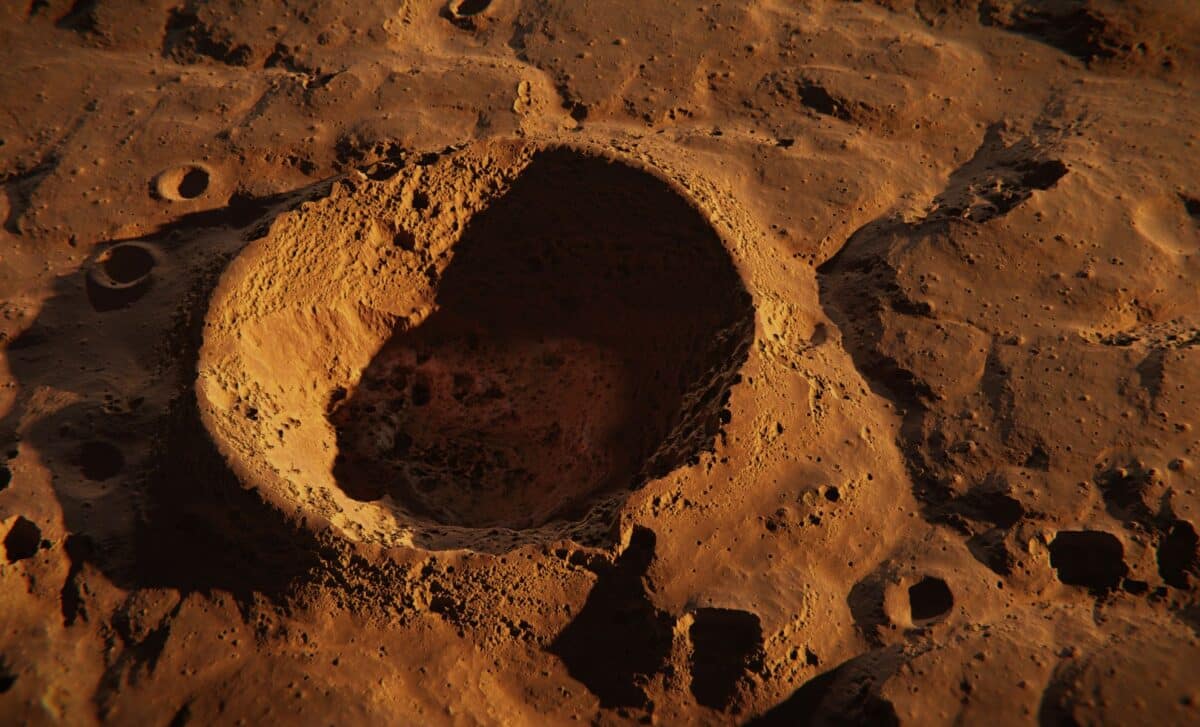
Over the past decade, the Curiosity rover has played a key role in this search, steadily climbing the layered terrain of Mount Sharp inside Gale Crater. Its mission is to investigate Mars’ ancient environments and uncover clues about the planet’s transformation from a wetter world to the dry, cold landscape seen today.
Recent findings have brought that goal into sharper focus. The rover has reached a new geological region rich in mineral deposits and shaped by complex surface processes. Early observations from this area suggest that Mars once harbored conditions more favorable to life than previously confirmed.
Ancient Water Signatures On Vera Rubin Ridge
In its latest phase of exploration, Curiosity moved onto Vera Rubin Ridge, an eight-story-high formation located within Gale Crater. The ridge, named after the astronomer Vera Rubin, contains high concentrations of hematite, an iron-oxide mineral known to form in water-rich environments. Similar mineral traces were previously discovered in other Martian regions by NASA’s Opportunity and Spirit rovers, but the ridge presents a rare opportunity to study these formations in layered rock.
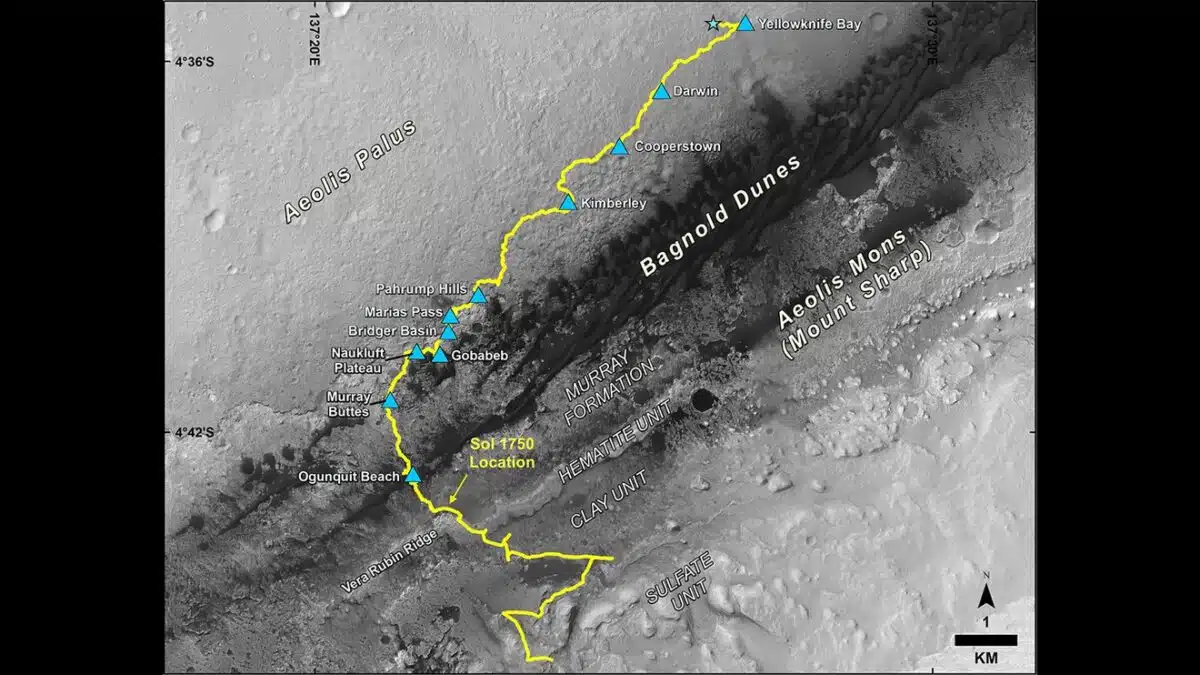 Curiosity’s route across Gale Crater toward Mount Sharp, shown in yellow. Credit: NASA/JPL-Caltech/University of Arizona
NASA scientists are investigating whether the hematite in Vera Rubin Ridge and the neighboring Murray formation share a common origin. Abigail Fraeman, a member of the Curiosity science team at NASA’s Jet Propulsion Laboratory, highlighted the mission’s key questions:
“Were they deposited by wind, or in a lake, or some other setting? Did the hematite form while the sediments accumulated, or later, from fluids moving through the rock?,” NASA’s Jet Propulsion Laboratory said in the statement.
Understanding this will help determine how these layers were shaped and whether water once persisted on the surface for extended periods.
Sand Dunes With No Earthly Match
Another significant find includes the identification of Martian dunes with characteristics that don’t exist on Earth. These formations were observed as Curiosity examined a site named Nathan Bridges Dune, part of the rover’s long-term study on Martian sand movement. Unlike the small ripples and large dunes found on Earth, Mars’ thin atmosphere allows for mid-sized dunes, a type unique to the planet.
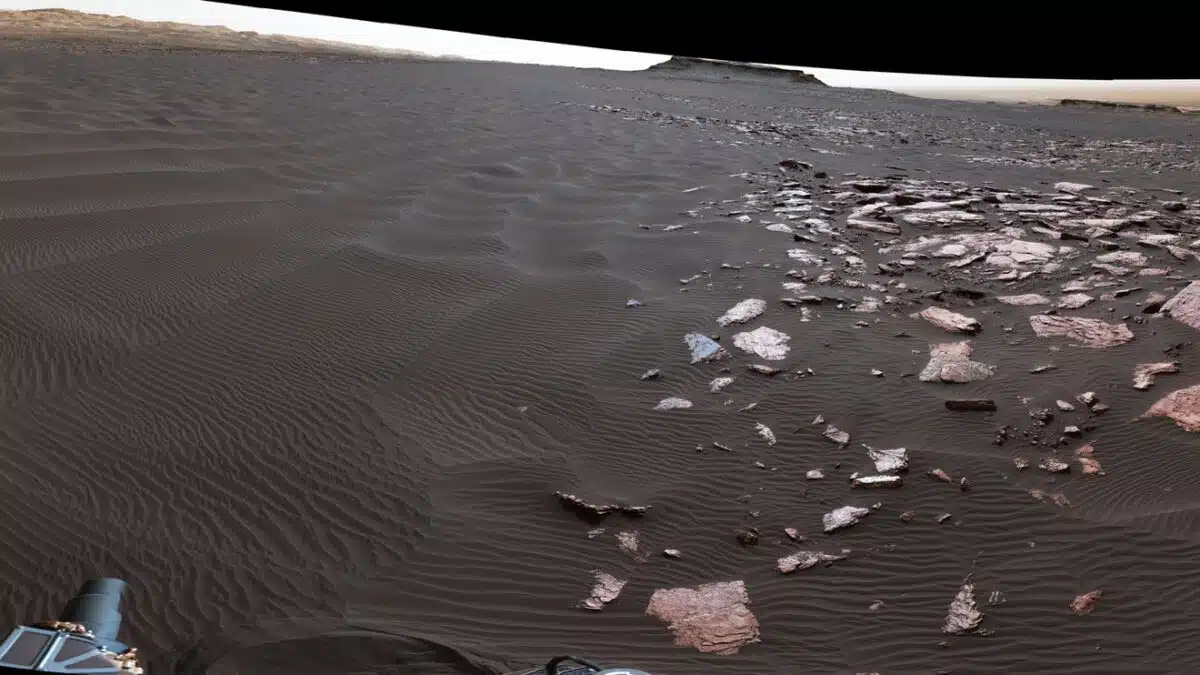 “Nathan Bridges Dune,” a rippled band of dark Martian sand, fills this Mastcam panorama from NASA’s Curiosity rover. Credit: NASA/JPL-Caltech/MSSS
This discovery builds on earlier research conducted in 2015, when Curiosity first revealed the unusual nature of Martian dunes. The presence of such structures further supports the idea that Mars’ surface processes differ fundamentally from those on Earth, shaped by its distinct atmospheric and environmental conditions.
Mars Keeps Testing Curiosity
Despite mechanical issues like worn wheels and a broken drill, Curiosity has covered over 16 kilometers since 2012, carefully rerouted to avoid harsh terrain. From its landing at Bradbury Landing to key stops around Mount Sharp, the rover has continued its scientific mission. One of its most significant stops was Ireson Hill, where it studied unique rocks like “Quimby” and “Quoddy” to analyze surface composition and sediment history.
Now stationed at Vera Rubin Ridge, Curiosity is focused on measuring oxidation levels in the surrounding rock layers. Scientists are exploring whether different oxidation conditions once existed, potential sources of energy for ancient microbial life. They’re also investigating if higher-elevation waters were more acidic, which would reshape our understanding of Mars’ past habitability.