
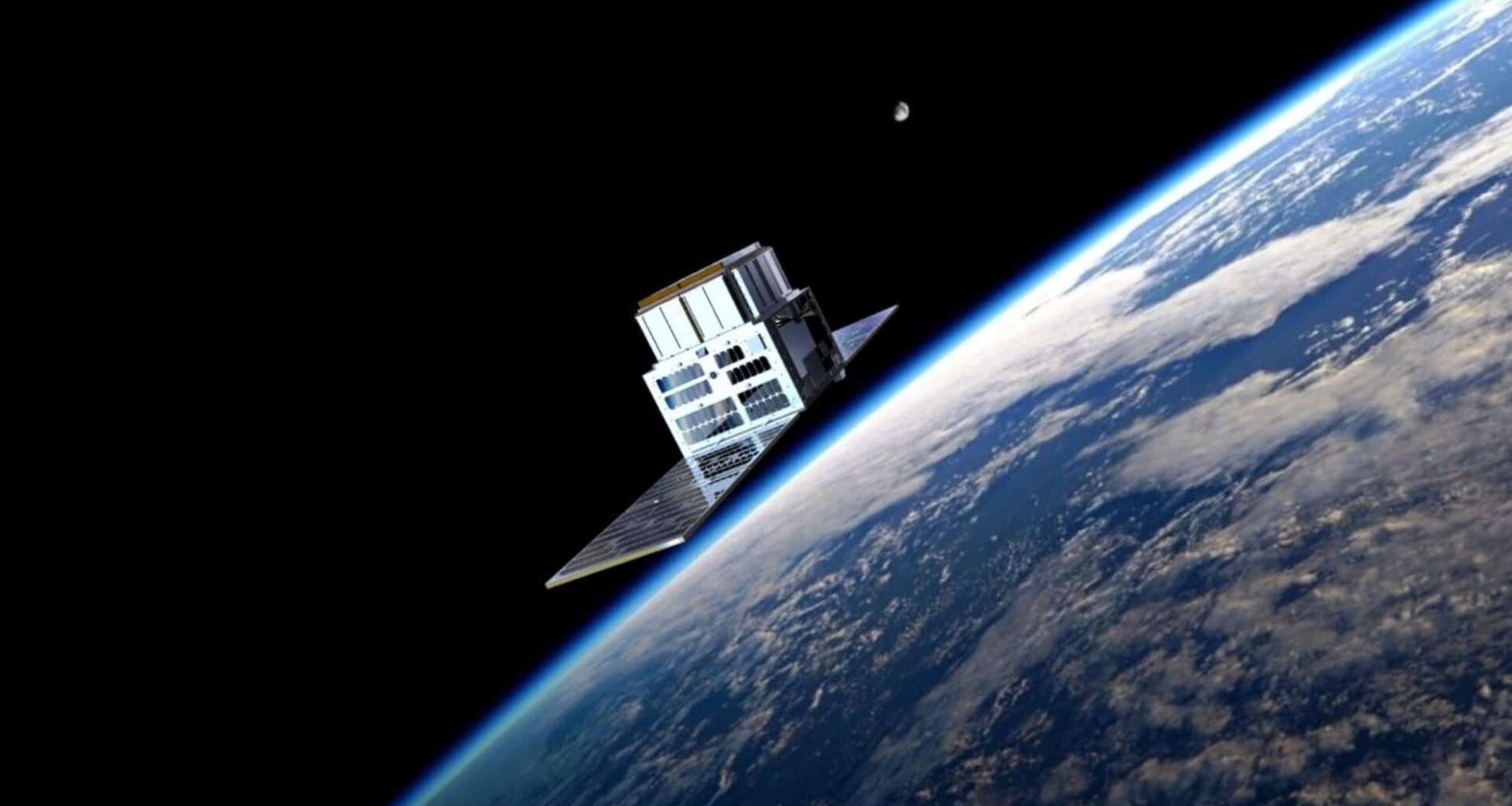
Called StarBurst, the spacecraft is designed to detect the short gamma-ray bursts (GRBs) generated by neutron star mergers, cataclysmic cosmic events that not only form black holes, but also give rise to heavy elements like gold and platinum.
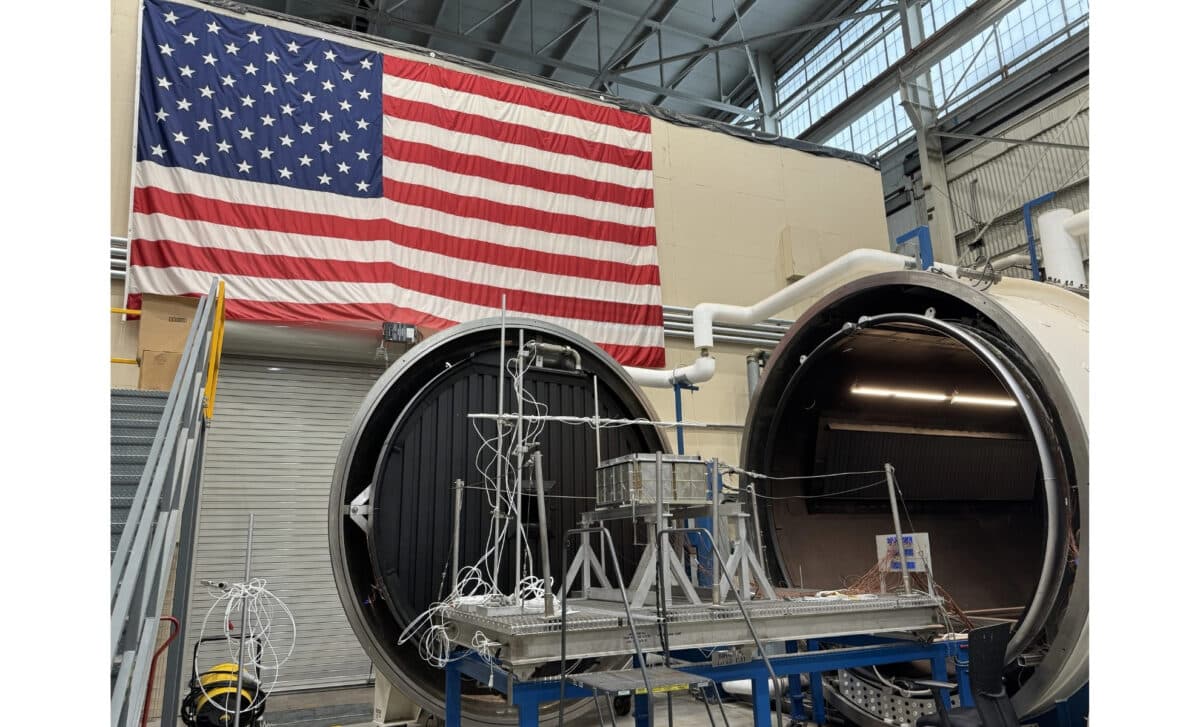 NASA’s StarBurst instrument outside a thermal vacuum chamber at NASA’s Marshall Space Flight Center in Huntsville, Alabama – © NASA
StarBurst is part of the NASA Astrophysics Pioneers program, which seeks to demonstrate how low-cost technology can be used for high-value astrophysical research. Once in orbit, it will operate alongside gravitational wave detectors like LIGO, improving the chances of observing these explosive events in multiple forms of energy simultaneously, a key step toward understanding the formation of the universe’s rarest materials.
A Compact Spacecraft Targeting Colossal Explosions
StarBurst will monitor short gamma-ray bursts, brief but violent explosions in space that typically last about two seconds. These GRBs are known to accompany the mergers of neutron stars, which often lead to the creation of black holes. These mergers are believed to be the main sites where most of the universe’s heavy metals, including gold and platinum, are created.
Built by NASA’s Marshall Space Flight Center, the satellite is a wide-field gamma-ray telescope equipped with 12 crystal detector units. Though small in size, the instrument’s design gives it five times the effective detection area of the Fermi Gamma-ray Burst Monitor (GBM). Because it will orbit Earth in space, StarBurst will have complete, unobscured visibility of the sky, significantly increasing its chances of capturing short GRBs as they happen.
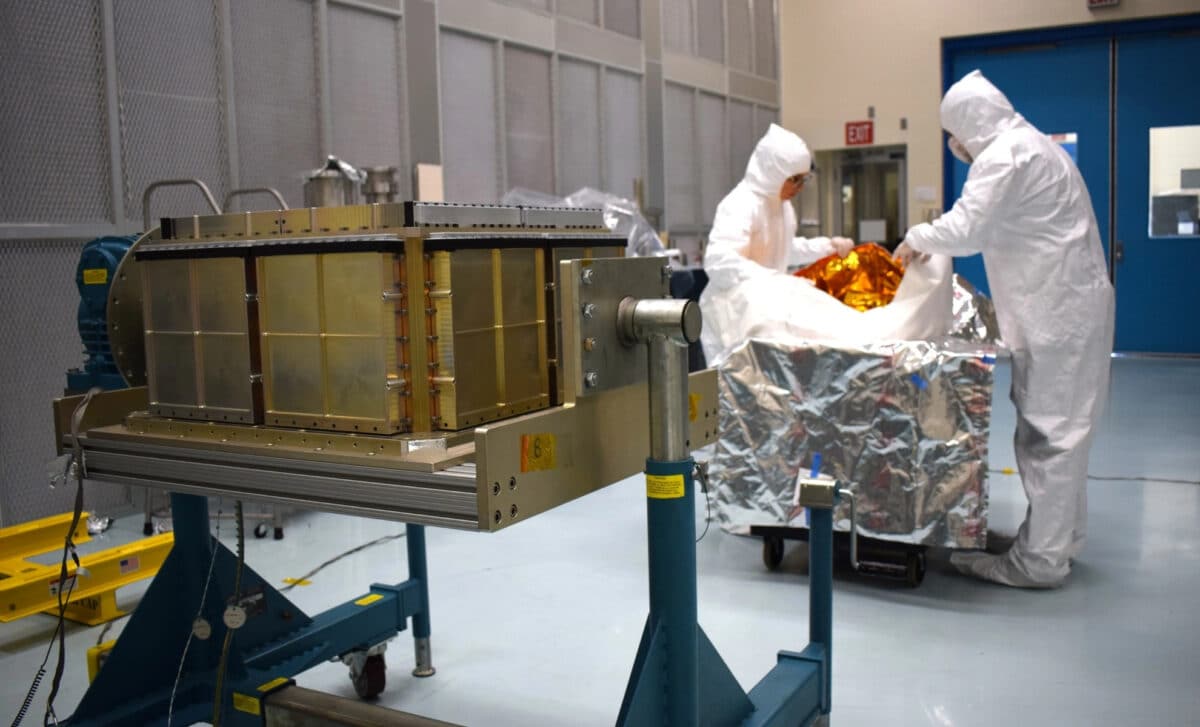 NASA Marshall test engineers fit test the multi-layer insulation blanket in early August at Marshall’s Stray Light Facility. The thermal blanket will insulate the crystal detector units – © NASA
NASA intends for StarBurst to detect these gamma-ray bursts at the same time that LIGO, the Laser-Interferometer Gravitational Wave Observatory located in Washington and Louisiana, captures their gravitational wave signatures. So far, only one such simultaneous detection has ever been recorded. StarBurst is expected to raise that number to around ten per year, according to the agency’s projections.
Tested for Space, From Radiation to Rocket Launch Conditions
Since its arrival at NASA’s facility in Huntsville, Alabama, in the spring of last year, the StarBurst satellite has undergone a series of demanding tests to prove its resilience and precision. These tests followed the successful integration of the instrument in Canada, and included thermal vacuum testing, vibration testing, and exposure to radioactive materials to simulate the satellite’s space environment.
For 18 days straight, StarBurst’s instrument was placed inside a vacuum chamber under extreme hot and cold temperature cycles, operating 24 hours a day. During this time, engineers introduced radioactive material into the chamber to trigger and monitor the instrument’s response to gamma-ray signals, a critical validation of its detection system. This process went beyond the usual temperature testing and was intended to confirm the instrument’s real-world functionality in space conditions.
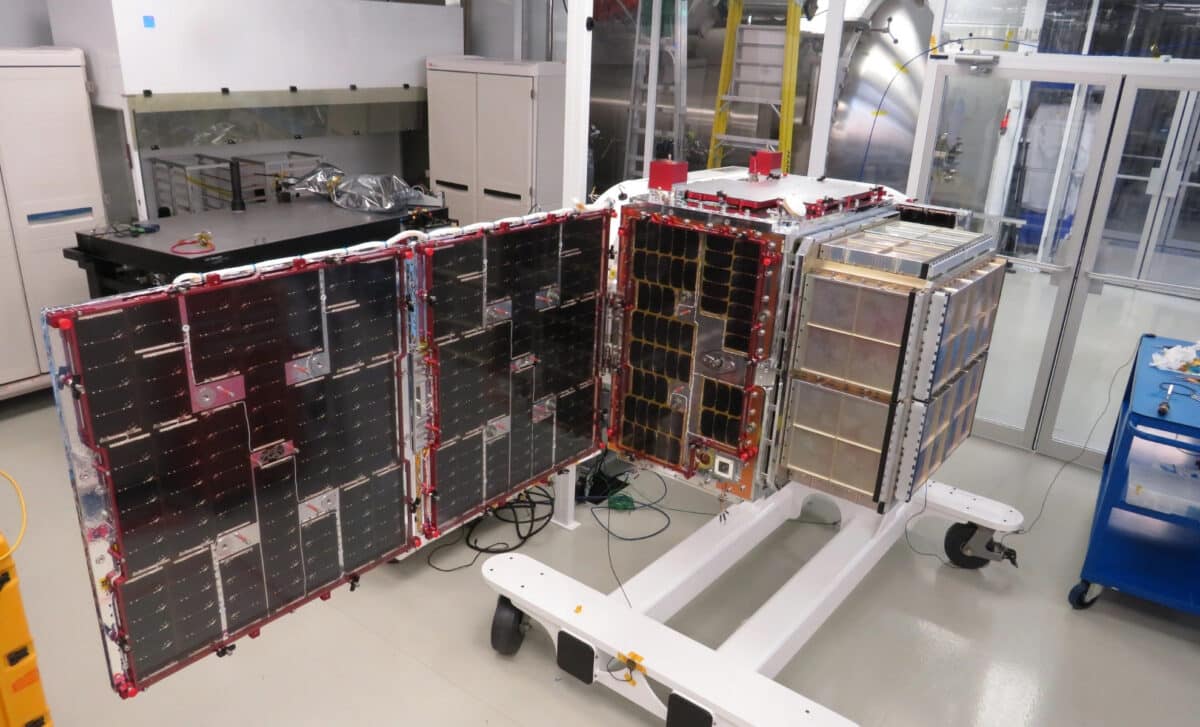 StarBurst was successfully integrated with the spacecraft bus Marshall team members were on hand to help integrate the instrument with the spacecraft bus at the Space Flight Laboratory at the University of Toronto in early September – © NASA
The satellite then faced flight vibration testing, during which it was bolted to a shaker table. The table reproduced the intense vibrations and turbulence the spacecraft is expected to endure during launch. Following these trials, in August 2025, the spacecraft was transported to the Space Flight Laboratory at the University of Toronto, where its multi-layer insulation blanket, designed to shield the crystal detectors from the harsh space environment, underwent its own set of durability tests.
Launch Synchronized With Ligo’s Next Run
The next stage of the project involves instrument calibration, functional tests, and electromagnetic compatibility checks. Additional vibration and thermal vacuum testing will be conducted again in the spring of this year, as NASA and its partners work toward full readiness.
StarBurst is expected to be fully completed by June 2026, but its launch is scheduled for 2027 to coincide with LIGO’s next operational cycle. By timing the mission this way, NASA hopes to maximize the likelihood of capturing simultaneous detections of short gamma-ray bursts and gravitational waves. The launch vehicle for the satellite has not yet been confirmed.
StarBurst will operate in low-Earth orbit for at least one year, gathering real-time data on some of the universe’s most extreme and rare events. It follows the launch of Pandora, the first spacecraft in the Astrophysics Pioneers program, which departed recently aboard a Falcon 9 rocket to study starlight filtered through exoplanet atmospheres in search of potential signs of habitability.