
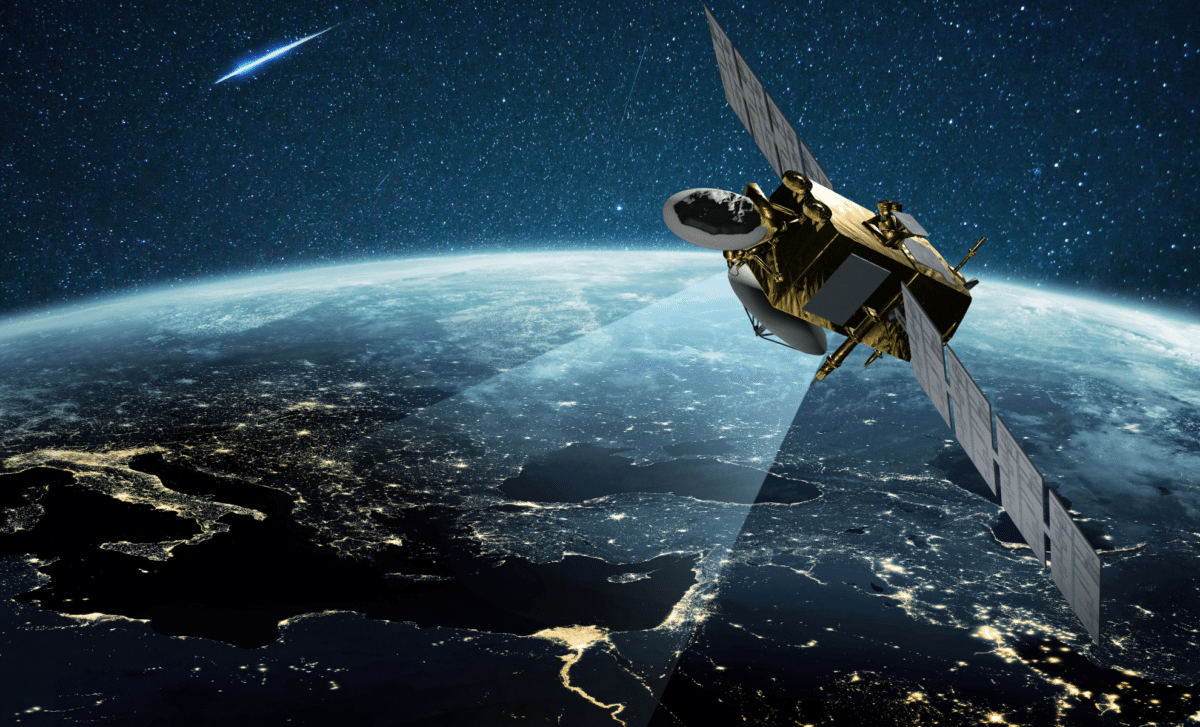
It might sound like science fiction, but researchers are exploring how magnetic fields could allow satellites to safely maneuver around each other without using traditional fuel. A study published on arXiv outlines a method called Electromagnetic Formation Flight (EMFF), which leverages solar-powered electromagnetic coils to create controlled magnetic interactions between spacecraft. As satellite traffic continues to surge in Earth’s orbit, especially with the growth of mega-constellations, the need for fuel-free, long-term mobility is becoming more urgent.
A New Kind Of Satellite Navigation Emerges
The method described in the arXiv study proposes that satellites could control their positions by generating magnetic fields using electromagnetic coils, which are powered by renewable energy sources like solar panels. When multiple satellites carry such systems, they can subtly attract or repel one another, maintaining formation or avoiding collisions, all without using traditional propellant fuel, which significantly limits mission duration.
This technique, known as Electromagnetic Formation Flight (EMFF), has been under development for years but is gaining fresh attention as the number of satellites in orbit grows exponentially.
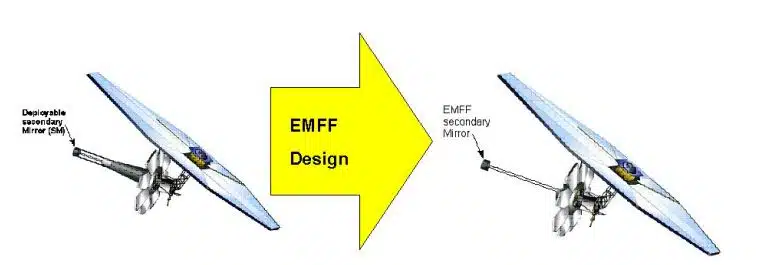 Next Generation NGST (NGST 2) using EMFF.
Credit: NASA’s Innovative Advanced Concepts (NIAC) program
“The complexity of formation flying systems takes a big jump from two units to three units,” explains Alvar Saenz Otero at the University of Washington, highlighting the challenges of scaling this technology to larger satellite swarms. Currently, EMFF systems are mostly conceptual, but successful demonstrations on Earth and in microgravity environments show promise.
According to Ray Sedwick of the University of Maryland, while EMFF offers exciting possibilities for controlling spacecraft, it isn’t yet suitable for large-scale use in crowded orbital environments.
“Everything we ever did for EMFF was always about deep space operations,” he says. “It’s not something that applies at a constellation level.”
For now, EMFF appears more viable for deep space missions, such as asteroid exploration or long-duration science platforms far from Earth’s gravity and debris-filled environment.
The Limits And Potential Of Superconducting Coils
One of the biggest obstacles facing EMFF technology is the range limitation of the magnetic fields it relies on. The forces generated are typically effective over very short distances, just a few meters. However, new research indicates that superconducting magnetic coils could vastly expand the operational range of EMFF, making it feasible for more diverse applications.
“The range that EMFF can work over increases significantly if you employ superconducting magnetic coils, but there are technical challenges here,” explains Sedwick.
These challenges include keeping superconductors at cryogenic temperatures and integrating them into compact, low-power satellite platforms. These hurdles are non-trivial, but progress in materials science and cryogenics could make such systems viable in the near future.
Researchers believe that with sufficient development, superconducting EMFF systems could allow multi-satellite platforms to reconfigure autonomously during missions, dodge space debris, or conduct complex coordinated maneuvers in remote environments like lunar or Martian orbit.
Not Ready For Constellation-Scale Operations Yet
While EMFF offers a vision of clean, fuel-free satellite navigation, its current limitations mean it won’t replace thrusters in the satellite mega-constellations orbiting Earth anytime soon. According to Sedwick, this approach isn’t built for use in tightly packed orbital environments like those being deployed by commercial operators. The electromagnetic forces are just too weak, and the spatial dynamics too unpredictable, when hundreds or thousands of satellites are involved.
Instead, the focus is shifting toward niche uses: missions that involve a small number of satellites operating in deep space, where the risk of collision is lower and orbital changes are less frequent. “It’s not something that applies at a constellation level,” Sedwick emphasizes again, pointing to the engineering complexity and power demands that still need solving.
Still, researchers remain optimistic. Advances in superconductors, autonomous control systems, and miniaturization may one day bring this futuristic concept into more mainstream use. Until then, EMFF remains an intriguing tool in the satellite design toolkit, one with the potential to extend the life of missions and reduce dependency on finite fuel reserves.