
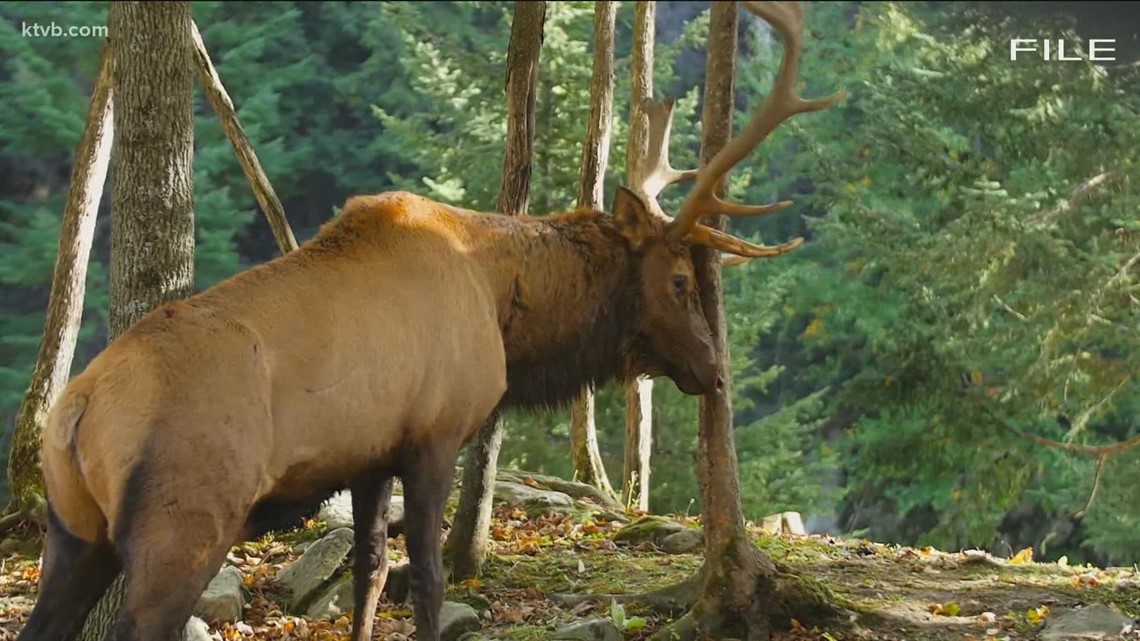
Game officials said the goal is to reduce damage to agricultural land after a herd of 100 nonmigratory elk caused over $1 million in damage.
BOISE, Idaho — Idaho Fish and Game plans to relocate or “lethally remove” about 100 elk from a herd on private land west of Emmett as part of an effort to reduce damage to nearby agricultural fields.
The Idaho Department of Fish and Game’s (IDFG) plan calls for relocating about 40 elk to areas with below-average elk populations and lethally removing about 60. Game officials aim to remove the elk, which live year-round on private land owned by five landowners in Unit 32, located in Payette County.
The herd has grown to 350 over the last five years. Game officials tracked the animals via GPS and learned that it remains on the property year-round.
Despite efforts by hunters, landowners, and Fish and Game staff to reduce elk numbers and crop damage, the herd caused over $1 million in damage to agricultural land in 2025, according to game officals. The landowners were only reimbursed for about 35% of their reported losses.
“The shortfall was due to two claims exceeding the single-claim payment maximum of $125,000 in state law, and overall, statewide claims last year exceeded Fish and Game’s fund for depredation payments, which resulted in proration of claims,” game officials said in a news release.
Fish and Game said it learned from previous rollouts that “projects have shown that attempting to trap all of a large herd, or a large portion of a herd all at once, risks the safety of the elk.”
The animals had learned how to avoid traps set by game officials.
The elk will be trapped and hauled to public lands outside of Unit 32.
Fish and Game said it will contract with the U.S. Department of Agriculture’s Wildlife Services to lethally remove elk that cannot be translocated. Those animals will be processed by a licensed meat processor, and the meat will be distributed to regional food banks.
The project will occur during spring and summer to ensure that resident elk are translocated or removed, rather than the roughly 1,000 migratory elk that winter in the area.
For more information about Fish and Game’s plan, visit their presentation here.