
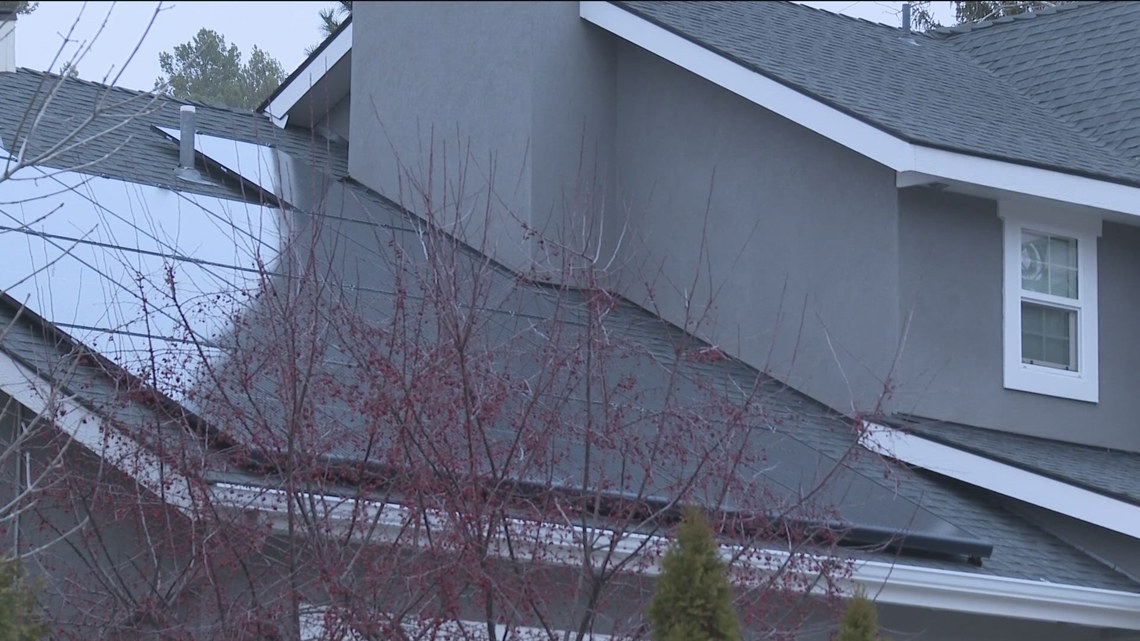
A persistent weather inversion in southern Idaho significantly curtails solar power output
BOISE, Idaho — A two-week weather inversion that’s been hovering over Southern Idaho is affecting solar energy production for thousands of Idaho residents.
For the almost 14,000 Idahoans in the Treasure Valley who contribute solar energy to the grid, they have seen a noticeable decrease in the past couple of weeks.
Alice Jenkins, a Treasure Valley resident, said the lack of sunlight has been alarming not just for her household, but for others who depend entirely on solar power.
“There are a lot of people out there who are off-grid completely, and they don’t have that option,” Jenkins said. “They’re just sitting there without power.”
Mark Parsons, who has owned and monitored solar panels for six years, said he gets the same dips in his solar production, but that it’s nothing out of the ordinary.
“This time of year, it’ll never charge. It’s cloudy,” he said.
The inversion causes stagnant air and haze in valleys. The Treasure Valley itself is on one of the longest recorded streaks without sunshine in history.
“For those who put solar on their homes, it typically is kind of a long-term investment on their homes,” said Lisa Young, director of the Idaho chapter of the Sierra Club.
Despite this short-term inversion appearing to greatly affect solar production, it actually is more than what is produced when there is wildfire smoke in the summer, said Young.
For grid-connected solar customers, the inversion can appear to create financial stress. The system works through solar energy compensation when owners produce extra energy. When they don’t, it appears to cause higher monthly costs.
“Just know that this is normal. These fluctuations and how much your solar panels are producing is going to change all the time,” said Young.
Another factor: Idaho Power reduced solar compensation by 30% last October.
“It has dropped pretty dramatically this past fall, and I think that’s caused a lot of angst because people looking for a return on investment with their solar system, it’s getting harder and harder to justify that as a consumer,” Parsons said.
According to Idaho Power, solar output across its systems can be reduced by up to 50% during an inversion. It supplements the difference with hydropower, flexible resources and planning.