
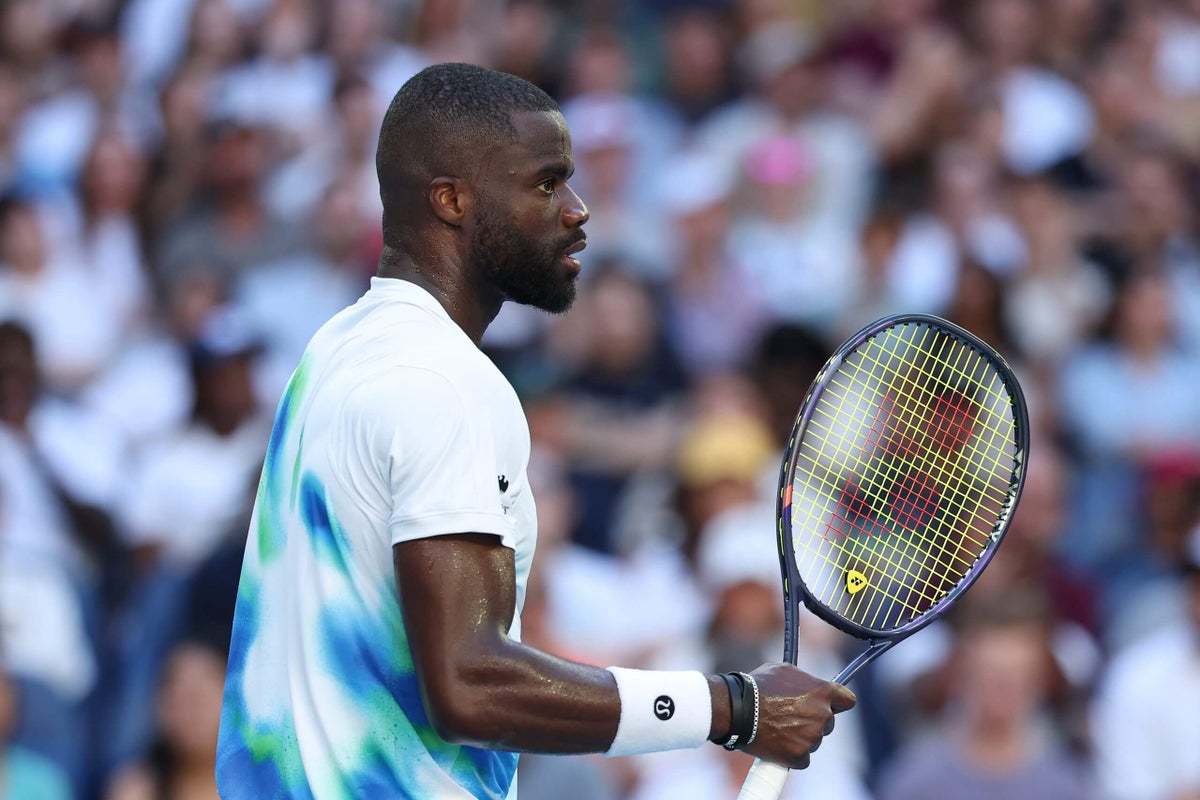
MELBOURNE, Australia — After midnight Thursday at Melbourne Park, the sound of a pair of tennis shoes squeaked across the empty grounds from Margaret Court Arena. After the sunshine and the bright lights and the show, one player remained, skittering around the baseline and whipping forehands as he had been doing just about an hour earlier.
Frances Tiafoe swears it’s different this time.
He knows what the past five years have been. A couple of near-miss moonshots on the biggest stages in tennis, followed by disappointments and the motivational battles that he has been fighting with himself since he began his professional career.
If only he could figure out a way to keep his fire lit, the way the greatest seem to do. If only he could love the game the way they do, even when they hate it. Anything might be possible.
But then he would come up empty on the court. The week-in-week-out grind of the tour would wear on him, so much of it unfolding far from the bright lights of the big events he craves.
Then came last summer’s U.S. Open, the highlight of his year, the place where he shines the brightest. Other than a surprise run to the quarterfinals of the French Open, his year had been pretty uninspiring. New York would change all that.
Instead, Jan-Lennard Struff did. The 35-year-old German qualifier knocked Tiafoe off the court in straight sets. He played four more listless matches over the next five weeks and lost them all. There he was, back in a dark hole.
This time though, the people closest to him — his longtime girlfriend, Ayan Broomfield, and his two agents, Jill Smoller, who spent years working with Serena Williams, and Matt Fawcett, who also represents the almost-always motivated Taylor Fritz — decided to have a word with him.
Either do this or don’t do this, they said but stop wasting our time — and yours.
“It’s one of those things where you’re just not really even saying anything,” Tiafoe said during a joint interview Friday ahead of the year’s first Grand Slam. “You’re just getting cooked and kind of got to take it and don’t argue it. Don’t try to fight it. That’s kind of what it was.”
And that’s how he found himself practicing forehands on an empty Margaret Court Arena, after he had beaten Francisco Comesaña of Argentina by cruising through two sets and recovering from dropping the third. That 6-4, 6-3, 4-6, 6-2 win took him to the third round of the Australian Open, and a tie with No. 6 seed Alex de Minaur.
By any measure, Tiafoe’s journey from New York to Melbourne has not been peaceful, or anything like what he drew up last summer, after a surprise quarterfinal run at Roland Garros on the red clay he has little use for. At the same time, in retrospect it was entirely predictable, at least to him — and to anyone who had been following the comments he has made in recent years that have called his occasionally fleeting motivation into question.
There was the time when he said the only two tournaments he really cares about are the Citi Open in Washington, D.C., his hometown tournament, and the U.S. Open. Then the other Grand Slams, especially Wimbledon.
There was the time when he described the opponents who had been beating him through 2024 as “clowns,” suggesting that he would have won had his head been in it against compatriot Marcos Giron, Dominik Koepfer of Germany and Pedro Cachin of Argentina, to name a few.
Tiafoe is a two-time Grand Slam semifinalist who has twice pushed Carlos Alcaraz to five sets, which doesn’t happen very often, and who has come alive at the highest level on several occasions. His best moments add fuel to the fire of questions about what is going on the rest of the year.
He turned 28 in January, and is now trying to hold off kids who are coming for his lunch money. He entered 2026 as the world No. 30, with four Americans ahead of him, all of them either younger or only a few months older.
After ending his season a month early at the beginning of last October Tiafoe resurfaced in December, at an exhibition against Carlos Alcaraz, the world No. 1, in New Jersey.
During an interview there, he described himself as having been “underwater” and “on the back nine” of his career. But the early end to the year brought “a ton of clarity,” he said.
“I’m tired of talking about it,” he added. “ I’m trying to just work, I know what I am capable of.”
Mark Kovacs, a veteran coach with a science-based approach is working with him in Australia. But that seems like a small detail compared with the larger work in progress.
Whatever version of himself Tiafoe says he is now, he has become a post-emotion tennis player. It doesn’t matter whether he feels like going to work in the morning. A lot of people don’t feel like going to work in the morning. They go anyway, and they do the work.
“I don’t care about motivation,” he said. “Just show up and do it. No matter what you’re going through, no matter if you’re tired, like nobody cares.”
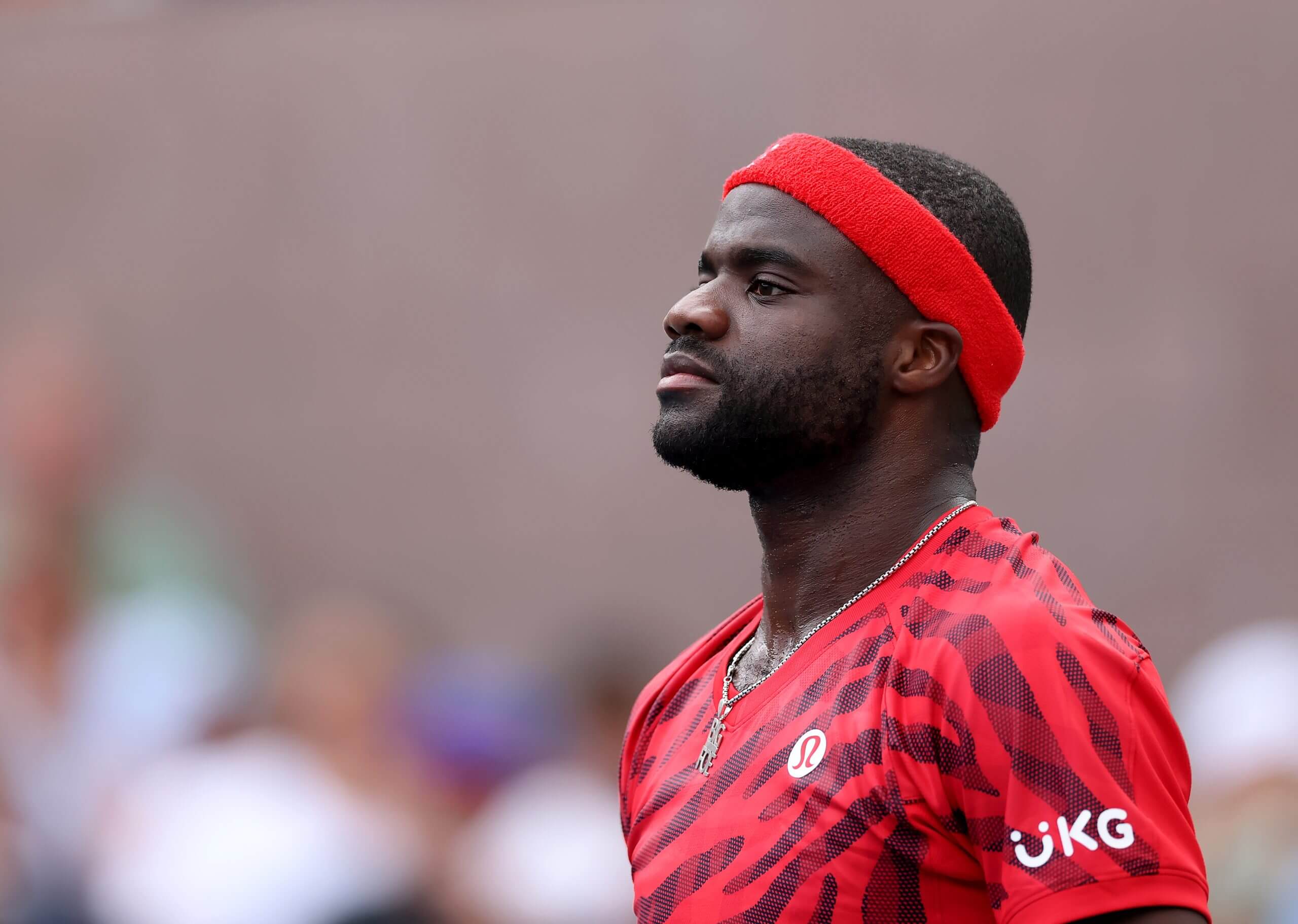
Frances Tiafoe’s 2025 season was another challenging one for the American. (Elsa / Getty Images)
Tiafoe played 49 matches in 2025 and won 26, making it his worst season by win percentage since 2019, the last time that he lost more matches than he won in a year. This season, he lost all six of his matches against higher-ranked opposition and went 26-17 against players below him, including a 5-6 record against players outside the top 100.
That led him to part ways with David Witt, his main coach, and Jordi Anaconda, a longstanding member of his team. Tiafoe had hired Witt in the summer of 2024; he immediately went on a run to the semifinals of the D.C. Open, the final of the Cincinnati Open and the semifinals of the U.S. Open, where he lost a tight encounter against Taylor Fritz. Tiafoe’s tennis has never fully recovered from that result.
“Don’t be mad about the reality you get without putting the work in,” he said over the phone last month. “That has just been sitting with me.”
These notes are not unfamiliar to Tiafoe. Witt’s arrival followed a bleak first six months of the 2024 season. There were more tough results after it, including a loss that ended with a tirade of swearing at a chair umpire who had called him for a time violation late in a deciding-set tiebreak in Shanghai following a gut-busting point with Roman Safiullin. That brought a $120,000 fine.
Hitting highs on his favorite stages is not a problem. But the tennis season is an 11-month slog, not a three-event sprint. Tiafoe knows he needs to bring intensity throughout the year to end this downward slide. And while he has plenty of fame and his rise in the sport’s wider consciousness, which has brought a slew of high-paying endorsement deals with Lululemon, Cadillac, Barclays and Stella Artois, at this stage of his career they put Tiafoe in the awkward position of being richer and more famous than his ranking suggests he should be.
He’s not talking like that person anymore. He said he’s become a big “quote guy” and rattled off a couple that he’d been trying to live by.
“The price of regret is much greater than price of discipline,” he said. “I don’t want to look back and be like, if I would have, I should have. I’m not trying to do that. I’ve had a lot of conversations about that and that’s what inspires me right now.”
Whatever he’s working toward, he knows it might not come during these weeks in Australia. There might be some delayed gratification involved. He’s fine with that, he said.
The past two months, he’s tried to focus on three larger questions:
What did he want to get out of the game? What impact did he want to have? How did he want to be remembered?
“I’ve done some great things,” he said. “I really feel like I haven’t scratched the surface.”
He doesn’t see any reason he can’t climb back to the top of the game, except for the one that stares back at him when he looks in the mirror.
“What do you really give to do that?” he asked rhetorically. “A lot of people are willing to do X, Y and Z, but what are you willing to give, and give up? I’m in a great place mentally and missing the game.”
Now the question is how long Tiafoe can stay in that place. Only he can answer it.