
Hill worries a gate would trap pollution in the creek and harm native plant and fish species. A sea wall would harden the canal, be complex to maintain and could be at risk of failure as seas rise, she said.
Redeveloping the canal would require the city, county or private developer to buy some or all of the 86 properties that border the canal, knock the buildings down, and have engineers build a taller barrier before rebuilding on top of it. Hill hopes it could be an earthen levee that future generations could transform for their own benefit.
Hill also proposed that San Rafael consider out-of-the-box ideas the Dutch have already “tested and proven,” such as floating homes. To float buildings, the city could dig large ponds and flood them. Developers could build multi-story complexes that float, like those in Amsterdam, or are being planned in Rotterdam.
“We should be ready to live in a bathtub,” Hill said. “Then I think we’re in business and will have a way to live for 100 years and preserve the city’s tax base.”
‘We don’t know how to make that fear go away’
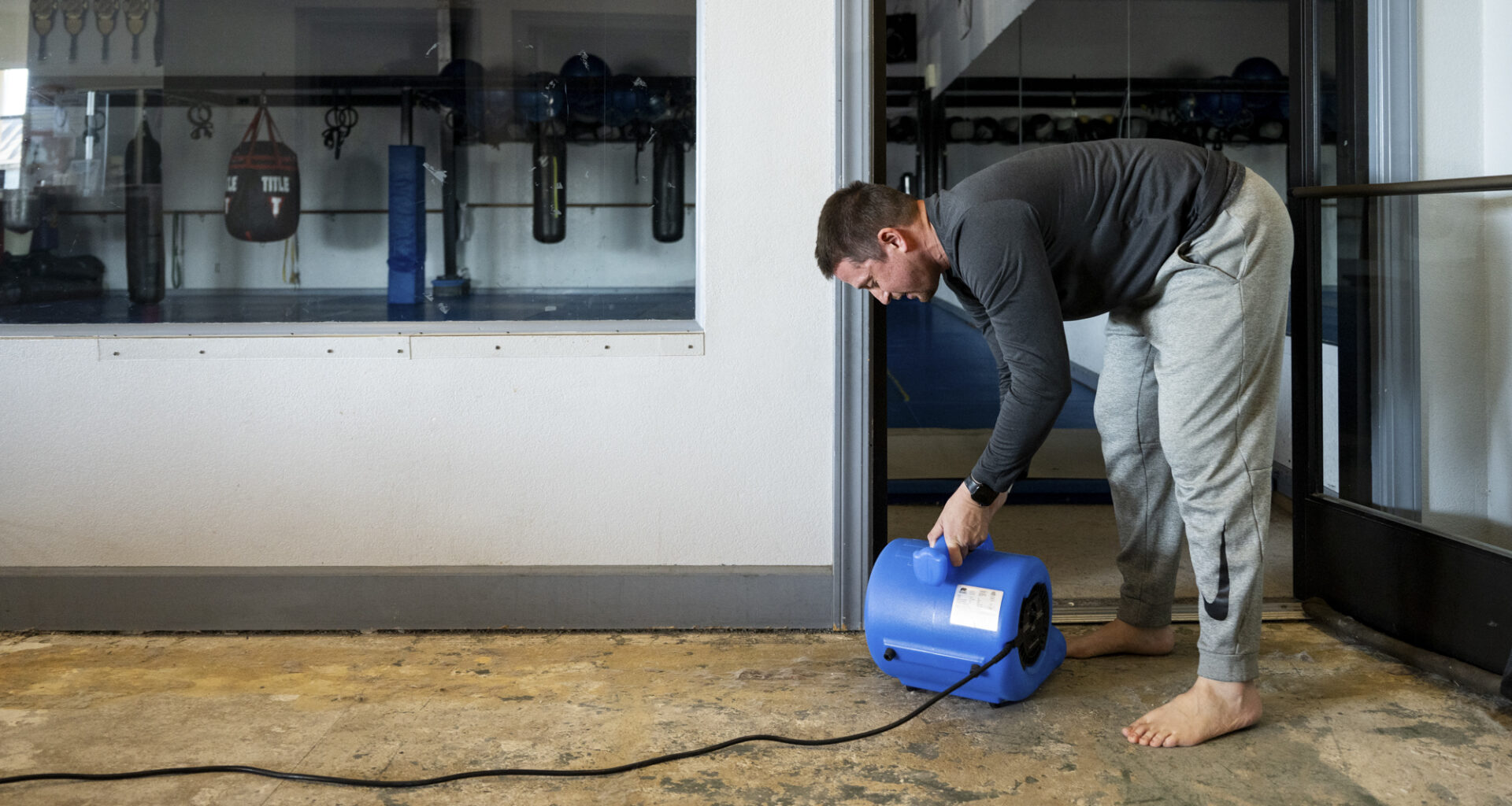
During winter months, king tides often disrupt life for people who live and work in San Rafael’s Canal Neighborhood. At least five people reported to Canal Alliance, a nonprofit that advocates for residents, that floodwaters reached up to 10 inches deep in their apartments.
Omar Carrera, the group’s chief executive officer, said many people are nervous to report the damage because they’re undocumented. If landlords forced them to relocate, even temporarily, they’re unsure if they could find an affordable place to live in Marin.
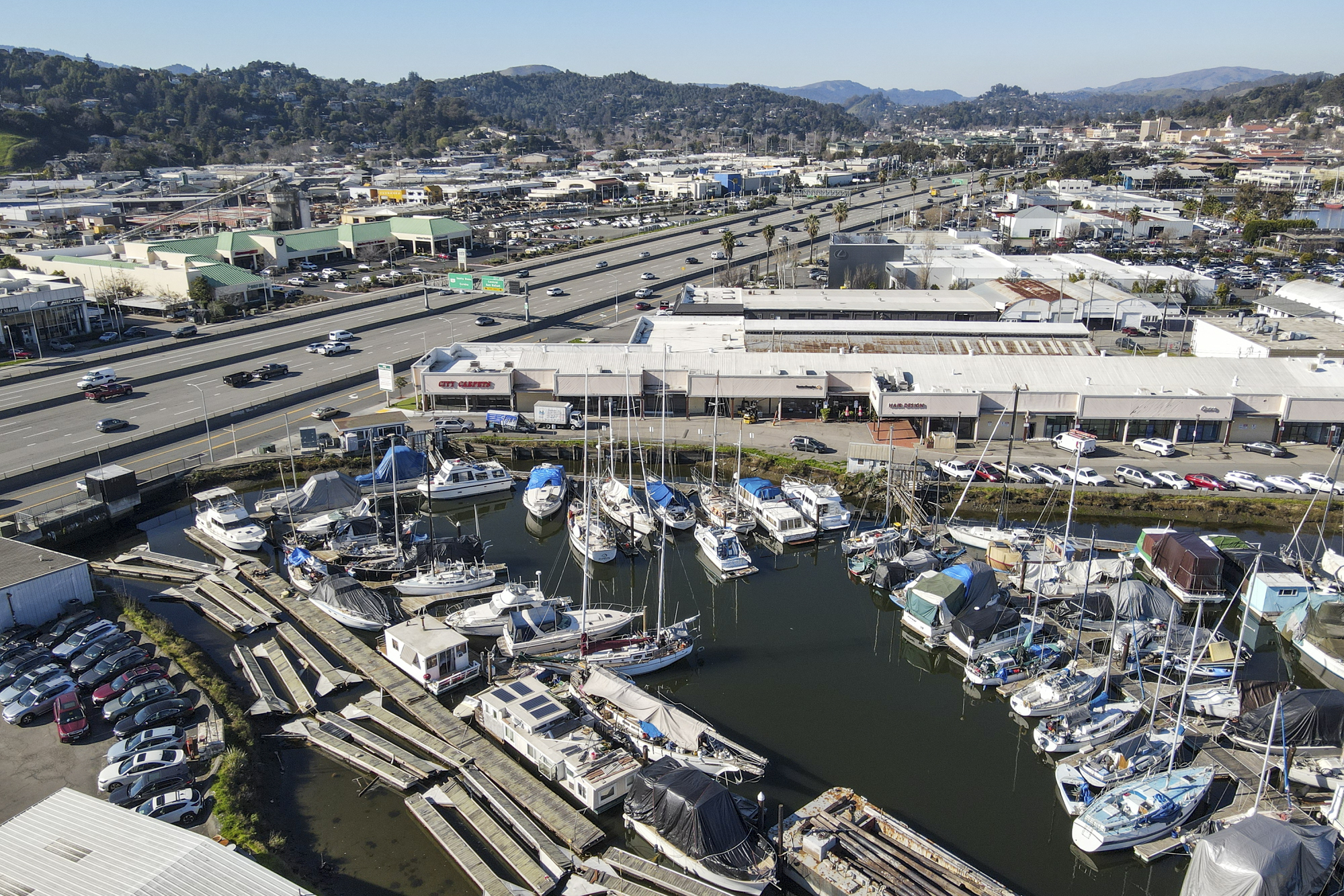 Businesses near San Rafael Creek in San Rafael on Jan. 12, 2026, after the area experienced flooding during a series of king tides and winter storms earlier in the month. (Beth LaBerge/KQED)
“They’re coming to us to see if we can help them with furniture, clothing, and cars that have been damaged, but they don’t want us to get involved with their property managers,” Carrera said.
Carrera moved to San Rafael more than two decades ago, and said this conversation about flood planning is getting old.
“Inaction is not acceptable anymore,” Carrera said. “It’s time for us to have the complicated conversation we have been ignoring for a long time, and to put humans at the center of it.”
Dan Herz lives on a San Rafael street with water on two sides. The flood turned his home into an island and spilled into his garage.
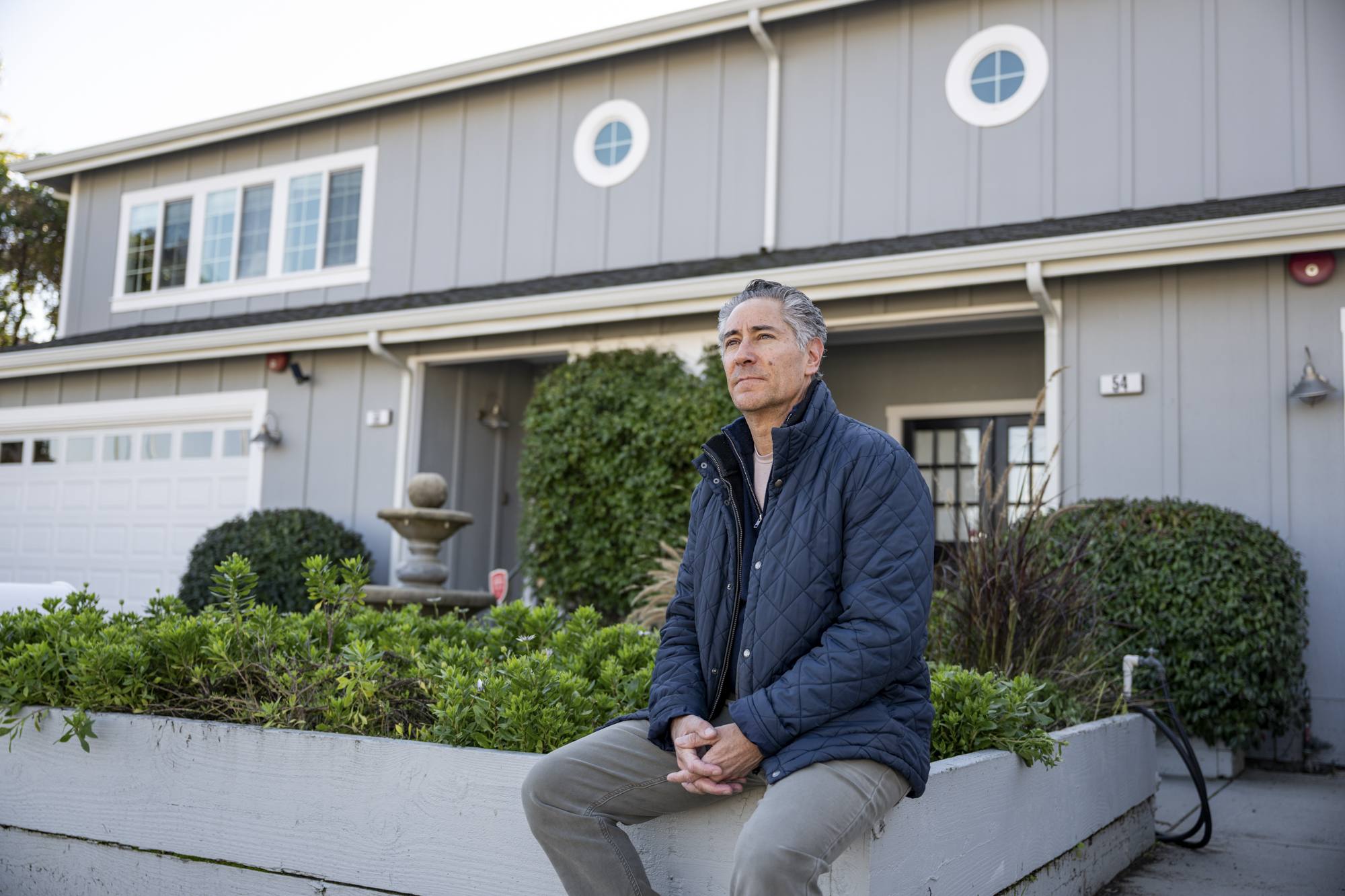 Dan Herz sits near his home in San Rafael on Jan. 12, 2026. The area around his home experienced flooding during a series of king tides and winter storms earlier in the month. (Beth LaBerge/KQED)
“I was running from window to window, going: ‘Oh my god. Oh, my god. It’s still coming,’” Herz said.
The experience forced him to think about whether his blue-and-white two-story home next to a marina could be underwater in the coming decades.
“It was the first time I felt scared,” Herz said. “It’s not a good feeling to see water coming at your property and to know that you can’t do anything to stop it.”
But something good did come out of the flood. Herz and neighbors are banding together to ask the city for help.
“We’re all scared, and we don’t know how to make that fear go away,” Herz said. “What will make all of us feel better is to inform ourselves.”