
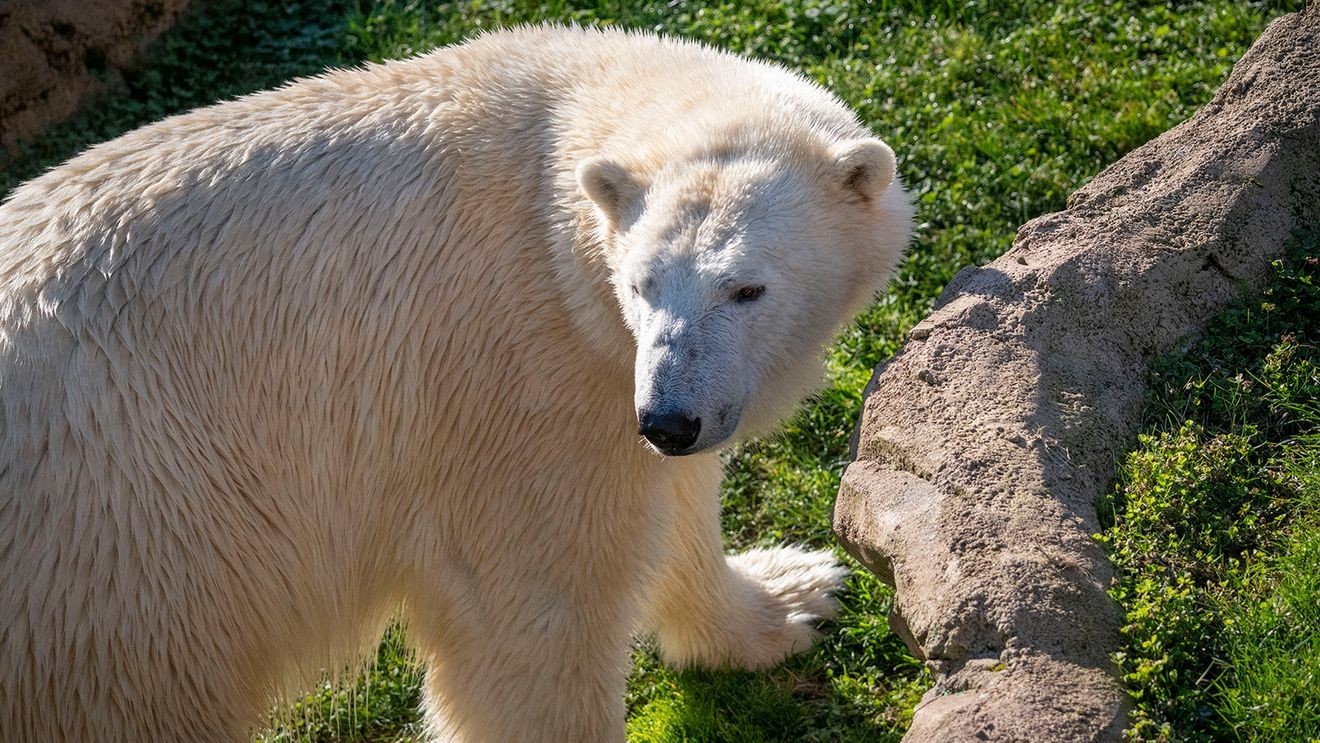
PORTLAND, Ore. (KATU) — The Oregon zoo has welcomed a new resident, Kallik, a 3-year-old polar bear, who is settling into his new home with a variety of unique features designed to mimic his natural environment.
Currently weighing in the low 700s, Kallik is expected to grow significantly over the next 18 months to two years, potentially reaching around 1,100 pounds.
Born Nov. 11, 2022 at the Toledo Zoo & Aquarium, Kallik moved to St. Louis in 2025 with his twin brother, Kallu.
Amy Hash, the area supervisor for Marine Life, explained that Kallik’s diet at the zoo includes fish, meat, and various types of fat, as polar bears are lipovores.
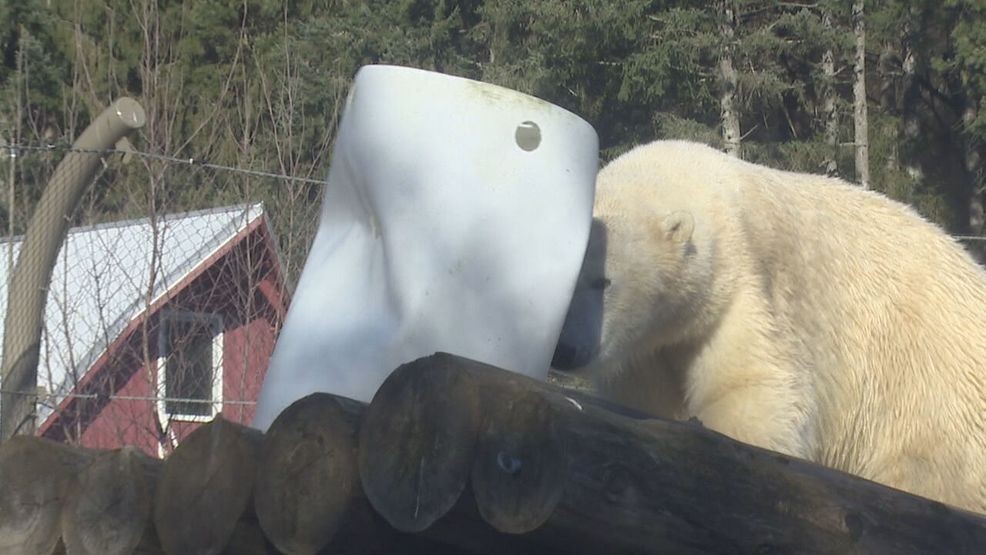
The Oregon zoo has welcomed a new resident, Kallik, a 3-year-old polar bear. Here, Kallik is seen pushing a barrel off of a cliff in his new habitat to play. Portland, Ore.,{ }Jan 21, 2026/Mike Warner, KATU News
“Fat is their most favorite thing to eat,” she said. While in the wild, polar bears primarily consume seals, the zoo provides a diverse diet to keep Kallik healthy and engaged.
Kallik’s habitat is equipped with an ice machine and saltwater pools to replicate the icy conditions of his natural habitat.
SEE ALSO | New polar bear makes a splash at Oregon Zoo’s Polar Passage habitat
“Polar bears love ice,” Hash noted, adding that the zoo has an ice maker that continually provides ice for Kallik to explore.
The habitat also includes a sand pit, mulch pit, and different heights for Kallik to climb and observe his surroundings.
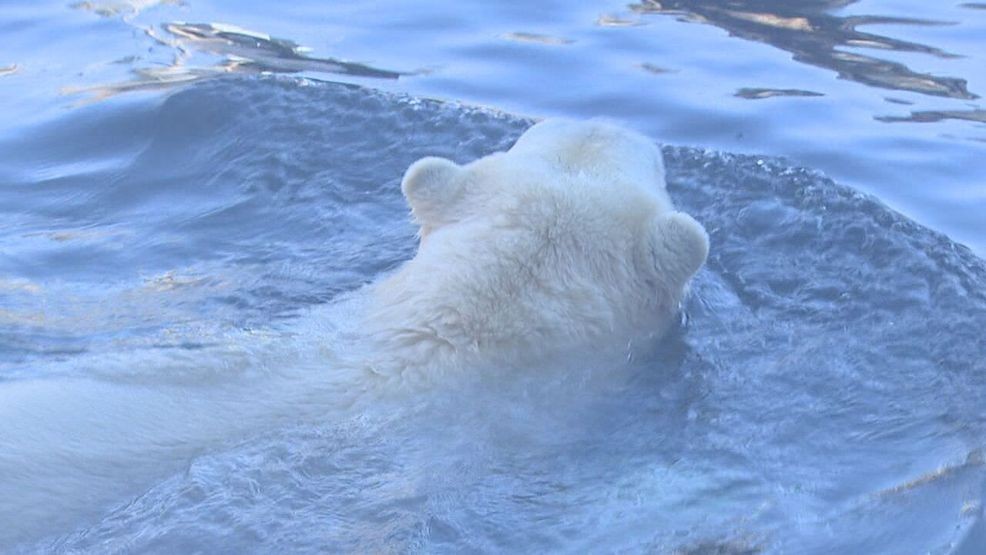
The Oregon zoo has welcomed a new resident, Kallik, a 3-year-old polar bear. Currently weighing in the low 700s, Kallik is expected to grow significantly over the next 18 months to two years, potentially reaching around 1,100 pounds. Portland, Ore., Jan 21, 2026/Mike Warner, KATU News
For now, Kallik will be the sole polar bear at the zoo, but the facility remains open to future additions based on the needs of the polar bear consortium.
The previous residents of Polar Passage, female bears Nora and Amelia Gray, recently relocated as part of a plan by the Polar Bear Population Alliance to maintain a sustainable, genetically diverse polar bear population in the U.S.
Visitors are welcome to see Kallik during regular zoo hours, though he may choose to spend time in private areas as he acclimates to his new environment.
Polar bears are classified as threatened under the U.S. Endangered Species Act due to changes in their Arctic habitat caused largely by climate change.
Hash said the zoo is committed to contributing to polar bear conservation through training and scientific research.
“We did a lot of training with our old polar bears that we had to try to contribute to science,” she said, highlighting the zoo’s efforts to support conservation initiatives.
Amy Cutting, vice president of conservation at Polar Bears International, stressed the role of zoos and aquariums in conservation efforts.
“Modern zoos and aquariums play a key part in saving this species,” she said. “Polar bears live in one of the harshest environments on the planet, making them notoriously difficult to study so we have gaps in our understanding of how climate change is affecting them. The bears in professional care can help.”
Kallik’s arrival has been a collaborative effort, with staff from St. Louis assisting in his transition. The zoo is maintaining open communication with St. Louis to ensure Kallik’s well-being and share updates on his progress.