
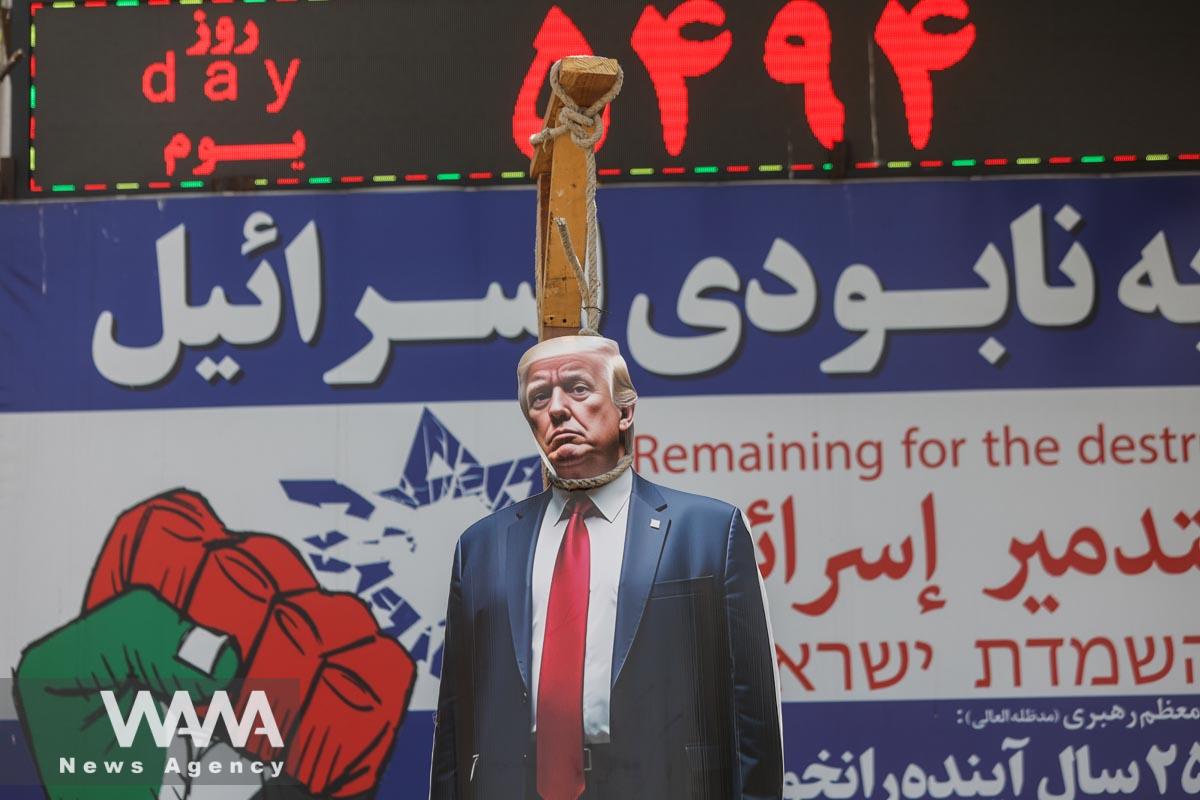
WANA (Jan 22) – On January 9, 2026, during a meeting with the people of Qom, Ayatollah Khamenei, Iran’s Supreme leader, spoke regarding the fate of the U.S. President, stating: “That fellow who sits there with vanity and pride, passing judgment on the entire world, should also know that usually the world’s despots and arrogant powers—such as Pharaoh, Nimrod, Reza Khan, Mohammad Reza, and their ilk—were overthrown just when they were at the peak of their pride; he, too, shall be overthrown.”
Based on this, the “International” section of KHAMENEI.IR has examined the despotic and arrogant behaviours of the current U.S. President and the ultimate consequence of this approach.
The current President of the United States is a striking example of modern despotism; a despotism that takes shape not through coups, but from within democratic mechanisms and by exploiting social, media, and institutional rifts.
Unlike classic despots, he rose to power through elections, yet he demonstrates that electoral legitimacy does not necessarily mean adherence to the principles and spirit of democracy. The indicators of modern authoritarianism are all clearly visible in his performance.
In practice, Trump has transformed power into his personal asset; independent institutions—from the judiciary to the media and the courts—are respected by him only when they are subordinate to his personal orders and objectives.
Such an approach demonstrates that even within democratic systems, the concentration of power can lead to authoritarianism, and establishing a balance between institutions and the president is only possible when the individual respects fundamental principles.
Trump systematically divides American society into two categories: “us” and “them.” Immigrants, Muslims, independent media, academic elites, and even some politicians from his own party are repeatedly labelled as enemies.
This approach weakens democratic dialogue, increases social polarisation, and creates an environment where criticism and protest are swiftly met with labels of treason or conspiracy. Trump has managed to bolster the support of a specific segment of society by creating a sense of collective threat and danger, thereby marginalising opposition.
Narrative Control and Attacks on the Media
The 47th President of the United States repeatedly calls critical media outlets sources of “fake news” and “enemies of the people,” attempting to replace pluralistic realities with his own official narrative by undermining public trust.
Social networks have become his primary tool for direct communication with people; however, these tools also provide the means to disseminate misinformation and incite collective emotions. Such narrative control is among his despotic methods for consolidating power, based on the manipulation of reality and the restriction of independent information sources.
This trend shows that even modern technologies have been unable to guarantee democracy automatically; instead, they have become tools for consolidating authority and creating “alternative realities.”
In such an environment, discerning the truth becomes difficult for citizens, and the capacity for collective resistance diminishes—a matter that further concentrates the foundations of power in the hands of an individual like Trump.
Disregard for Truth and the Normalisation of Lies
One of the prominent indicators of modern despotism is a disregard for truth and the normalisation of lies. Trump repeatedly makes statements that are not verifiable, yet their constant repetition causes a significant portion of society to become distrustful of the concept of truth, leading to the formation of an “alternative reality.”
This process provides the breeding ground for authoritarianism, as political loyalty and belief replace evidence and truth, and collective decision-making standards are severely diminished.
When political truth turns into dependence on power and group loyalty, society loses its capacity for collective resistance, and the ability to critique and reform policies becomes strictly limited. This situation is an example of the modern despotic characteristics of the U.S. President, who, by creating alternative realities, paves the way for the concentration of power and a reduction in accountability.
Immigration Policy and the Violation of Human Dignity
Trump’s immigration policies—including the entry ban on citizens of certain Muslim countries and the separation of children from their families—are examples of an instrumental view of human beings. In these policies, humans are regarded not as possessors of rights, but as tools for advancing political and security objectives.
This approach calls into question the human and ethical foundations of politics and causes justice and human dignity to be sacrificed for political ends. By utilising immigration policies, Trump seeks to create fear and restrictions to control society and to strengthen and support specific groups.
Disregard for the Democratic Rules of the Game
Following his defeat in the 2020 election, Trump did not accept the election results, and with rhetoric regarding fraud, he triggered a wave of violence in America.
The attack on the Capitol building is also a clear example of ignoring the rules of elective institutions and the concentration of power in the hands of one individual; a despotic behaviour that accepts the rules only when they are in his favour, and otherwise tramples upon them.
This action demonstrates that even in a seemingly democratic electoral system, the concentration of power and disregard for institutions can lead to political crisis and public violence—conditions in which public trust in democracy is easily destroyed, and its restoration requires significant time and effort.
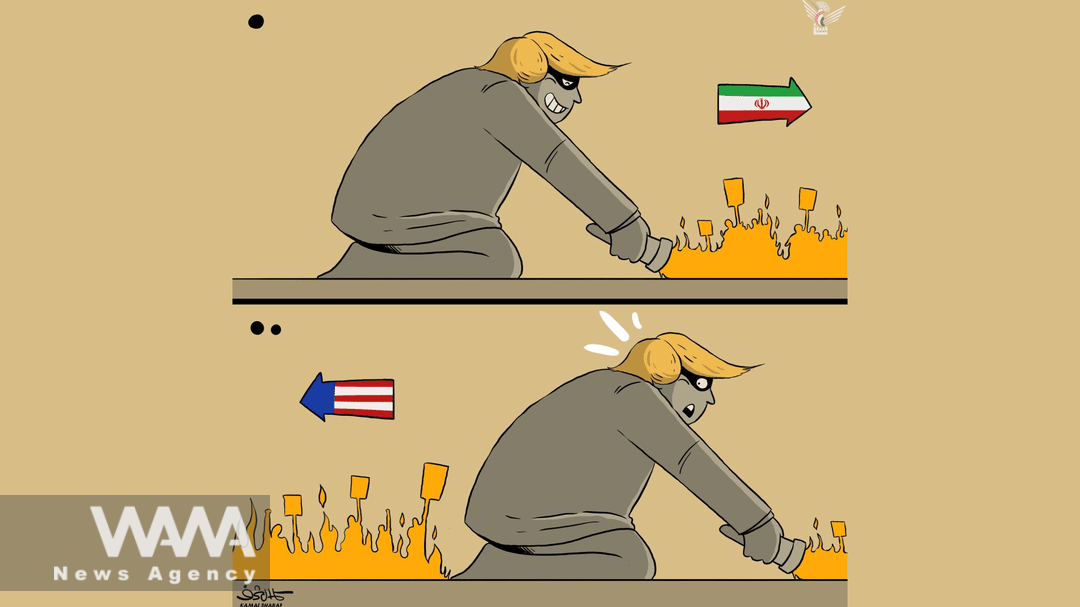
New Cartoon by Kamal Sharaf: Trump as the Architect of Instability.Social Media / WANA News Agency
Foreign Policy Based on Force and Humiliation
In the arena of foreign policy, Trump has adopted a unilateral and humiliating approach. Withdrawing from international agreements, exerting “maximum pressure” on countries, and disregarding global institutions demonstrate that he views international relations as a stage for the display of personal power rather than cooperation and dispute resolution.
This behaviour has led to increased instability at both regional and global levels. The use of force and humiliation in international relations is a pattern that has repeatedly led to conflict and instability throughout history.
Trump’s approach shows that even in the modern world, it is possible to ignore global institutions and the rules of international cooperation; however, the cost of this approach will be widespread instability and the erosion of the credibility of international mechanisms and organisations.
Conclusion
In summary, it must be said that the current President of the United States is a living image of a modern despot who, through pride, egocentrism, and the concentration of power, ignores morality, law, and democracy. History has shown that such individuals, no matter how powerful they may seem, ultimately fall under the pressure of political failures and defeats.
Trump views the law not as a binding framework, but as a temporary tool for advancing his personal and political interests. This same perspective manifests in the international arena in the form of ignoring legal commitments, unilateral withdrawal from agreements, and the undermining of global institutions.
By casting aside the rules of international law, he has turned relations between countries into a field of bullying and pressure. Unilateral sanctions, public threats against governments, the humiliation of allies, and the instrumental use of economic and military power show that Trump understands only the logic of force and power.
Historical experience demonstrates that lawlessness in the international arena gradually erodes legitimacy, breaks alliances, and increases global resistance. By insisting on this same path, Trump is moving ever closer to the inevitable fate of despots: “overthrow”—a fate that history has repeated many times.
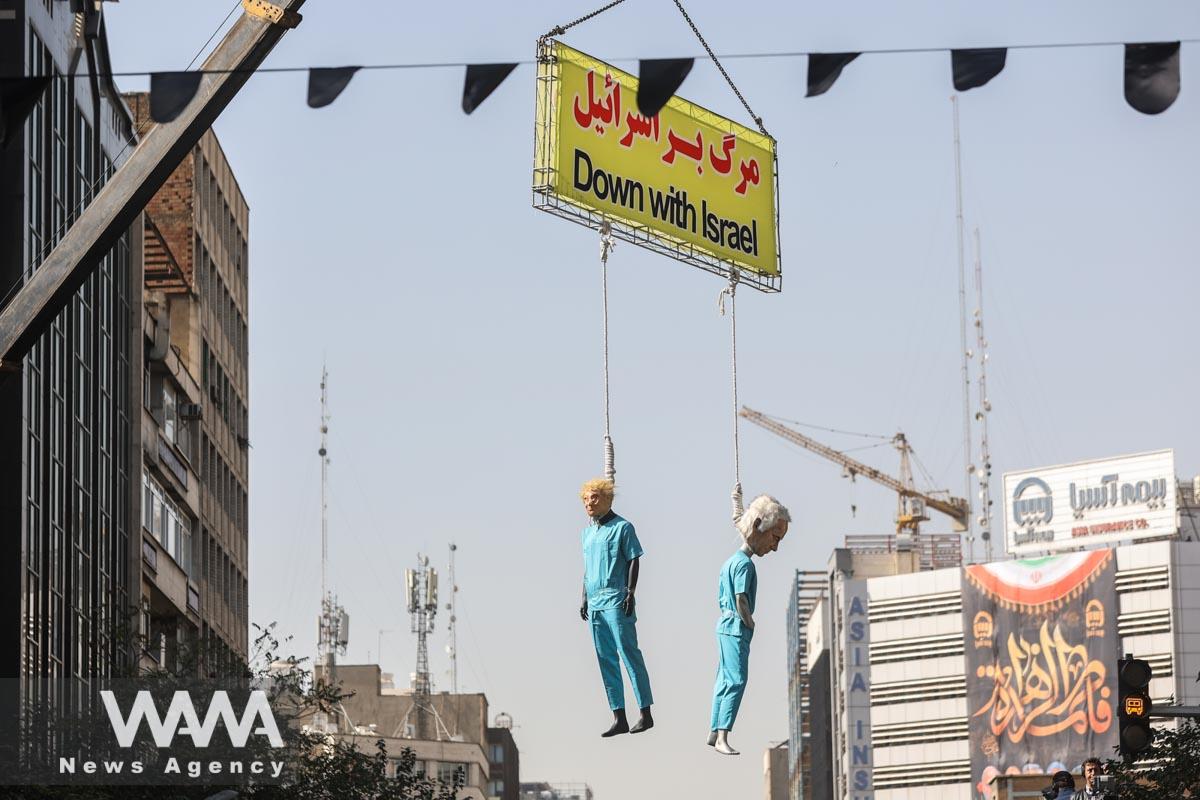
Models of U.S. President Donald Trump and Israeli Prime Minister Benjamin Netanyahu being hanged are displayed during the 46th anniversary of the U.S. expulsion from Iran, in Tehran, Iran, November 4, 2025. Majid Asgaripour/WANA (West Asia News Agency)