
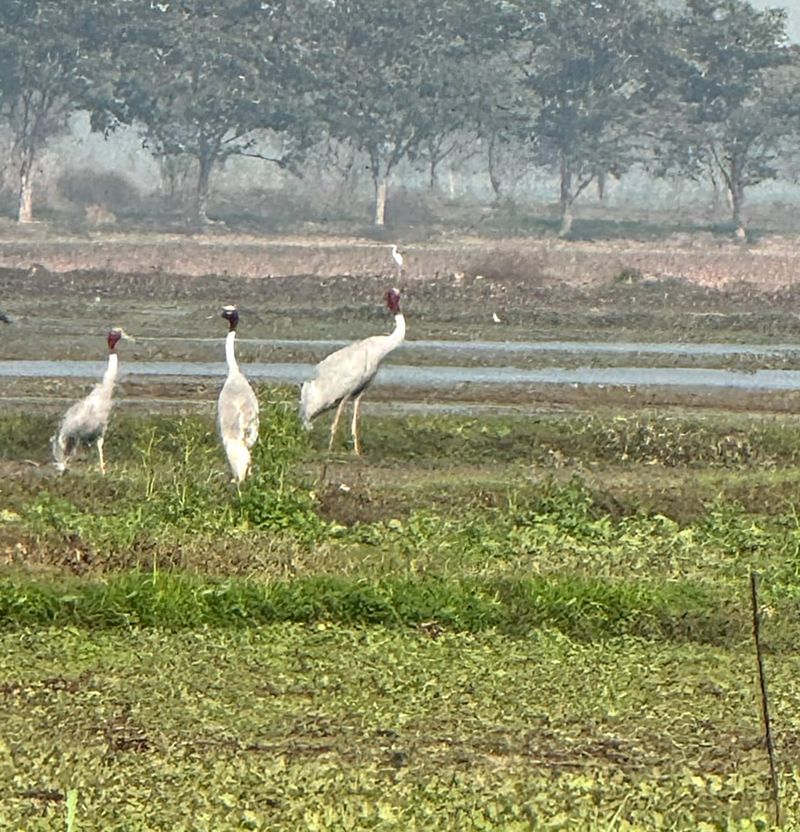
Chaotic and cacophonous, yet celebrated all over Asia, this is how eco-tourists describe Keshopur wetland, situated between the Ravi and the Beas and home to thousands of migratory marvels and a testament to nature’s resilience.
Also known in local parlance as ‘chhumb’, old-timers maintain that it is a bridge between land and water ecosystems. The area, over the years, has acquired the status of a mini-township. This freshwater aquatic body is managed by residents of five villages. That is why it is called a community reserve.
In September 2019, it was designated as a Ramsar site. With this, it became India’s 27th and Punjab’s sixth site of international significance under the world wetland convention held in Ramsar (Iran) in 1971. This is an inter-governmental body for conservation of wetlands across the world.
Ramsar sites form the world’s largest network of protected areas and commit governments to maintain their ecological character and also to prudently use it for the benefit of humanity. There are 2,500 Ramsar sites across the world and inclusion of a wetland in this list indicates the government’s pledge to protect its ecological integrity.
Related news: Encroachments galore, dilapidated roads in Keshopur wetland
Keshopur wetland’s wild pigs destroying agricultural land
Keshopur supports critical functions like flood control, groundwater recharge, climate regulation and provides habitats for innumerable species, sustaining livelihoods through fishing and agriculture.
It is managed by residents of five villages, Keshopur, Dalla, Matwa, Miani and Magarmudian. It comprises marshes, ponds and agricultural land. Birdwatchers from faraway places make it their abode in the winter months, during which birds fly in from Siberia, Scandinavian and Central Asian countries.
Interestingly, two pairs of Sarus cranes have made the place their permanent residence. These cranes are not known to stay in one wetland for long periods of time, but these pairs are an exception. Rare species of migratory birds, which can be found here include Gadwall and the Common Teal as well as endangered species like the Spotted Pond Turtle.
The migratory birds take the Central Asian flyway route to reach Keshopur. This route entails travelling over more than 30 countries. This “highway in the sky” provides for essential stopovers for food and rest during migrations. The area is a key wintering ground for birds using the central Asian flyway route.
Atul Mahajan, Divisional Wildlife Officer (DFO, Wildlife), says right now, which is the peak season, nearly 15,000 birds have arrived for their annual sojourn. Wildlife officials admit that many wetlands in the region have shrunk or been deliberately drained to make way for agricultural land. At one time, this wetland was spread over thousands of acres, right till the banks of the Ravi. Today, the area has been reduced to just 800 acres. To complicate matters, it is hemmed in by roads and farms from all four sides and has been disconnected from the Ravi, its mother river.
Keshopur is indeed a living proof of the importance of water conservation.