
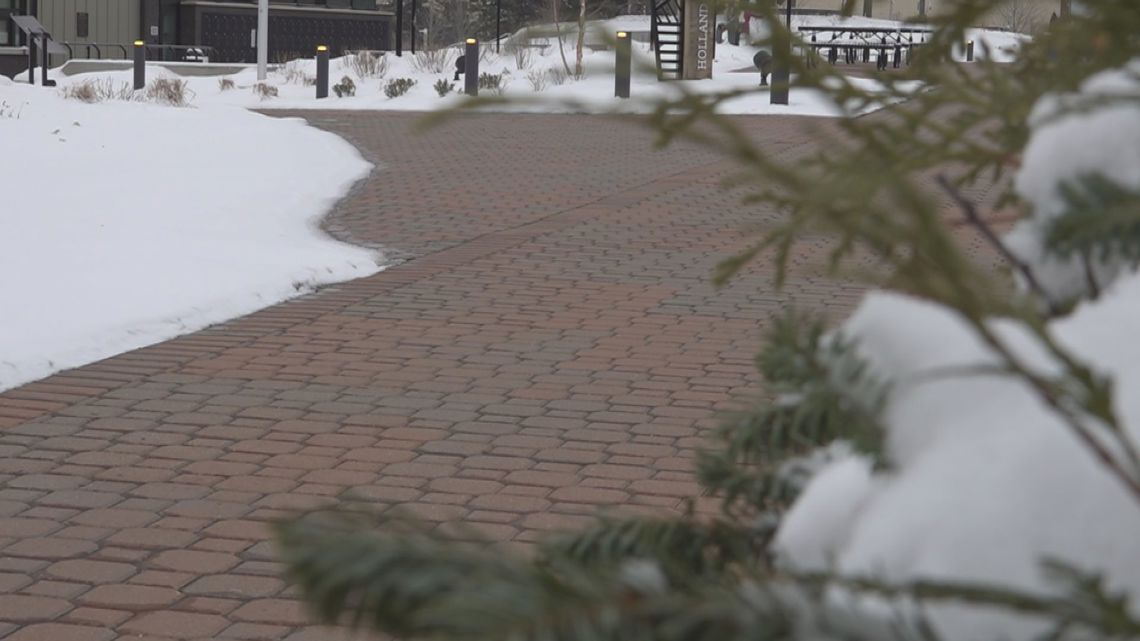
The city lists theirs as the largest municipally-run snowmelt system in North America. First begun in the 1980’s, it now runs through miles of sidewalks and streets.
HOLLAND, Mich. — A crunch of snow and ice beneath your footsteps is the sound of the sidewalks experiencing a classic West Michigan winter, as you trudge on to your destination.
But in downtown Holland, the much different sound of solid steps on the sidewalks below might instead characterize one’s regular commute.
It’s thanks to a unique, scientific system of engineering running right under one’s feet: what’s known as the city’s “snowmelt” system.
“We use waste heat from our power plant, and it runs through over a million square feet of streets and sidewalks in the downtown area to heat them so that we don’t have to shovel the snow on those streets and sidewalks and keeps them clean and fresh for shoppers and walkers and runners in the downtown area,” said Holland Mayor Nathan Bocks.
Water in tubing beneath the streets and sidewalks comes in from the plant at 95 degrees, Bocks explained. It runs through the system and goes back to the plant, he said, at 75 degrees.
While other cities may have similar infrastructure, Holland lists theirs as the largest municipally-run snowmelt system in North America. It’s one in which Bocks, on behalf of his city, appeared to take a great deal of pride.
“We get calls from cities all over the country and all over the world saying, ‘How can we have a snowmelt system?'” he said.
The system, according to Bocks, spans about a mile of streets and over four miles of sidewalks – the equivalent, he said, of about 18 football fields.
“You can run more than a 5K in downtown Holland without ever crossing the same place,” he said.
It’s a system that first began in the late 80’s. When it comes to operating it nowadays, according to the city, circulating water through the system cost $3,400 last January. That amount, 13 ON YOUR SIDE was told, was $1,000 last August.
And how well does it actually work?
“It’s able to melt an inch an hour of snow at 20 degrees when we have a 10-mile-an-hour wind,” Bocks said.
And that’s not the extent of the system’s technological prowess, he signaled.
“In different areas, we have what we refer to as ‘smart bricks’ that have thermometers and little cell phones in them,” Bocks said. “So if there’s an area that’s not getting enough of the heat to it, it can send that signal back to the power plant so that we know that that’s an area that we need to take a look at.”