
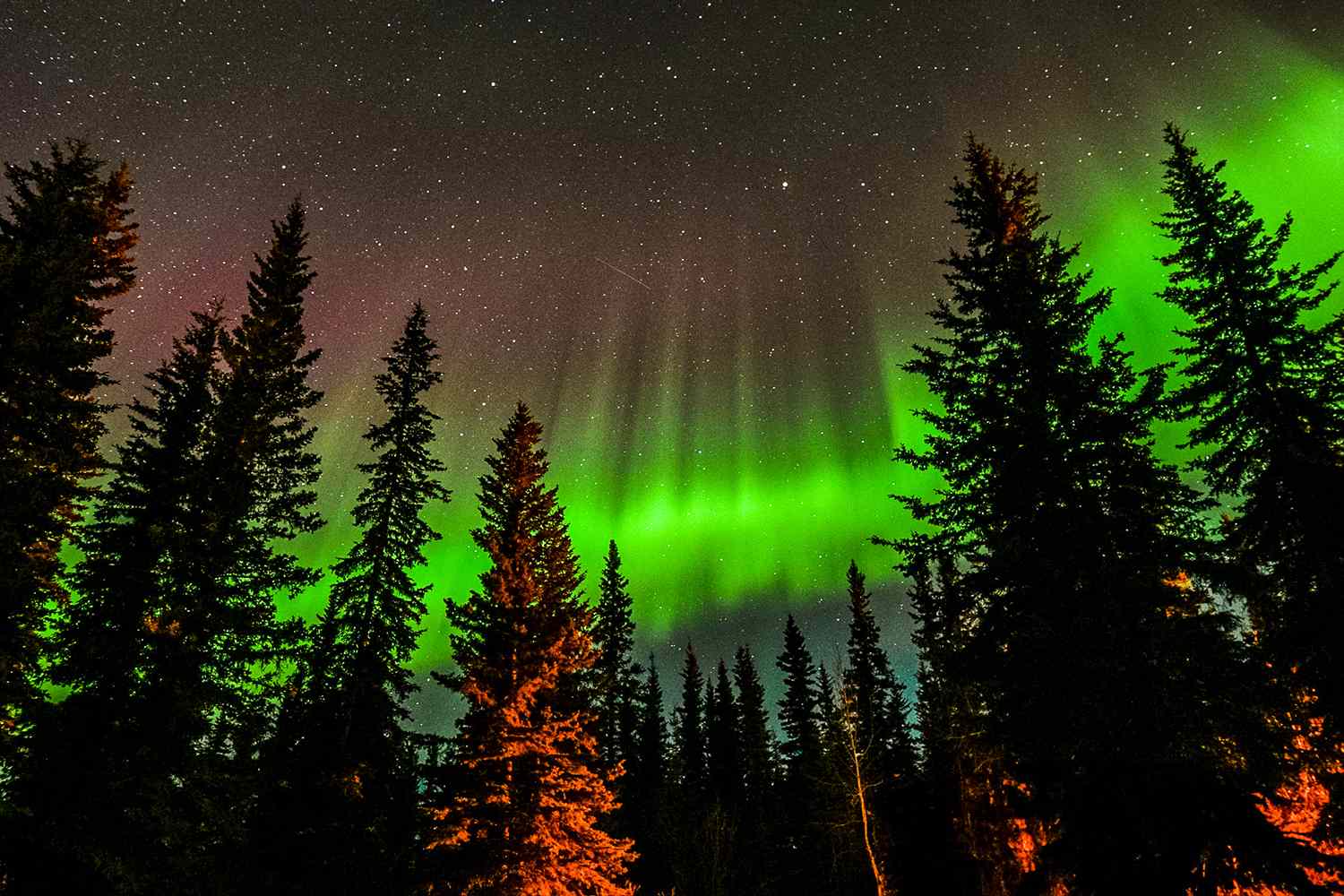
NEED TO KNOW
The northern lights could still be visible Wednesday night across up to 13 northern U.S. states, even as space weather activity settles after earlier surprise solar stormsThe best viewing window is between 10 p.m. and 2 a.m. local time, ideally from a dark, north-facing location away from city lightsStargazers hoping to photograph auroras should use night or pro modes on smartphones, disable flash and stabilize cameras with a tripod for low-light conditions
Look up, because the sky isn’t done with us yet!
If you’re the kind of stargazer who keeps one eye on the astro-weather and the other on space weather alerts, Wednesday night (Jan. 21) deserves your full attention.
After a week of unexpectedly intense solar and geomagnetic activity that sent the northern lights spilling far beyond their usual territory, forecasters say the aurora hasn’t fully clocked out, as there is still a chance the sky could shimmer with color and surprise us once again.
The aurora borealis (northern lights) is a result of geomagnetic storms, which occur when charged particles from the sun collide with gases in the Earth’s atmosphere, creating brilliant waves of light in the sky. Still, their visibility depends on several factors, including intensity and location.
For seasoned sky-watchers (and hopeful first-timers), this is one of those nights where being outside, looking north and trusting in the power of divine timing could pay off.
Missed the jaw-dropping auroras earlier this week? Another window to catch the northern lights is here, and though geomagnetic conditions are calmer, the show could still stretch farther south than usual.
Here’s everything you need to know about when, where and how to watch this stellar event.
When will the northern lights be visible?
Aurora borealis display near Fairbanks.
Gallo Images ROOTS Collection/Getty
According to the National Oceanic and Atmospheric Administration, auroral activity is expected on Wednesday night (Jan. 21) with a forecasted Kp index of 4 on a nine-point scale.
That level suggests the northern lights could be visible south of the Canadian border, even though no minor or major geomagnetic storms are currently predicted.
Scientists were recently surprised by powerful solar and geomagnetic events earlier in the week, which is why visibility remains possible despite quieter forecasts.
While this night won’t be as intense as earlier displays, auroras could still appear across as many as 15 states overnight.
Where will the northern lights be visible?
Strong geomagnetic activity illuminates the Alaskan skies.
Getty
The best chances remain in Canada and Alaska, where auroras may appear shortly after sunset.
Farther south, visibility becomes more limited but still possible in parts of Washington, Idaho, Montana, Wyoming, North Dakota, South Dakota, Michigan, Wisconsin, New York, Vermont, New Hampshire and Maine.
Southern sightings aren’t guaranteed, but clear skies and darkness could make all the difference,
How to watch the northern lights?
Auroras in Manning Park, British Columbia,.
Andrew Chin/Getty
Aurora borealis is easiest to spot during the winter season, when nights are longer and skies stay darker.
The key is to choose a north-facing location, ideally elevated and far from light pollution. NOAA says the lights are best viewed between 10 p.m. and 2 a.m. local time, so don’t rush the process — sometimes the glow builds slowly before revealing itself.
How to photograph the northern lights?
Northern lights in Debrad, Slovakia.
Robert Nemeti/Anadolu via Getty
Hoping to make some magical memories? Your smartphone is more than enough to do the trick! All you have to do is go to settings, turn on Night Mode and point your camera lens towards the sky.
If you’re a more seasoned stargazer and happen to have a DSLR or mirrorless camera, grab a tripod and set your camera to manual mode. Remember, patience is key.