
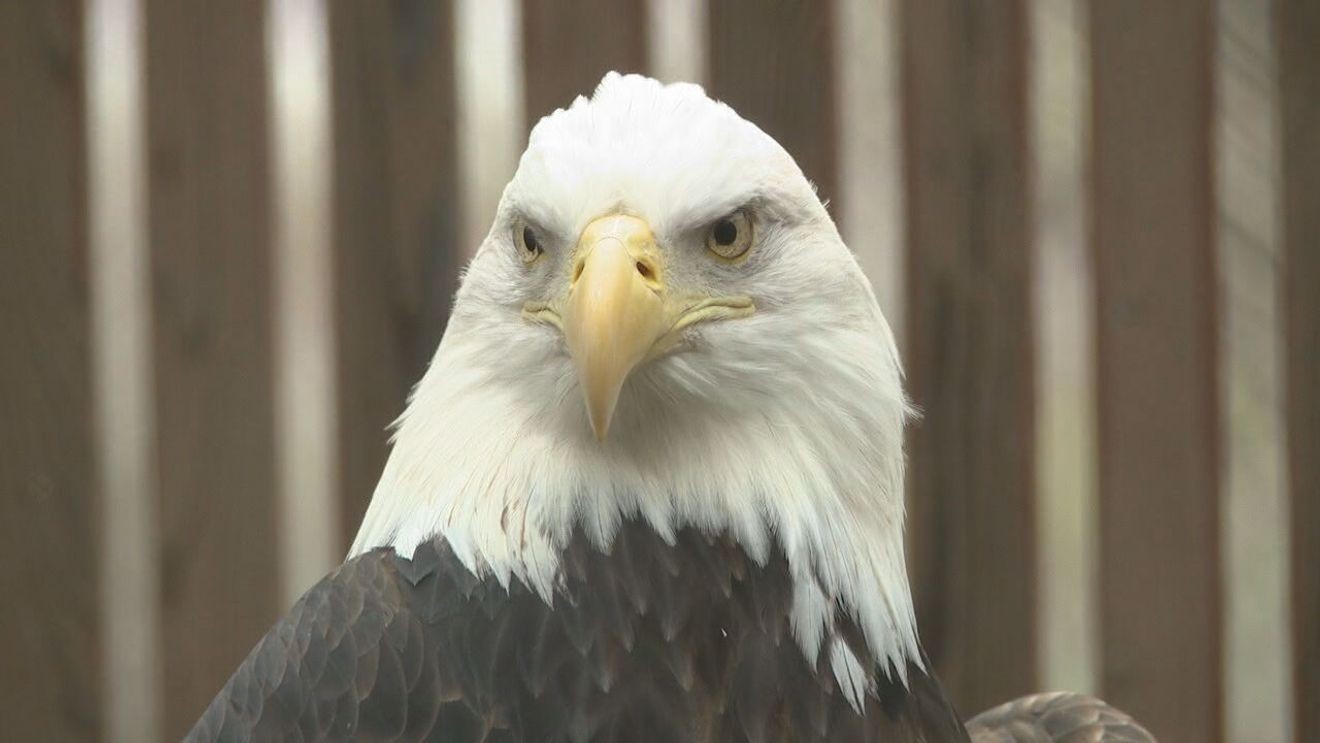
THE DALLES, Ore. (KATU) — The bald eagle is an enduring symbol of the American spirit. It appears as the emblem for government agencies, and even on our currency.
“They chose it because of its symbol of strength, of courage and freedom,” said Cheryl Ragar, the Executive Director of the Columbia Gorge Discovery Center & Museum.
Even though the bald eagle’s been thought of as our national bird since 1782, Ragar says it only won that designation recently.
“Congress only passed the action that made it officially our national symbol in 2024,” she said.
That national symbol can be spotted high in the sky in The Dalles.
“Most of the bald eagles are migrating,” said Bethany Rittenhouse, a park ranger with the U.S. Army Corps of Engineers (USACE). “We do have some bald eagles that live here year-round, but the majority of the ones that you’re going to see are migrating down from Alaska.”
READ ALSO | Ninety miles from Cuba: A visit to the southernmost point in the continental U.S.
Because you can see so many eagles this time of year, USACE started Eagle Watch, an annual event for people to witness this rare sight.
The eagles stay by the Columbia River to hunt for fish.
If you can’t see any when you look up, all you have to do is look ahead at Liberty and Ferguson. They’re the resident eagles of the Columbia Gorge Discovery Center & Museum. Both were injured in the wild and now live under the care of raptor coordinator Julia Khoury. Over time, she has gotten to know their personalities.
“Ferguson is a big chicken. He’s not very brave. He will come up close to you and then spook himself by how brave he’s being and run off again,” Khoury said. “He wants to be as close to Liberty as possible at all times. He’s obsessed with her. Liberty thinks he’s a pretty good roommate. She’s a lot bolder. She’s a lot more confident.”
She says Liberty and Ferguson help her tell museum guests about the remarkable recovery story of the bald eagle.
“They did hit a very low point, but we were all able to work together, put in a lot of regulations, and were able to bring them back from really low populations. There were only 444 breeding pairs out in the wild.”
That was in the 1960s. Now there are more than 71,000 nesting pairs in the U.S. Once nearly wiped out, bald eagles are soaring again — proof that when Americans band together to protect what’s important, recovery is possible.