
MELBOURNE, Australia — The first crowded days of the Australian Open often feel like the beginning of the school year.
Players return from their break, however short it is, rested and full of promise for what the new season might bring. There has been plenty of that this year, but also plenty of something else.
During the first three rounds, on seemingly every other court and behind every other microphone, there was another example of the formerly walking wounded or sidelined, speaking with hope and gratitude for returning to something many of them had taken for granted during the early years of their careers.
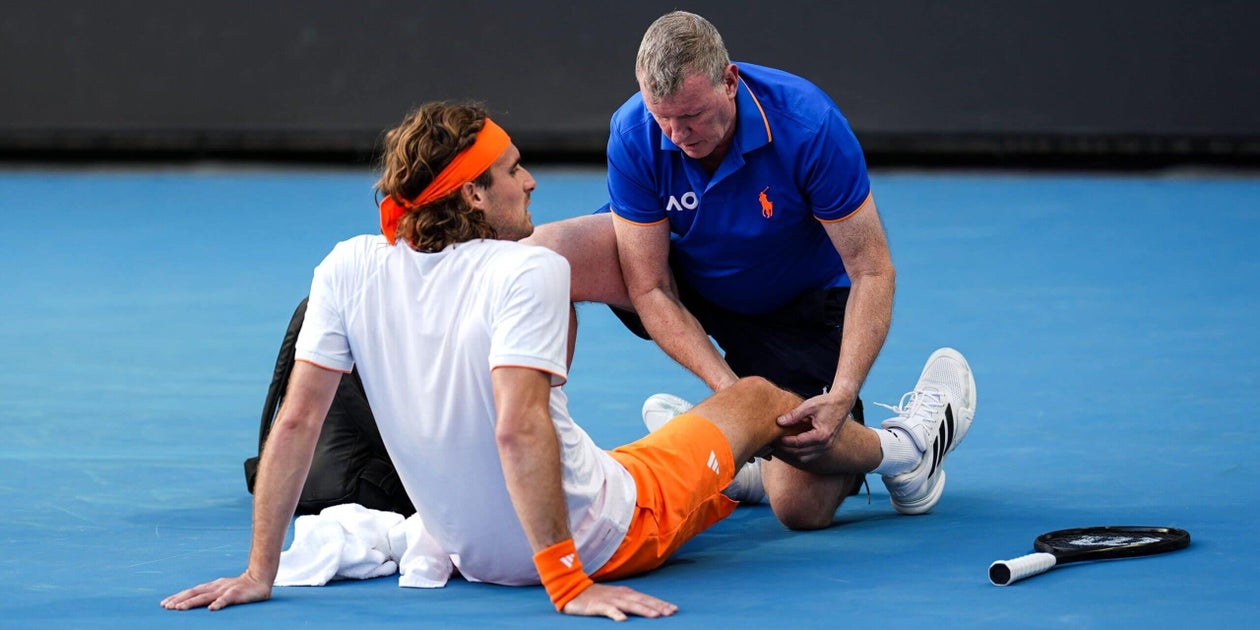
There was Stefanos Tsitsipas, who spent last year nursing an ailing back.
There was Grigor Dimitrov, who tore a pectoral muscle two sets to love up against Jannik Sinner in the Wimbledon quarterfinals, an injury that required surgery and amounted to his fifth retirement in five Grand Slams.
There was Karolína Muchová, who has found some solidity in her ailing wrist.
There was Paola Badosa (back); Tommy Paul (shoulder, adductor, ruptured tendon in his foot); Hubert Hurkacz (torn meniscus); Sloane Stephens (stress fracture in her foot); Shang Juncheng (a bone spur and stress fracture in his foot) and Ben Shelton (shoulder strain).
All of them had moments when they looked into the abyss, wondering what the next tennis version of themselves might look like — or whether it would exist at all.
“Results don’t even matter to me. What matters is training properly and not feeling pain and not being bothered by anything.” Tsitsipas, who contemplated a future without tennis during his back issues last year, said during a news conference ahead of the tournament.
This is where tennis finds itself at the start of the 2026 Grand Slam season. Many top players reached a breaking point during last season, the second year of having a full schedule of 12-day ATP and WTA 1000 tournaments, one rung below the four majors. Throughout 2025, numerous players spoke about the impact of a schedule that wears out their minds and their bodies. The fall swing in Asia became something like a mini-season of ”Survivor,” with top players skipping big tournaments, retiring from matches or withdrawing ahead of them.
The tours say that player welfare is a priority, and that the extended schedules bring days off between matches. Players say that those days off are not as important as extended rest.
According to the Professional Tennis Players Association, there were more player withdrawals from tournaments last season than there have been in decades.
“Prior injury is the strongest predictor of future injury, so health and safety should be the number one priority across all of tennis,” the organization’s medical director, Dr. Robby Sikka, wrote in a text message earlier this week.
All the recovering players are hoping they have found the formula to defy the odds. For all of them, it started with a moment of honesty, when they accepted that they would have to step away, rest and recover.
It has gone better for some than for others. Stephens, who came through qualifying, lost her first match to Karolína Plíšková, who missed a year because of a fluke ankle ligament injury that required two surgeries after an infection. Dimitrov, who spent six months rebuilding his body after the pectoral tear, lost in the first round to Tomáš Macháč as he battled wrist pain after declaring himself fit.
Tsitsipas said he suffered a fluke injury ahead of the tournament, then another during his second-round loss to the same player. Hurkacz and Shang exited at the same stage. Top-10 tennis players are not often rebuilt in a day, or an off-season.
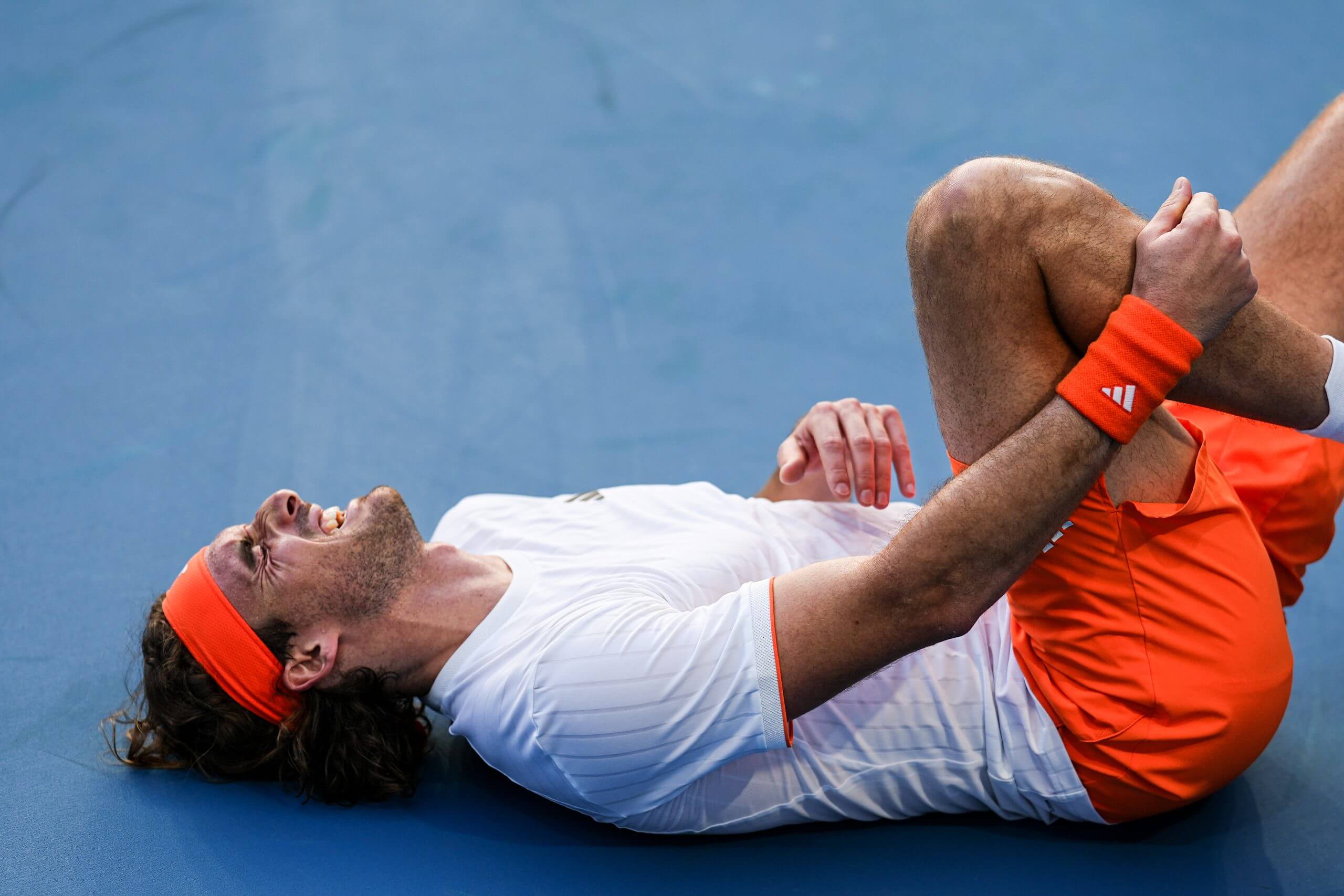
Stefanos Tsitsipas is one of a number of players who came into the Australian Open grateful to be playing at all. (Shi Tang / Getty Images)
Talking about health is a complicated matter for players. During a news conference last week, 20-time Grand Slam champion Roger Federer said fudging the truth and telling the world how great he felt when he was actually in constant pain from accumulated injuries was one of the things he missed the least about his career.
“It’s a tricky situation, especially because it’s something that is always going to be there,” Badosa, the former world No. 2, said of her back problem, which she has been managing the past two years.
She played just 32 matches last year, only three of them coming after Wimbledon in July. Flare-ups come and go without warning, she said, sometimes when she is striking the ball as well as she can. “I just have to accept it.”
That curtailed season led to a longer preseason of roughly 10 weeks, rather than the four to seven starting in November or December that most players plan. Badosa’s goal: make her body as injury-proof as she can.
“I put all my energy there,” she said.
She isn’t alone in paying more attention to health than forehands and backhands. Muchová, who has chronic wrist problems and often plays with strapping around her upper legs, has grown religious about her post-match routine of riding the bike for 10 minutes, getting into an ice bath, and then doing 30 minutes of stretching exercises.
She kind of hates the ice bath, and only goes in up to her waist. So far it’s doing the job. She’s into the third round, but she knows that there is always risk.
“We’ll see,” she said in an interview before the tournament.
Five days in, the award for the best physical recovery probably goes to Tommy Paul, who has been clinical through the first two rounds. The 28-year-old floating across the court once more, digging his way out of corners, and playing the all-court game that can make him a tough test for all but the best few players in the world.
Paul, a 2023 Australian Open semifinalist, had a cup of coffee in the top 10 around this time last year, just as he entered an eight-month battle with his body. He played through an odd tear in his left shoulder here last year, making it to the quarterfinals before losing a match he should have won against Alexander Zverev.
The shoulder improved, but other small injuries hampered him through early May, by which time he started experiencing strains and pulls through his mid-section. He played Carlos Alcaraz at the French Open, in a matchup that usually produces pyrotechnics. Alcaraz blasted a hobbled Paul off the court.
Then, at Wimbledon, came the ruptured tendon in his foot, before he somehow played two five-set matches at the U.S. Open, losing the second to Alexander Bublik after winning the fourth set in a tiebreak that finished his body off.
In retrospect, Paul said, he probably should not have played Wimbledon or the U.S. Open.
“There was, like, four matches I played the whole year where I wasn’t in pain, which was ridiculous,” Paul said ahead of this tournament. “There’s only so much that you can really skip if you want to keep your ranking up.”
When he finally did stop at the end of the summer, he sat on his couch at home in Florida for a few weeks. When it was time to start again, the first order of business was rebuilding his muscles in his legs and his core and regaining the mobility in his knees and hips.
Regaining his wind was tricky, because that requires cardio, but the most efficient cardio exercises are high-impact activities like running, and he wanted to avoid anything that would raise the chances of reinjuring himself. Low-impact cardio training, like cycling or running in a pool, takes more time and is less sport-specific that doing shuttle sprints on a tennis court.
“A lot of long days,” he said.
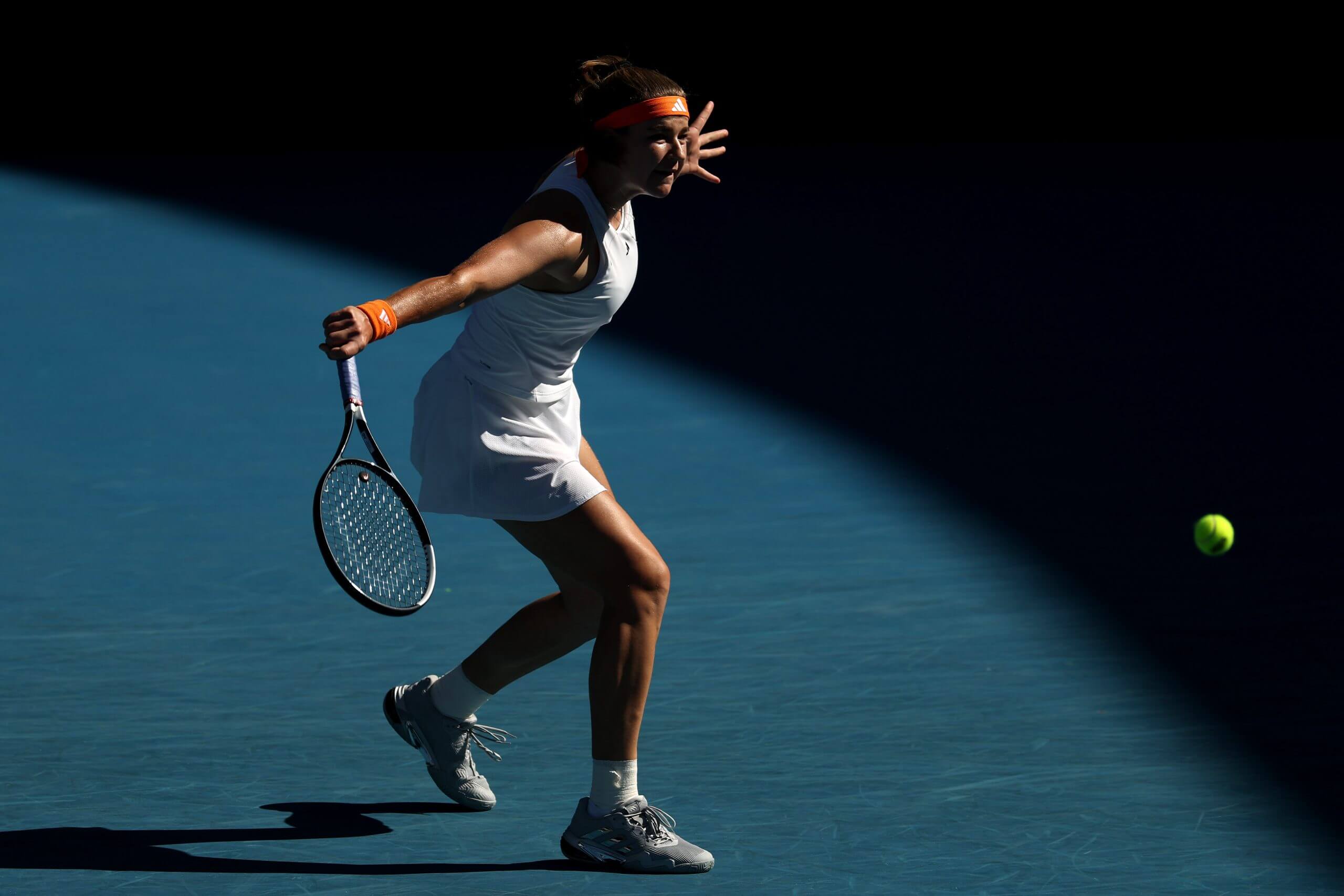
Karolína Muchová has been playing freely in Melbourne after a long run of injury management, but it continues. (Phil Walter / Getty Images)
Stephens, the 2017 U.S. Open champion, spent 11 months wishing she could have those long days. She wore a boot over the stress fracture in her foot for three months and couldn’t do much of anything.
“It was either that or surgery, and surgery would have been a career-ender,” she said during an interview after her first-round loss to Plisková. Really, it was her fourth round, because she won three in qualifying to get there. She did not receive a wild card, like former champion Stan Wawrinka, 40, and Venus Williams, 45.
“Only Grand Slam champion in qualifying,” Stephens said, with a bit of an edge.
Hubert Hurkacz is not a Grand Slam champion, and he did not come through qualifying. He did go on a stunning comeback run at the United Cup, the mixed international team event which opens the season, beating world No. 3 Alexander Zverev and No. 9 Taylor Fritz, both of whom have also said they spent much of last year carrying injuries (Zverev) or are managing long-term conditions (Fritz, with knee tendonitis).
Still, for the Pole, that was not the point.
“Just grateful to be back,” Hurkacz said. “I will never take my health for granted again.”
That is an increasingly common sentiment around the sport, with some of the biggest names out for months. Jack Draper, who has played little since Wimbledon, has kept pushing back his comeback from a bone bruise in his playing elbow. Holger Rune is spending the year recovering from a ruptured Achilles tendon and subsequent surgery.
Shelton, whose last Grand Slam ended in what he called “the worst pain he’d ever felt” and a tearful retirement on his home courts in New York City, said he had a quick scan just minutes after the injury and learned that he didn’t suffer structural damage. Surveying the landscape of the injured among his friends and peers as he sat home for a month last September and let his shoulder injury heal enough for him to get a few matches in before the end of the season, he felt something like gratitude.
“Everything isn’t perfect, but that’s how it always is. And if you’re not doing well here at the beginning of the year, you’re, you’re in trouble the next 11 months,” he said to a few reporters Sunday.
He empathizes with Federer but promised he really did feel good.
“Our tour has been riddled with injuries the last couple of years,” Shelton said. “So I feel very lucky.”