
PORTLAND, Maine — Let’s start by giving David Driskell — educator, curator, scholar activist, artist, and not necessarily in that order — his due. As a foundational force in the long, slow expansion of the American canon to include Black artists largely disregarded for centuries, he was tireless, thorough, and impassioned. Watch the excellent 2021 HBO documentary “Black Art: In the Absence of Light,” and you’ll get the idea. He plays a starring role.
And if you’re wondering: Yes, centuries. In 1976, Driskell curated “Two Centuries of Black American Art: 1750 to 1950,” at the Los Angeles County Museum of Art, an assertion, radical at the time, that Black art history had a continuum and lineage essential to understanding America itself — an idea the intellectual establishment had largely, blithely, ignored. The show, Driskell recalled in a 2009 interview with the Smithsonian, was conceived to send a signal, loud and clear: “‘No, you haven’t seen everything. You don’t know everything,’” he said.
Driskell conveyed his deep knowledge of the long arc of Black American cultural pedigree to generations of his students at Talladega College in Alabama, at Howard University, where he’d been a student, at Fisk University in Nashville, and finally at the University of Maryland, where The Driskell Center remains as his lasting legacy, nurturing scholarship around Black artists, past and present. (Driskell died of COVID-19 in 2020, at 88.)
Every summer starting in 1961, Driskell would travel to his studio in Falmouth, Maine, just north of Portland, and he has a legacy here, too. At the Portland Museum of Art, “David C. Driskell: Collector,” is an important jog to the memory — that now, coming up on a third century of Black art, lineage would be that much harder to draw without his life’s work. And in an era of fractious politics and a resurgence of racial animus, the echoes of his foundational gesture, 50 years ago, seems not that far away at all.
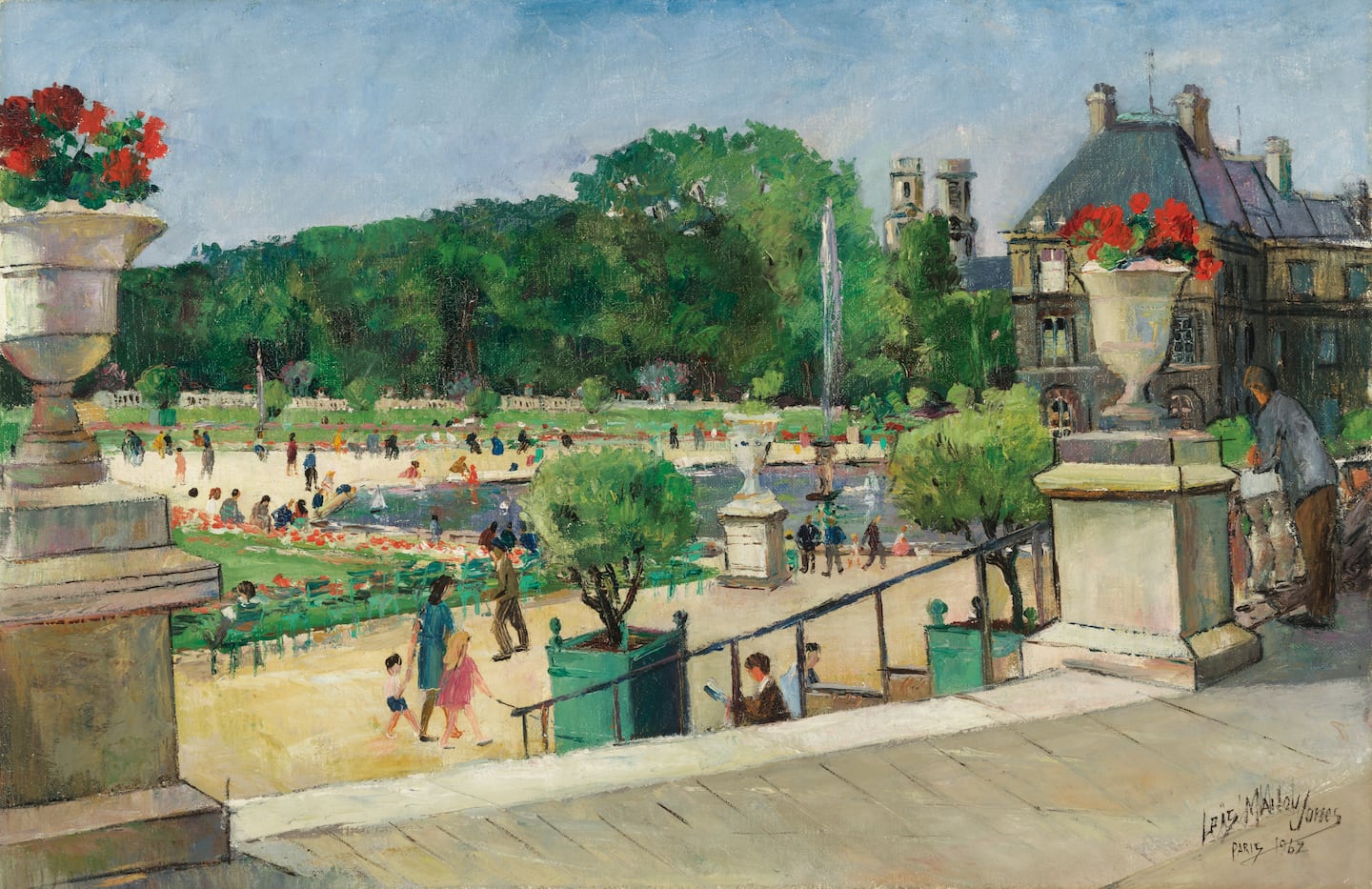 Loïs Mailou Jones, “Paris,” 1962. Portland Museum of Art, Maine. Petegorsky/Gipe Photo
In 2021, the PMA paid homage to Driskell’s work as a gifted painter himself with “David Driskell: Icons of Nature and History,” spotlighting an element of his life’s work largely overshadowed by his scholarship and advocacy. To be fair, it loomed large: Thelma Golden, the director of the Studio Museum in New York, the most significant Black art institution in the country, wrote in the exhibition catalog that “Two Centuries” was a monument to “activist curating,” and for her, a powerful proof point that would inform her own career. It made her realize, she wrote, that scholarship had the power “to transform the history of art as it was written.”
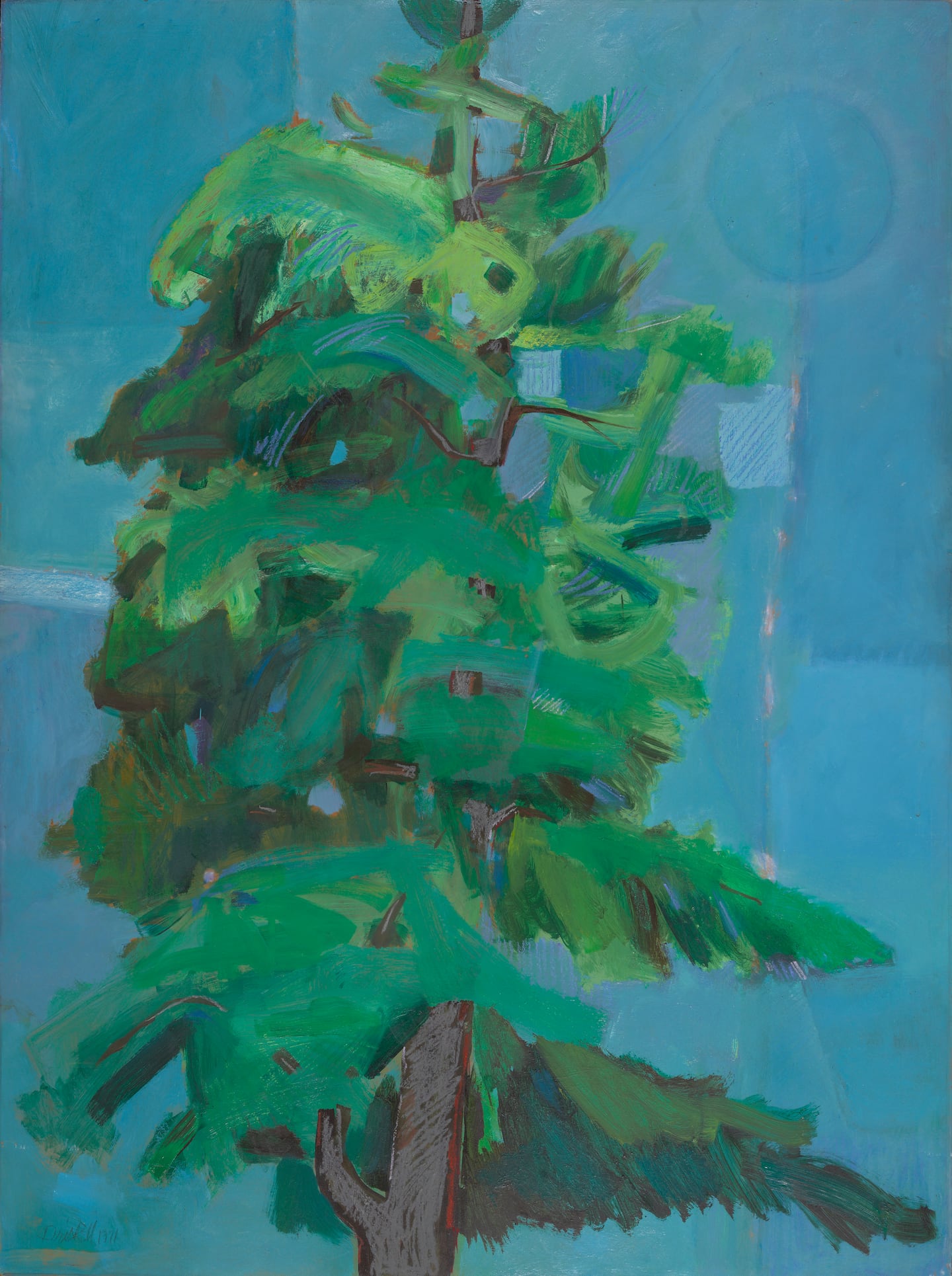 David Driskell, “Pine and Moon,” 1971. Portland Museum of Art, Maine. Courtesy DC Moore Gallery, New York.Pillar Digital Imaging
But that 2021 show gave a view into his introspective artist’s soul, and helped reveal his life’s priorities around breaking down divisions in both art and the culture. The current exhibition, though pocket-size, is a road map of his extrovert advocacy, and the alliances he forged as he pushed things forward.
The walls at the PMA are a who’s who of the Black Arts Movement of the 1970s, with Driskell as a central figure. Here, “Urban Street Scene,” a fractured, brightly-colored 1974 collage by Romare Bearden, a towering figure of the movement and a close Driskell confederate, there, a lovely untitled watercolor abstraction from 1964 by Alma Thomas, another close friend who broke ground in 1972 as the first Black woman to have a solo exhibition at the Whitney Museum of American Art. Lois Maillou Jones’s “Paris,” 1962, is a bright, post-Impressionist delight, conveying the liberation she felt as a Black artist overseas, free of the constraints of American racial politics. She had been one of Driskell’s teachers when he was an undergraduate at Howard University. Elizabeth Catlett, also a student of Jones’s, is here too, represented by “Sharecropper,” 1968, one of her best-known works. She, like Jones, abandoned the tensions of American racial animus for Mexico, where her social-justice-driven works found common ground in that country’s long history of the same.
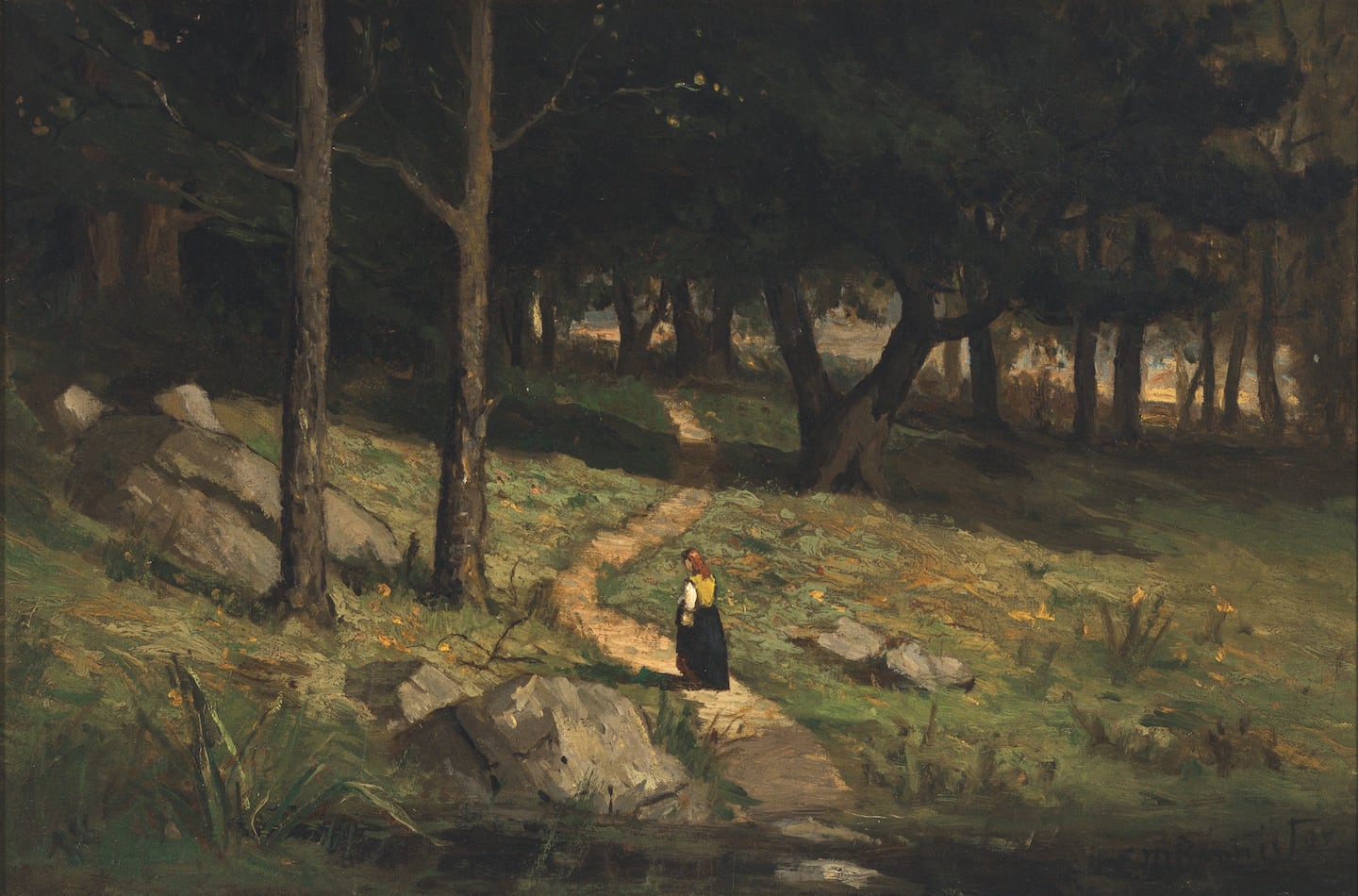 Edward Mitchell Bannister, “Untitled (Walking in the Woods),” 1880s. Portland Museum of Art, Maine. Petegorsky/Gipe Photo
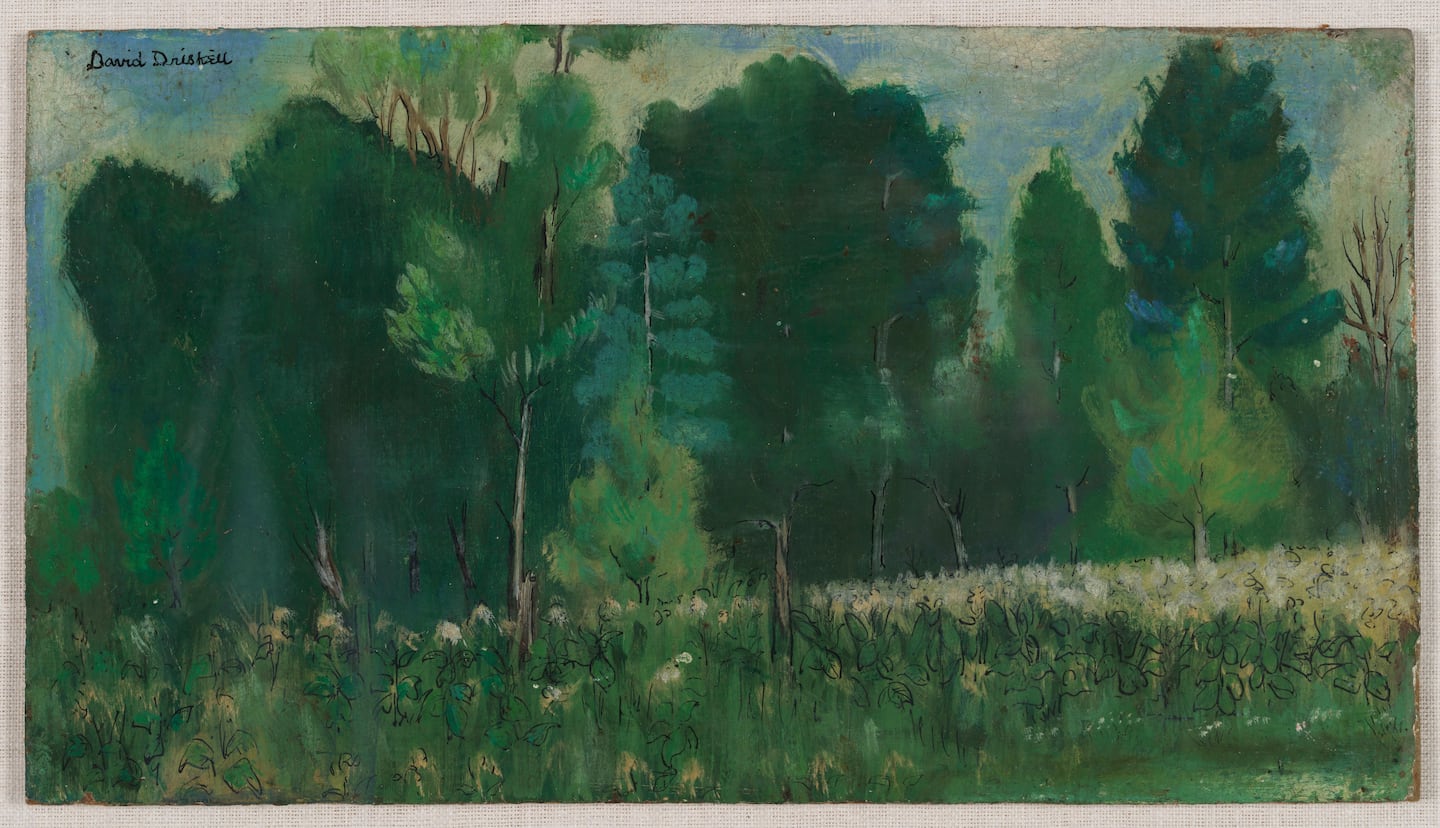
The show surely wasn’t meant as a reminder, but in this regressive moment in American culture, when history itself seems at risk, it’s a significant, unintentional warning: Hard-fought progress can never be taken for granted, and that even the most natural, normal seeming forward motion can be forgotten and lost. In this little showcase, Driskell’s insistence — of an arc of Black culture tracking every moment of American evolution — can be found. I was moved by a pair of small landscape paintings by the artist Edward Mitchell Bannister, a Black artist of the 19th century only recently being recognized for his remarkable talent. “My Father’s Farm, North Carolina,” a small 1955 painting by Driskell, of a moody green fog of forest, hangs nearby, almost as if in communion.
The lineage was always there, he seems to say. It just took someone willing to see it. Driskell was that someone. His legacy, until very recently a beacon, now feels more like a bulwark. Its existence will be — has to be — a protective armor for whatever assaults come next.
DAVID C. DRISKELL: COLLECTOR
Through March 1. Portland Museum of Art, 7 Congress Square, Portland, Maine. 207-775-6148, www.portlandmuseum.org
Murray Whyte can be reached at murray.whyte@globe.com. Follow him @TheMurrayWhyte.