
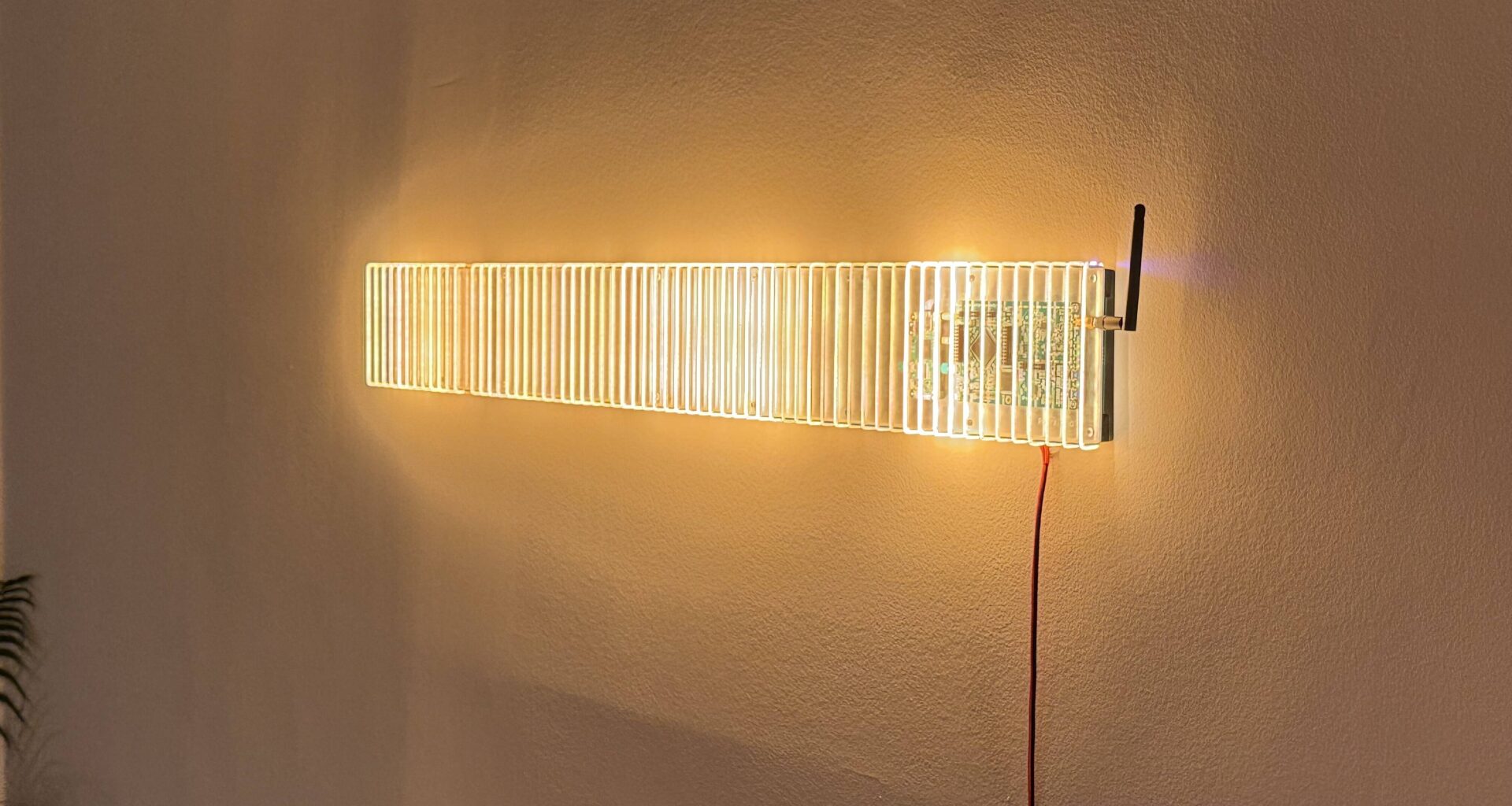
Unless you live in a Faraday cage, you’re surrounded at all times by invisible radio signals, from Bluetooth and Wi-Fi to cellular traffic. French artist Théo Champion has found a way to make that wireless noise visible, with an intense piece of Raspberry Pi-driven art that turns nearby radio activity into light.
Champion, who goes by Rootkid online, created a piece he calls “Spectrum Slit” that turns radio signals within the 2.4 GHz and 5 GHz bands used by Wi-Fi, Bluetooth, and other commonly-used technologies, into light displayed in a linear array of 64 LED filaments, each corresponding to a specific segment of the spectrum.
“At moments of low network usage, the sculpture emits faint, intermittent light, reflecting the ambient background noise of an urban environment,” Champion explained. “As wireless activity increases, the filaments surge and saturate, forming dense bands of intense illumination.”
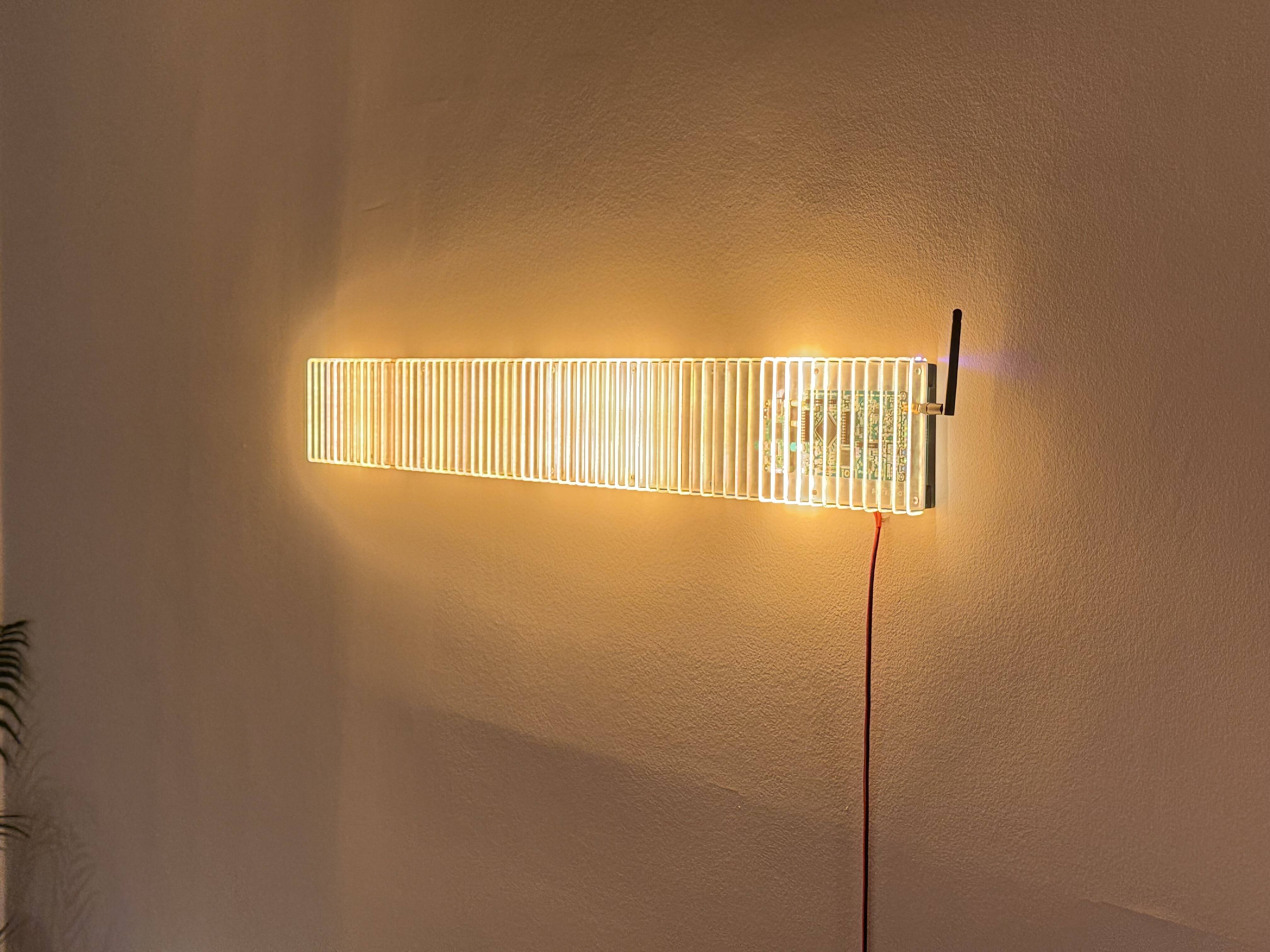
Spectrum Slit all aglow with radio wave data – Click to enlarge
A video Champion published on YouTube Thursday showing the build process of the piece displays the intensity of the light in his Paris apartment after neighbors had returned home in the evening, and it gets bright.
“For all my projects, the motivation is the same,” Champion told The Register. “We tend to look past the technology that surrounds us and shapes our lives. My work is about forcing us to look at it, and seeing the beauty in engineering.”
The moment of introspection on our modern technological paradigm afforded by Champion’s work didn’t come easy, or cheaply, though.
As explained in the video and his write-up, Champion built the device using a HackRF One software-defined radio connected to a Raspberry Pi, which together sample wireless signals and convert them into data used to drive Spectrum Slit.
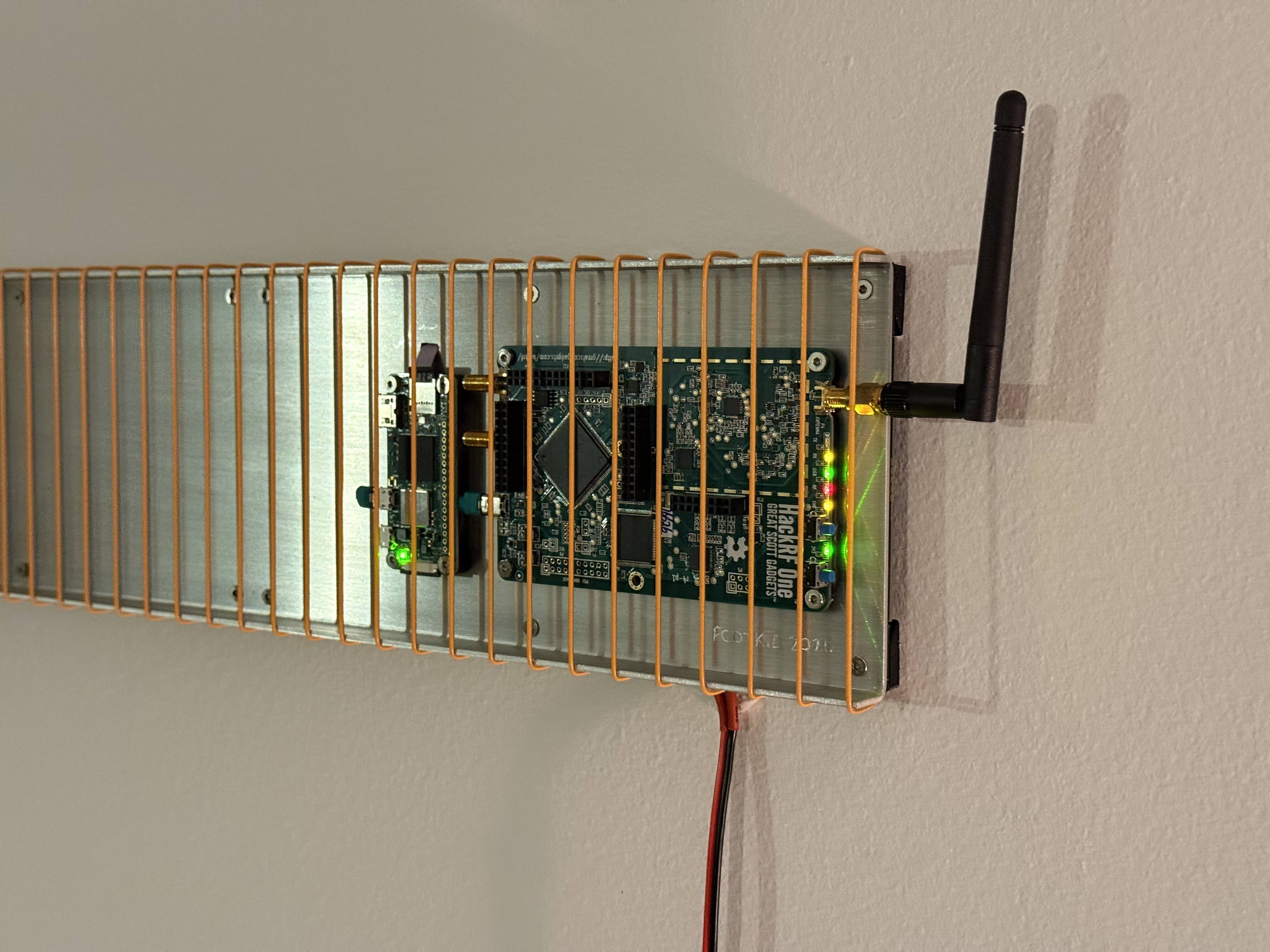
The simple electronics that make Spectrum Slit work – Click to enlarge
Champion wrote the software for the build using Python, but when it came to the sheet metal frame that makes up the bulk of the device, and the printed circuit boards he had to design to make the device work, those elements had to be outsourced to fabricators for a few hundred bucks a piece.
“I work on these projects when I have time, [a] few hours here and there,” Champion explained in an email conversation about how long this effort took. “But I’d say around 3 weeks of research/experimentation then a week for the actual build part.”
As for the parts themselves, he estimates the whole build cost him around $1,000.
You have to hand it to him, though – the finished product is impressive. Paris residents who want to get a first-hand look will likely have the chance to see Spectrum Slit in person, as Champion told us that he’s in discussions to get it and his other tech-inspired art pieces, like a device that fires up a dark web marketplace for stolen data if a user pushes its single button, or a RPi running a Llama LLM that reflects on its own existence until it runs out of memory and resets, placed on display.
Those interested in owning their own Spectrum Slit, take notice: When asked whether he’d consider building additional copies of Spectrum Slit if commissioned, we’re told it’s possible.
“I am open to the idea, yes,” Champion told us. ®