
MINOCQUA, Wis. (WJFW) — Living in the Northwoods, we see wildlife of all kinds, but sometimes that wildlife suffers the consequences of human nature.
Eagles and loons are birds known for suffering from lead poisoning in the Northwoods.

contributed: Northwoods Wildlife Center
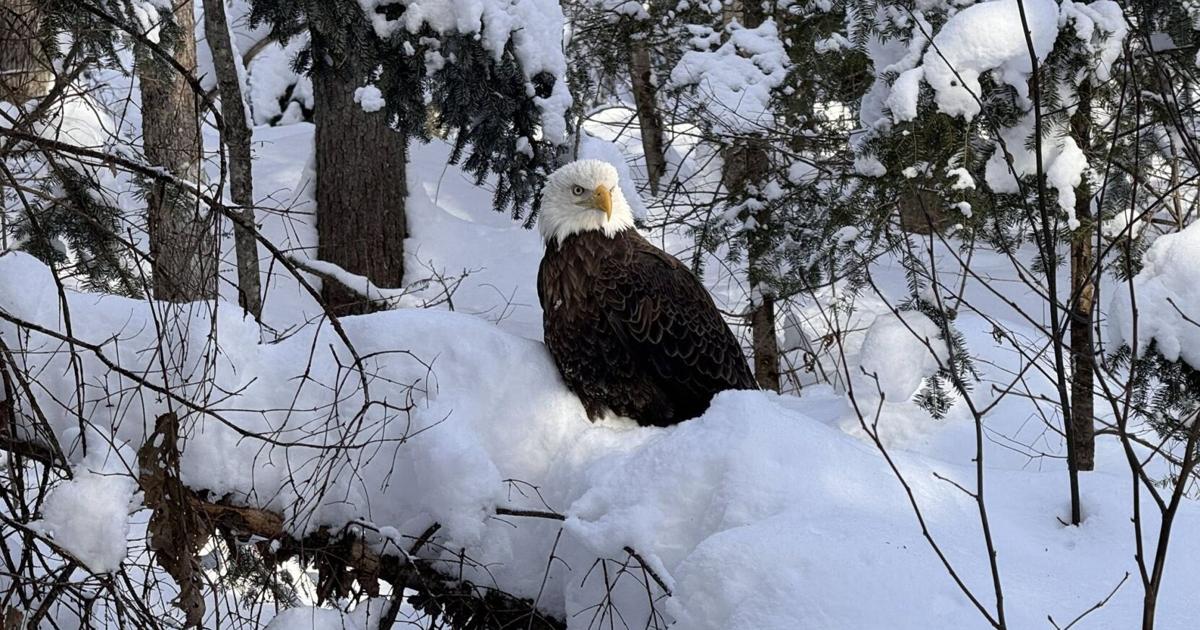
This past week, the Northwoods Wildlife Center rescued an eagle that seemed to be in distress. For a few days, people had been driving along a road and saw an eagle sitting in the snow.
“It’s not unusual to see an eagle sitting on the snow for a little while,” said Bryon Black, Northwoods Wildlife Center executive director. “Especially next to the road, if they’re eating roadkill or something, but when it’s in the same spot for an extended period of time people begin to worry.”
contributed: Northwoods Wildlife Center
The concerned people called the team at Northwoods Wildlife Center.
“By the time we got there, the eagle had moved into a swamp with deep snow, so it was a bit of a challenge to rescue the eagle.”
contributed: Northwoods Wildlife Center
The team at Northwoods Wildlife checked the eagle for broken bones and injuries. They also checked for frostbite, but because the bird was sitting on snow and not the ground, it was fine. The eagle is suspected to have lead poisoning despite being able to move.
“Everyone that we test has lead poisoning, so it’s one of these things where even before we get the results back,” Black said, “because it is so common, we begin treating for lead poisoning right away.”
The symptoms of lead poisoning in birds can include muscle weakness, reduced activity and changes in droppings.
“Sometimes you find them with their head drooping really low,” Black said. “They can just barely hold themselves up and that’s a very bad sign. It’s an indication of pretty severe lead poisoning. But, we’re hoping this guy pulls through because he was a little bit more mobile, he could jump around, move around a bit.”
He explained that lead causes more issues than people realize.
“It’s just not great for the environment at all, it has bad neurological effects on people and other animals,” Black said. “So, it’s really important for us to do whatever we can to not use lead, and try to get it out of the environment whenever we can.”
After speaking with hunters and fisherman in the area, Black has noticed a change.
“People are making the change,” he said. “We have noticed more and more people who are deciding to use non-toxic ammunition and non-toxic fishing tackle, which is great.”
The Northwoods Wildlife Center is starting a new initiative to get rid of lead.
“We’ve decided as an organization to help that along by launching a Lead-Out initiative here at the Wildlife Center,” Black said, “which is an educational program but we’re also accepting people’s lead as we’re a drop off location for people who are trying to get rid of their lead.”
If you want to get rid of lead ammunition or tackle, you can drop it off at Northwoods Wildlife Center, 8683 S Blumenstein Rd., in Minocqua, to be recycled properly. The eagle the center is taking care of is stable and being kept quiet, comfortable and hydrated.