
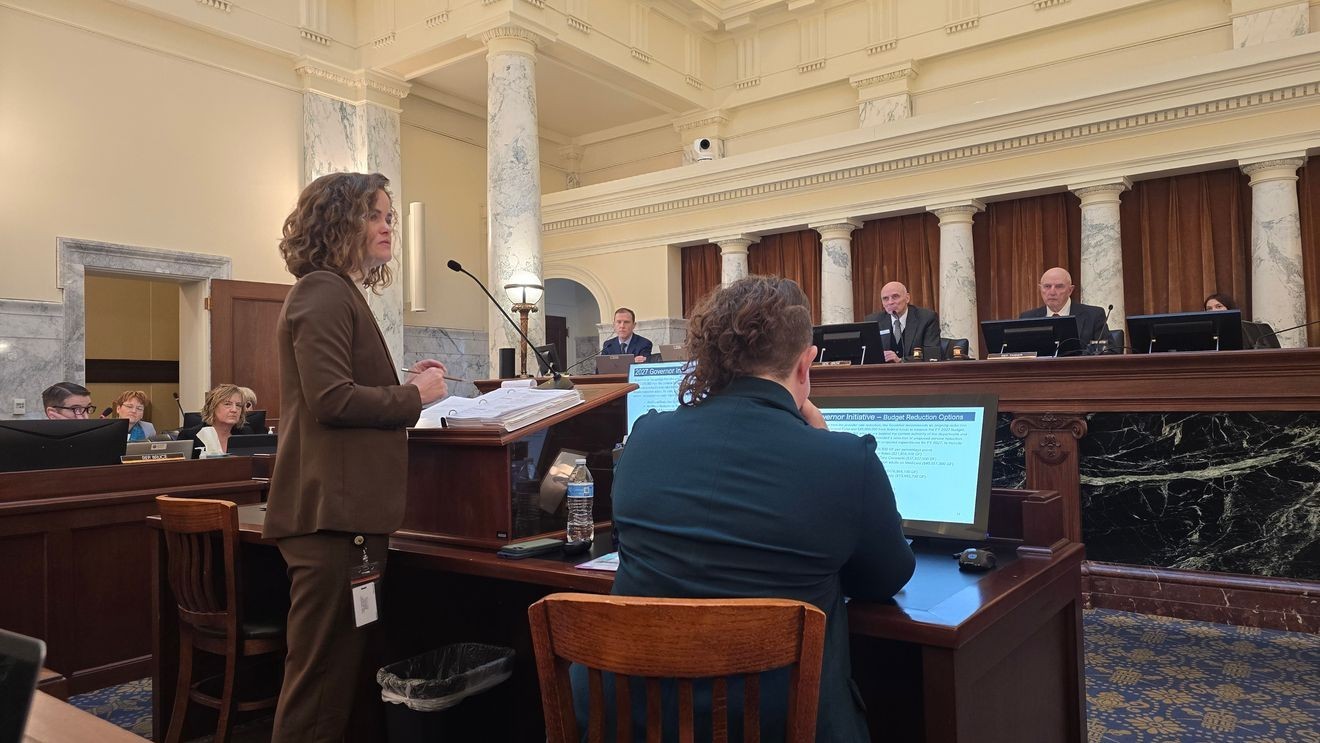
BOISE, Idaho (CBS2) — The Department of Health and Welfare’s Medicaid Division presenting their budget request for the Joint Finance-Appropriations Committee this morning. Within that presentation were a series of Governor initiatives to add to savings from the 4% provider rate cuts implemented last year. This includes an ongoing reduction of $22 million from the general fund and $45 million from federal funds.
Lawmakers also heard more about a program tasked with searching for overpayments and abuse within Medicaid services and the question of what impact a repeal of Medicaid expansion would have on the State’s budget.
Governor initiatives
The department told committee members the cutting of such programs and services is not within the authority of the department and would require legislative action. Sharing a list of services for the legislature to consider and could implement.
The services and their estimated impact on the general fund, according to the Division of Medicaid’s presentation, are as follows:
Additional reduction to hospital rates – $2,076,500 per percentage pointAdditional reduction to residential habilitation rates – $21,858,900Removal of administrative costs for Managed Care Contracts – $37,437,500Removal of the Pharmacy Benefit for Non-expansion Adults on Medicaid – $40,051,300Removal of Adult Dental Services – $5,512,100Removal of Home and Community Based Services – $176,564,100Removal of Physical, Occupational and Speech Therapy – $13,093,700Removal of Case Management – $6,368,700Removal of Hospice services – $1,479,100Removal of Adult Prosthetics and Orthotics – $398,300Removal of Adult In-Home Nursing Services – $258,900Removal of Adult Chiropractic Services – $183,600Removal of Adult Audiology – $23,200Removal of Adult Vision Services – $463,400
Medicaid expansion
Sen. Glenneda Zuiderveld, R-Twin Falls, asked Department of Health and Welfare deputy director Sasha O’Connell if the department has considered the recommendation from Idaho’s DOGE Task Force to repeal Medicaid expansion. Zuiderveld said many of her colleagues are “concerned” about the 4% rate cut, suggesting the repeal of expansion could help avoid those cuts.
O’Connell responded by saying that decision is outside of the authority of the department and would require legislative action. However, the legislature tasked the department with finding out the monetary effects of a repeal.
O’Connell cited a study presented by current DHW director Juliet Charron in which a repeal would likely lead to an increase in budget as opposed to savings.
Included in those costs, O’Connell said, would be hospital assessment. Currently, the state takes in a tax from hospitals based on the amount of Medicaid recipients they serve, 30% of that money goes to the state’s general fund. Expansion recipients count in that number.
O’Connell explained that if expansion were to be repealed, expansion recipients would no longer be factored into that assessment leading to less money the state takes in from hospitals. O’Connell says the estimate would be around $38 million.
An additional cost of repeal, explained by O’Connell is within state hospitals. State hospitals, in the past did not bill Medicaid, but do now. Expansion members are included in people those hospitals serve.
“Our need to fund those state hospitals doesn’t necessarily change when you remove Medicaid expansion, you’re just removing the federal match we receive for those folks that are in the hospitals,” O’Connell said, addressing the committee.
She said since the need would still be there, the offset would be paid using general funds. Estimated around $20 million.
Medicaid Program Integrity Unit
Another piece requested by the department and recommended by the Governor is $935,000 ongoing to go towards the Medicaid Program Integrity Unit. Currently, the unit is a team of 16, these funds would go towards funding an additional 5,500 hours for contract workers to aid in program audits for fiscal year 2027. The funds will be split evenly between the general fund and dedicated funds.
The department says they have had trouble hiring and retaining a staff with the required qualifications and experience and believe adding contractors will increase the unit’s ability to be proactive in their investigations and audits.
The Program Integrity Unit is tasked with looking through Medicaid programs for “waste, fraud and abuse.” The Department of Health and Welfare says in their proposal, over $3 million in overpayments were recovered in fiscal year 2025 and they expect to see an increase in overpayment recoveries.