
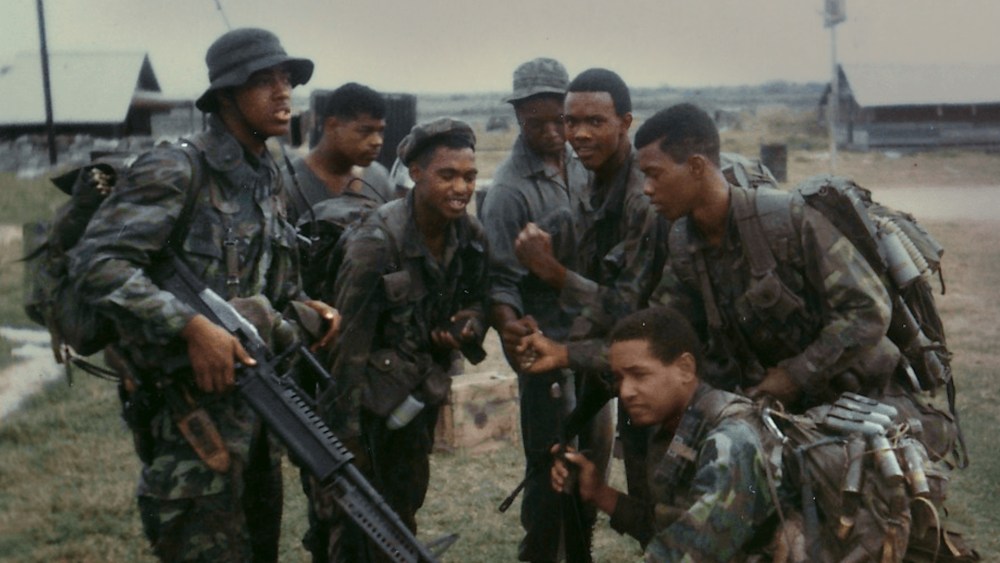
When Vietnam veteran Ed Emanuel wrote the memoir “Soul Patrol” (2003), the gesture could have been likened to that of a marooned man sending out a message in a bottle. Although he’s had a decades-long career in the film industry, Emanuel had lived with troubled memories of serving in the first African American special operations six-man Long-Range Reconnaissance Patrol team. His tour ran from 1968-1969. As profoundly bonded as those men had been in combat, they’d lost touch in the intervening years. He hoped the book would find its way to his compatriots and if so, maybe they’d find their way to him. It did. They did. And the men began having reunions.
In director J.M. Harper’s haunting, revelatory documentary “Soul Patrol — premiering at the Sundance Film Festival — the veterans gather at a hotel for their final reunion in 2024. The film features Emanuel as well as other “LURP” (as the units were called) fellow team members Thad Givens, John Willis, Lawton Mackey Jr., Norman Reid and Emerson Branch Jr., among others. “Soul Patrol” contributes a little-known chapter to the nation’s understanding of Vietnam War and Black history.
As the documentary opens, insect whirs and faint helicopter chuf-chufs mix with a choral hymn. An intertitle offers a quote commiserate with the music’s reverence: “He who has a why to live for can bear almost any how,” courtesy of the philosopher Frederick Nietzsche (who will be one of the film’s guiding muses). A handful of soldiers creep cautiously in the shadows while a voiceover narration sets the stage for the harrowing encounter central to the film. In Cu Chi, in the Southeast stronghold of Tay Ninh province, Emanuel had an out-of-body experience that he has grappled with ever since.
“Soul Patrol” shifts to the present-day grocery store, where Emanuel and his partner, Anita Sue Wallace, steer a shopping cart through the aisles. Also wandering (or else patrolling) the store’s aisles beneath the fluorescent blare are a handful of soldiers in combat gear. It’s a creative salvo: employing a cast to represent the figures of Emanuel’s wartime past that have haunted him, including his younger self (played by Myles Simms-Aur), helmeted and carrying an M-16 rifle. That solemn poetry the soldiers recite either aloud or in their thoughts comes by way of Nietzsche.
This is Harper’s second documentary (2024’s “As We Speak,” about the weaponization of hip-hop lyrics in the courts, also premiered at Sundance). He’s proving to be a filmmaker deeply compelled by the intersections of the individual and the institutional. He’s also an experimenter, leaning here into stylized re-creations, but also utilizing that grocery moment to further center Emanuel’s reckoning with a not fully reconcilable past. The rare Super 8 footage, taken by some of the subjects at the time of the tours, lends even more intimacy to their experiences of Vietnam. Along with a cache of their still photos, the personal visual record underscores how impossibly young they were.
Standing at the podium that day, Emanuel recalls another of his reasons for writing the book: “Maybe I could free myself of demons and the questions and bad memories I have,” he tells the men and their partners and spouses gathered at their final banquet reunion. It’s an unburdening he offers to his fellow comrades. This meal — everyone dressed to the nines — is just one strand Harper utilizes to braid a complex story of soldiers and citizens (his subjects are both), war overseas and conflict at home (and they suffered both).
In 1968, the war was increasingly unpopular. Protests were growing. This unrest mirrored the ongoing fight for Civil Rights and the rise of the Black Power movement, whose best-known leaders roundly condemned the war. (In 1967, Muhammad Ali had been sentenced to five years for refusing to serve.) But they were not a fringe. Harper makes resonant use of Martin Luther King Jr.’s speeches about the moral implications of America’s incursion into Vietnam.
The ratio of Black men serving at the time of Emanuel’s tour was 23%. Yet those soldiers’ returns were often met with derision. Two survivors admit that many of the people in their lives had no idea they’d served. The ’60s remains one of the most turbulent periods in modern U.S. history. Emanuel recounts the captain of his flight to Vietnam coming on the PA to tell the soldiers that Bobby Kennedy has been killed.
Building on the rapport Harper built with his subjects in “As We Speak,” the interviews in “Soul Patrol” brim with trust. The subjects say rending but also disquieting things about killing. In a fine nod to the insights of those who live most intimately with the bedeviled memories of the veterans, Harper convenes their partners, who share with each other their insights and challenges. A takeaway: It has not been easy. The men’s recollections about the boredom and terror of their time in Vietnam and the censoring they experienced upon their return offer reasons for that.
Toward the end, “Soul Patrol” returns to Emanuel standing in that grocery store. It’s an image that hints at some measure of spiritual repair. The credits begin their roll with Jimmy Ruffin’s aching ballad “What Becomes of the Brokenhearted?” playing. Like Emanuel and his comrades, Harper and his film go a meaningful way in asking and offering an answer to that plaint.