
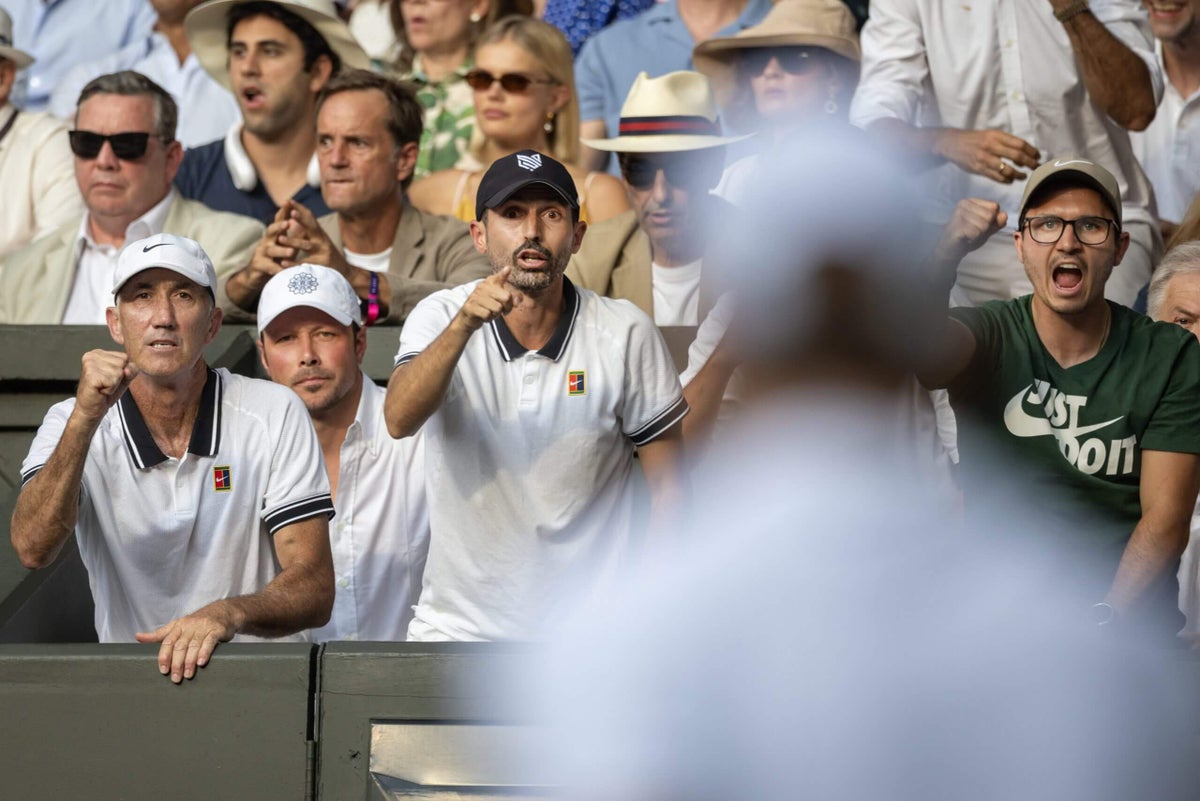
MELBOURNE, Australia — “I just expect them to read my mind.”
Telepathy between coaches and players is one of tennis’ favorite conceits, and Aryna Sabalenka leaned all the way into it when asked what she wants from her team after beating Iva Jović to reach the Australian Open semifinals.
The world No. 1’s 6-3, 6-0 win was a comfortable one, but it still saw her customary expressions of disapproval to her coaching box, such as a swiping hand gesture, which is Sabalenka code for “shut up.”
Sabalenka is one of the most expressive players on the tour. She rarely hides her disbelief, whether at her own misses or her opponents’ winners. During a news conference at the Brisbane Open earlier this month, she said of her coaches’ communication: “Honestly, I have no idea what I want. Every tournament I look there, and I think that’s the crazy thing, because they kind of are trying to guess what I’m looking for.
“Sometimes I’m looking for support. Sometimes I’m looking for advice. Sometimes I’m looking just of sake of looking. That’s the tricky part for them.”
The mid-match dynamic between player and coach — and translating often unspoken needs and wants, as well as instructions — is critical to a star’s success. Off-and-on court coaching has steadily progressed from banned, to banned but prevalent, through trials and various caveated permissions. At the 2025 Australian Open, the tournament took things to a new level by introducing coaching boxes sunk into the corners of the biggest courts, putting the dialogues between players and their teams as close to the match action as possible.
Every player wants something slightly different from their coach, and as Sabalenka explained, this can change match to match, point to point, often with little rhyme or reason.
Jović, 18 and playing in her first major quarterfinal, got plenty of encouragement from her team early on against Sabalenka as they recognized and sought to manage her nerves.
“I usually like to figure things out on my own,” she said in a news conference. “So I don’t do a crazy amount of little tactical things. More just encouragement, and then maybe if there’s something that’s obviously going wrong, you give more specific tactical advice.”
Ahead of a key game in the second set of the following match on Rod Laver Arena, Learner Tien received detailed tactical instructions from his coach, the former French Open champion Michael Chang. The detail gave way to vocal encouragement once Tien went up break point against No. 3 seed Alexander Zverev. Tien described Chang as a “calming influence” on court in his post-match news conference, even following a tight four-set defeat, 6-3, 6-7(6), 6-1, 7-6(3).
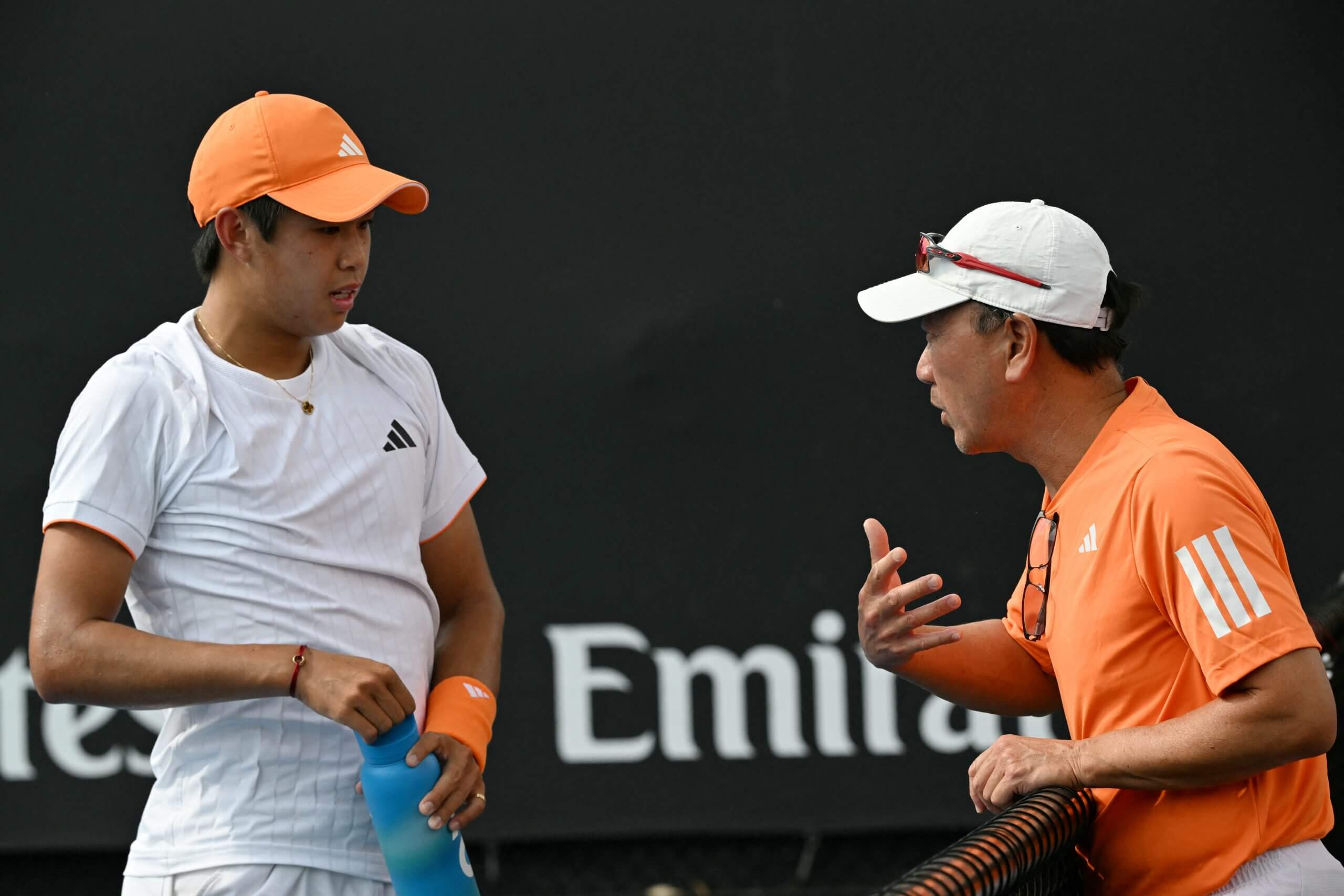
Learner Tien (left) and Michael Chang’s coaching partnership bore early fruit with Tien’s quarterfinal run. (Paul Crock / AFP via Getty Images)
On the other side of the net, Zverev looked toward his brother and father for endorsement after good moments, having said Sunday in a news conference: “I like when the team is a bit more fired up, which sometimes isn’t the case, but I think this week it’s been quite good.”
Zverev’s offering judgment of his team’s performance is typical of players, some of whom will berate their coaches mid-match. Sometimes this can be for too much encouragement, sometimes it can be for not enough. As Sabalenka said, don’t expect consistency.
Novak Djokovic frequently vents at his box, and one of his former coaches, the six-time Grand Slam champion Boris Becker, said that “it’s a lot harder than it looks.”
“To understand the player’s emotions and where they are coming from, you have to read their game very well emotionally,” Becker, a TNT Sports pundit at the Australian Open, said in a virtual media briefing on the eve of the tournament.
“If they need a bit of noise from the side, if they need a bit of calmness. It needs an intelligent coach and all these successful players have intelligent coaches, but it’s a lot harder than it looks.
“And if a player wins, it’s because of the player. If a player loses, it is because of a coach. That is the name of the game for coaches in tennis or in football. But that’s what we signed up for. So you can’t complain about it.”
One of the few players more consistently grouchy with their team than Djokovic was Andy Murray, whose former coach Amélie Mauresmo, along with other team members, took to moving to different parts of the court so that he wouldn’t spot them and vent. Ivan Lendl, the coach with whom Murray won his three majors, was the only one he didn’t dare blow off steam at.
There was consequently a lot of intrigue around how Murray would receive mid-match feedback when he coached Djokovic last year. Murray ended up feeling that the most important thing a coach can do is provide the right kind of vibe for their player.
“You need to bring an energy, a bit of confidence as well,” he said during an interview with the Tennis Podcast in December.
“I’m aware from a psychological perspective how important those things are. So it’s something that if I ever coached again, I would work on and try and do a better job of it.”
Murray felt that the box being so close to the court at the Australian Open didn’t provide the ideal vantage point during Djokovic’s run to the semifinals, but Zverev said he thought it made sense to facilitate dialogue between player and coach.
Like Sabalenka, players do appreciate how tough the job of a coach is. Amanda Anisimova, the No. 4 seed, said in a news conference last week that “most of the time we say things that we don’t mean, and it’s just because we’re so emotional on the court and in those tense moments.
“For sure, they definitely are in a pretty bad position sometimes with us. But yeah, if we ever do say something, I’m sure most of us apologize after the match. At least I’ve done that before.”
She added that as she has gotten more experience, she has learned how to work better with her coaches mid-match. “I think a lot of times in the past I didn’t. I would kind of just use that time to express my frustration and not really listen to what my coach or team is saying.
“I think it’s a bit tricky sometimes, because you’re obviously emotional when you’re going to the side, asking for help in a hopeless moment.”
During Coco Gauff’s quarterfinal defeat to Elina Svitolina, she sought advice from her team on the proportion of her “playing wrong” and Svitolina playing right, she said after her 6-1, 6-2 loss Tuesday night.
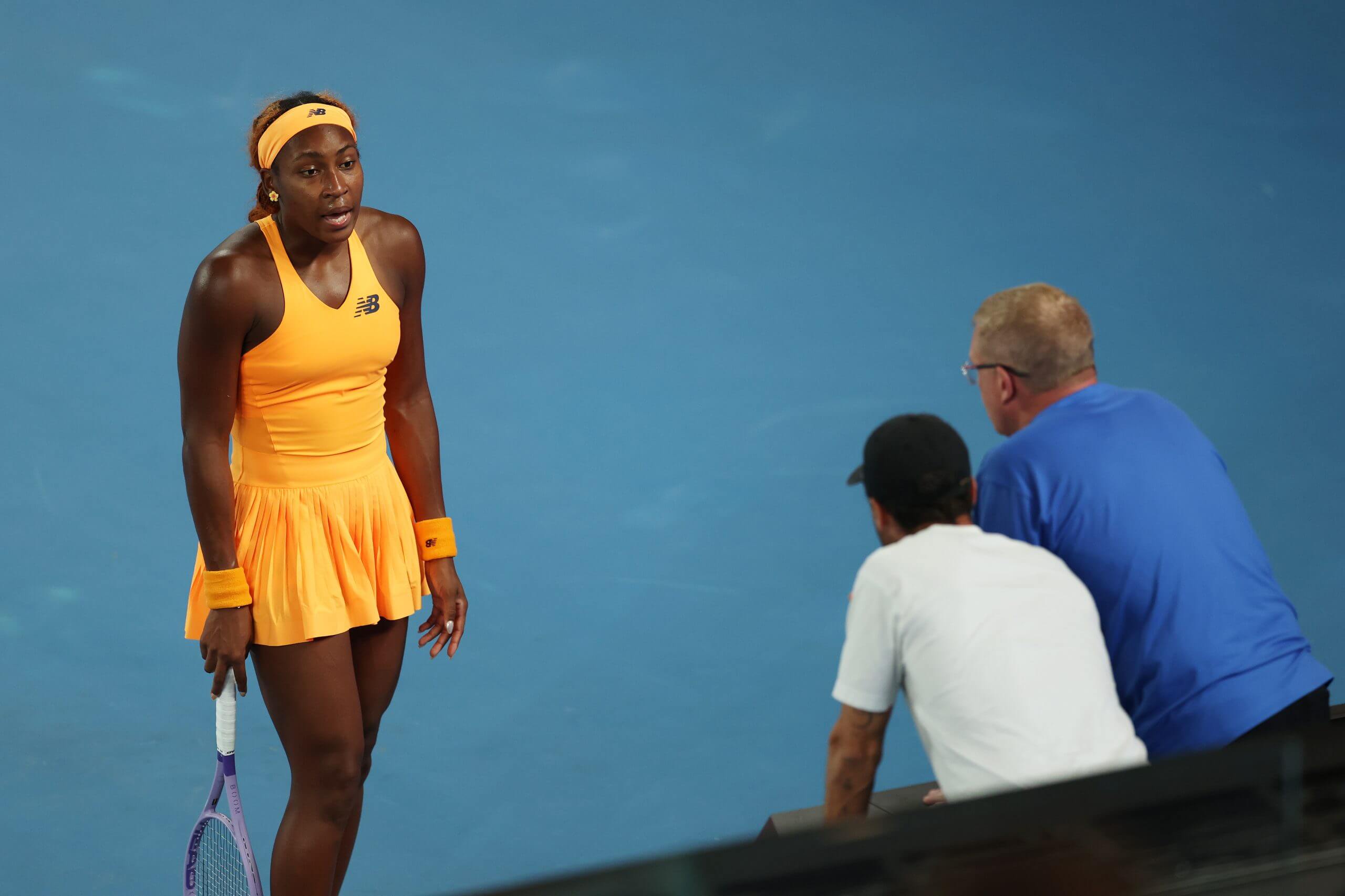
The proximity of the coaching boxes on Rod Laver Arena to the court itself puts the dynamic front-and-center. (Clive Brunskill / Getty Images)
The way emotions dovetail with tactical input is key to the relationship between player and coach. After beating Corentin Moutet Friday, world No. 1 Carlos Alcaraz said that his team have certain words that they know will make him smile.
Ben Shelton, who faces Jannik Sinner in the quarterfinals Wednesday, frequently makes eye contact with his father and coach Bryan during matches, and described on Thursday the kind of telepathy Sabalenka was advocating.
“We have a good enough relationship that he kind of knows what I need and when I need it, and he knows when to not say anything and just kind of let me do my thing,” Shelton said in a news conference on Friday, expanding on the way energy traffics between player and coach. It is not always the case that players want their teams to be reciprocal, but for Shelton, that works.
“If I’m pretty locked in and not saying much, they’re not going to be screaming at me, ‘Come on, hey!’ They’re just quiet claps or fist pumps, or whatever it is,” Shelton said.
“But if I’m showing a lot of emotion, positive emotion, then they’re going to give that back to me.”
Jessica Pegula, who takes on Anisimova Wednesday, extends the reciprocal relationship to more involved discussions.
“I don’t think I do well when someone directly tells me, ‘You need to do this, you need to do that,’” she said in a news conference Thursday.
“I communicate with them to keep it more of an open dialogue, almost. I think that helps me get my brain thinking and problem-solving better out on the court, and helps me see the court better when I feel I have that type of communication. But it’s important, especially now with people being so close … Before, I feel like in other Slams, they are so far away that you can’t really hear them or know what they’re saying anyway.”
Coaches also have to adjust to different players’ preferences, even if they do not align with their usual approach. Emma Raducanu’s coach, Francisco Roig, is generally very vocal, but after a subdued showing from him during her defeat to Anastasia Potapova last week, she said that was what she wanted.
“The best way for me to deal with tricky situations is to find the answers from within,” she said.
“I feel like when I look over and I’m questioning something or asking, it’s more putting negativity, whereas I know the answer inside, really.”
Sometimes, coaches who work in teams will coordinate who does what to give their player the best support. Pam Shriver explained this dynamic during an interview at Wimbledon two years ago, when Donna Vekić reached the semifinal. Shriver was working alongside Vekić’s main coach, Nick Horvat, and they would discuss who should say what and when — as well as whether the instruction should be given in English or Croatian.
These are the careful considerations coaches take to ensure they support their player as best they can. After reaching the semifinal, Vekić was asked whether she appreciated the fact that players could now speak to their coaches.
“Probably not,” she said, laughing. “I told them to shut up five times during the match.”