
Key events
Show key events only
Please turn on JavaScript to use this feature
The budget hotel chain Travelodge has warned that recent government policies have made trading conditions “more challenging” after the sector missed out on fresh business rates relief.
A day after the Treasury announced additional tax relief for pubs and music venues, the Travelodge boss Jo Boydell said the move was “neglecting the broader hospitality sector”. She added:
Higher rates and a lack of bespoke support, together with wider regulatory cost increases sends the message that the government does not understand the economic value that our sector delivers.
Travelodge said its business rates bill is set to increase from £38m over the past year to £50m in 2026 due to changes taking effect in April, with “further significant rises” in the following years as transitional relief measures are phased out.
Its warning came as the 625-strong hotel business reported a 0.7% increase in revenues to £1.04bn last year.
ShareCoinbase adverts banned in UK for suggesting crypto could ease cost of living crisis
A cryptocurrency company advised by George Osborne has been banned from showing a set of adverts that suggested using its services could be a solution to the cost of living crisis.
Coinbase, which appointed the former Conservative chancellor to chair its global advisory council last year, has been told by the UK’s advertising watchdog that its adverts were “irresponsible” and “trivialised the risks of cryptocurrency”.
The adverts from the US crypto exchange include a sarcastic two-minute video showing people singing “everything is just fine, everything is grand” as their home falls into a state of disrepair and suffers a power cut, while outside Britons cheerfully dance through streets littered with rats and piles of overflowing bin bags.
As the ad progresses, a shopper faces rising prices for fish fingers in a supermarket, white-collar workers lose their jobs, a sewage pipe bursts and rubbish falls from the sky.
The clip ends with large text saying: “If everything’s fine, don’t change anything”, before being replaced with the Coinbase logo. The company, which was founded in 2012, provides a platform for people to buy and sell various cryptocurrencies.
The Advertising Standards Authority (ASA) said the advertising campaign, which launched in August, implied that using Coinbase could be an alternative to the financial concerns associated with the cost of living, and so trivialised the risks associated with investing in cryptocurrencies.
We considered that using humour to reference serious financial concerns, alongside a cue to ‘change’, risked presenting complex, high-risk financial products as an easy or obvious response to those concerns.
ShareRoyal Mail delivered Christmas letters and parcels late to about 16m people
Royal Mail has been criticised for offering an “unacceptable” performance over the crucial Christmas period after it failed to deliver letters and cards on time to about 16 million people, Citizens Advice found.
The consumer watchdog, which carried out research into Christmas deliveries, said that figure was 50% higher than in 2024, and the highest level over the festive period in five years, excluding when Royal Mail was hit by strike action in the run-up to Christmas four years ago.
“We’re afraid there’s no light at the end of the tunnel for consumers struggling with Royal Mail’s persistent delivery failures,” said Anne Pardoe, the head of policy at Citizens Advice. “When people have no other postal provider to choose from, the sheer volume of delays is simply unacceptable.”
The research, based on a survey of almost 2,100 adults conducted by Yonder, calculated that 5.7 million of the 16 million who experienced delivery delays missed out on receiving important information, such as health appointments, fines, benefit decisions and legal documents.
“The company’s dreadful festive slump is about much more than late Christmas cards,” said Pardoe. “This is a worrying trend, and with cuts to delivery days looming, [postal regulator] Ofcom must start cracking down even harder on missed targets before things go from bad to worse.”
Share‘My Tesla has become ordinary’: Turkey catches up with EU in electric car sales
When Berke Astarcıoğlu bought a BMW i3 in 2016, he was one of just 44 people in a country of 80 million to buy a battery electric vehicle (BEV) that year. By the time he bought a Tesla in 2023, BEVs were no longer a complete oddity in Turkey, making up 7% of new car sales.
Fast-forward two years and electric cars are selling so fast that Turkey has caught up with the EU in its rate of adoption. Its market is now the fourth largest in Europe, behind Germany, the UK and France.
“A premium product is a thing that makes you happy but that not everyone can have,” said Astarcıoğlu, a mechatronic engineer from Istanbul and the developer of an app to find charging stations. “My Tesla has become an ordinary car over here.”
BEVs made up 16.7% of new car sales in Turkey in 2025, just behind the EU’s 17.4%, registration data published on Tuesday shows. While uptake is lower than in the Netherlands or the Nordics, where BEVs make up 35% to 96% of new cars sold, sales in Turkey have raced ahead of almost every country in southern and eastern Europe.
Its electric vehicle surge is part of a global trend in which emerging markets from Uruguay to Vietnam are spurning fossil fuel-burning cars at surprising speed. The latest data comes as Turkey prepares to host the UN climate summit, and one month after the EU watered down its 2035 ban on new combustion engine cars.
Analysts attribute the boom to a disparity in Turkey’s special consumption tax, which has left electric cars only slightly more expensive than comparable petrol cars. Sales remained high even after the government raised taxes on electric vehicles in August.
“Practically speaking, Turkish people don’t buy electric vehicles because it’s eco-friendly,” said Ufuk Alparslan, an analyst at the climate thinktank Ember, saying that running costs were lower for electric cars. “The motivation is purely economical.”
ShareAmazon reveals fresh round of global job cuts in email sent in error to workers
Amazon has told workers of a fresh round of global job cuts in an email that appears to have been sent in error.
Workers at Amazon Web Services (AWS) received a meeting invitation from a top executive on Tuesday for the following day – subsequently cancelled – that also contained a draft email.
The message erroneously said the affected employees in the US, Canada and Costa Rica had already been told they had lost their jobs.
It was signed by Colleen Aubrey, a senior vice-president of applied AI solutions at the company’s cloud computing arm AWS, while the layoffs were referred to in the email as “Project Dawn”.
“Changes like this are hard on everyone,” Aubrey wrote in the email, which was seen by multiple news outlets including Reuters and Bloomberg. “These decisions are difficult and are made thoughtfully as we position our organisation and AWS for future success.”
ShareDebenhams lifts forecast and will retain PrettyLittleThing brand
The British retailer Debenhams has lifted its forecast for 2025 profit as all its brands are doing well, including PrettyLittleThing.
The company, which rebranded from Boohoo last March after buying the department store chain Debenhams out of administration five years ago, said trading had been better than expected. This means it now expects adjusted core profit for the 12 months to 28 February to come in at £50m, rather than £45m as previously estimated. It said:
This is a result of the continued momentum in our Debenhams brand, a discernible improvement in the performance of our youth brands and accelerated progress on our transformation plan. All our brands continue to trade profitably.
The online retailer had planned to sell PrettyLittleThing as part of a cost-cutting drive to boost profits and reduce its debt burden, but now plans to retain the brand. It reiterated that it will still go ahead with the sale of non-core assets to “materially” reduce debt.
Given the success we are seeing with PrettyLittleThing’s turnaround, the momentum it is building and the substantial opportunity ahead as a fashion-led marketplace, the brand will be retained.
Designers Victor Anate, left, Naomi Campbell and Edwin Thompson walk the runway at the PrettyLittleThing x Naomi Campbell Spring/Summer 2024 fashion show as part of New York Fashion Week. Photograph: Evan Agostini/Invision/APShare
On the stock markets, European shares are taking a breather and have fallen back after two days of gains.
US stock futures are pointing to a higher open on Wall Street later, with the tech-heavy Nasdaq seen rising 0.8%.
The pan-European Stoxx 600 index is flat ahead of the latest interest rate decision from the US Federal Reserve later today (markets are expecting no change but are waiting for further clues on policy from Fed chair Jerome Powell during the press conference).
A technology stocks index climbed as much as 2.7%, after ASML, the world’s largest supplier of computer chip equipment, reported stronger-than-expected orders for the fourth quarter, highlighting booming AI demand. Its shares rose 7% to hit a record high, and are now trading 5.3% higher.
The Dutch company’s chief executive Christophe Fouquet said the group expected a “significant increase” in sales of its Extreme Ultraviolet machines this year, after fourth-quarter orders beat analysts’ expectations.
Swedish truckmaker Volvo climbed 2.7% after it posted a smaller-than-anticipated decline in fourth-quarter operating profits.
On the flipside, the luxury group LVMH shares tumbled by 7% after chief executive Bernard Arnault expressed caution about the year ahead.
The FTSE 100 index in London has slipped 16 points, or 0.16%, to 10,191. Germany’s Dax is down 0.13%, France’s CAC has lost 0.9%, Italy’s FTSE MiB slid 0.7% and Spain’s Ibex is trading 0.6% lower.
Updated at 04.18 EST
Pound rises above $1.38 for first time since 2021; gold breaks through $5,300
The pound has also benefited from the weaker dollar, and rose above $1.38 for the first time since October 2021.
Meanwhile, gold briefly broke through the $5,300 an ounce level, as investors sought out safe-haven investments.
Sterling has climbed nearly 3% in the last four trading days, from around $1.34, reflecting a sharp unwind in dollar positions as investors respond to growing policy risk in the US, said George Vessey, lead currency and macro strategist at the cross-border payments firm Convera.
Several factors are weighing on the US currency simultaneously, but the common thread is erratic US policymaking, which has revived the dollar’s risk premium and pushed investors to rotate out of dollar‑denominated assets or hedge their exposure.
He said for the pound, “the move looks convincingly bullish and could mark the beginning of a shift into a higher trading range, with the psychological $1.40 level now the next upside marker”.
The FX options market reinforces this momentum. Positioning for a stronger pound versus the dollar is now the most bullish over a one‑week horizon since 2019, while longer‑dated risk reversals have surged back to levels last seen during the tariff shock last April.
More broadly, currency volatility has returned with force. The G10 one‑month implied/realised volatility spread is at its widest in over a year, signalling that traders are bracing for more turbulence ahead.
ShareEuro hits $1.20 as sentiment towards dollar sours
As sentiment towards the dollar sours, the euro has hit $1.20 against the greenback, setting a new milestone.
Last week, the euro rose about 2%, its biggest weekly gain since last April, when Donald Trump’s sweeping “Liberation Day” trade tariffs caused global turmoil.
The dollar has been on the backfoot against a number of major currencies, sinking to a fresh four-year low today.
Trump’s trade and foreign policy and his attacks on the US Federal Reserve, America’s central bank, have weakened the dollar. The latest sell-off intensified after he said the dollar’s value was “great” when asked whether the greenback had declined too much.
2025 was the European single currency’s best year since 2017, as it climbed about 13%. However, the path to $1.20 has not been smooth – the euro was near that level in September but then the dollar recovered.
A year ago, the euro was trading close to $1, but has strengthened since then, helped by a European stimulus package led by Germany, the region’s economic powerhouse, and efforts to boost long-term growth and security in the eurozone.
Historically, the $1.20 level sits just above the euro’s average since it was launched in 1999, according to Reuters. But it’s still much lower than the peak of $1.60 it touched in 2008 during the global financial crisis.
ShareEasyJet warned over ‘misleading’ £5.99 cabin bag fee
EasyJet has been told by the UK’s advertising regulator that its claim that carry-on baggage fees cost “from £5.99” is “misleading”.
The Advertising Standards Authority (ASA) said there was “insufficient evidence” that the price was available for large cabin bags “across a range of flight routes and dates”.
It banned the airline from using the phrase in its marketing and asked it to ensure that for “from” prices for large cabin bags, the lowest price is available “across a significant proportion of flights”.
In its defence, the budget airline told the regulator its advertised price was available on a range of routes but prices varied depending availability, demand and operational cost. It added that the actual price for a particular booking was clearly displayed before purchase.
The regulator’s ruling comes after an investigation by consumer group Which? which found the price for adding a large cabin bag exceeded £5.99 on all 520 easyJet flights analysed. The lowest price found was £23.49 while the average was £30.
An easyJet plane. Photograph: David Parry/PA
Large cabin bags are designed to fit in overhead lockers on planes. Most low-cost airlines charge passengers an extra fee for bringing a large cabin bag.
Rory Boland, editor of magazine Which? Travel, said:
It’s frankly astonishing that airlines think they can ignore the rules and mislead customers with unattainable prices, so it’s absolutely right that the ASA has made this ruling against easyJet as a result of our complaint.
Our recent investigation found that there is a culture of airlines using low headline fares – then charging exorbitant prices on top to take a standard cabin bag.
The easyJet cabin bag prices we collected were typically five times as much as the ‘from £5.99’ it claimed. When booking a trip, customers should consider choosing an airline without cabin bag add-ons as it may work out cheaper.
EasyJet said in a statement:
We always aim to provide clear information to our customers on pricing, and the purpose of this page was to display factual information on fees and charges to customers.
We always have some large cabin bags available for the lowest price.
In light of the ASA’s feedback we have made some changes to the page to ensure the information is as clear as possible for consumers.
Ipek Ozkardeskaya, senior analyst at Swissquote, said it is likely that the dollar will continue to weaken.
There were plenty of major stories and market moves yesterday, but the most significant — and most impactful — was undoubtedly the sharp sell-off in the US dollar. It pushed the US dollar index to a four-year low and continues to drive gold and silver to fresh record highs this morning.
Trade and geopolitical uncertainty, tied to an increasingly unreliable American friend and ally, as well as growing concerns about what will happen to the Federal Reserve’s credibility once Jerome Powell leaves office (it will fly out of the window), continue to weigh on the US dollar. Add to that the latest US consumer survey, which showed a sharp drop in consumer confidence, a marked deterioration in how households view the current situation, a decline in the share of consumers expecting income growth, and a steady rise in those saying jobs are hard to get. You get a pretty murky picture for the greenback and the two-speed US economy.
Still, this will hardly convince the Fed to cut rates today or in the coming months. Powell is likely to avoid political commentary at his post-decision speech today and keep the focus firmly on economic data to justify policy decisions.
That said, we all know the US President is waiting just outside the room — and anything he might say about the Fed’s decision, or about how much he dislikes Powell, would only risk making matters worse for the US dollar, much to the delight of gold and silver longs. But with or without buzzy headlines, the US dollar looks condemned to weaken.
The only real comfort is that US inflation has not surged as a result of tariffs.
ShareIntroduction: AI boom will produce winners and ‘carnage,’ says tech boss; dollar sinks to four-year lows after Trump comments
Good morning, and welcome to our rolling coverage of business, the financial markets and the world economy.
The artificial intelligence (AI) will create winners but there will be “carnage along the way,” the boss of a US technology company has warned.
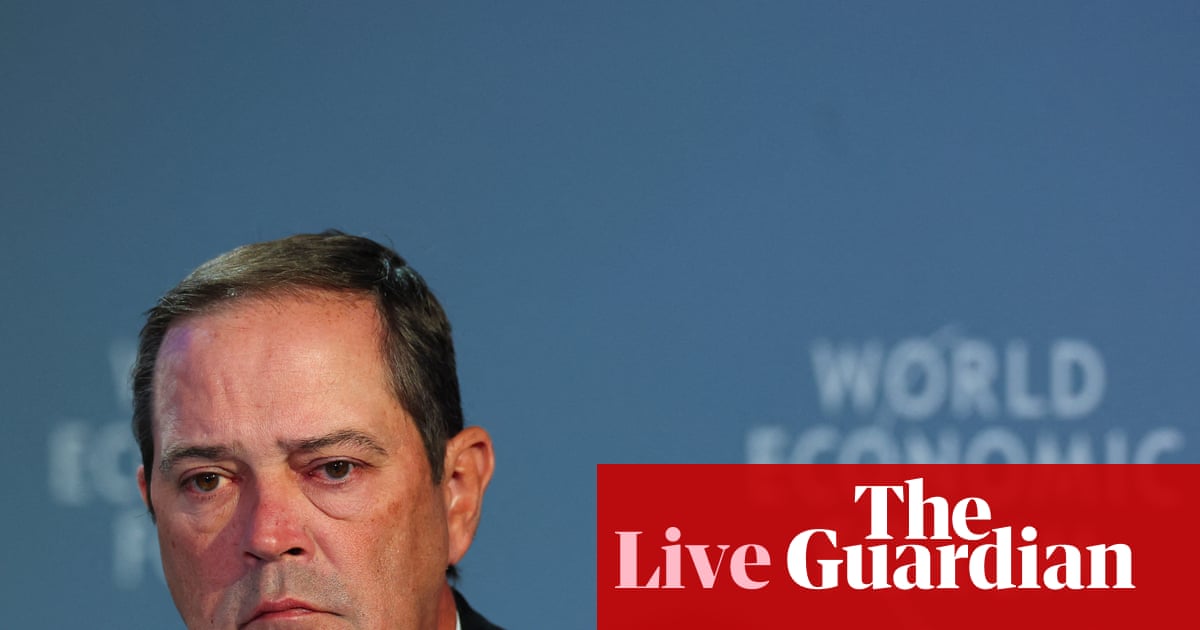
Chuck Robbins, who runs Cisco Systems which produces IT infrastructure enabling use of AI, told the BBC the technology will be “bigger than the internet”, but the current market is probably a bubble and some companies “won’t make it”.
Robbins said some jobs will be changed by AI, or even “eliminated”, especially in areas like customer services where companies will need “fewer people”, but urged workers to embrace rather than fear the technology.
This comes after a spate of warnings over job losses as a result of the technology, and fears that the boom is a bubble waiting to burst. JPMorgan Chase boss Jamie Dimon has said some of the money invested in AI would “probably be lost”, while Google parent company Alphabet’s chief executive Sundar Pichai said there was some “irrationality” in the AI boom.
The dollar has sunk to four-year lows after Donald Trump brushed off its recent decline, triggering more selling of the US currency ahead of the Federal Reserve’s interest rate decision later today.
The dollar slumped 1.3% against a basket major currencies yesterday, and has slipped a further 0.2% this morning. It has fallen for four days in a row.
The US president said yesterday the value of the dollar was “great,” when asked whether he thought it had fallen too much. Traders interpreted this as a signal to carry on with dollar selling.
The dollar has been under pressure amid Trump’s erratic trade tariffs and foreign policy and as traders brace for a possible coordinated currency intervention by US and Japanese authorities to stabilise the yen’s decline.
The Japanese currency has been rallying since Monday amid talk of the US and Japan conducting rate checks, seen as a precursor to official intervention.
Kyle Rodda, a senior analyst at Capital.com, told Reuters:
It shows there’s a crisis of confidence in the US dollar. It would appear that while the Trump administration sticks with its erratic trade, foreign and economic policy, this weakness could persist.
Markets are expecting no change to interest rates at the Fed meeting, and Trump is not going to like that, having pushed for lower rates over the past year. Analysts said this could inject more volatility into dollar trading.
The US president could announce his candidate to replace Fed chair Jerome Powell soon after the rate decision. The Trump administration’s criminal investigation of Powell and his ongoing attempt to fire Fed governor Lisa Cook are also in focus.
Gold continues to climb, breaking through $5,200 an ounce to a new record high. The precious metal, seen as a safe haven investment in times of political turmoil, jumped 1.7% to $5,278 an ounce.
Last year, gold recorded a 64% gain, the largest annual increase since 1979.
The Agenda
2.45pm GMT: Bank of Canada interest rate decision (no change expected)
7pm GMT: US Federal Reserve interest rate decision (no change expected)
7.30pm GMT: Fed press conference
Updated at 02.47 EST