
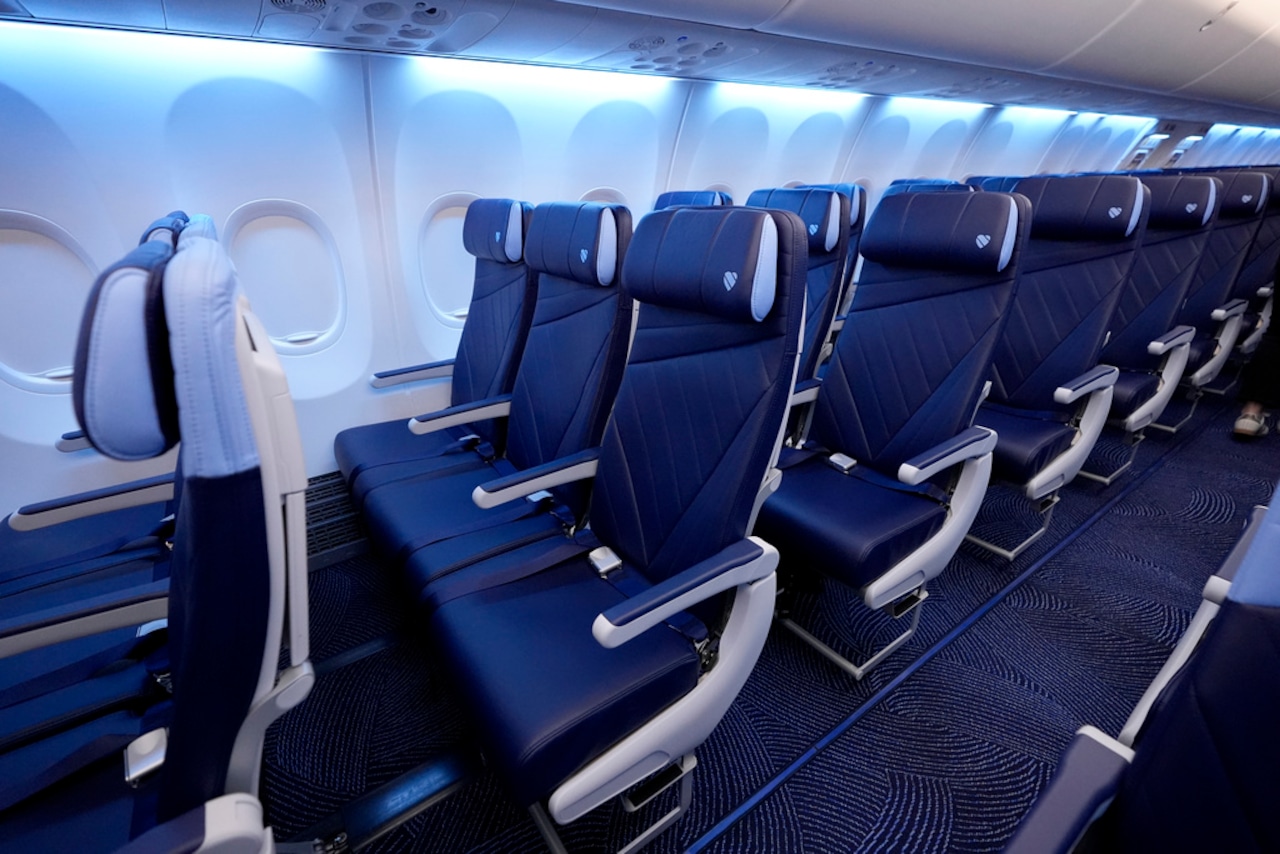
A new Southwest Airlines policy that requires plus-sized passengers to buy an extra seat if they “encroach” onto the seat next to theirs is sparking disappointment, anguish and frustration among leagues of larger bodied people across the U.S. who long relied on the airline as their carrier of choice.
Southwest’s new “customer of size” policy, which takes effect Tuesday, requires plus-sized passengers who cannot fit entirely within one seat to purchase a second one. That’s regardless of whether the seat next to them is empty.
Those passengers can later request a refund for the second seat, but will only receive one if the flight is not full. Under Southwest’s old policy, plus-sized passengers could choose to purchase an extra seat, but the airline didn’t require it. And the airline would later refund the price of that extra ticket — even if all other seats on the plane were full and the refund could result in a net loss for the airline, according to an airline spokesperson.
That practice had set Southwest far and above all other major U.S. airlines, according to members of plus-sized communities and a check of other airlines’ posted policies by The Oregonian/OregonLive.
Autumn Wright, an Albany resident who regularly flies out of Portland International Airport, said she has switched from Southwest Airlines to Alaska Airlines because both airlines now have nearly identical policies. (Other major airlines, such as United and American, don’t offer refunds, according to their posted policies).
“I was like … ‘There’s nothing special about you anymore.’ So I might as well look at other airlines,” Wright said.
Wright was among an outpouring of individuals — all members of a private Facebook group for “fat/plus/curvy/body positive” Oregonians — who responded to a request from the news organization asking how Southwest’s new policy affects them. The Oregonian/OregonLive interviewed three who deeply mourn the switch.
“I think we’re all really sad,” Wright said. “It was a really good policy. It made flying really accessible.”
The switch comes as airlines continue to try to cut operational costs and pump up profits, charging for everything from seat selection to checked baggage. Meanwhile, more than two-thirds of adults in the U.S. are considered overweight or obese, the standard amount of legroom is shrinking and the width of coach seats commonly falls between 17 and 18 inches but can be as narrow as 15.5 inches.
The change in policy also is cast against a backdrop where some smaller bodied passengers have felt encroached upon, creating unpleasant flying experiences and encounters. Even when that doesn’t happen because there’s an extra seat available, plus-sized passengers say they’re frequently subjected to ridicule and judgment over their weight for simply boarding a flight.
 Southwest Airlines is one of the major air carriers at Portland International Airport and in the U.S. (AP Photo/Gene J. Puskar, File)APSouthwest: Seeking ‘a quality experience for all’
Southwest says its new policy will prevent situations where a plus-sized passenger arrives for a flight, needs an extra seat and there isn’t one — resulting in someone getting bumped from the plane.
Spokesperson Chris Perry said the new rule, also known as the “extra seat policy,” allows the airline to “provide a quality experience for all Customers traveling with us.”
Although Southwest doesn’t specifically spell it out, the change may also help reduce conflicts in situations where smaller bodied passengers feel their available space has been reduced by larger bodied passengers sitting next to them.
Plus-sized air travelers, however, say the new policy hurts given Southwest’s past. Julianne Wotasik, an Oregonian who is an active member of the National Association to Advance Fat Acceptance, said plus-sized travelers nicknamed Southwest “Southworst” back in 2010 when Hollywood movie director Kevin Smith unleashed a series of widely viewed tweets about how he was booted from a flight because he hadn’t bought a second seat. The airline, Wotasik said, made amends by changing its operating procedures.
“They made changes. There was forgiveness,” Wotasik said. “They were the airline of the fat community, the No.1 airline. Every fat travel forum, people were constantly, constantly talking about ‘Southwest has this policy and you can get this extra seat!’”
It is with that history in mind that Wotasik said plus-sized travelers now feel so bruised.
“We thought Southwest was cool with us,” Wotasik said. “And now they’re very, very much not. It feels like a betrayal because we trusted them after they hurt us originally.”
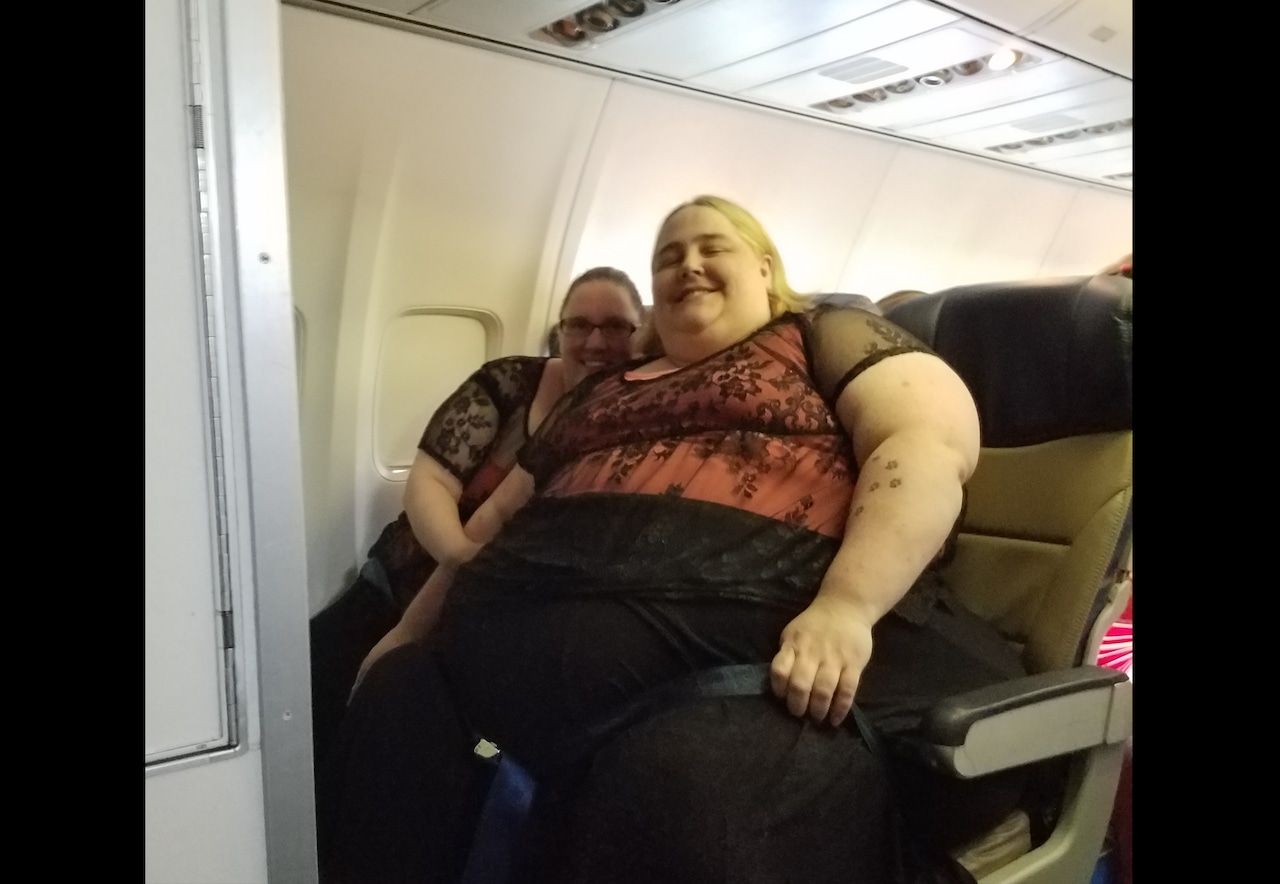 Julianne Wotasik and her fiance, Ragen Chastain, are pictured here on a Southwest flight, on their way to attend a wedding in Denver in 2016. The couple shared three seats in the front row of the plane, with the extra seat provided free of charge through Southwest’s old policy, Wotasik said.(Photo courtesy of Julianne Wotasik)An end to her flying days
Starting Tuesday, the airline also is switching to assigned seating and leaving behind its more than half-century old policy of open seating — first to board, first to select their seats.
Assigned seating, the airline said, will allow families and friends to choose seats together when booking their flights. Passengers who want more legroom can also pay extra to reserve a limited number of newly configured seats at the front of the plane.
Wotasik, who describes herself as disabled and “superfat” (a term she uses without shame), said the changes are preventing her from continuing to fly on Southwest, which was the last airline that could meet her needs.
For one, she said it has become much more competitive to snag two seats together in the first or second row of the aircraft — the only seats she is able to access because her wheelchair won’t fit down the narrow aisle of the airplane. It used to be that under the airline’s open seating policy, Wotasik would be among the first passengers to board and secure two of those front seats, she said. But because of the new assigned seating policy, those days are gone.
On top of that, Wotasik said the fleet’s newer planes have front rows with armrests that can’t be raised, making it impossible for her to sit across two seats, she said.
And finally, there are financial concerns: She said she simply can’t afford to pay for two seats, which now cost extra because they have more legroom.
The end result, Wotasik said, is that her flying days are over. She said she will travel by car, but some parts of the country are just too far.
“I’m no longer able to see my best friend in South Dakota, which is devastating to me,” said Wotasik, who lives in Medford and regularly has flown out of Portland. “I am no longer able to see my sister in Wichita. There are people in my life that I am losing time with because I can’t travel on an airplane any longer.”
The two new changes to Southwest operations together — the “extra seat policy” and the “assigned seating policy” — are a double whammy, she said.
“The problem is this rule change super sucks for disabled people and it really sucks for fat people, but for fat disabled people … it’s a really detrimental change,” Wotasik said.
An uncertain future of travel
Wright, the Albany resident, said she flew Southwest once or twice a year over the past decade and always bought an extra seat for peace of mind. The airline, Wright said, always refunded her, even if the flight appeared completely full.
Now, Wright worries, the policy change will discourage bigger bodied people from traveling.
“It’s going to make it harder,” Wright said. “Maybe you’ll think twice, ‘Do I really need to fly?’”
Freya Gereke, a plus-sized Portland resident, said they never ran into any problems under the old policy — having flown Southwest about 20 times in the past three years, mostly for work in California and Washington. Gereke said they never had to buy a second seat because the adjacent seat was always empty.
Now, Gereke said they can’t afford to come up with the money to reserve a second seat.
“The idea that I have to front twice as much as any other airline customer just because they’ve shrunk the size of the seats over the last couple decades to a point where an average American isn’t comfortable in those seats?” Gereke said. “It’s kind of insulting.”
As soon as Gereke runs out of Southwest credit card points to buy tickets with, they said they will turn to a slower form of travel: The train.
“Southwest was one of the last holdouts,” Gereke said. “And it’s really a shame to lose them.”