
LANSING, Mich. – Michiganders have fewer than two weeks to submit their comments about the state’s proposal to enact restrictions against six invasive plant species known to harm natural ecosystems.
Experts argue it’s better for Michigan’s environment to use less harmful landscaping options than the targeted species. Currently, the state has proposed callery pear, Japanese barberry, common buckthorn and glossy buckthorn for restricted status, while proposing water hyacinth and water lettuce for complete prohibition.
The Michigan Department of Agriculture and Rural Development is asking for public feedback on the proposal to regulate those invasive species starting in January 2028. Public comments can be submitted through an online survey through Feb. 9.
The goal is to prevent or reduce the spread of these invasive species known to harm Michigan ecosystems, officials said.
If the measure is approved by the Michigan Commission of Agriculture and Rural Development during its March meeting, landscapers and plant nurseries would be warned for a first offense in the initial year of regulation. Businesses would be allowed a period to come into compliance, but subsequent violations could bring fines.
People who unknowingly have these invasive species on their property or in their waterways won’t face penalties.
From among the six invasive plant species under consideration for new restrictions, Japanese barberry has spread the most across the Michigan landscape. Maps of the outbreaks of each species can be viewed online with the Midwest Invasive Species Information Network.
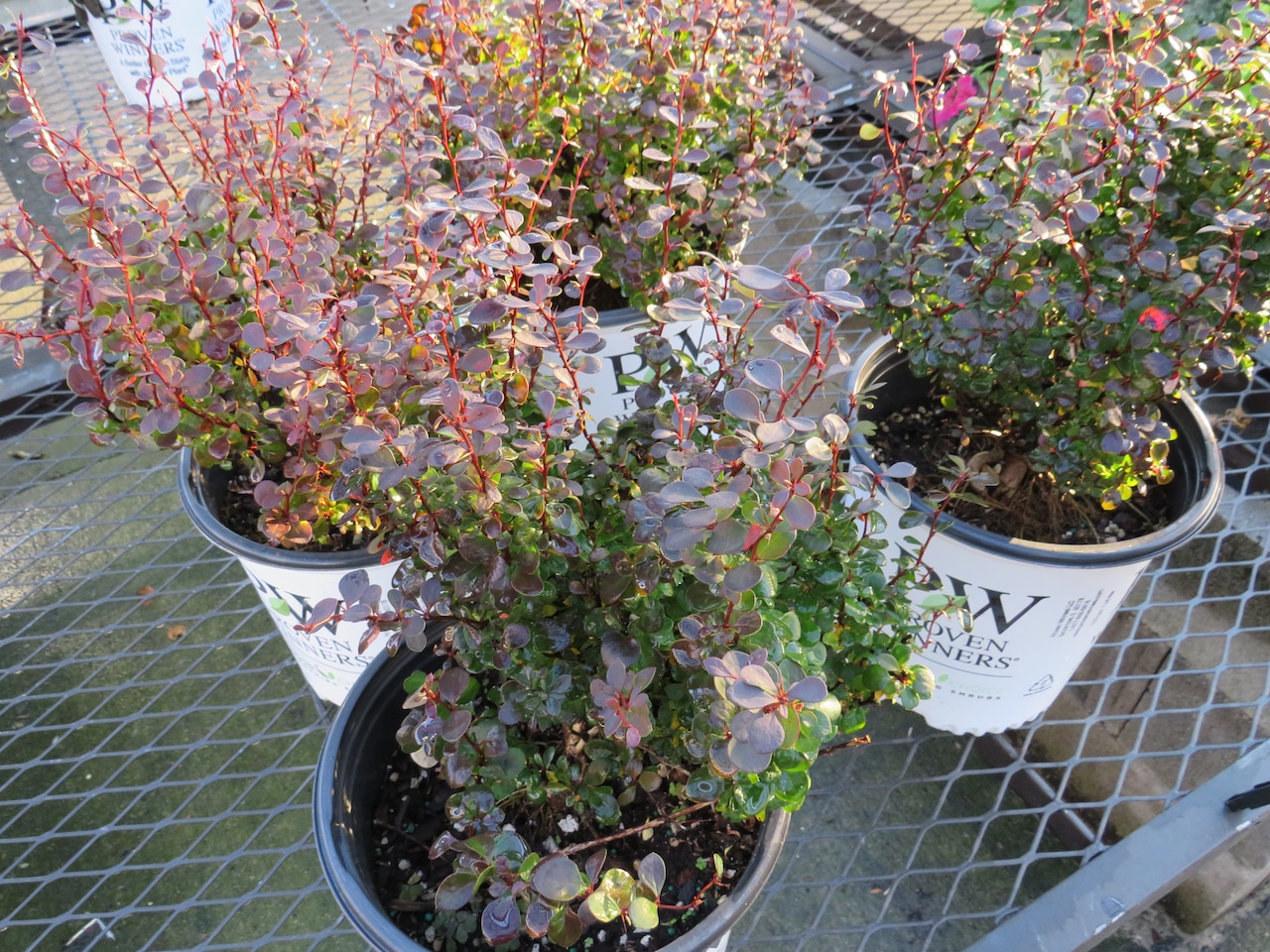 This MLive file photo shows invasive Japanese barberry bushes for sale. The plant is not regulated in Michigan, though they are in multiple neighboring states. (Sheri McWhirter | MLive.com)
One conservation expert said he’s been battling heavy Japanese barberry infestations in natural areas in Manistee County. It’s spreading extremely aggressively, said Josh Shields, forester and wildlife biologist with Manistee and Mason-Lake Conservation Districts.
“Typically, you can find in nearby areas where it has been purposely planted in neighborhoods, because Japanese barberry is available in a lot of stores for purchase. It’s a popular ornamental plant,” he said.
“A lot of times there are areas near where these really heavy invasions are where you can pretty confidently trace the invasion back to these plantings.”
Shields said he works with landowners who have infestations so thick they can’t walk through the area. They work to pull out what they can by hand, then use machinery and herbicide to knock down the overgrowth.
“The way that it displaces native plants in areas where it invades, it reduces the biological diversity down to the point that this is not a very resilient habitat,” he said. “Having a monoculture of barberry underneath a forest canopy is not set up to be a functioning, resilient ecosystem.”
Related: Invasive jumping worms pose growing threat to Michigan’s ecosystems
And Shields isn’t alone. There is a widespread network of government and conservation officials working to remove Japanese barberry and the other five targeted invasive species from both natural and landscaped areas.
In Traverse City, city officials are already working to remove invasive callery pear trees which for years have been growing alongside downtown streets.
City Manager Ben Marentette said each year the city’s forester chooses between 10 and 20 callery pear trees to be removed from their streetside spots, based on tree age, condition, vandalism and accidents. He said each invasive tree is then replaced with either native serviceberry, native hackberry, or ivory silk trees which are native to Japan.
“It is our forester’s professional opinion, which I support, that a mass removal of these downtown trees would decimate a mature tree canopy and would take many years to recover from, hence the staggered approach,” Marentette said.
Meanwhile, members of the Michigan Nursery and Landscape Association haven’t discussed the state’s proposal and therefore haven’t reached a formal position, according to a group spokesperson.
‘Let this gateway be green’: Kalamazoo blocks commercial development near Asylum LakeJan. 27, 2026, 7:40a.m.New sea lamprey barrier proposed in the Upper Peninsula Jan. 27, 2026, 6:00a.m.Public outcry continues over Microsoft’s proposed Kent County data centerJan. 26, 2026, 10:32p.m.Grand River rapids restoration project clears federal environmental reviewJan. 26, 2026, 2:44p.m.When Lake Michigan freezes, even its lighthouses grow beardsJan. 25, 2026, 4:21p.m.