
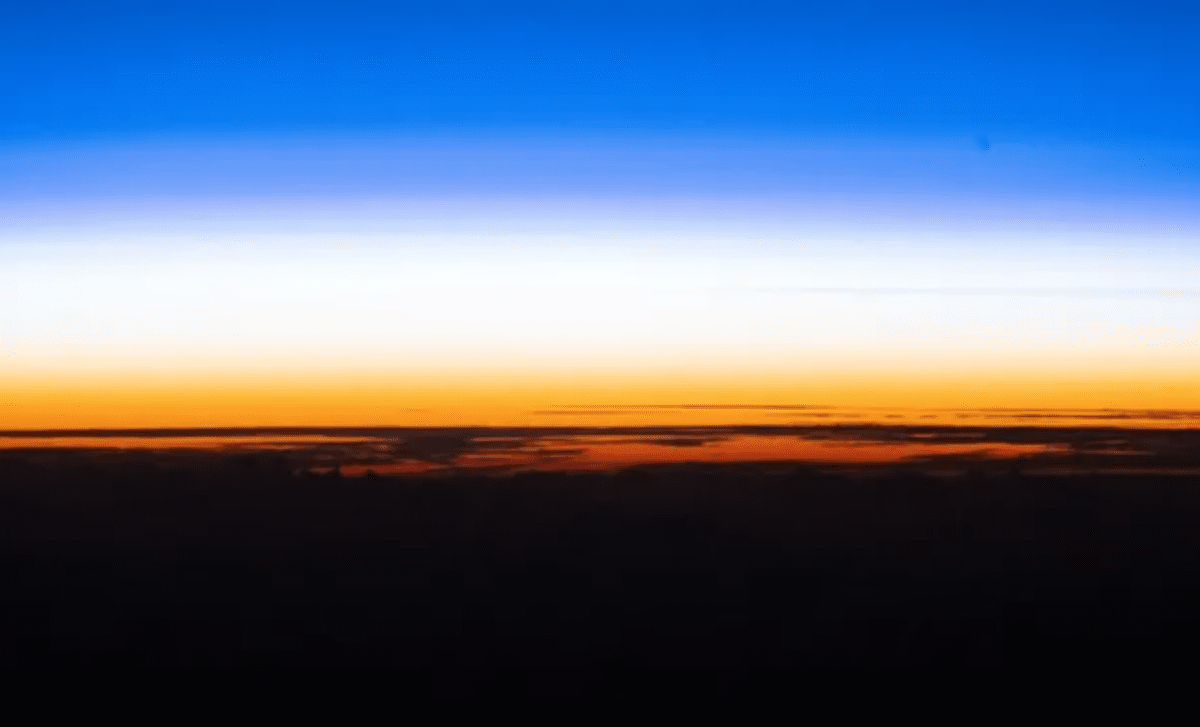
The beauty of a sunset is universal, it captivates those on Earth, painting the sky with brilliant colors. But what if you could witness a sunset from space? Astronauts aboard the International Space Station (ISS) are lucky enough to experience such breathtaking views regularly. A recent photograph captured from the ISS offers a stunning perspective of a sunset over Earth, showcasing the power of light and shadow in a way that is uniquely different from what we see on the ground.
The Fascinating Perspective of a Sunset from Space
When we think of sunsets, most of us picture the sun dipping behind mountains or disappearing beyond the horizon of the ocean. However, astronauts aboard the ISS experience something altogether different. Rather than seeing the sun set in the traditional sense, they witness the sun disappearing as the ISS speeds into Earth’s shadow. The International Space Station orbits the planet at a staggering speed of 17,500 miles per hour, meaning it completes an orbit around Earth every 90 minutes. Because of this rapid movement, the astronauts onboard experience 15 to 16 sunrises and sunsets every day.
This constant shift between light and shadow offers astronauts a unique view of Earth’s atmosphere and the way light interacts with the planet. The sun doesn’t gradually sink below the horizon. Instead, the astronauts are moving so fast that the transition from daylight to darkness happens in a matter of minutes. The colors of the sunset are intensified because astronauts are viewing the light through Earth’s atmosphere at a different angle. Sunlight scatters as it passes through the atmosphere, bending and filtering the colors, which enhances the reds, oranges, and yellows that we associate with sunsets. The result is a mesmerizing and surreal visual display.
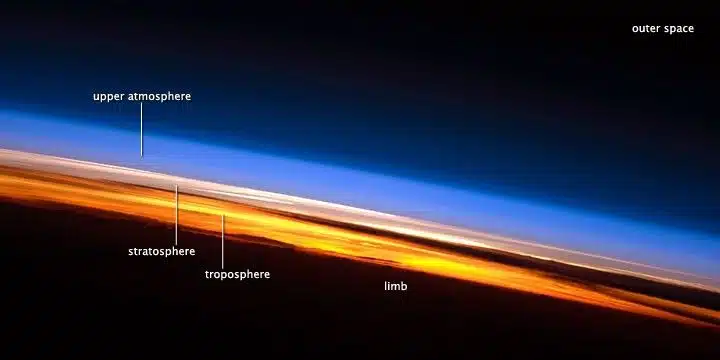 Astronauts aboard the ISS see sixteen sunrises and sunsets per day. Image of the Day for June 13, 2010 Credit: NASA
The Science Behind Sunsets in Space
A sunset seen from space provides a front-row demonstration of how light behaves when it interacts with Earth’s atmosphere. The light entering space is bent, refracted, scattered, and absorbed in ways that can only be observed from above. As sunlight passes through the layers of Earth’s atmosphere, shorter wavelengths like blue light scatter, while longer wavelengths such as red and orange light stretch across the sky in a razor-thin gradient that spans thousands of miles along the planet’s curvature.
Astronauts aboard the ISS witness this phenomenon as they fly into the shadow of Earth. The station’s rapid movement allows for an accelerated version of sunset that happens in mere moments rather than the long hours we experience on Earth. The constant motion of the ISS across the sky adds another layer of uniqueness to the sunset experience. The image captured by NASA in early January 2026, showcases these stunning effects. The clouds above the Pacific Ocean are silhouetted against the backdrop of a glowing sky as the sun sets behind the curve of the planet.
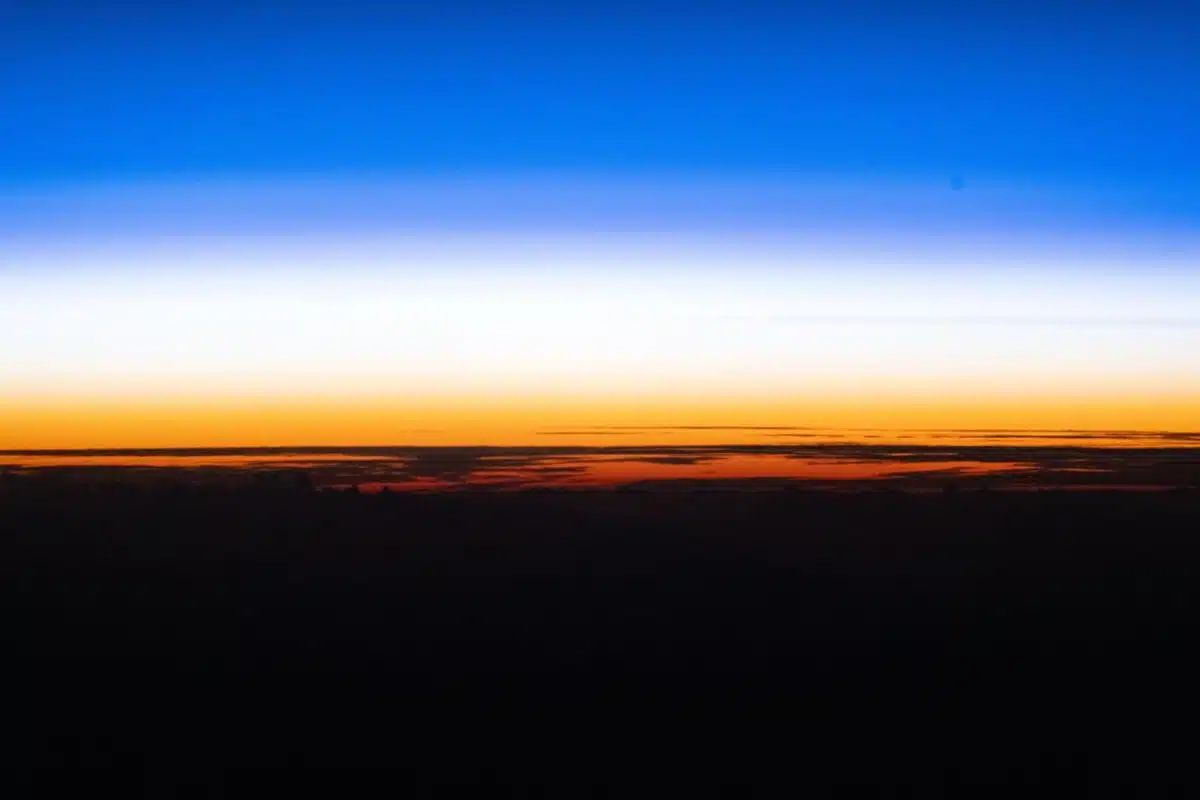 An orbital sunset silhouettes the cloud tops above the Pacific Ocean as the atmosphere along the horizon fades from orange to white, then to blue, in this photograph taken from the International Space Station while it orbited 262 miles above Earth.
Credit: NASA/Chris Williams
Understanding the Emotional Impact of Watching Sunsets in Space
Seeing a sunset from space is more than just a beautiful visual experience. For astronauts, it’s also an emotional and reflective moment. Floating above Earth, watching the planet’s gradual transition from light to dark, astronauts are reminded of the fragility and interconnectedness of life on our home planet. This perspective encourages a sense of unity, as Earth appears as a single, interconnected system rather than a patchwork of separate regions.
The sight of such a vast and vibrant planet in space can evoke powerful feelings of awe and wonder. Astronauts have described the experience of looking down at Earth from space as humbling, with many saying it gives them a profound appreciation for our planet and the delicate balance that sustains life. This view of Earth from space helps foster a greater sense of environmental responsibility and a desire to protect the planet for future generations.
The Role of the ISS in Experiencing Sunsets and Other Celestial Phenomena
The International Space Station plays a crucial role in helping scientists and astronauts better understand the Earth’s atmosphere and its various processes. With its vantage point in low Earth orbit, the ISS provides unparalleled opportunities for observing the planet and its environment. The sunsets, sunrises, and other celestial phenomena observed from the ISS offer valuable insights into the behavior of light and the atmospheric conditions that affect our daily lives.
By studying these events from space, scientists can gather data that would be impossible to obtain from the surface of the Earth. The ISS acts as a mobile laboratory, constantly moving through different light and shadow regions, giving scientists real-time data on the effects of sunlight, radiation, and atmospheric conditions on the planet. This research not only enhances our understanding of the Earth’s climate but also provides crucial information for future space exploration missions.