
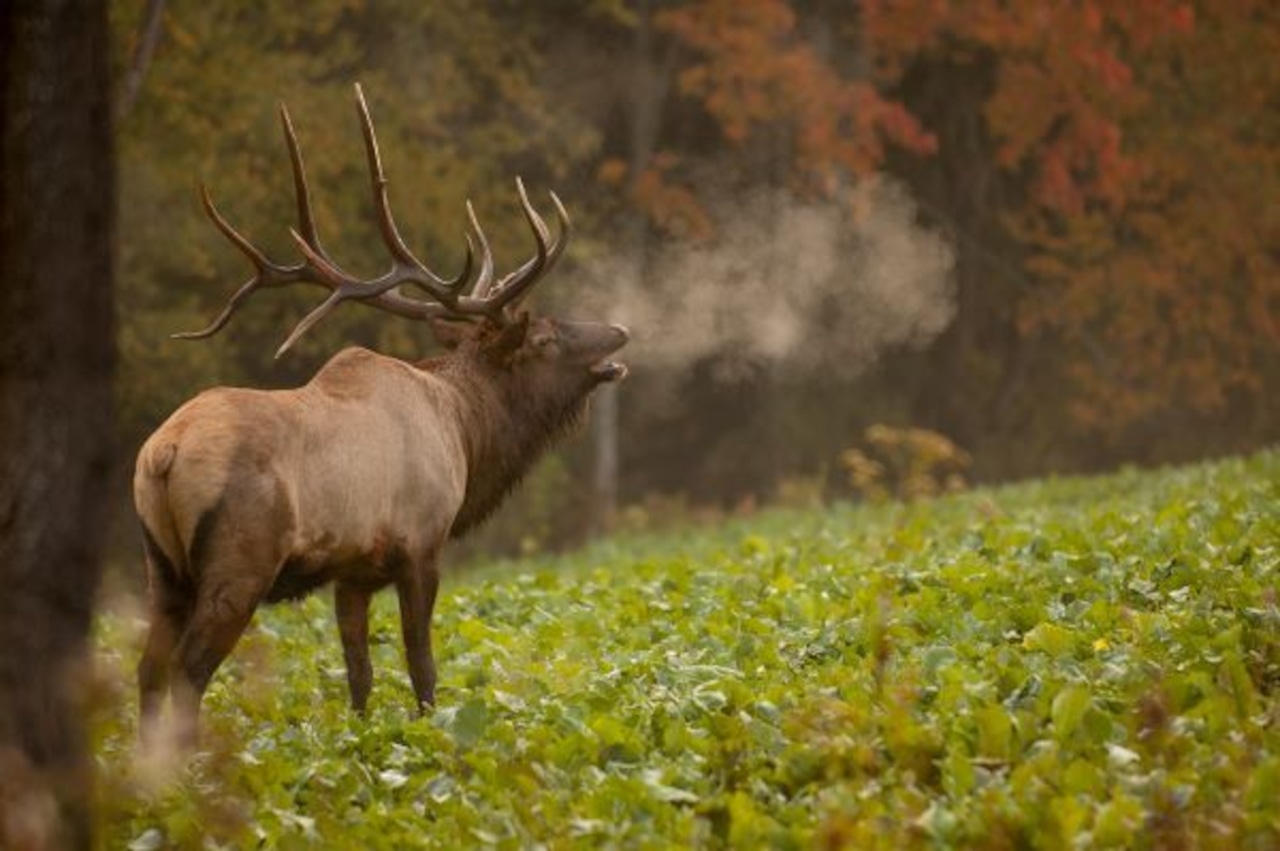
Michigan’s elk herd has grown past its ideal population, and state officials are working to bring it back to size.
Population estimates from 2024 put the herd at 1,150 animals. Meanwhile, the ideal number is 500 to 900 animals, said Brent Rudolph, the deer, elk and moose management specialist for the DNR.
“We are actively trying to reduce that elk population,” he said.
RELATED: Michigan DNR testing trail cameras, infrared tech to count wild elk
The herd is centered in the Pigeon River Country State Forest, primarily in Cheboygan, Montmorency and Otsego counties. As the population grows, animals spread into outlying areas, Rudolph said. This increases the likelihood of disease and conflicts with people, including farms and traffic.
Hunting is the primary method of population management, he said. The agency is targeting cow elk to have the biggest long-term impact on the population.
The DNR awarded 260 elk hunting licenses for the 2025 season, 180 of which were for antlerless elk. Hunters harvested 153 elk, including 87 antlerless.
RELATED: Michigan elk harvest down in 2025 due to challenging conditions
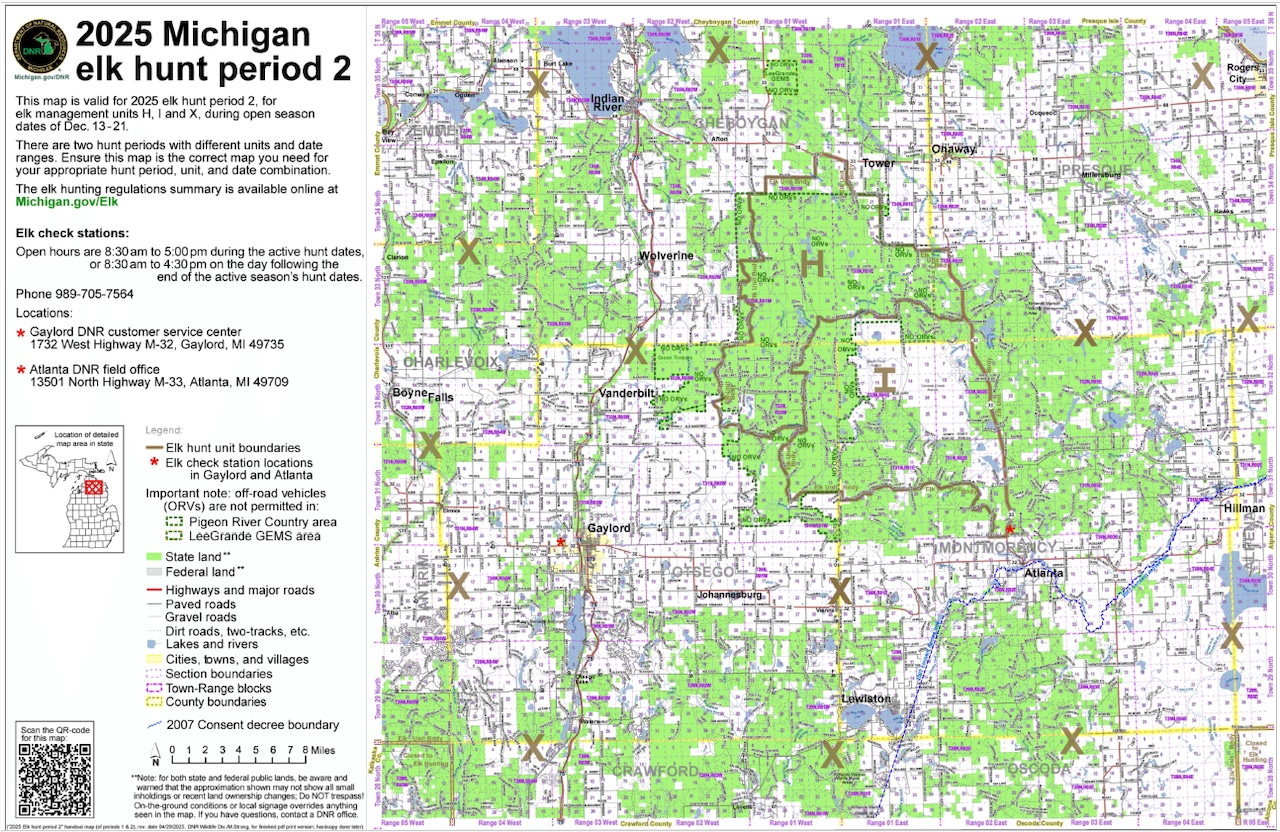 This map shows areas open to hunting during Michigan’s elk hunt period two, which takes place in December. Area marked “X” are part of the herd’s outlying range. The core range includes areas marked “H” and “I.”Michigan Department of Natural Resources
Along with the ratio of any-elk to antlerless tags, the hunt map is also drawn strategically to manage the herd, Rudolph said.
The elk hunt is divided into an early period (late summer) and a late period (December). The early hunt focuses on outlying areas, marked X in the map above, where the herd most needs to be thinned, he said. The late period allows hunting in the core range, marked H and I, and outlying areas.
In 2025, the first period aggressively targeted cow elk outside the core range with 70 of the 100 tags being for antlerless animals. Of the 160 tags awarded during the second period, 110 were for antlerless elk.
Looking ahead, the DNR is also proposing to expand both hunting periods, more than doubling the total harvest time from 21 to 45 days.
RELATED: Michigan DNR proposes doubling length of elk hunting seasons
The changes would increase hunters’ chances of success by providing better weather conditions, more flexibility to choose when to hunt and giving them time to effectively target appropriate elk, said Scott Eggeman, field operations manager for the DNR Wildlife Division.
If approved by the Natural Resources Commission, the first hunt would run continuously for 30 days, from the second Saturday in September through the second Sunday in October, instead of three short four-day hunts spread across late summer.
The second period would lengthen to 15 days, from December 1 to 15, moving earlier in the month to avoid overlap with holidays.