
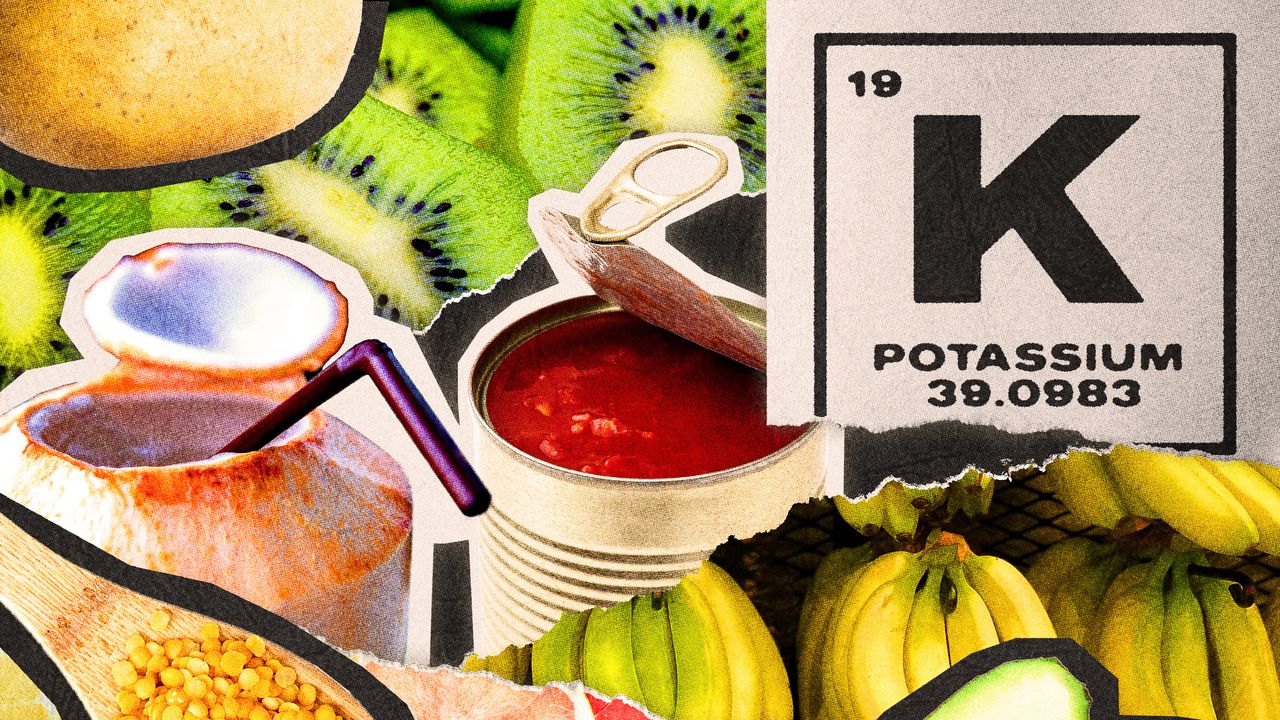
Even if you’re tracking your macros, you probably have no idea how much potassium you’re getting (or not getting) on a regular basis. That’s where knowing the symptoms for potassium deficiency come in handy. If you’re dealing with muscle cramps, lightheadedness, irregular heartbeat, and fatigue, Gunning says those are all signs you may not be getting enough potassium.
If these are one-off symptoms or it’s happening after you work out, the fix is getting more of the below foods high in potassium. If you’re experiencing these symptoms regularly, you should still up your intake of the below foods, but it’s also a good idea to see your healthcare provider who can run some tests to make sure there isn’t a contributing underlying factor.
And in the meantime, here are 10 potassium-rich foods to eat more of.
1. Tomato paste
“If you want to get more potassium, tomato paste is going to be your best friend,” Valdez says. He says that one 6-ounce can of tomato paste has a whopping 1,724 milligrams of potassium. His favorite way to cook it is with Spanish rice or with pasta.
2. Lentils
All three dietitians namecheck lentils as a top potassium source. Just half a cup has 949 milligrams. Lentils are full of other beneficial nutrients too, like protein, fiber, and magnesium. If you’re adding more potassium-rich foods to your diet to benefit your heart, just make sure the lentils you’re buying are low in sodium to get the maximum benefits.
3. Avocado
Justice for 2016-era avocado toast? Gunning says the fruit (yes, fruit) is a good way to get your potassium, with 42 milligrams in roughly half an avocado. It may not sound like much, but it’s a pretty significant drop in the bucket and, ideally, it’s not the only potassium-rich food you’ll eat that day anyway.
4. Dried apricots
This is one potassium source that all three dietitians say often gets overlooked. One cup has 1,511 milligrams of potassium, which is almost half the recommended daily requirement. Dried apricots are a good source of fiber and calcium too.
5. Bananas
You knew this one was going to be on here, right? There’s a reason why bananas are the food most people think of when it comes to potassium. One banana has 375 milligrams of potassium. Coupled with the carbs and magnesium, it’s a great post-workout food to help with recovery, especially when it’s paired with some protein.
Gunning says that plantains (which are from the same genus as bananas) are also great sources of potassium. One serving has roughly 396 milligrams of potassium.
6. Citrus fruits
Citrus fruits, like oranges and nectarines, also contain potassium, Gunning says. One orange has 232 milligrams of the nutrient. It’s not a huge amount, but, again, ideally it’s not the only potassium-containing food you’re eating that day.
7. Melons
Another type of fruit that Gunning says is high in potassium are melons, which include cantaloupe, honeydew, and watermelon. One serving of cantaloupe, for example, has 157 milligrams of potassium.
8. Kiwi
While we’re talking about fruits with potassium, kiwi is another one to add to the list. One serving has 302 milligrams of it. This small, but mighty fruit is also full of fiber and vitamin C.
9. Potatoes
One serving of white potato has 450 milligrams, while a serving of sweet potato has 486 milligrams. In both cases, it’s more potassium than in a banana.
10. Coconut water
Yes, it’s technically a drink and not a food, but White says that coconut water is a great source of potassium. One cup has 600 milligrams. Think of it as nature’s Gatorade.