
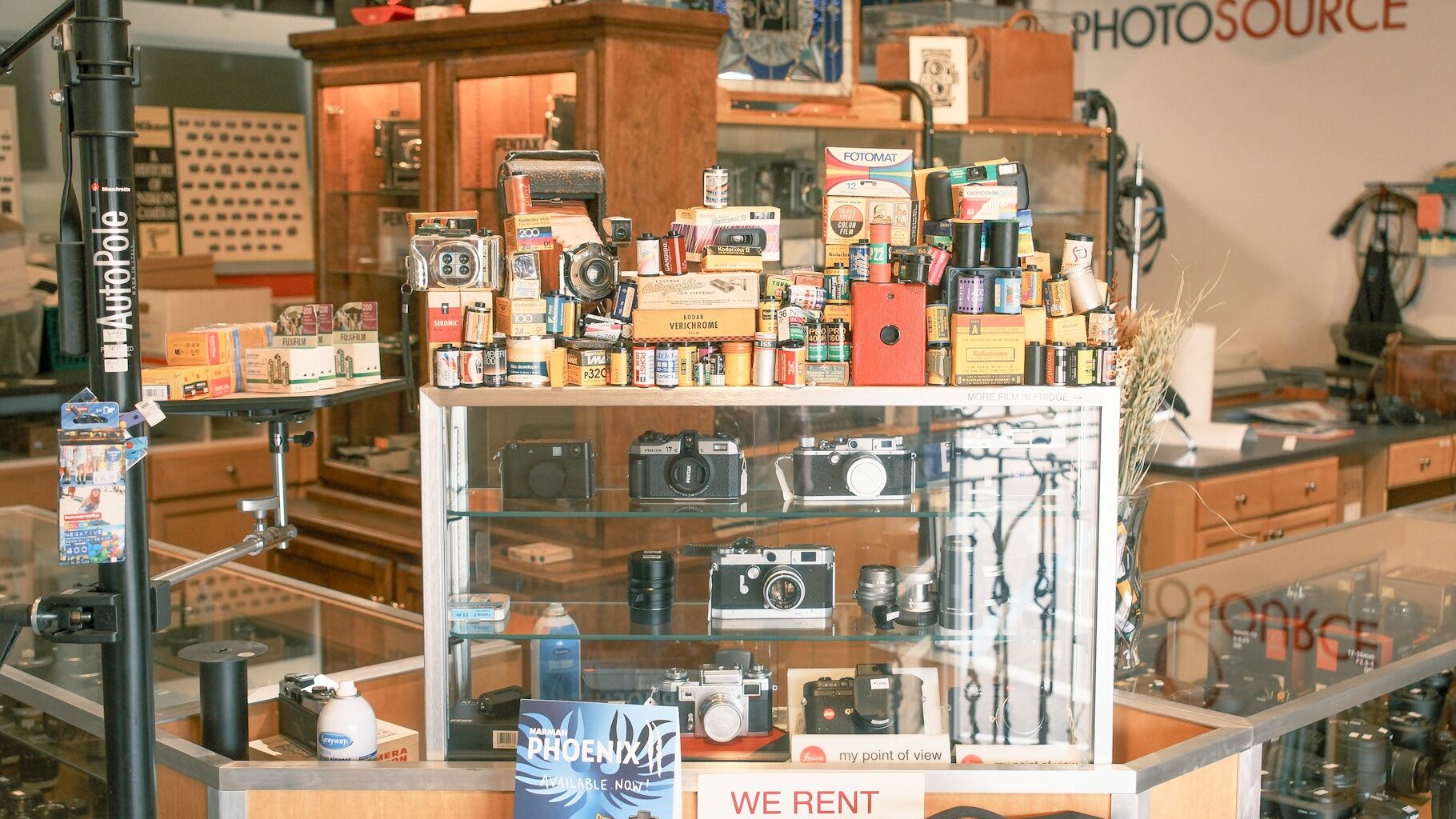
Photosource, one of only two dedicated camera stores in Sacramento still operating, opened its doors in 2001. While they’ve always developed film at their store, they’ve recently witnessed a resurgence of film amongst Sacramento photographers.
Michael Kallweit, local owner of Photosource, accredits this surge to a reaction to the proliferation of phone and digital cameras.
“I think it’s the opposite of people’s phones,” Kallweit said. “It emulates the vibe from yesteryear, there’s just a different look.”
According to Kallweit, it’s becoming more and more popular for wedding photographers to offer a film photography package.
“They come in on Monday with 10 or 20 rolls of film that they shot from one or two weddings,”
Kallweit said. “To me that’s always sort of shocking because, what if something goes wrong?”
Oftentimes, things do go wrong when you shoot film. When using cameras that are for the most part at least twenty years old, parts break. Light seals degrade, shutters don’t fire correctly and lenses grow mold and gather dust.
For some, however, those imperfections are features, not bugs.
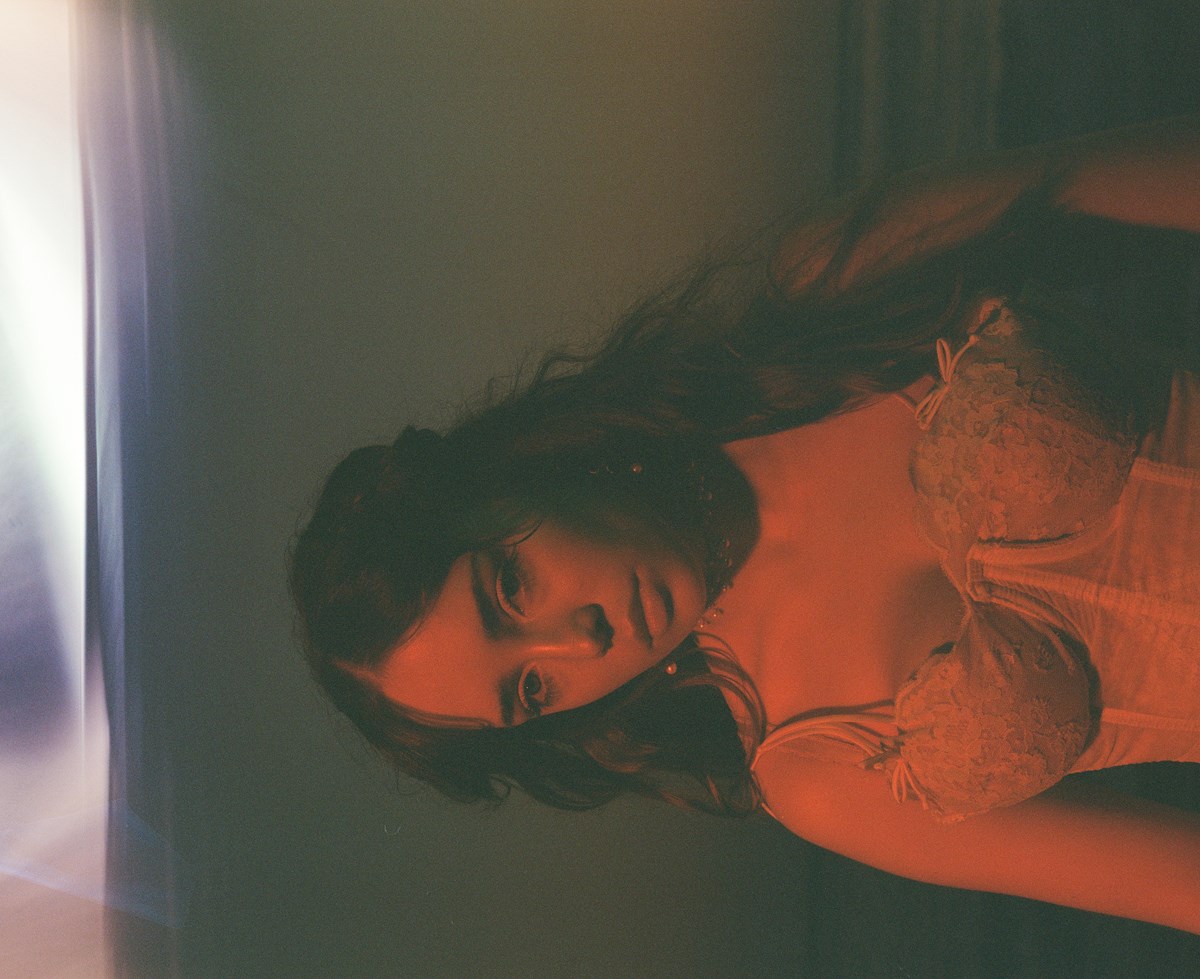 Film developed with striations and light leaks (seen at the top of the photo) from the first frame of the roll. The image is of Imogen Krause, musician and community college student at Natural Bridges State Beach in Santa Cruz, California.Ruth Finch/CapRadio
“Sometimes these cameras leak light and you get these striations,” Kallweit said. “But that kind of adds to the allure and to the mystique of the image when something misfires and you still get something cool out of it.”
With the popularity of film photography on the rise in Sacramento, Photosource has had to process more and more film to keep up with the demand. They own an automated film processing machine, but the companies that manufacture these machines have stopped making replacement parts, and keeping them running can take some engineering.
“We’ve been challenged with it so much so that I bought a second machine. What we’ve been doing is out of the two machines making one machine that works,” Kallweit said. “With the two, we’ll hopefully be able to process film on a commercial level for a while, but we never know.”
Photosource doesn’t just process film, however. They have cases full of vintage cameras for sale, and they also offer printing services and allow customers to rent out their darkroom or camera equipment.
Many of the employees at Photosource shoot film as well. Michael Blanchard, who has shot film since the 1970s and handles their online camera store, said that film cameras can often be higher quality than their digital counterparts.
“Post-war film cameras up through the early digital age are amazing mechanical devices,” Blanchard said. “They’re much higher quality devices than what they make now, the modern cameras, they tend to be really plastic. “
While some collect these older cameras, Blanchard doesn’t let his collect dust.
“I’m not really a collector, the cameras I have I use,” Blanchard said. “If I don’t really use them much I get rid of them and get something I do use.”
He credits the resurgence of film to a younger generation that, after being raised in an increasingly digital world, values physical media more and more.
“Having something that’s analog is really valuable to them,” Blanchard said. “There’s something magic to watching that photograph come up in that developer, it’s an amazing thing.”
Anna Beers, a photography major at Sacramento State, said she uses the darkroom as an avenue to be more creative with her work.
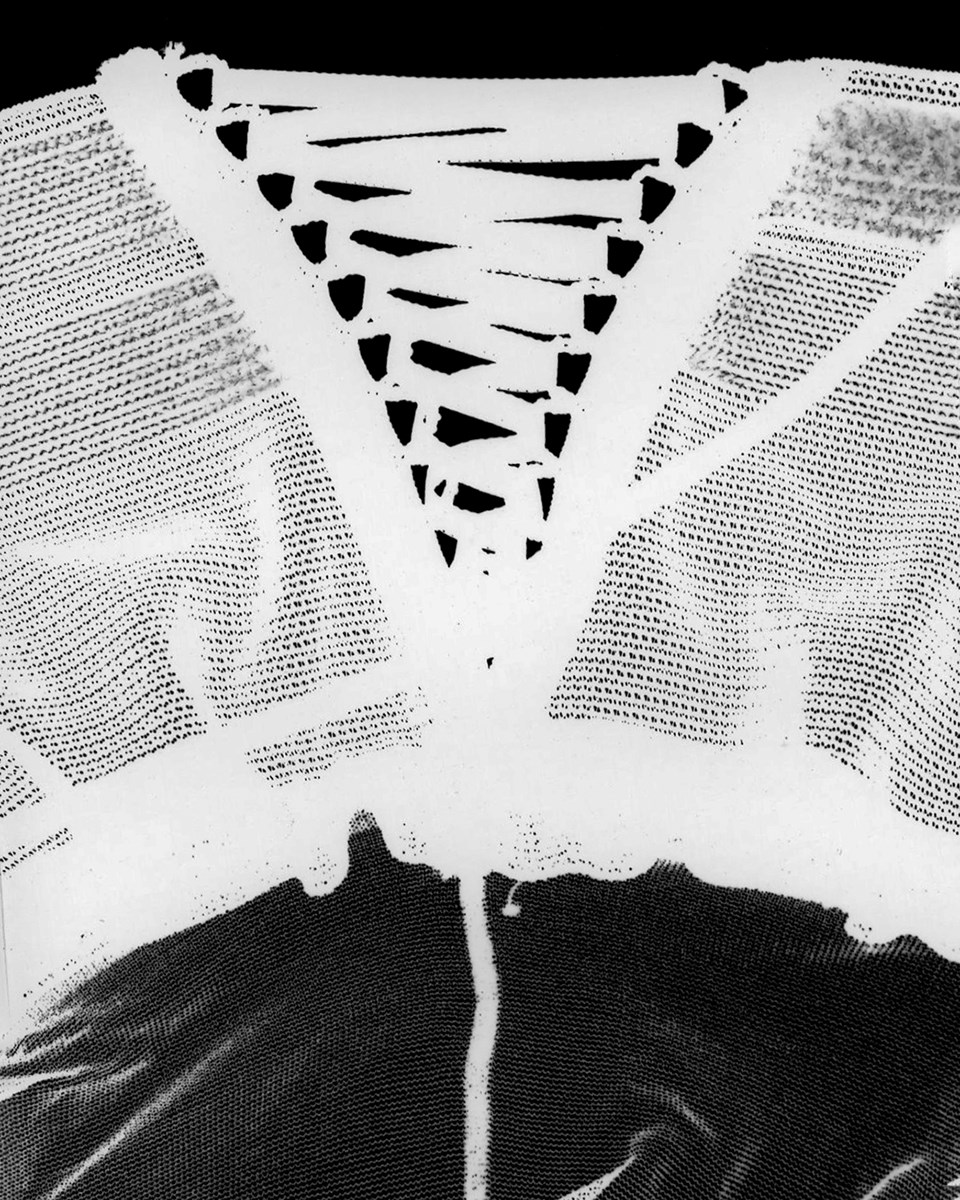 A projection of a stocking on photo paper made on Nov. 10, 2026.Courtesy of Anna Beers
“So having the freedom to interpret a photo and stretch it in different ways and really have to slow down and be intentional with printing in the darkroom is something that I really love,” Beers said. “It’s just so magical, every time you put a piece of paper in the chemicals and an image appears, it just feels amazing.”
She also likes to use the darkroom to create pieces called photograms. When printing in the darkroom, photographers can place things on the photographic paper and expose the shadow of the object, inverting its shape on the page.
“It’s a whole different way of seeing things, you get less detail and it really becomes about the shape of objects,” Beers said. “I’m not just documenting this thing, it becomes completely different.”
“What keeps me going back to film photography is just how exciting it is, how physical it is, how you kind of have to be patient,” Beers said. “Taking the time to slow down and being surprised about what happens, even when you think you know.”
Taylor Abbott, who works at Photosource, said that she’s drawn to the idea of having physical versions of her photos.
“Growing up, my parents separated and we didn’t have a ton of photos to look back on,” Abbott said. “I’ve kept all my film since I started, so I have everything physically and then hopefully one day it won’t get lost in the digital world.”
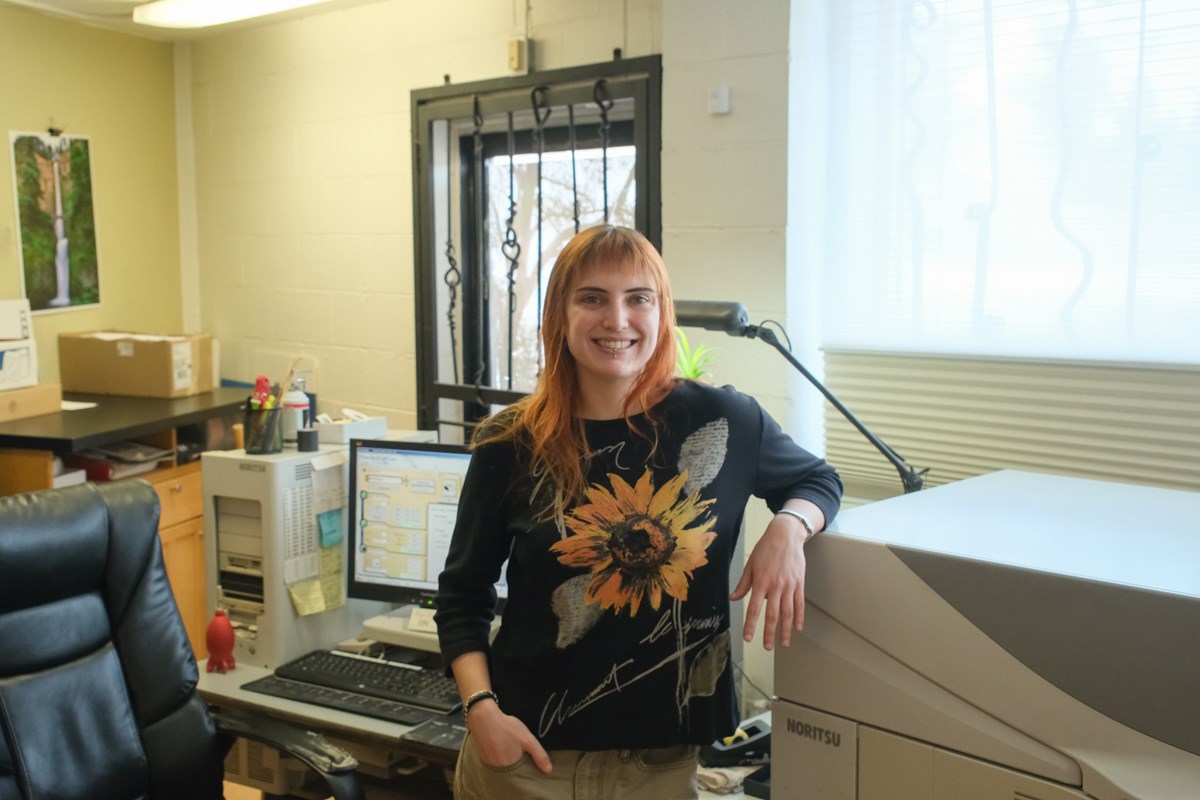 Taylor Abbott leans against Photosource’s chemical print machine, where scanned film is laser projected onto photo paper and processed through a series of chemical processes to develop the final print on Jan. 27, 2026.Ruth Finch/CapRadio
She started shooting film after moving back to Sacramento in 2021. Abbott said during the pandemic, after having to leave college, she wanted to take up a hobby. She found a disposable camera, and decided to get it developed.
“I fell in love from there … I just started shooting all the time,” Abbott said. “It was just another way to take photos without having to take my phone out.”
Kallweit said he’s already experienced losing photos to the cloud.
“I’m already missing stuff from my phone, from my iCloud that’s maybe 10 years old,” Kallweit said. “I’m going to make a box full of 4×6 [prints], and those’ll go into a closet somewhere and my kids are going to find them in 50 years, and it’s going to be amazing.”
Follow us for more stories like this
CapRadio provides a trusted source of news because of you. As a nonprofit organization, donations from people like you sustain the journalism that allows us to discover stories that are important to our audience. If you believe in what we do and support our mission, please donate today.