
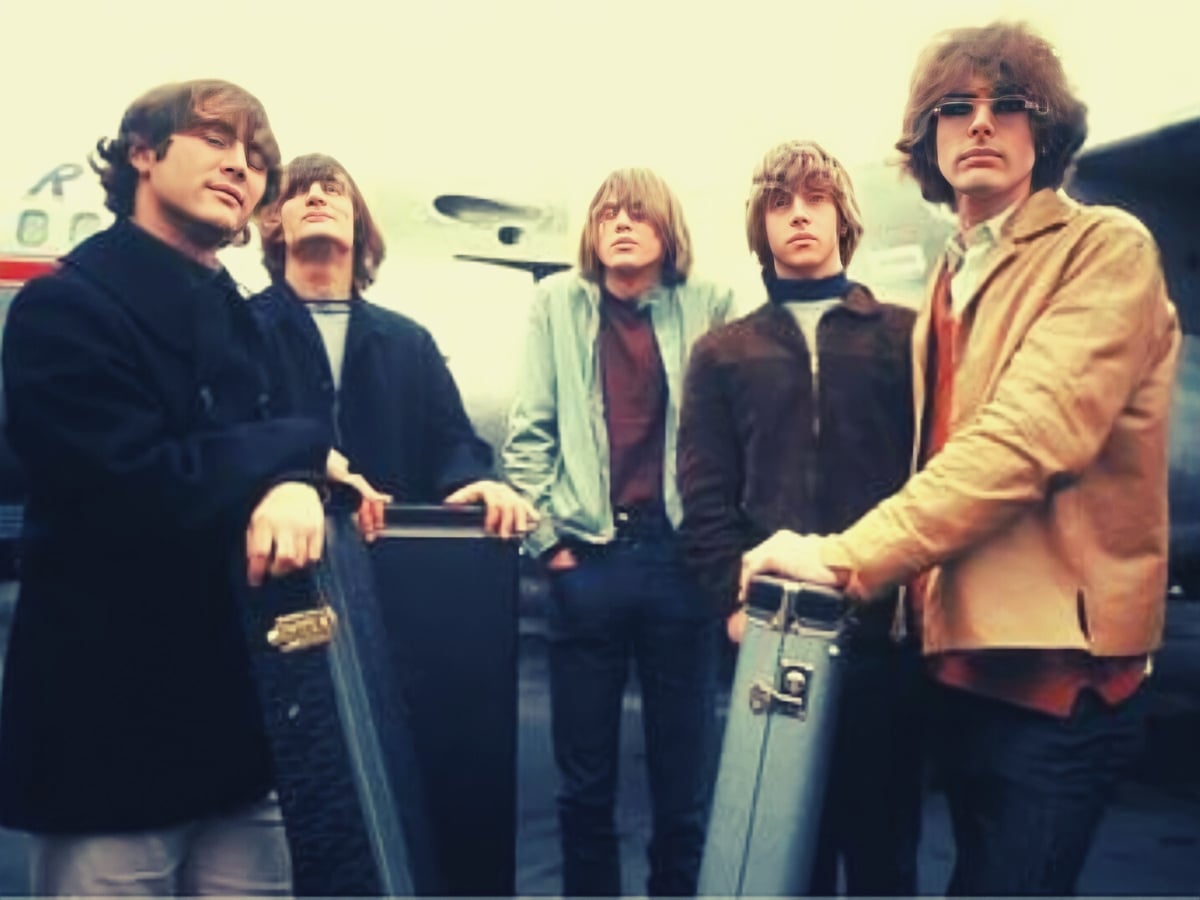
(Credit: The Byrds)
Sat 31 January 2026 0:00, UK
If any American band could rival the dramatic year-to-year transformation The Beatles were experiencing in the 1960s, it would probably be The Byrds.
Auteurs of the jingle-jangle Rickenbacker sound, this LA outfit initially made their bones as Dylan interpreters, taking Bob’s hard-scrabble East Coast folk poetry and putting it through their West Coast sunshine machine, gussied up with tight harmonies and lovely reverb. That period put them on the map, but it also seemed to put The Byrds on the back foot, eager to prove they could write challenging material in their own right.
Suddenly, they were a psychedelic band one day, an art rock band the next, and a country and western band when you blinked. The individual members of the group each took turns grabbing at the reins, and, in due time, the original Byrds line-up reached its inevitable detonation point.
One of the last complete statements the band made as a relatively united front was the 1967 single ‘So You Wanna Be a Rock ‘n’ Roll Star’, released the same year singer/guitarist David Crosby and drummer Michael Clarke were eventually axed. Written by Roger McGuinn and Chris Hillman, ‘Rock ‘n’ Roll Star’, on an initial, lazy listen, sounds like a joyous bit of encouragement to the Byrds’ young fans: “So you want to be a rock ‘n’ roll star? / Then listen now to what I say / Just get an electric guitar / Then take some time and learn how to play”.
By verse two, however, there’s talk of “selling your soul to the company”, and it becomes clear that The Byrds are sending a sarcastic word of warning rather than a welcome invitation. By now, the one thing everyone in the band could agree on is that the pop scene was getting overloaded with fluff groups who were manufactured by record companies and had nothing interesting to say. The Byrds, by contrast, saw themselves as genuine artists, and they were far more interested in collaborating with other serious musicians, rather than trying to fit into the pages of Tiger Beat or Hit Parader.
A year earlier, for example, Hillman and Crosby had done some session work with the South African singer Lette Mbulu during the recording of her debut album Lette Mbulu Sings. This eye-opening experience had also connected them with several other South African artists who’d fled apartheid, including a then 27-year-old Hugh Masekela, one of the country’s great trumpet players.
Inspired to add horns to the next Byrds album, Hillman and Crosby invited Masekela himself to play a trumpet solo on ‘So You Wanna Be a Rock ‘n’ Roll Star,’ and he humbly accepted, which proved to be a mutually beneficial crossover.
The following year, Masekela’s unique interpretation of Philemon Hou’s instrumental ‘Grazing in the Grass’ became a surprise radio hit in America, reaching number one on the Billboard singles chart, and introducing many Americans to the wider world of South African music.
By then, The Byrds had already transformed into a full-on country rock band with their Sweetheart of the Rodeo album, showing that if you really wanted to be a rock ‘n’ roll star and remain one, you had to keep re-inventing yourself.
Related Topics