
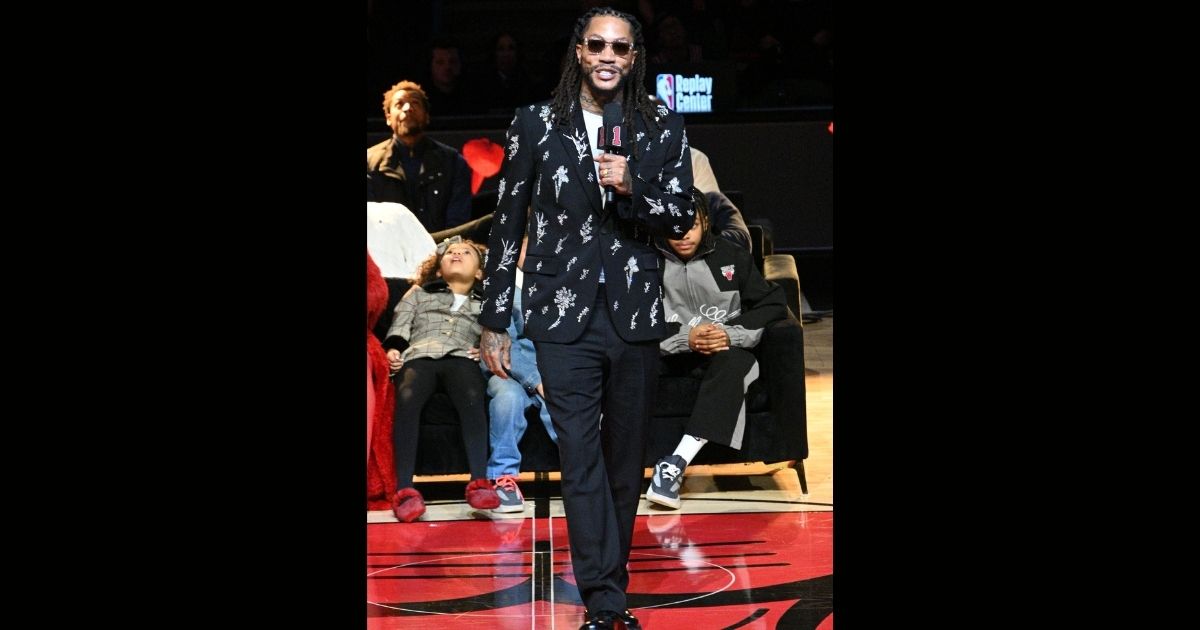
Long after the final buzzer sounded on the Chicago Bulls’ 114–111 victory over the Boston Celtics, the United Center remained filled with fans who were not ready to leave.
They stayed in their seats. They waited. They watched the lights dim.
Approximately 20 to 30 minutes after the game ended, the Bulls formally retired Derrick Rose’s No. 1 jersey, honoring a Chicago native whose rise from neighborhood courts to NBA stardom became inseparable from the city’s identity.
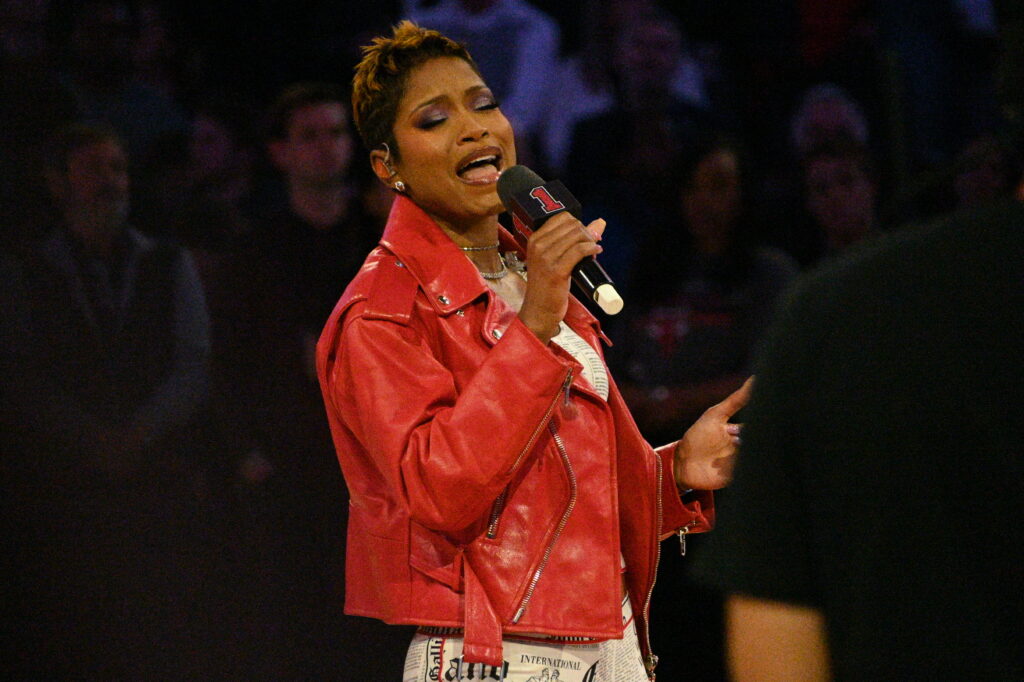 Actress Keke Palmer singing the National Anthem for Derrick Rose night at the United Center. (Photos by Marcus Robinson)
The arena transformed from a basketball venue into a place of reflection, memory, and tribute. Congratulatory video messages played on the Jumbotron, featuring former teammates, coaches, and franchise legends. Appearances by Michael Jordan and Scottie Pippen on the Jumbotron drew sustained applause, underscoring the moment’s magnitude and situating Rose within the continuum of Bulls history.
When Rose’s No. 1 jersey was revealed in the rafters, thousands of red rose petals cascaded from above, prompting a prolonged standing ovation. The banner now hangs alongside four other retired Bulls numbers — Jerry Sloan (No. 4), Bob Love (No. 10), Michael Jordan (No. 23), and Scottie Pippen (No. 33) — placing Rose among the franchise’s most enduring figures.
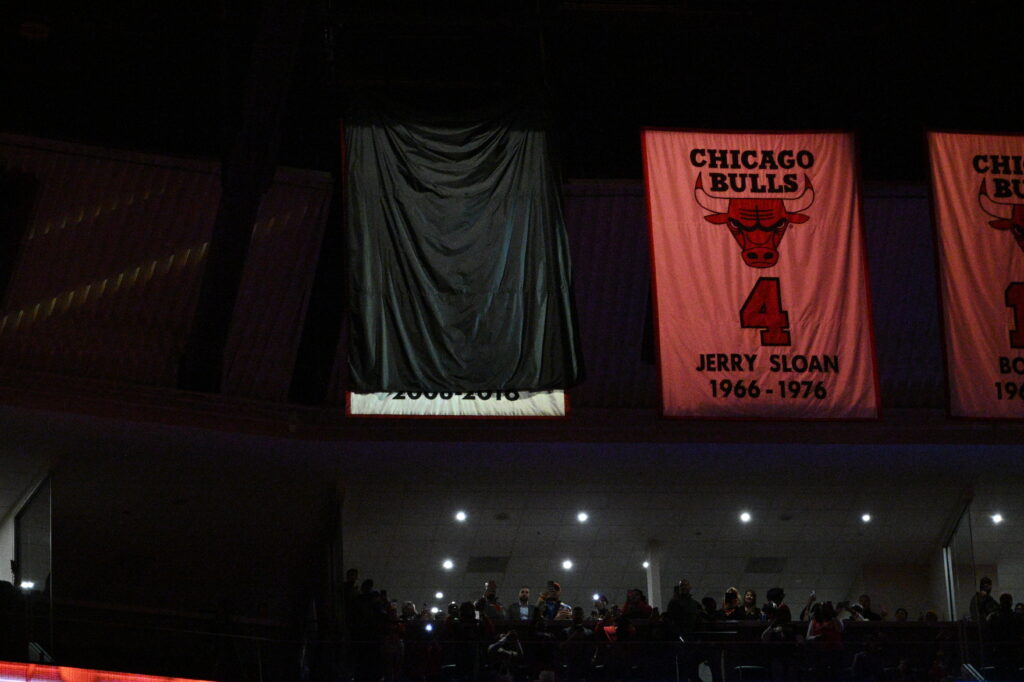 Chicago Bulls No. 1 Jersey hangs in the rafters waiting to be unveiled. (Photos by Marcus Robinson)
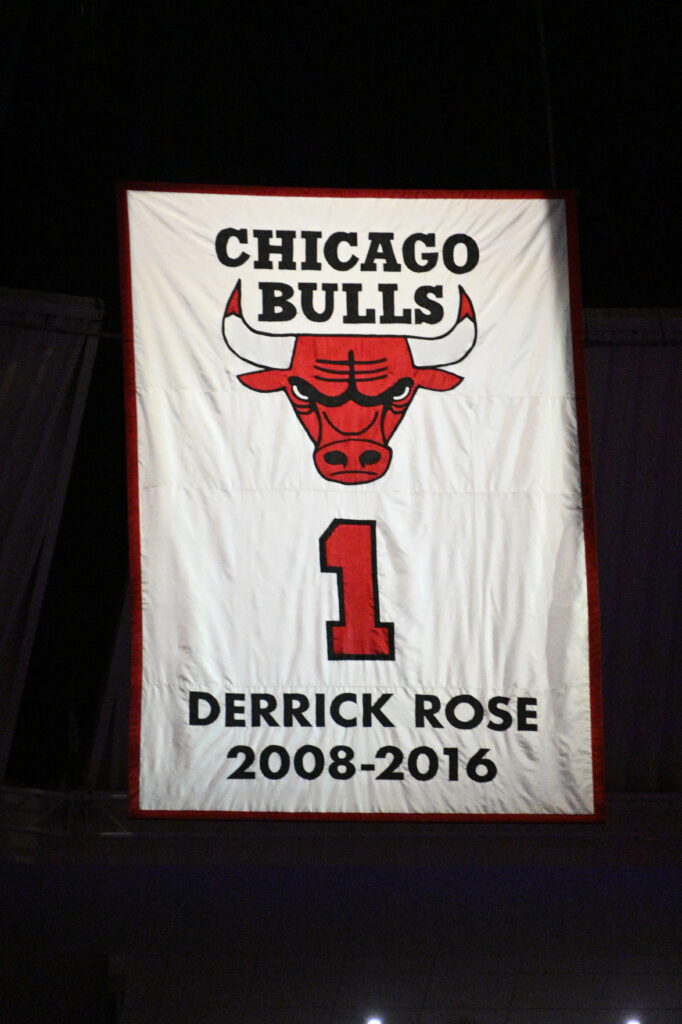 The banner representing the retirement of Derrick Rose’s No. 1 jersey is unveiled.
Seated on the court were Rose’s family and basketball family. His mother, Brenda Rose, sat at the center — a presence Rose has long credited as the foundation of his life and values. Nearby were his wife, Alaine Rose, and their children, PJ, London, and Layla, along with his brothers Reggie, Dwayne, and Allan.
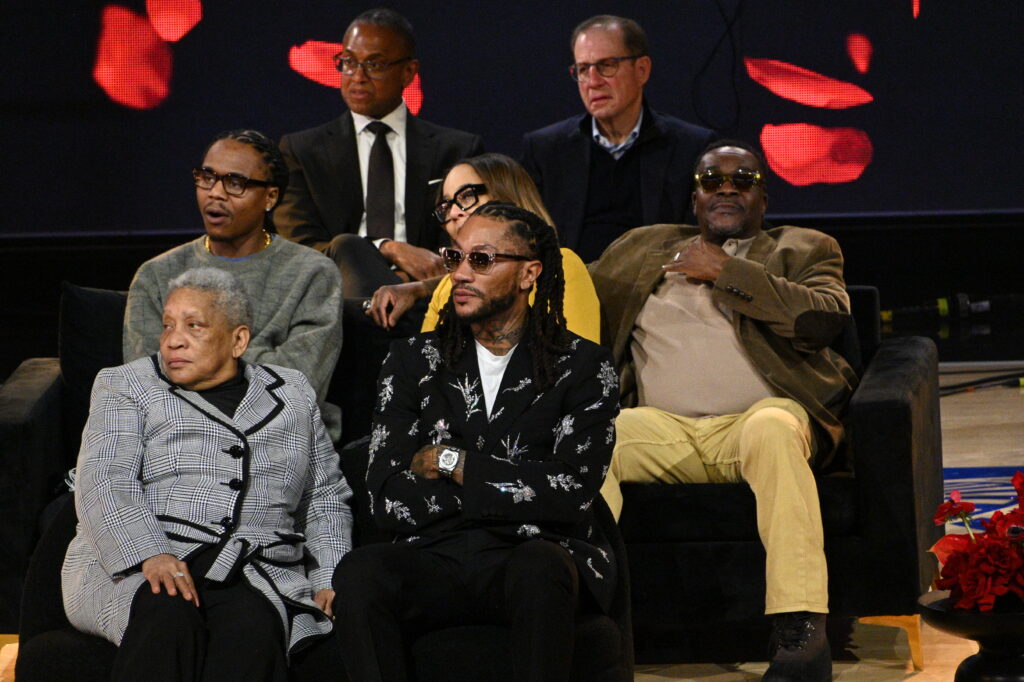 Derrick Rose’s Mother, Brenda, (left) sits in the first row with her son at his jersey retirement ceremony.
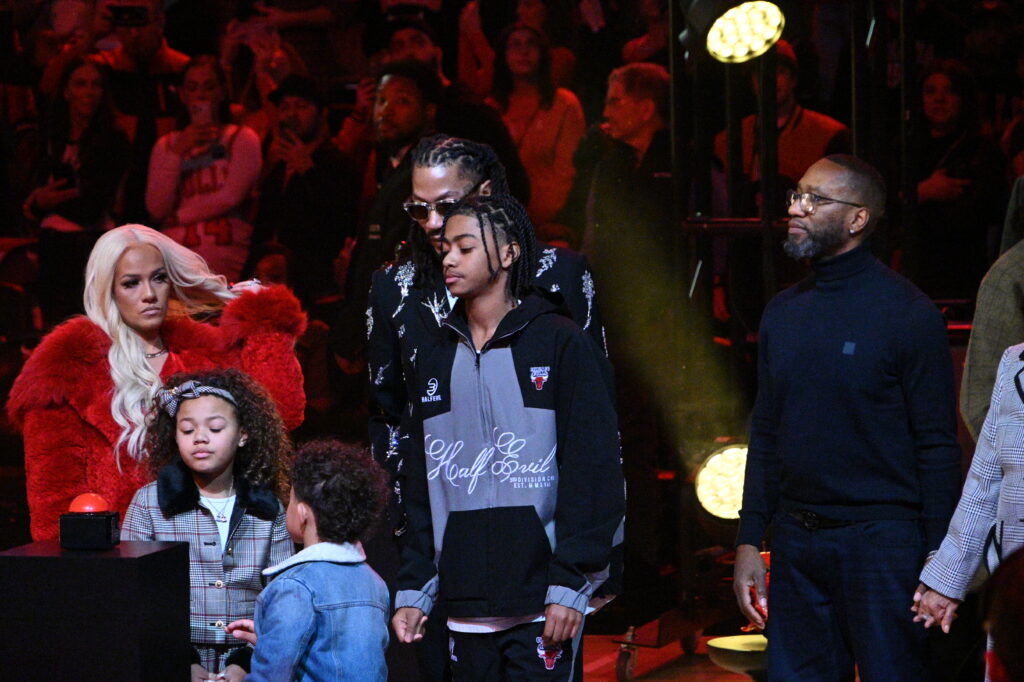 Derrick Rose stands partially visible with his wife and children. From left to right are Layla Rose, London Rose, PJ Rose, and Alaine Rose.
Former teammates Taj Gibson, Luol Deng, and Joakim Noah were seated together, joined by former Bulls coach Tom Thibodeau, who coached Rose during his MVP season and subsequent playoff runs. Bulls executive and former player B.J. Armstrong was also present, creating a scene that reflected multiple eras of Bulls basketball.
When Deng stood to speak, the arena erupted into a familiar chant — “Luuuuuu” — echoing throughout the United Center and briefly halting the program. Deng waited for the crowd to settle before addressing them, acknowledging the moment with a smile.
Deng spoke about brotherhood, emphasizing the bond he shared with Rose during their years together in Chicago. He reflected on the battles they endured, the expectations they carried, and the loyalty that defined their time as teammates. Deng spoke about growing together under pressure and about what it meant to stand alongside Rose during both triumph and adversity.
His remarks resonated deeply with fans who remembered that era as one built not only on talent, but on trust and shared sacrifice.
Gibson followed, offering a more personal perspective. He spoke about Rose’s achievements, but focused even more intently on the foundation behind them — Rose’s family and upbringing. Gibson talked about how Rose’s environment, values, and support system shaped him into the man he is today.
He spoke about Rose’s humility, discipline, and sense of responsibility, noting that those qualities were evident long before accolades arrived. Gibson’s remarks drew attention to the person behind the player, reinforcing the idea that Rose’s legacy extended beyond statistics and awards.
Joakim Noah encouraged former coach Tom Thibodeau to share his fondest memory. Thibodeau took the microphone, offering insight into Rose’s character from the perspective of a coach who saw him daily — in practice, in meetings, and in moments far from the spotlight.
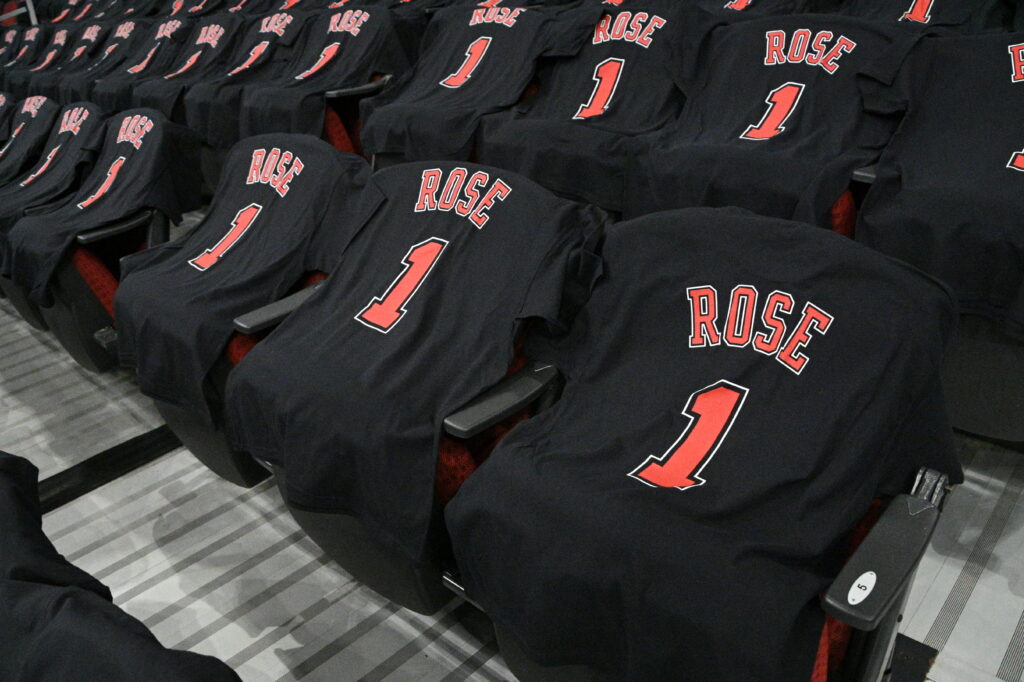 Derrick Rose T-shirts were given to fans in celebration of his jersey retirement.
Thibodeau spoke about Rose’s work ethic and competitiveness but emphasized something deeper: Rose’s accountability. He shared a story that illustrated how Rose consistently put team success above personal recognition, often absorbing criticism quietly while continuing to lead by example.
Thibodeau described Rose as a player who never needed to speak loudly to command respect, noting that his commitment, preparation, and resilience earned trust organically. The story reinforced a recurring theme of the night — that Rose’s leadership was rooted in action rather than words.
As Rose took the microphone, the arena fell silent.
“I was never really a fit for all of this,” Rose said, referring to the attention and spectacle that followed him throughout his career. “My personality was never fit for it.”
Yet, he acknowledged, Chicago embraced him anyway.
Rose spoke openly about the difference between obsession and love — a lesson he said took years to understand. He reflected on how obsession once isolated him, and how learning to love the game allowed him to reconnect with people and purpose.
“I gave you my heart,” Rose said, addressing the fans who remained long after the game ended. “I felt like I gave my all.”
At one point, Rose paused, looked around the arena, and addressed his career directly.
“I have no regrets,” he said. “I feel like I maxed out.”
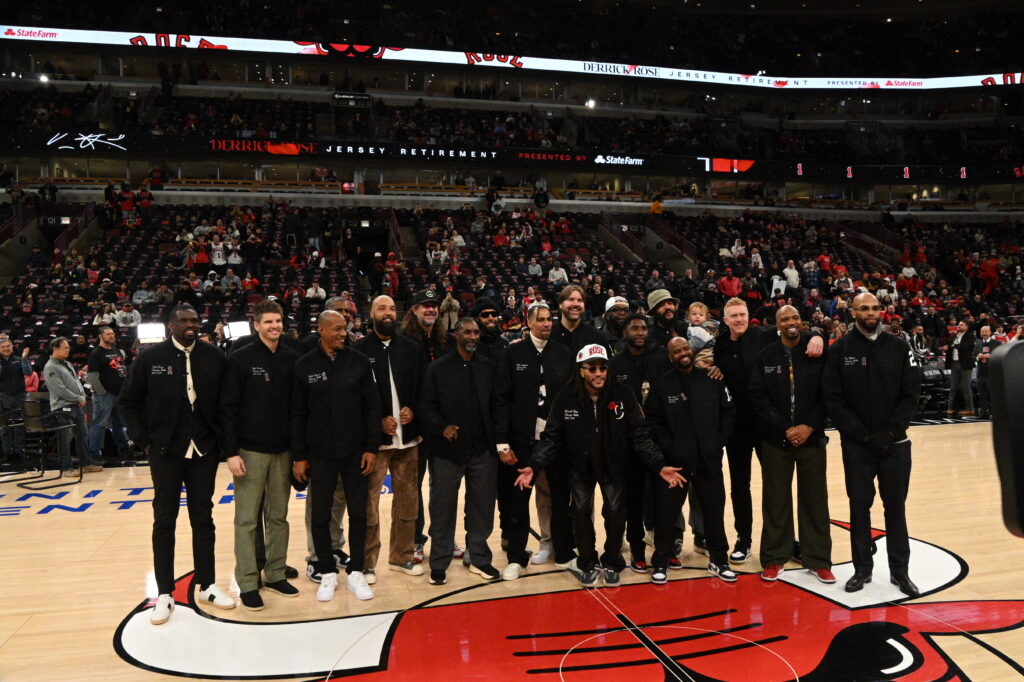 Derrick Rose (center) surrounded by former Chicago Bulls teammates.
He spoke candidly about injury, identity, and growth, acknowledging how difficult it was to separate basketball from self-worth. Rose said adversity ultimately taught him perspective and self-understanding.
“I won’t be the last hooper to be quiet,” Rose said. “You don’t gotta fit in like that. You can do your own thing and still love the game.”
Throughout his remarks, Rose repeatedly credited his mother for keeping him grounded, reinforcing the themes earlier raised by Gibson. He spoke about family as his constant, regardless of circumstance.
Rose’s story has long resonated in Chicago because it mirrors the lived experiences of many who watched him grow. Born on the South Side before his family later relocated to the West Side, Rose rose to prominence at Simeon Career Academy, carrying the hopes of a city before being selected first overall by the Bulls in 2008.
His Rookie of the Year season and historic 2010–11 campaign — when he became the youngest Most Valuable Player in NBA history — reignited belief in the franchise. Injuries that followed changed his career path, but they did not sever his bond with Chicago.
The statement drew a wave of applause. Rose explained that while injuries altered the trajectory of his career, they did not diminish the meaning of what he experienced or what he contributed.
For many fans, Rose became a symbol not only of brilliance, but of resilience — a player who endured scrutiny and physical hardship while remaining deeply connected to home.
That connection was evident well beyond the ceremony itself.
Even after the program concluded and the arena began to empty, demand for Derrick Rose memorabilia continued late into the night. Fans crowded the Bulls team store, purchasing jerseys, apparel, and commemorative items. At one point, store staff temporarily locked the doors to control capacity as fans continued to line up outside.
Retired on January 24, 2026, Rose’s No. 1 jersey now hangs permanently above the court at the United Center, where he once carried the hopes of a city hungry for its next chapter.
As the night came to a close, fans lingered — some taking photos, others standing quietly and looking up at the rafters.
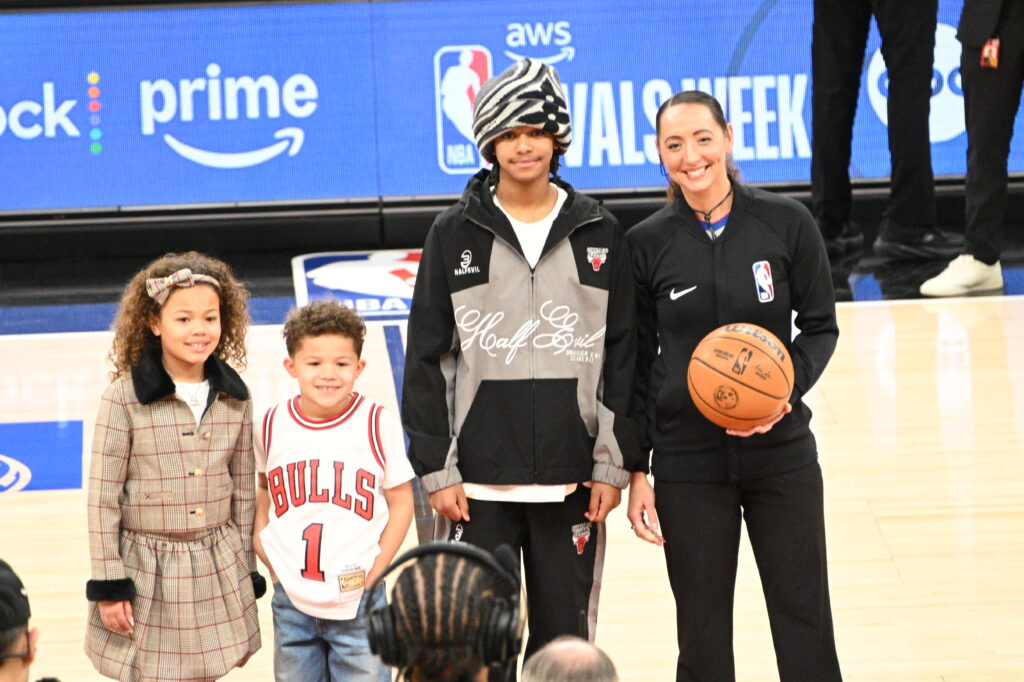 Derrick Rose’s children Layla, London and Derrick “PJ” Rose Jr. pose with an NBA official.
Above them, Derrick Rose’s jersey now rests among Bulls legends — not simply as a record of accolades, but as a testament to a relationship between a city and one of its own.
For Chicago, it was not just a jersey retirement.
It was a homecoming.